Singha Durbar
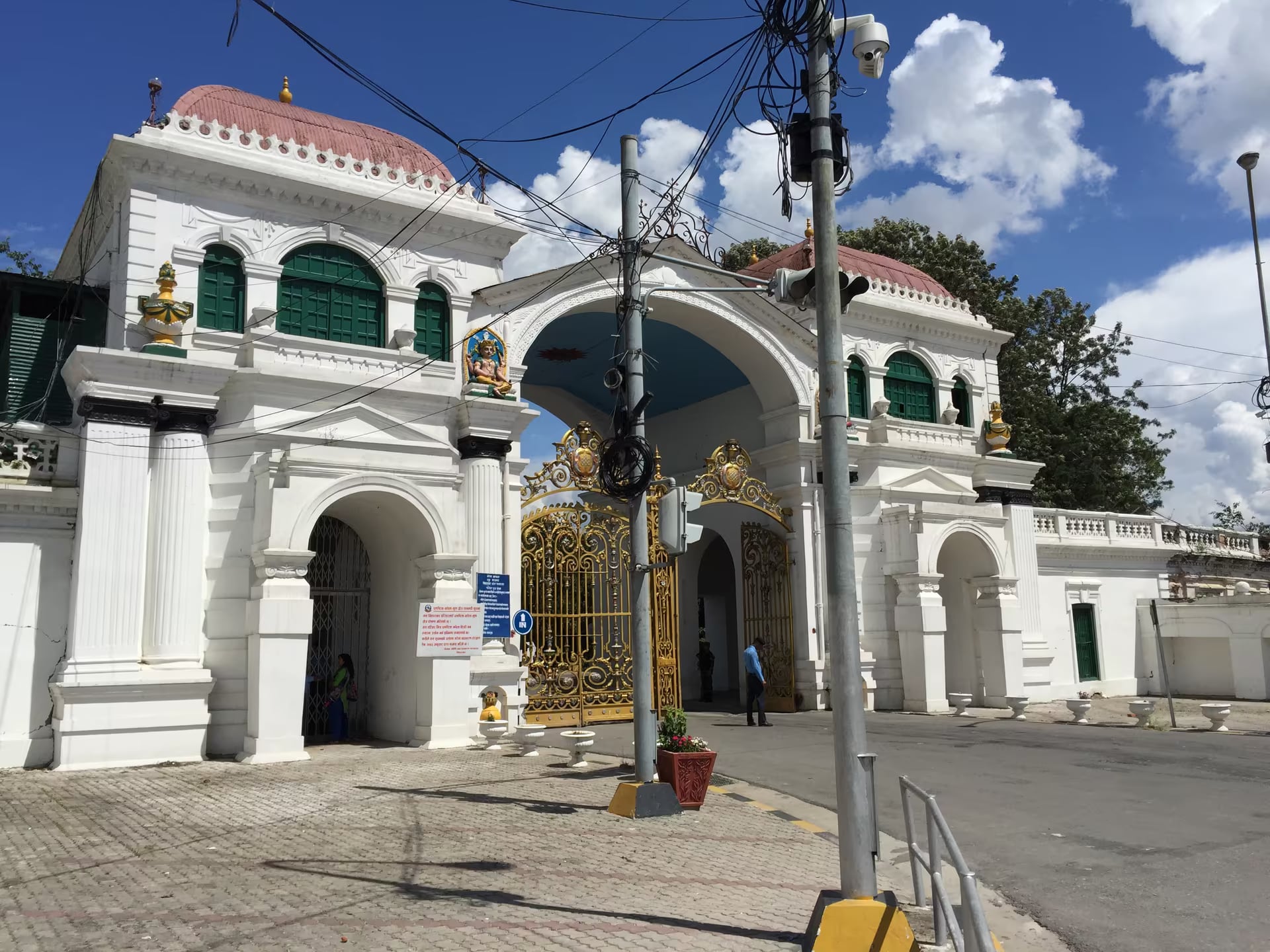
Chandra Shumsher Rana's 1908 palace, once called the largest private residence in Asia at some 1,700 rooms. Most of it burned in 1973; the surviving neoclassical west wing is now Nepal's federal secretariat. Facade only — no public access.
- Altitude
- 1,310 m
- Coordinates
- 27.696°, 85.324°
Current Weather
Singha Durbar — the Lion Palace — was built in 1908 as the private residence of Chandra Shumsher Jung Bahadur Rana, the prime minister who ruled Nepal from 1901 to 1929. It is the largest and most consequential building of the Rana century, and at completion it was widely described as the biggest private palace in Asia, with something on the order of 1,700 rooms across seven storeys and a frontage of white stuccoed neoclassical columns, porticoes and pediments.
Its architect was Kishore Narshingh, of the Narshingh family who served as court architects across several Rana administrations and who also designed the Garden of Dreams for Chandra Shumsher's son. The style is the Rana signature: European classicism — Palladian massing, Corinthian orders, tall shuttered windows — executed in local brick and lime plaster by Newar craftsmen, with almost nothing of the pagoda-and-strut tradition visible on the exterior. The lions that give the palace its name flank the entrance.
The building passed from the family to the state in the late 1940s, and after the fall of the Rana regime in 1951 it became the seat of the Nepali government rather than of one household. That is the reversal worth understanding: a palace built to house one family's absolute power became, within half a century, the office building of the constitutional state that replaced them.
On 9 July 1973 a catastrophic fire destroyed most of the complex. What stands today is essentially the western wing and its facade, restored over the following years; the vast rear ranges are gone. Singha Durbar now houses the federal parliament secretariat and several ministries.
It is not a visitor attraction. There is no ticket, no museum and no public access without official business — the gates are guarded and the grounds are a working government compound. What you can do is see the facade from Singha Durbar Marg, which is genuinely worth ten minutes if you are already walking between Thapathali and Babar Mahal, and read the building as the political counterweight to the Malla durbar squares: the same city, four centuries later, expressing power in an entirely borrowed language.
Location & What's Inside
Related
Connected places and entries worth pairing
Planning this trip? Local operators publishing trips here can arrange it.
Elsewhere in this region
Help us get it right
Know Singha Durbar better than we do?
We write from research and reporting, and the ground changes faster than we can keep up. If something here is out of date, or you have been and would tell it differently, we would rather hear it.