Long before any visitor arrives, the monks of Tengboche begin the festival by building a mandala out of coloured sand.
It is made on a flat board inside the monastery, the sand laid down through narrow metal funnels tapped with a rod so the grains fall in a thread rather than a heap. The design is geometric and exact — a palace seen from above, with gates on four sides — and it takes days of work by monks sitting over it in shifts. This happens during the long private stretch of the festival cycle, which runs roughly two and a half weeks before the three public days and is not open to onlookers.
The mandala is not decoration and it is not a picture of anything. It is the residence of Chenrezig, the deity the whole festival is addressed to, and the empowerment, the dances and the fire offering all draw on what has been gathered into it. Its point is finished when they are: near the end of the cycle it is dismantled and the sand is carried out and given to the water. Nothing is kept.
This is the part of Mani Rimdu most trekkers never see, and it is worth knowing it happened. The three days on the courtyard are the public end of a much longer piece of work.
Related Places & Sites
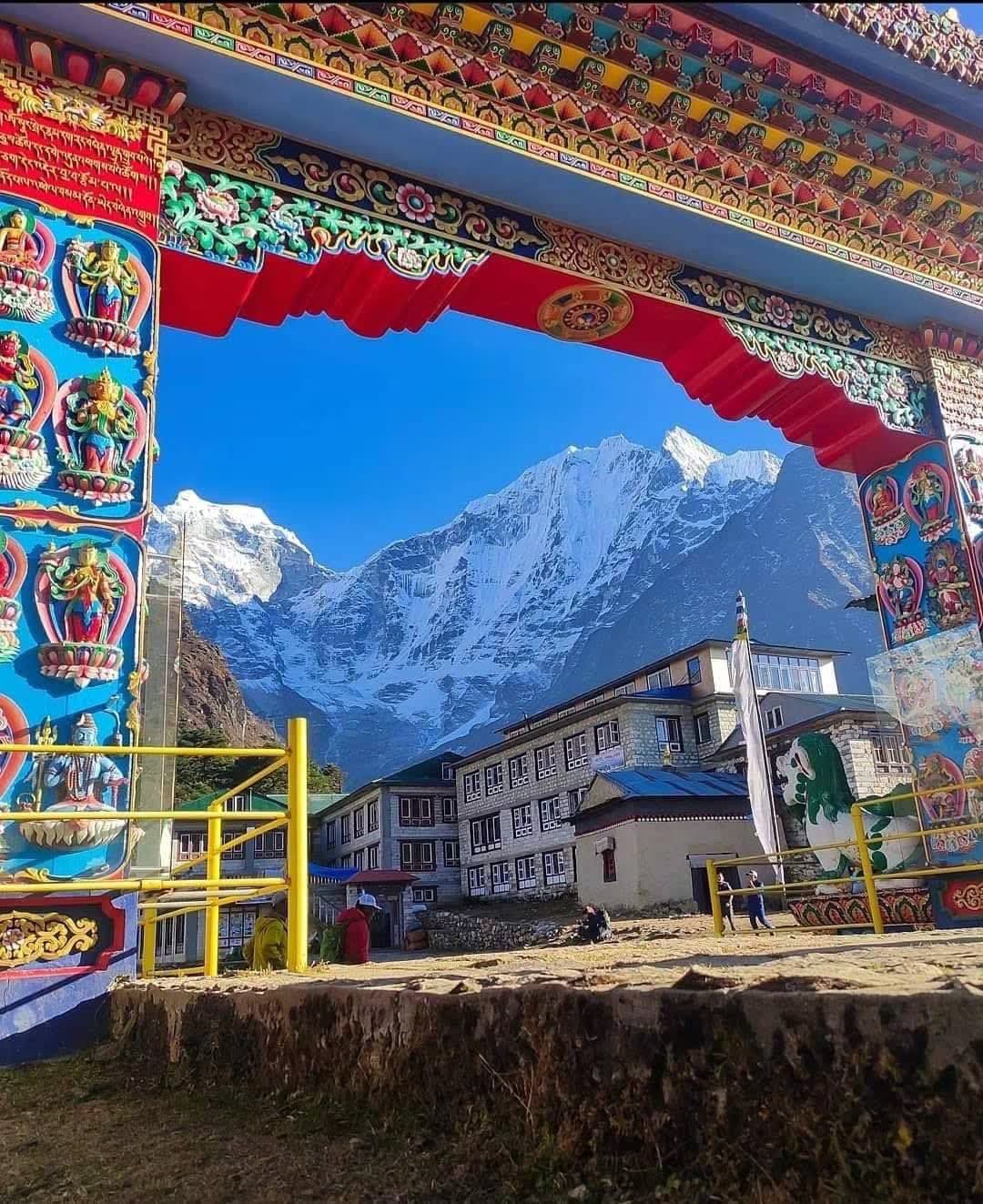
sacred site
Tengboche MonasteryBuilt inside the gompa during the closed weeks of the ritual cycle, and dispersed at the end of it
Deities & Presences
Rituals & Ceremonies
Part of Mani Rimdu