The festival is the dumpling. Everything else follows from it.
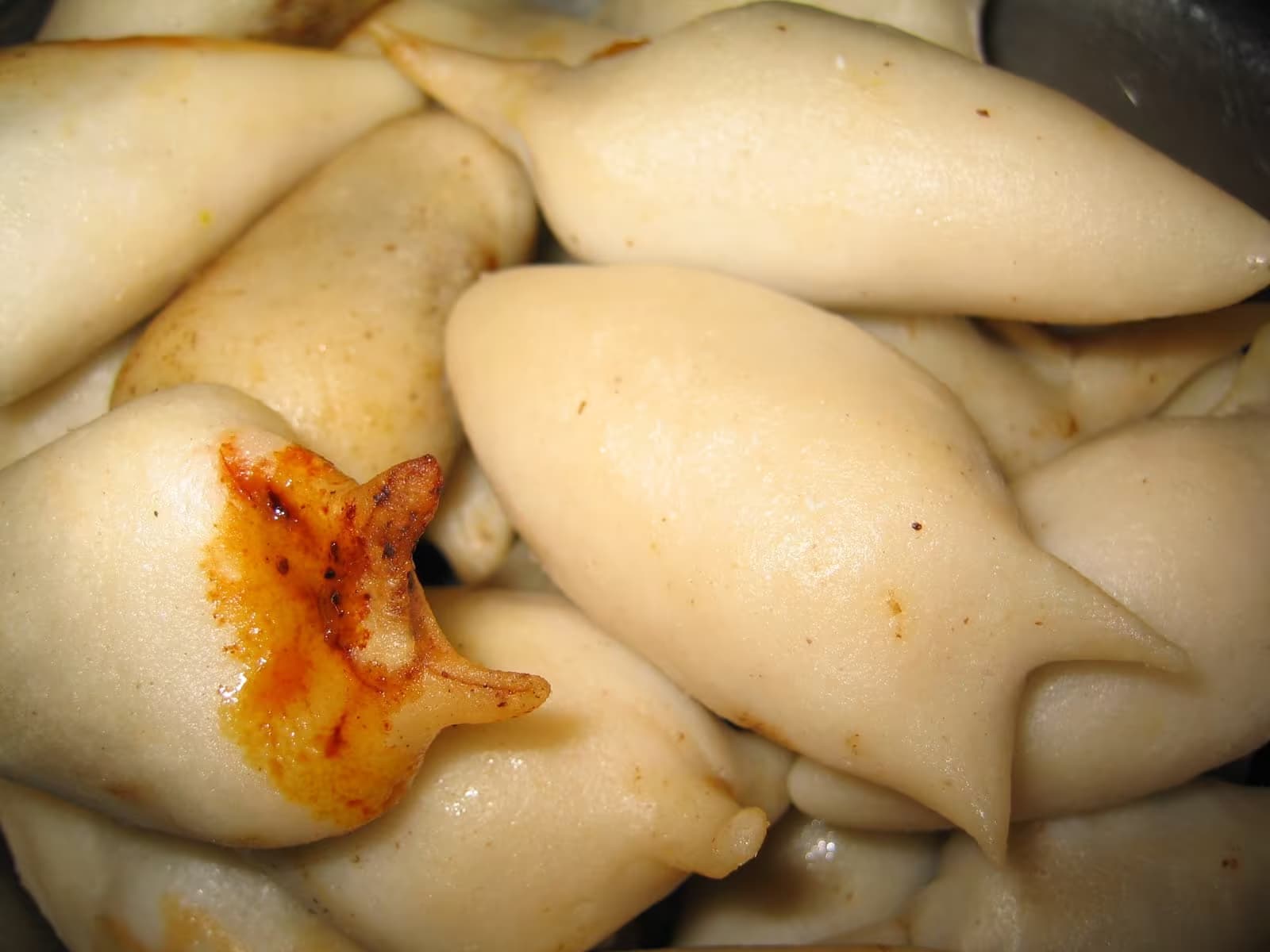
Yomari is made from fresh rice flour — from the new harvest, which is the entire point of the timing — kneaded into a soft dough and worked by hand into a hollow parcel with a long drawn tip, most often compared to a fig or to a temple spire. Inside goes chaku, hardened cane molasses that melts to syrup in the steam, or khuwa, milk reduced to solids, sometimes with sesame. The parcel is sealed by pinching and then steamed.
The making is communal and it is the thing itself, not preparation for the thing. Families and neighbours work together in the kitchen, and the shape is the skill: a good yomari has a clean, thin, upright tip, and pinching one is taught by grandmothers to children over years of failing at it. The first bite is a hazard — the filling comes out molten.
In Kathmandu, Patan and Bhaktapur, restaurants, bakeries and street stalls sell fresh yomari through the festival, and yomari-making workshops have become an easy and genuinely enjoyable way for a visitor to spend the morning of it.
Related Places & Sites
Deities & Presences
Rituals & Ceremonies
Part of Yomari Punhi