Temple · Hindu
Batuk Bhairav Temple
बटुक भैरव मन्दिर❊मतिक्व भैलः
Bhairav (child form, Batuk)·Licchavi period by tradition; present structure much later·Lalitpur
A small metal-roofed shrine at the Lagankhel crossroads holding Bhairav in his child form — the temple whose priests close Patan's great chariot festival by sending word of it to the sky and the underworld.
Dedicated to
Bhairav (child form, Batuk)
Period
Licchavi period by tradition; present structure much later
Hours
Open dawn to dusk
Admission
Free
Neighborhood
Lagankhel
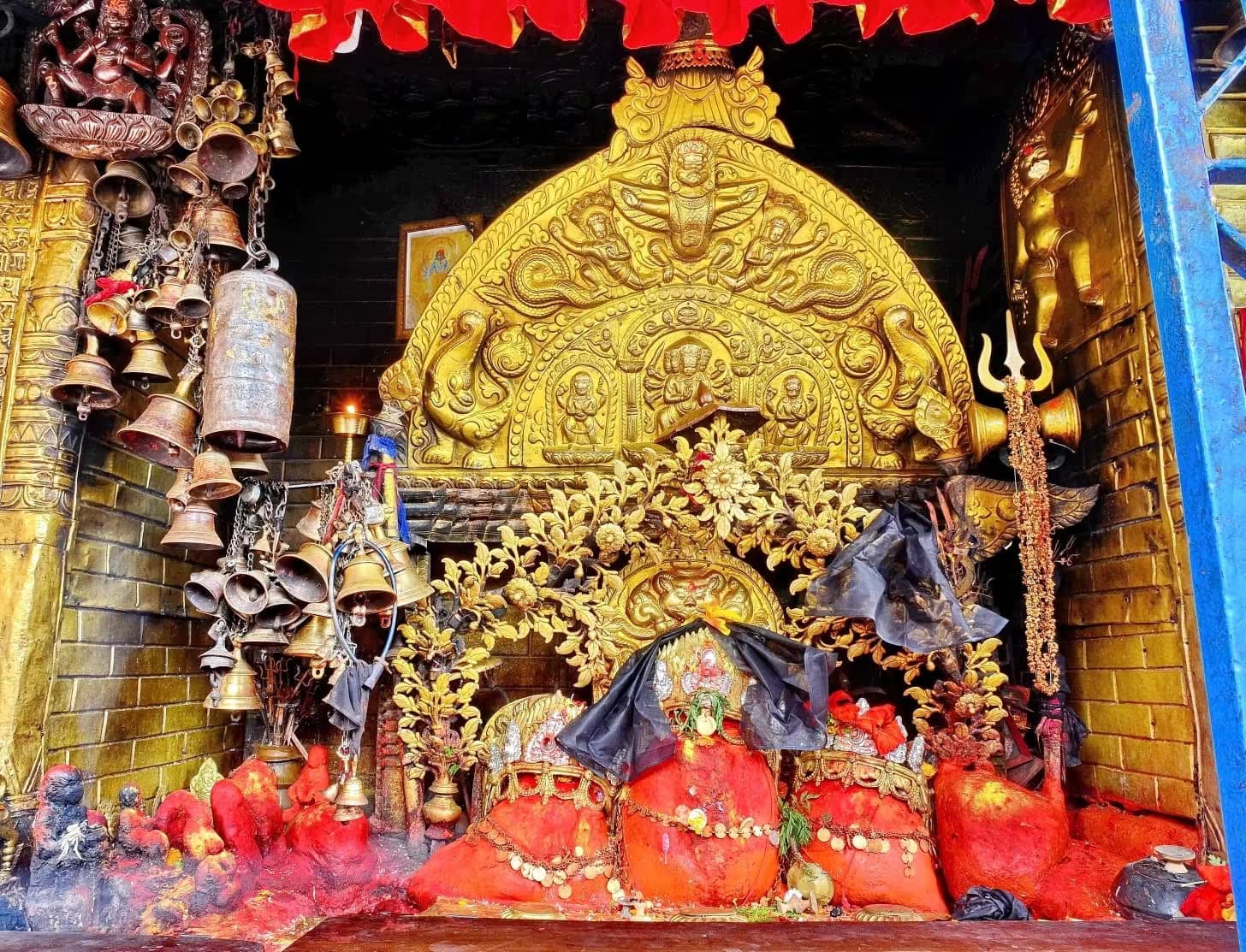
Batuk Bhairav — Matikwa Bhailah (मतिक्व भैलः) in Nepal Bhasa — stands at the Lagankhel crossroads in Patan, a one-storey shrine under a metal roof, wedged into a junction that traffic now flows around on all sides. Batuk means a young boy, and this is Bhairav as a child — not the skull-garlanded terror of Kal Bhairav in Kathmandu but a playful, quick-tempered form, worshipped for vitality and for resilience in hard times. The object of worship is a plain stone; images of Kumar, Ganesh and Kumari share the shrine. Devotees offer liquor here, as they do at Bhairav shrines across the valley.
Local tradition dates the shrine to the Licchavi king Amshuvarma, said to have founded it after returning from pilgrimage to Prayag — establishing a Batuk Bhairav here so that the valley's devotees would not have to travel to India for his darshan. The founding story is legend rather than documented history, but the temple's antiquity is not seriously disputed locally: residents put it as old as the Machhindranath chariot festival itself.
The legend attached to it is unusually vivid. An angered Batuk Bhairav is said to have taken the form of a cat and begun devouring the children of the settlement. The king turned to the guru Minanath, who appeared to the royal priest in a dream with instructions; the cat was brought under control, a rite of appeasement performed, and the shrine established to hold him.
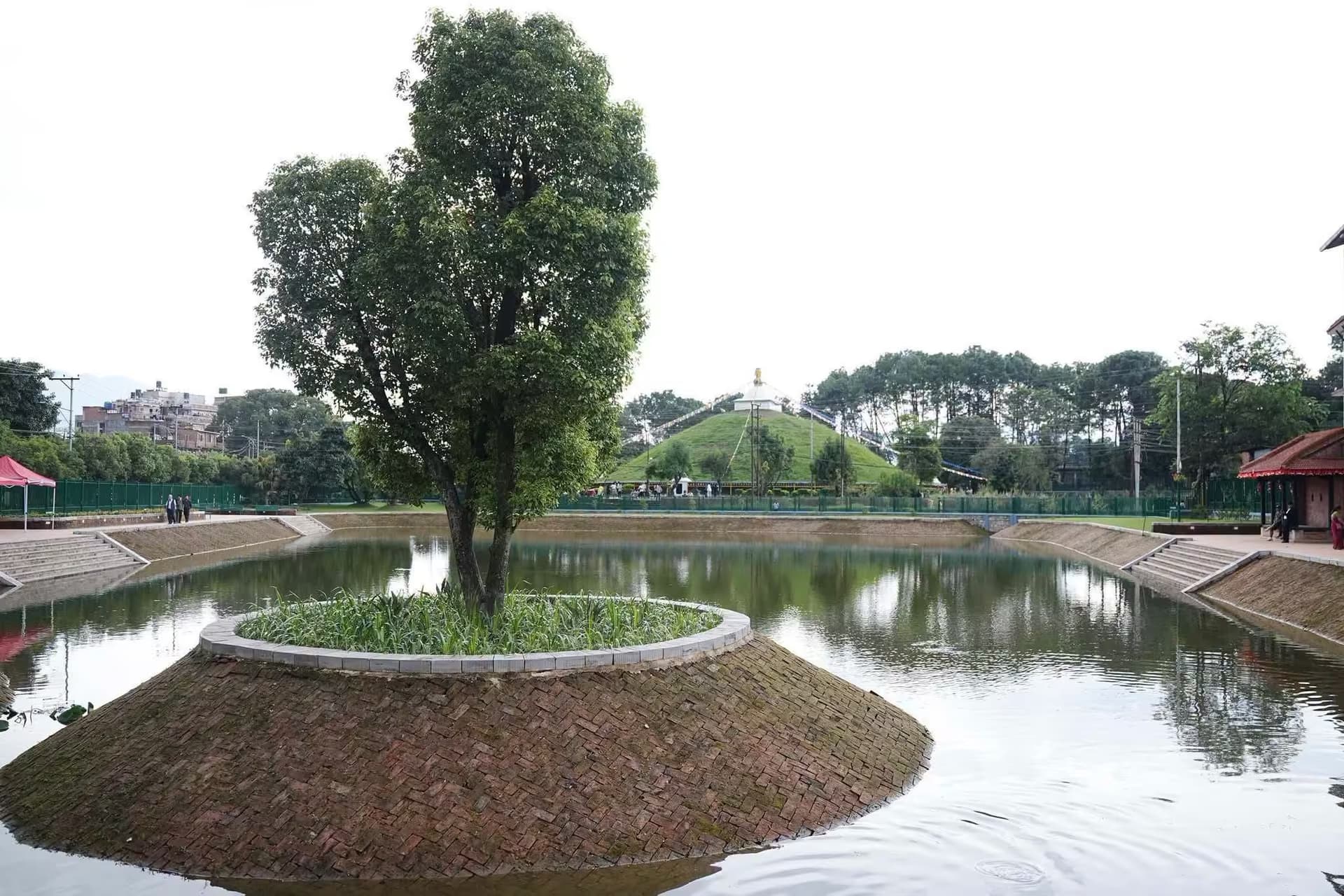
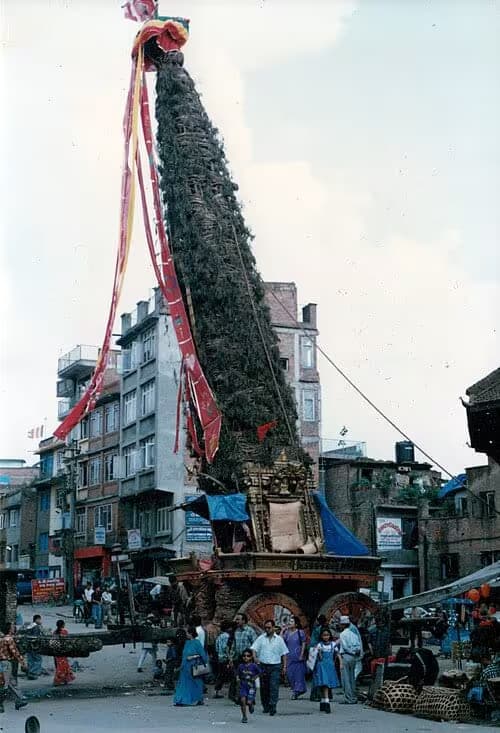
That bond with Minanath is still the temple's living function. Once a year, at the close of the Rato Machhindranath chariot festival, priests come from the Minanath temple in Tangal to perform a tantric mangsahuti fire offering here — sources place it on the day of Bhoto Jatra, the festival's closing act. The rite exists to announce that the year's jatra has ended, and the announcement is sent in three directions: a pair of sparrows released skyward carries the news to Indralok, and a pair of fish released into Saptapatal Pokhari — the great pond a few steps west, beside the Lagan Thur stupa — carries it down to Patal-lok. Sources describe the relationship between the two deities differently, some calling Batuk Bhairav a pupil of Minanath and others his clan deity; what is consistent is that Minanath's priests, not the shrine's own, perform this rite.
This is a working neighbourhood shrine rather than a monument, and it takes five minutes to see. Its interest is entirely in what it connects: come here as part of the Lagankhel walk that takes in Saptapatal Pokhari, Paleswan Pukhu and the Lagan Thur Ashoka stupa, and the pond's name and the temple's ritual explain each other.
Coda
Continue the Pilgrimage
Planning this visit? Local operators publishing trips here can arrange it.
Elsewhere in this region
Help us get it right
Know Batuk Bhairav Temple better than we do?
We write from research and reporting, and the ground changes faster than we can keep up. If something here is out of date, or you have been and would tell it differently, we would rather hear it.