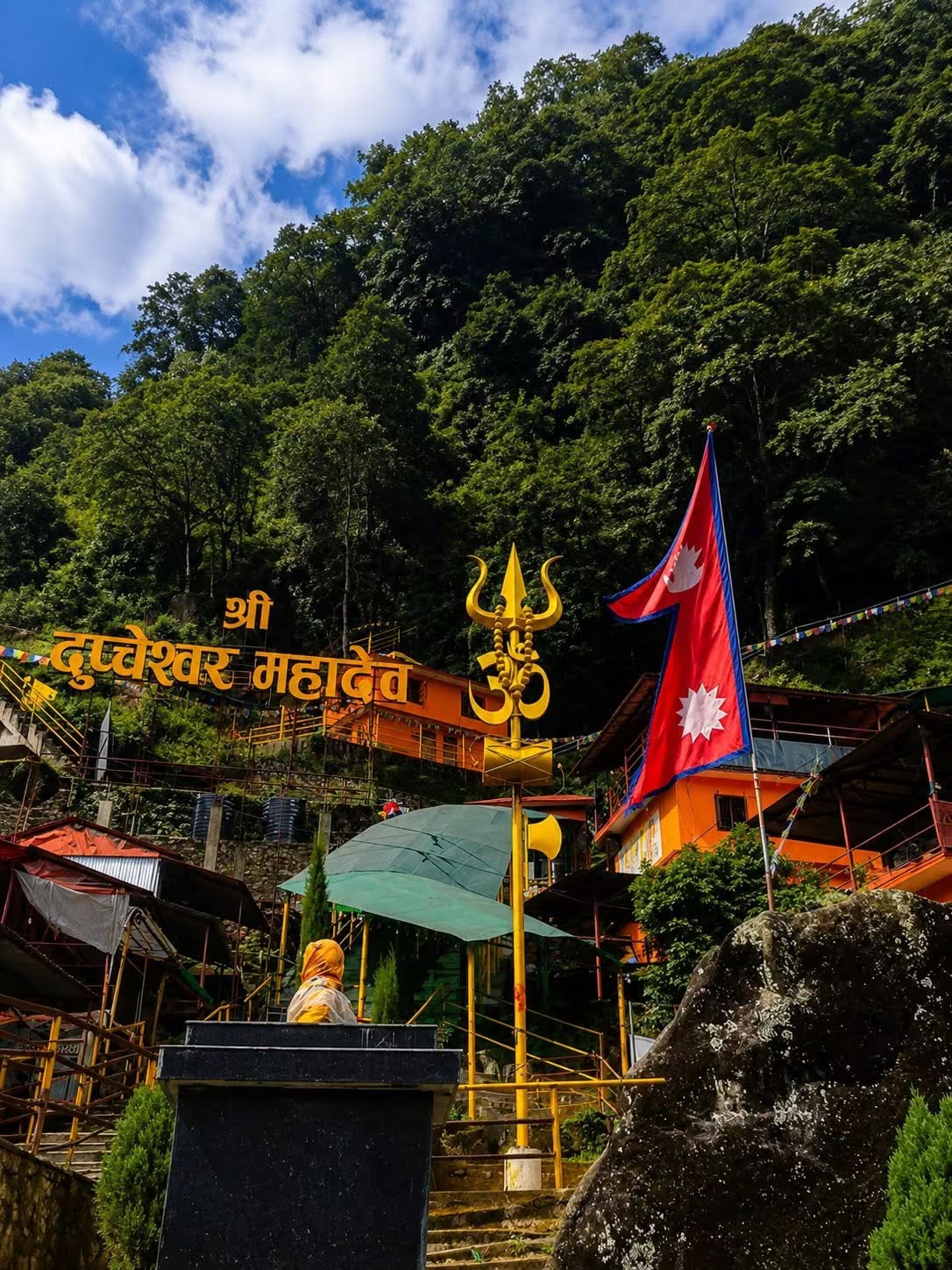
Temple · Hindu
Dupcheshwor Mahadev
दुप्चेश्वर महादेव
Lord Shiva, as a self-manifested (swayambhu) linga·Local tradition dates worship here to roughly 400 years ago; in continuous Hindu use since·Nuwakot
A self-manifested Shiva shrine among river boulders on the Suryamati in eastern Nuwakot — three hours from Kathmandu, and packed on Dhanya Purnima and Shivaratri.
Dedicated to
Lord Shiva, as a self-manifested (swayambhu) linga
Period
Local tradition dates worship here to roughly 400 years ago; in continuous Hindu use since
Hours
Dawn to dusk; heaviest on Dhanya Purnima and Maha Shivaratri
Admission
Free
Neighborhood
Shikharbesi, Dupcheshwor Rural Municipality — on the Suryamati (Tadi) river
Dupcheshwor Mahadev is a Shiva shrine on the banks of the Suryamati (Tadi) river in eastern Nuwakot, about 60 km north of Kathmandu and roughly 35 km east of the district headquarters at Bidur. It is not a built temple in the Kathmandu Valley sense. The object of worship is a natural cylindrical stone projection standing among large river boulders, treated as a swayambhu — self-manifested — linga rather than an installed one, with the shelter and the shrine buildings grown up around it over time.
The cow and the name
The local account, given as roughly four hundred years old, is that a Tamang herder's milking cow went missing and was found standing over this stone, letting her milk down onto it of her own accord. The site was called Dudheshwor — 'lord of milk' — for that reason, and the name shifted over generations to Dupcheshwor. A second etymology circulates locally and is worth knowing because the rural municipality itself gives it: dupchhe, hidden or concealed, plus ishwor, god — the god who was hidden here.
What people come for
The shrine's particular reputation is for childless couples, who come to ask for a child, and for children slow to begin speaking. That gives the place a different feel from a general-purpose Shiva temple: much of the crowd on a big day is there on a specific errand, and the offerings — milk above all — reflect it.
The major day is Dhanya Purnima, the full moon of Mangsir or Poush, when a substantial mela fills the riverbank. Maha Shivaratri, Bala Chaturdashi, Teej and Janai Purnima also draw large numbers. Outside those days it is quiet, and the walk in through the river gorge is most of the appeal.
Getting there
Allow three hours from Kathmandu in a private jeep. The road approach runs through Samundratar and Ghyangphedi; pilgrims coming the older way still walk in on rural trails from those villages. From the Dupcheshwor Mahadev bus stop it is a 15–20 minute walk down to the shrine. Public buses run but are slow and infrequent — this is a day trip that works far better with a hired vehicle, and a long one either way.
Around it
Dupcheshwor sits in the eastern half of Nuwakot, well away from the Trishuli-corridor sights — Nuwakot Durbar and Bidur are a couple of hours west along poor roads, so pairing them in one day is ambitious rather than natural. The trekking routes out of Ghyangphedi toward Gosaikunda and the Galfu–Kutumsang line toward Helambu start from the same rural municipality, and the shrine is a common first stop for walkers heading that way.
When to go
Autumn and winter are best: dry roads, low river, clear air, and Dhanya Purnima falling inside that window. Spring is fine but hazy. Avoid the monsoon — this is an unpaved approach through landslide-prone hills to a shrine beside a river that rises fast, and the last stretch of the walk is on wet rock.
Access & Mobility
A 15–20 minute walk down from the road head on an uneven path, with rock steps near the shrine. Not wheelchair accessible and difficult for anyone unsteady on rough ground.
- Vehicle
- On foot
Best visited in autumn and winter.autumn: best, 11°C to 25°C. Dry roads, low clear river, and the best air of the year. Bala Chaturdashi falls here and the shrine is busy but manageable. monsoon: avoid, 19°C to 28°C. The approach through Samundratar and Ghyangphedi is unpaved and landslide-prone, the Suryamati rises fast, and the last stretch of the walk is on wet rock. Janai Purnima falls in this window and locals still come; visitors should not plan around it. spring: good, 12°C to 26°C. Warm and comfortable, though hazy by midday. Teej and the spring pilgrimage traffic build the crowds without the road being difficult. winter: best, 4°C to 19°C. Dhanya Purnima — the Mangsir or Poush full moon and the shrine's biggest day — fills the riverbank with a mela. Cold mornings, easy travel. Maha Shivaratri closes the season with the second-largest crowd.
The Almanac
The approach through Samundratar and Ghyangphedi is unpaved and landslide-prone, the Suryamati rises fast, and the last stretch of the walk is on wet rock. Janai Purnima falls in this window and locals still come; visitors should not plan around it.
Coda
Continue the Pilgrimage
Planning this visit? Local operators publishing trips here can arrange it.
Elsewhere in this region
Help us get it right
Know Dupcheshwor Mahadev better than we do?
We write from research and reporting, and the ground changes faster than we can keep up. If something here is out of date, or you have been and would tell it differently, we would rather hear it.