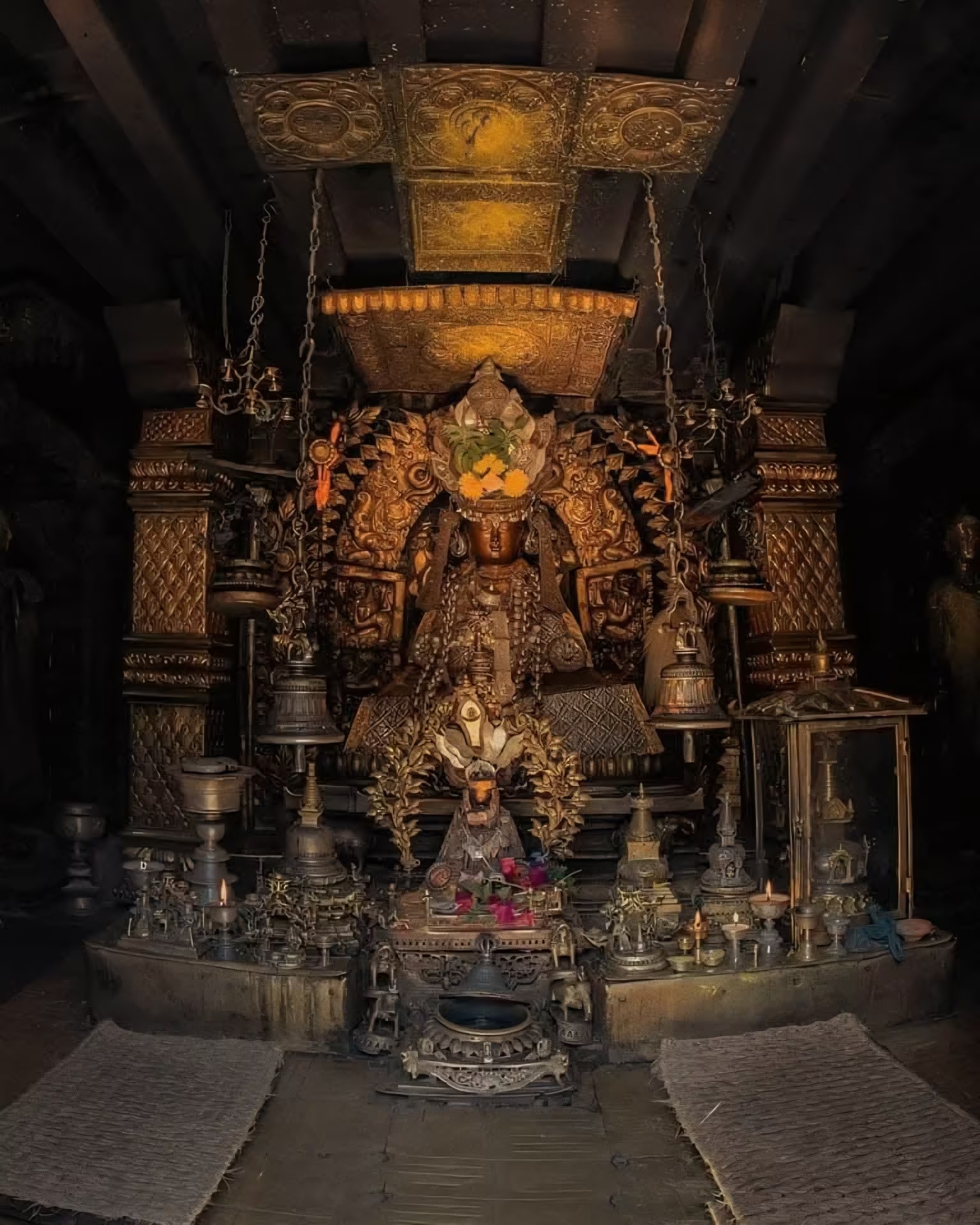
Bahal · Buddhist
Hiranya Varna Mahavihar (Golden Temple)
हिरण्यवर्ण महाविहार❊क्व बहा
Shakyamuni Buddha·12th century CE·Lalitpur
Patan's celebrated Golden Temple — a 12th-century Newar Buddhist bahal sheathed in gilded copper, with a rotating boy priest and an 800-year-old Prajnaparamita manuscript.
Dedicated to
Shakyamuni Buddha
Period
12th century CE
Hours
6:00 AM – 7:00 PM
Admission
Local 50 · USD 1
Neighborhood
Patan Durbar Square area
Hiranya Varna Mahavihar — the Golden Temple, known to Patan's Newars as Kwa Bahal — is the most celebrated Buddhist monastery courtyard in the Kathmandu Valley, and the single best place to understand what a living bahal actually is. Tradition dates its founding to the twelfth century under King Bhaskar Varman, and it has operated continuously as a Newar Vajrayana monastery ever since: not a preserved monument, but a working sangha of local Shakya households who keep its rituals running every single day. The name is literal. Step through the low doorway off the street and the courtyard ahead of you is sheathed in gilded copper that catches whatever light the Valley sky allows.
A courtyard sheathed in gold
The layout is the classic Newar bahal form — a tight rectangular courtyard enclosed by buildings on all four sides — but executed with a richness no other courtyard in Nepal matches. The main shrine, a three-tiered pagoda housing the gilded Kwapa Dyah (the monastery's Shakyamuni Buddha), is plated in embossed copper from plinth to finial. Facing it stands a freestanding central shrine containing a Swayambhu chaitya, itself crowned in gold, so the small courtyard effectively holds two golden temples in conversation with each other. Look closely at the metalwork: repoussé toranas over the doorways, long gilt banners hanging from the roofs, mythical guardians at every threshold, and rows of prayer wheels set into the courtyard walls. Tortoises — kept as temple guardians — wander loose across the flagstones, entirely unbothered by visitors.
A boy serves as head priest
The Golden Temple's most distinctive institution is its rotating priesthood. The chief priest is a young boy from the local Shakya community who serves for 30 days, performing the daily rituals under the guidance of elders, before handing the role to the next boy. The rotation has continued unbroken for centuries, which means the monastery's most senior ritual office is permanently held by a child — a vivid expression of how Newar Buddhism distributes sacred duty across the whole community rather than a monastic class. Arrive early in the morning and you will see the rituals in motion: butter lamps, offerings, and neighborhood devotees stopping for darshan on their way to work.
An 800-year-old Prajnaparamita
Kwa Bahal is also a manuscript shrine. The monastery safeguards an approximately 800-year-old copy of the Ashtasahasrika Prajnaparamita — the Perfection of Wisdom in eight thousand verses — one of only a handful of such manuscripts kept in active ritual use anywhere in Nepal, and the only one in Patan. Priests recite from it, families commission readings for merit and protection, and the text is ceremonially restored every few years. It is a reminder that the bahal tradition preserved not just architecture but an unbroken textual lineage of Sanskrit Buddhism that disappeared almost everywhere else in South Asia.
The rat that chased the cat
Local legend holds that the monastery was founded on the spot where a rat chased a cat — nature inverted, read as a sign that the site was auspicious. The story still shapes the temple's everyday rules: the resident creatures of the courtyard are treated as belonging to the place. The most visible rule for visitors comes from the same ritual logic — no leather may enter the courtyard. Leave belts, bags, and shoes at the entrance, walk clockwise, and keep photography to the courtyard rather than the shrine interiors.
Visiting and the wider Patan walk
The Golden Temple sits in the old lanes just a few minutes' walk north of Patan Durbar Square, and is the natural anchor for a deeper bahal walk through the city. Nag Bahal, one of Patan's largest open courtyards, is immediately adjacent; Krishna Mandir marks the Durbar Square end of the route; and south of the palace the metalworkers' quarter leads to Mahabouddha Temple and Rudravarna Mahavihar, Kwa Bahal's great sibling monastery. For the living goddess-shrine side of the same neighborhood, continue toward Baglamukhi Temple near Kumbheshwar. The Golden Temple also belongs on any Valley-wide Buddhist circuit, and pairs naturally with the broader bahals of Patan collection — most of those courtyards are quiet and residential, which makes Kwa Bahal's concentrated golden intensity all the more striking.
Best visited in autumn.autumn: best, 10°C to 27°C. Perfect light for photographing the golden facades. Comfortable walking between Patan's many temples and bahals. monsoon: possible, 20°C to 30°C. The enclosed courtyard offers some shelter. Golden surfaces gleam beautifully when wet. Fewer tourists. spring: good, 12°C to 30°C. Warm and comfortable for exploring the ornate courtyard. Combine with Patan Durbar Square and the museum. winter: good, 2°C to 20°C. Cool but sunny. Low winter sun catches the golden metalwork beautifully. Morning puja ceremonies are serene.
The Almanac
The enclosed courtyard offers some shelter. Golden surfaces gleam beautifully when wet. Fewer tourists.
Folio III
Nearby Sacred Sites
Places within a short walk that help turn this stop into a small sacred cluster.
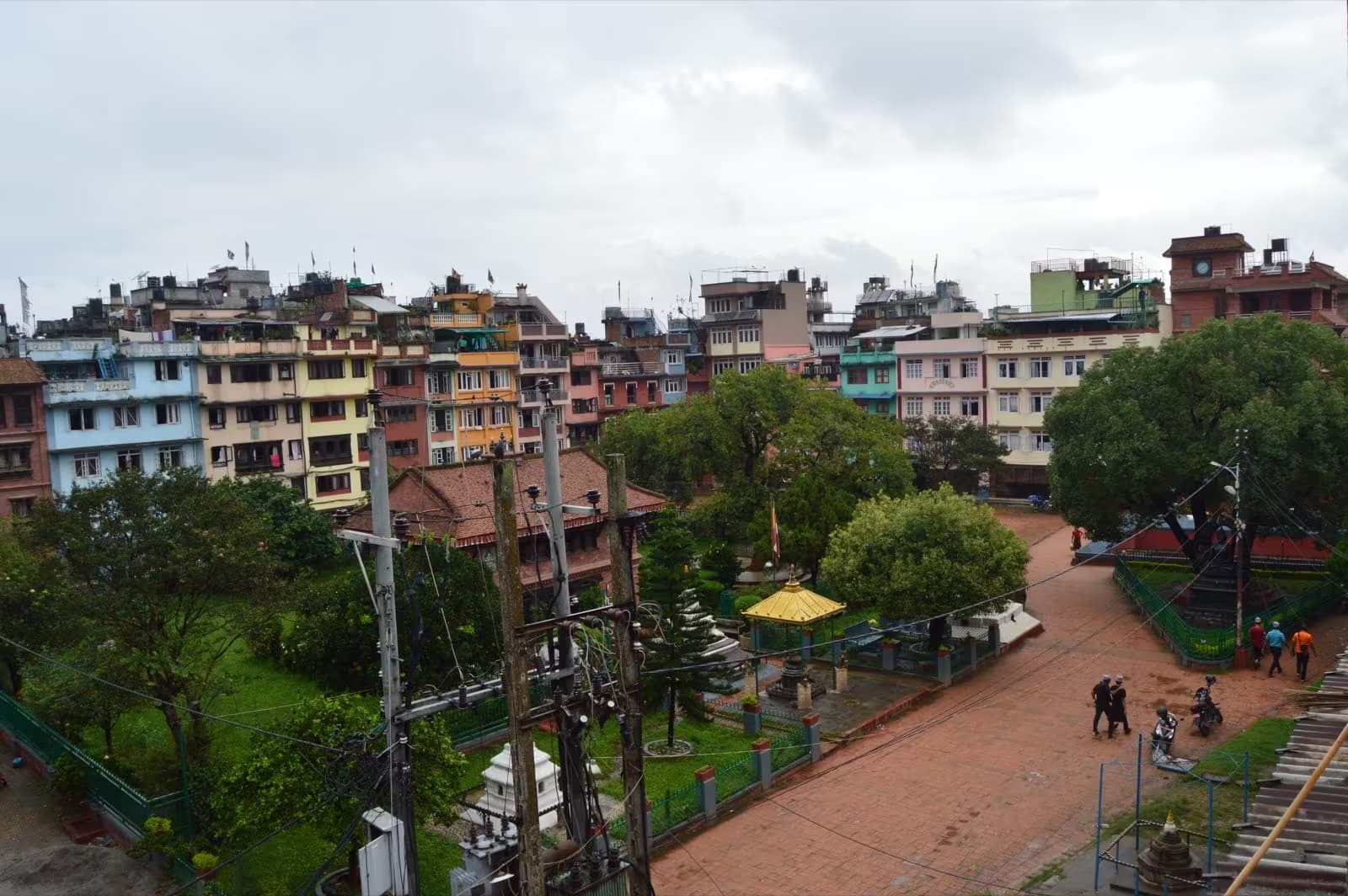
Nag Bahal (Nagbahal)
One of Patan's oldest Buddhist courtyards and the gathering site for the Samyak Mahadan festival, where all Dipankara Buddha images from across Patan are assembled.
Su Bahal (Jayamanohara Mahavihar)
Jayamanohara Mahavihar (Su Bahal) is one of Patan's 18 principal bahals — the 'Monastery of Victorious Delight', a tranquil Buddhist courtyard.
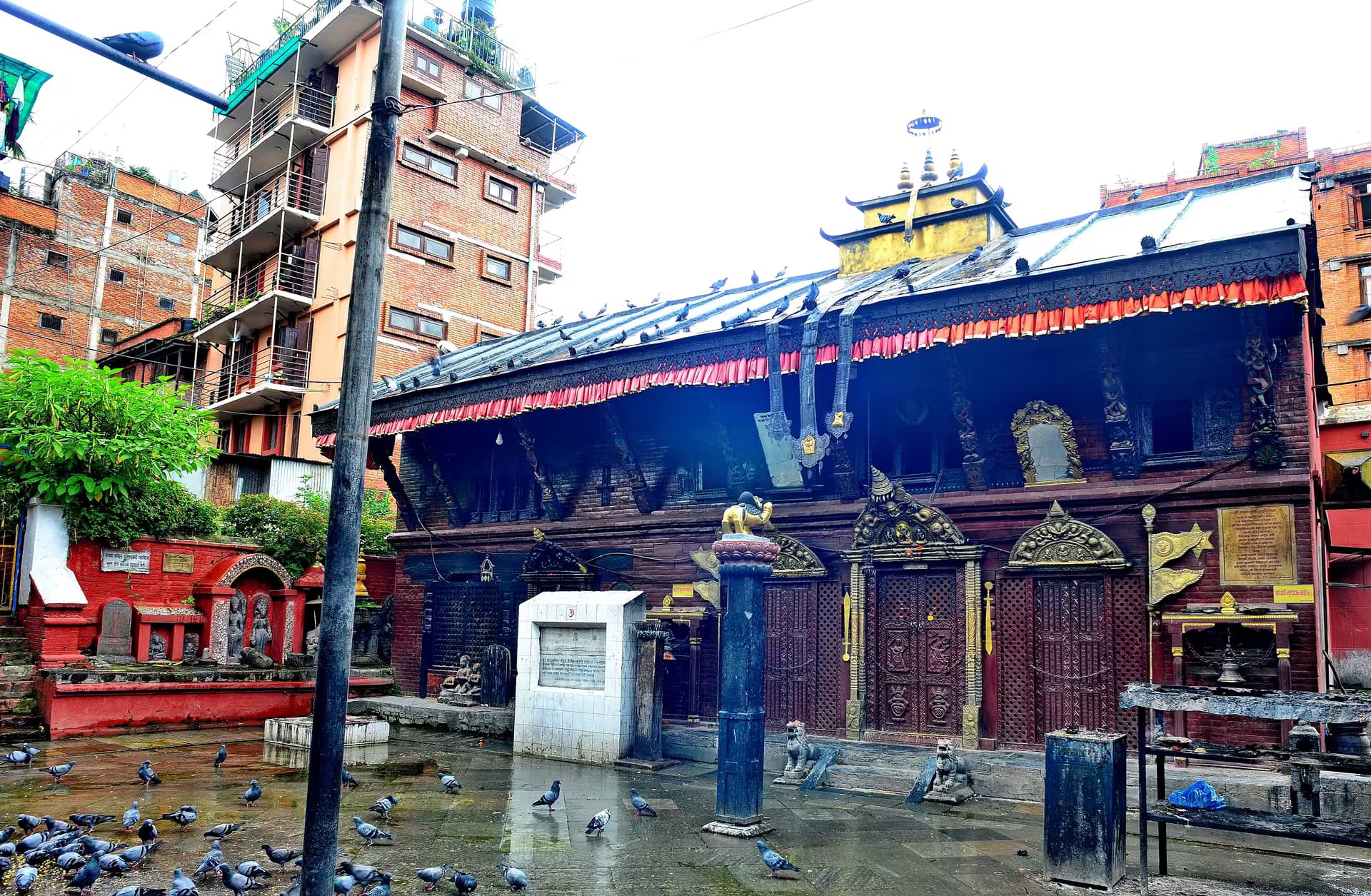
Baglamukhi Temple
A revered tantric goddess temple in Patan dedicated to Baglamukhi, the Mahavidya of stambhana, known for Thursday puja, dispute-resolution prayers, and its sacred Kumbheshwar-side complex.
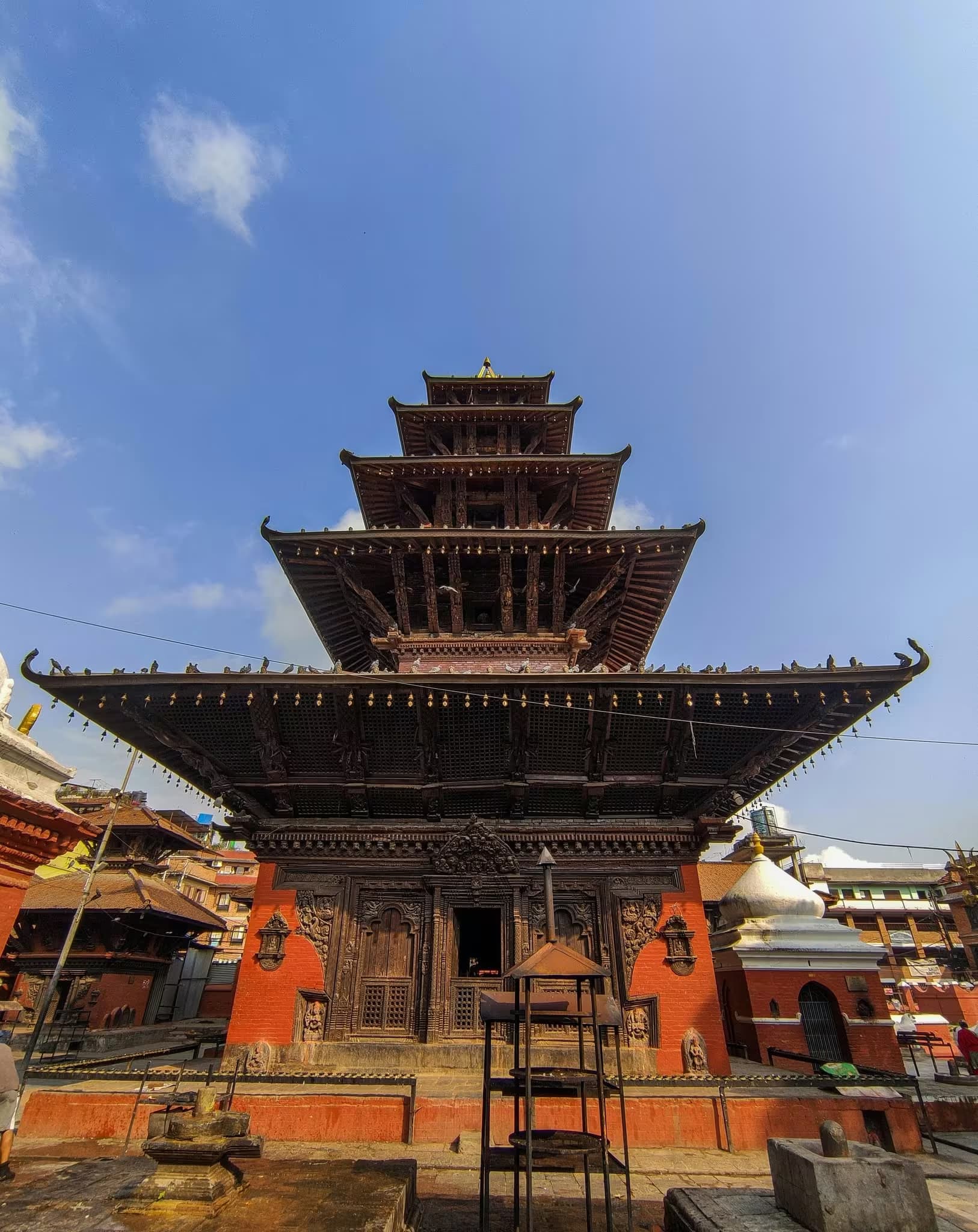
Kumbheshwar Temple
Patan's five-tiered Shiva temple — one of only two five-storey pagodas in the Kathmandu Valley — built around a spring-fed tank believed to run underground from Gosainkunda, and the focal point of Janai Purnima.
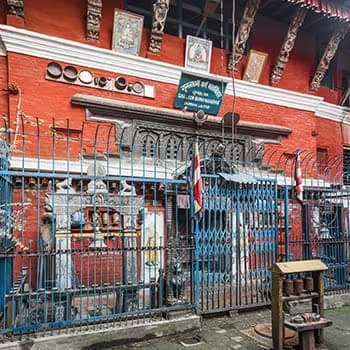
Dhum Bahal (Gunalakshmi Mahavihar)
One of the traditional 18 bahals of Patan, Dhum Bahal (Gunalakshmi Mahavihar) is a historic Newar Buddhist monastery courtyard in the old city of Lalitpur.
Coda
Continue the Pilgrimage
Planning this visit? Local operators publishing trips here can arrange it.
Elsewhere in this region

Help us get it right
Know Hiranya Varna Mahavihar (Golden Temple) better than we do?
We write from research and reporting, and the ground changes faster than we can keep up. If something here is out of date, or you have been and would tell it differently, we would rather hear it.