Temple · Hindu
Janaki Mandir
जानकी मन्दिर
Goddess Sita (Janaki)·Built 1910 CE·Dhanusha
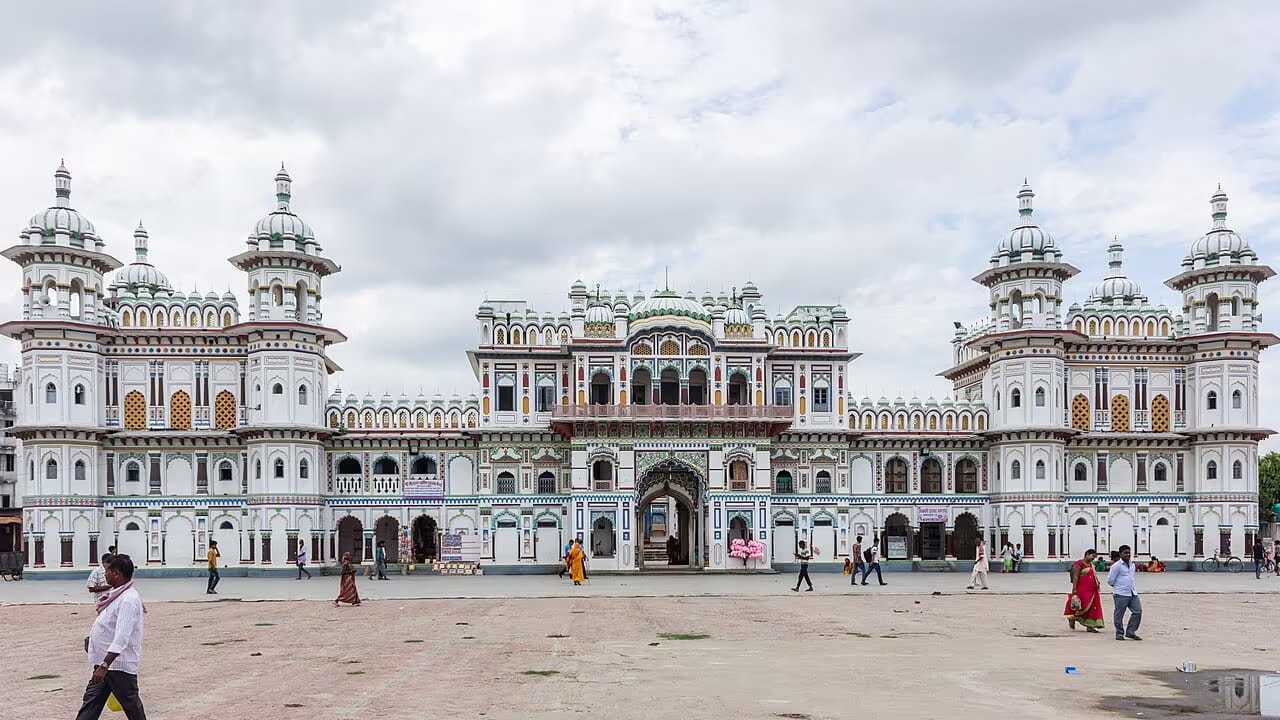
A magnificent Mughal-Rajput style marble temple in Janakpur dedicated to Goddess Sita, the only temple of its kind in Nepal.
Dedicated to
Goddess Sita (Janaki)
Period
Built 1910 CE
Hours
5:00 AM – 8:00 PM
Admission
Free
Neighborhood
Janakpur City Center
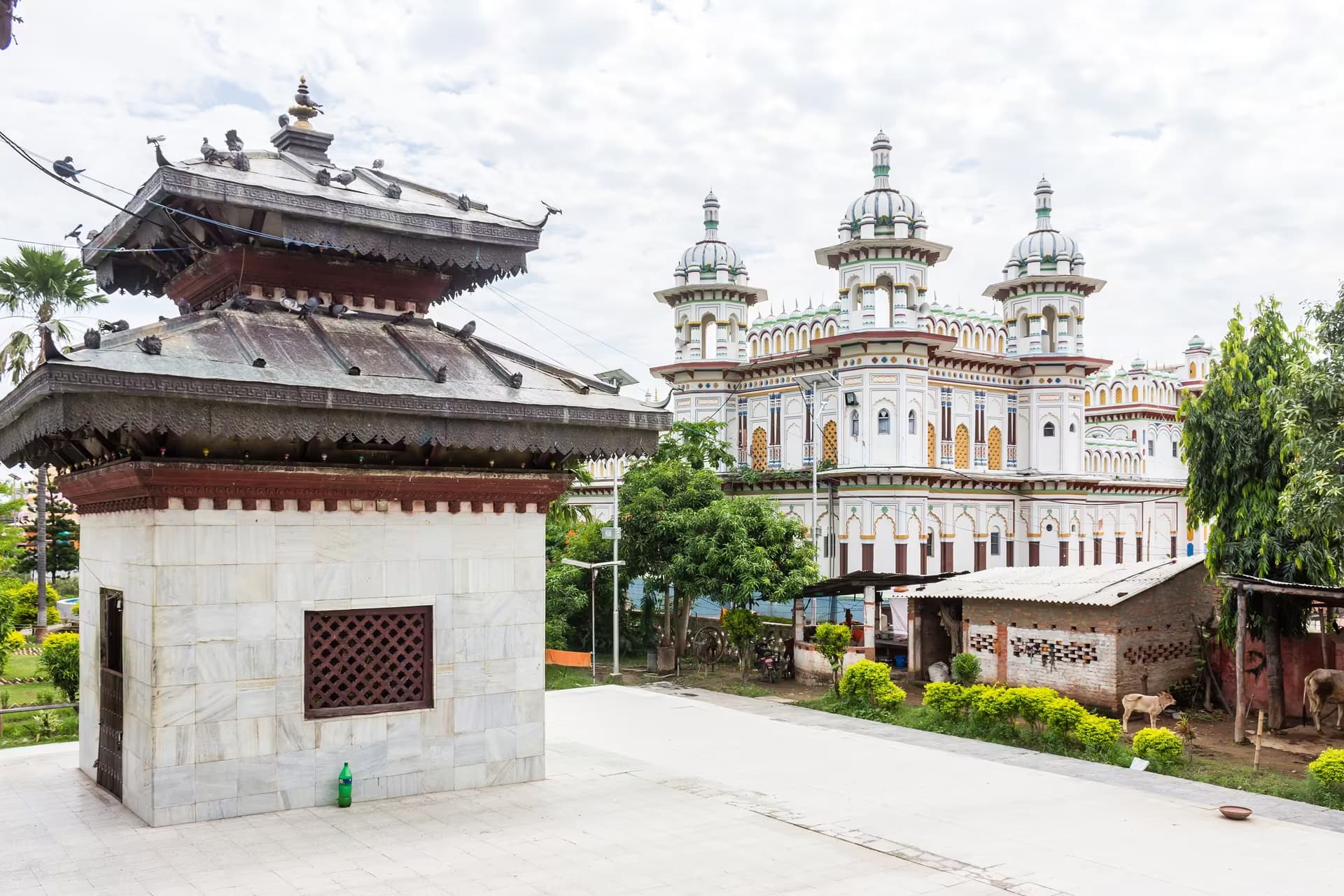
Janaki Mandir is the heart of Mithila — the gleaming white marble palace-temple of Goddess Sita (Janaki), rising over Janakpur like something carried north from Rajasthan and set down on the Terai plains. Nothing else in Nepal looks like it: where the rest of the country builds tiered pagodas in brick and carved timber, Janaki Mandir is all domes, turrets, arched colonnades, and latticed marble screens. For Hindus across Nepal and India, this is the birthplace city of Sita and the stage of the Ramayana's most beloved wedding; for everyone else, it is one of South Asia's great undervisited temple towns.
The Nau Lakha temple
The present temple was completed in 1910 by Queen Vrisha Bhanu of Tikamgarh, in central India, fulfilling a vow to Sita. It cost nine lakh rupees — a staggering sum at the time — and the name stuck: locals still call it the Nau Lakha Mandir, the nine-lakh temple. The three-storey Mughal-Rajput structure holds sixty rooms ornamented with coloured glass, paintings, and pierced stone jali work around a vast inner courtyard where the sanctum enshrines Sita with Rama at her side. Come at dusk: the marble takes on the colour of the sky, the courtyard fills for evening aarti, and pilgrim song carries out over Janakpur's bazaar lanes.
Sita's city
Janakpur is identified with the capital of the ancient kingdom of Mithila, ruled by the philosopher-king Janak. In the Ramayana tradition, Janak found the infant Sita in a furrow while ceremonially ploughing — sita means furrow — and raised her as his daughter; here Rama bent and broke Shiva's great bow to win her hand. The temple's own origin keeps a quieter legend: tradition holds that in 1657 a golden image of Sita was discovered at this very spot, and that the ascetic poet-saint Sur Kishor Das, regarded as the founder of modern Janakpur, established her worship here long before the marble rose. The city remains one of the subcontinent's living centres of Sita devotion — for many Maithili women she is less a distant goddess than the daughter of the house.
Vivah Panchami — the wedding, re-staged every year
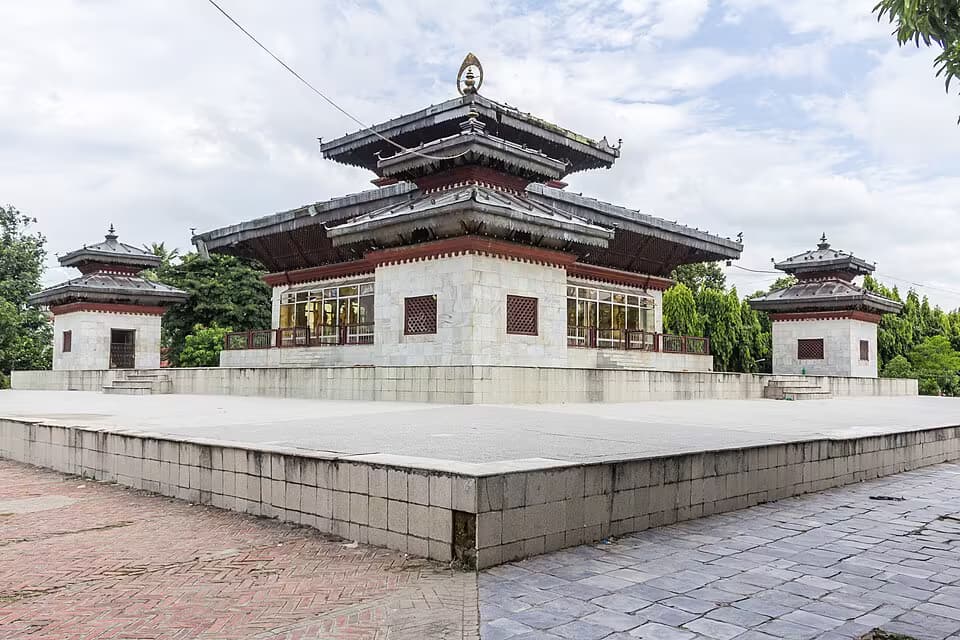
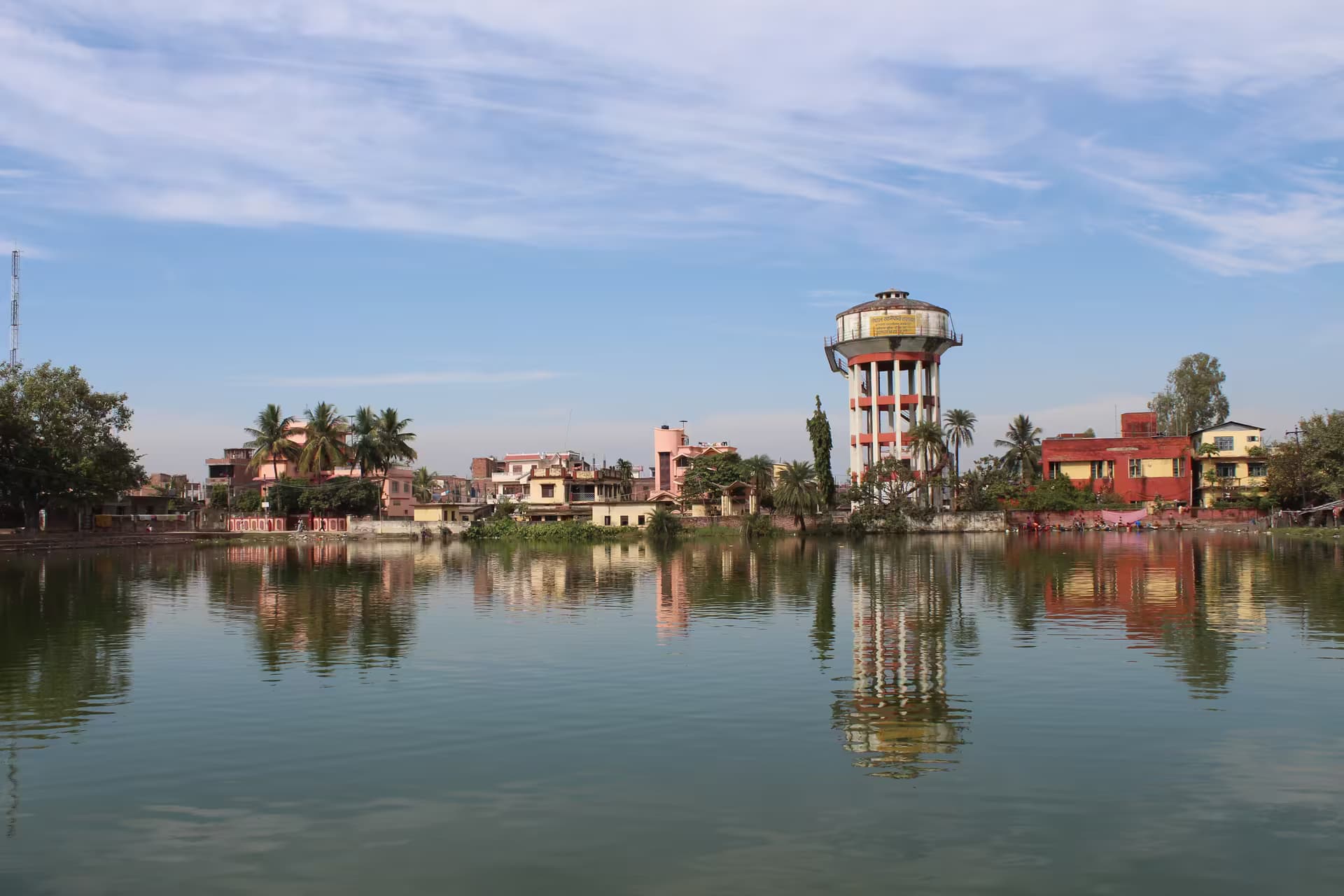
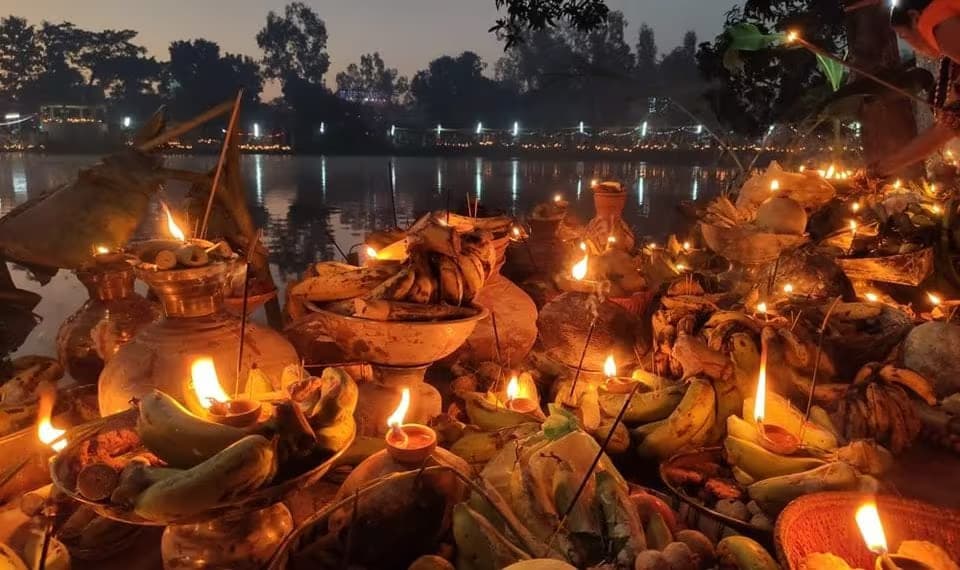
Each winter, on Vivah Panchami, Janakpur re-marries its daughter. The wedding of Rama and Sita is re-enacted at the Vivah Mandap pavilion beside the temple with processions, music, and a marriage party that arrives from Ayodhya in India — tens of thousands of pilgrims fill the city for a festival that feels equal parts devotion and family wedding. A few weeks earlier, Chhath Puja turns Janakpur into its most luminous self, when the city's sacred ponds — Dhanush Sagar and Ganga Sagar chief among them — fill at dawn and dusk with devotees standing waist-deep in water, offering fruit and light to the sun. If you can only visit the Terai once, aim for one of these two.
Mithila art, on every wall
Janakpur is the Nepali home of Mithila (Madhubani) painting — the bold, dense, symbol-filled art traditionally painted by Maithil women on courtyard walls for weddings and festivals: peacocks, fish, lotus ponds, wedding scenes, bordered geometries. You'll find it on the temple walls, on houses across town, and at local women's art cooperatives, where the tradition has become a living livelihood; an original painting is the best souvenir Janakpur sells. The city's Maithili-speaking culture — Nepal's second-largest language community — gives the whole town a flavour distinct from the hill country: cycle-rickshaws, sweet shops, pond-side ghats, and a historic narrow-gauge railway that long linked Janakpur to Jaynagar across the Indian border.
Visiting
Janakpur lies in the eastern Terai, reachable by direct flight from Kathmandu or by road via the East-West Highway. Winter (December–February) is the prime season — cool, dry, and aligned with Vivah Panchami — while summer is intensely hot and the monsoon turns the plains green but humid. Pair the temple with a slow walk around both sagars at sunset, and see the wider Hindu temples collection for how Janaki Mandir fits Nepal's larger sacred geography alongside Pashupatinath.
Access & Mobility
Central Janakpur location with mostly flat approaches, but festival crowds around Vivah Panchami and Chhath can make movement difficult for elderly visitors.
- Vehicle
Road access to central Janakpur; final movement around Janaki Mandir and nearby ritual sites is on foot.
- On foot
Short walks connect Janaki Mandir with the Vivah Mandap and nearby sacred ponds.
Best visited in winter.autumn: good, 17°C to 33°C. Cooling down. Vivaha Panchami (Nov/Dec) celebrates Sita's marriage — a massive colorful festival with processions. monsoon: avoid, 26°C to 35°C. Extreme heat and humidity in Janakpur. Heavy rains can flood the temple area. Not recommended for tourism. spring: possible, 20°C to 38°C. Very hot. Ram Navami (Mar/Apr) is the main festival. Visit early morning. The Mughal-style architecture is stunning in morning light. winter: best, 8°C to 24°C. Most comfortable time to visit. Cool mornings, warm days. The white marble temple is beautiful in soft winter light.
The Almanac
Extreme heat and humidity in Janakpur. Heavy rains can flood the temple area. Not recommended for tourism.
Folio III
Nearby Sacred Sites
Places within a short walk that help turn this stop into a small sacred cluster.
Ram Janaki Vivah Mandap
Marriage pavilion beside Janaki Mandir in Janakpur, central to the Sita-Rama wedding tradition and Vivah Panchami celebrations.
Janakpur Sacred Ponds
The sacred pond network around Janaki Mandir, including Dhanush Sagar and Ganga Sagar, used for ritual bathing and Janakpur festival circuits.
Coda
Continue the Pilgrimage
Guides that feature this place
- Itinerary9 min
Nepal Pilgrimage Itinerary: Pashupatinath, Lumbini, Janakpur & Muktinath
A practical Nepal pilgrimage itinerary linking Pashupatinath, Janaki Mandir, Lumbini, and Muktinath with 3-5 day, 7 day, and 10-14 day route options.
- Itinerary11 min
A Spiritual Journey Through Nepal: Temples, Monasteries & Sacred Landscapes
A guide to Nepal's most powerful spiritual sites — from Hindu temples and Buddhist monasteries to sacred mountains and meditation retreats, with a suggested 2-week pilgrimage route.
- Regional8 min
Hindu Pilgrimage Circuit in Nepal: Temples, Routes, Festivals & Etiquette
A Hindu pilgrimage planning guide for Nepal covering Pashupatinath, Muktinath, Janaki Mandir, Manakamana, Pathibhara, Halesi, Baraha Kshetra, Devghat, Doleshwar, and major festival timing.
- Seasonal8 min
Chhath Puja 2026: Dates, the Four Days, and Where to Watch
Chhath Puja 2026 runs November 12-15, with the evening offering on Saturday, November 14 and the dawn offering on Sunday, November 15. The four-day schedule, the 36-hour fast, the best ghats in Janakpur and Kathmandu, and how to watch respectfully.
Planning this visit? Local operators publishing trips here can arrange it.
Elsewhere in this region
 Guide
GuideNepal Pilgrimage Itinerary: Pashupatinath, Lumbini, Janakpur & Muktinath
 Guide
GuideChhath Puja 2026: Dates, the Four Days, and Where to Watch
 Festival
Vivah Panchami
 Guide
GuideHindu Pilgrimage Circuit in Nepal: Temples, Routes, Festivals & Etiquette
 festival_element
Sandhya Arghya
 Guide
GuideA Spiritual Journey Through Nepal: Temples, Monasteries & Sacred Landscapes
 festival_element
Usha Arghya
Help us get it right
Know Janaki Mandir better than we do?
We write from research and reporting, and the ground changes faster than we can keep up. If something here is out of date, or you have been and would tell it differently, we would rather hear it.