Temple · Buddhist
Maya Devi Temple
मायादेवी मन्दिर
Birthplace of Siddhartha Gautama (Buddha)·Earliest shrine c. 249 BCE (Ashoka); present structure rebuilt over excavations completed 2003·Rupandehi·UNESCO World Heritage
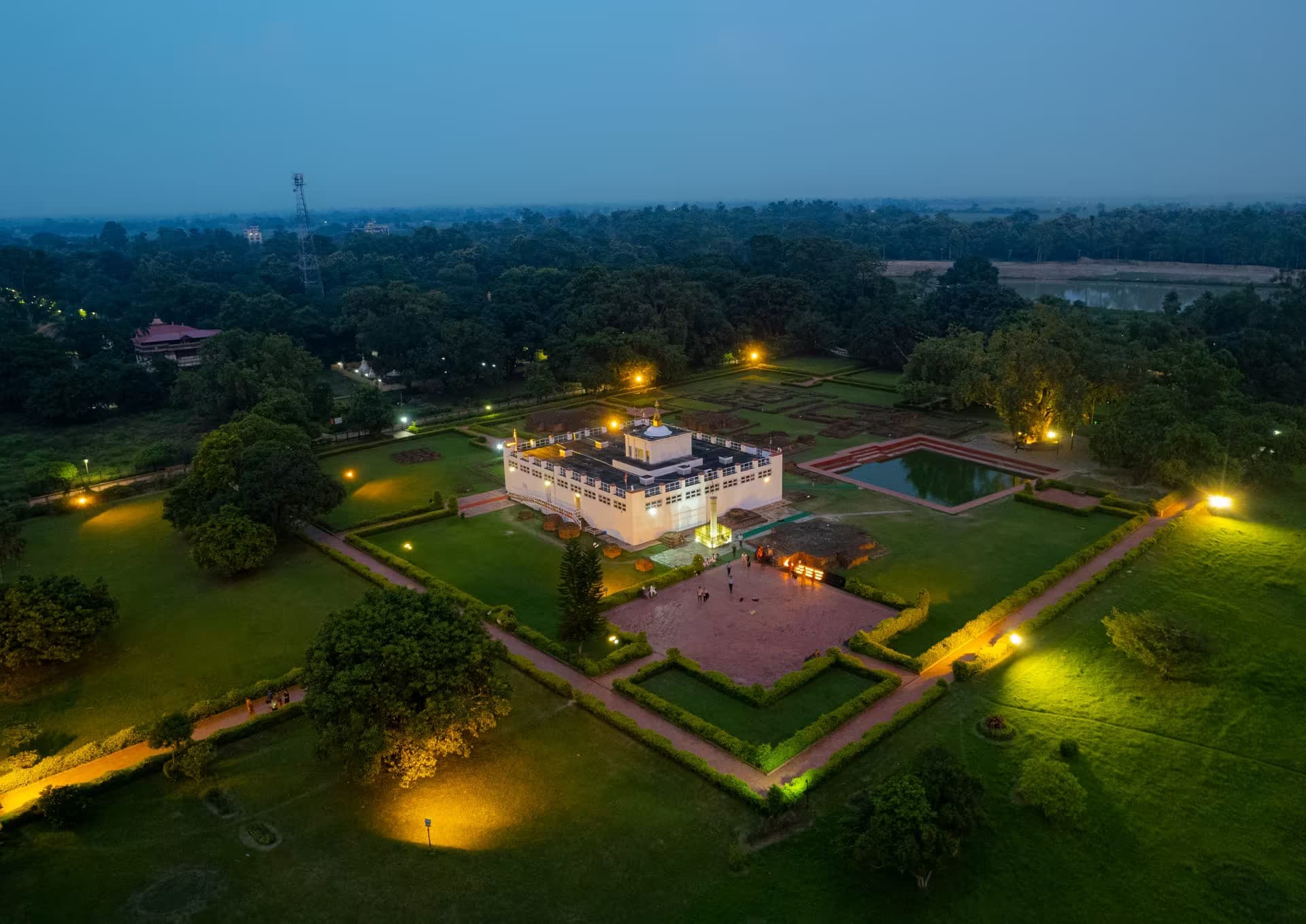
The sacred core of Lumbini — the shrine built directly over the exact spot where Queen Mayadevi gave birth to Prince Siddhartha Gautama in 623 BCE.
Dedicated to
Birthplace of Siddhartha Gautama (Buddha)
Period
Earliest shrine c. 249 BCE (Ashoka); present structure rebuilt over excavations completed 2003
Hours
06:00 – 18:00 (sacred garden), Maya Devi Temple 06:00 – 17:30
Admission
Local 200 · USD 3
Neighborhood
Sacred Garden, Lumbini
The Maya Devi Temple is the spiritual centre of Lumbini, the birthplace of the Buddha, and one of the four holiest sites in all of Buddhism (alongside Bodh Gaya, Sarnath and Kushinagar). The temple — a simple whitewashed structure set in the middle of the sacred garden — stands directly over the exact spot where Queen Mayadevi is said to have given birth to Prince Siddhartha Gautama in 623 BCE while resting on her way to her parents' home.
Inside the temple, a raised walkway allows visitors to look down onto three key relics discovered during successive archaeological excavations (Keshar Shumsher in 1933, P. C. Mukherjee in the 1890s, and the landmark 1992–96 campaign led by Nepal's Department of Archaeology and UNESCO):
- The Marker Stone — a polished conglomerate stone laid by Emperor Ashoka in the 3rd century BCE to mark the precise birthplace.
- The Nativity Sculpture — a worn sandstone bas-relief, likely 4th century CE, showing Queen Mayadevi giving birth while holding onto the branch of a sal tree, with the infant Buddha emerging from her right side.
- Foundations of earlier shrines dating back to Ashoka's time, revealing at least 15 superimposed layers of brick dwellings and monastic structures.
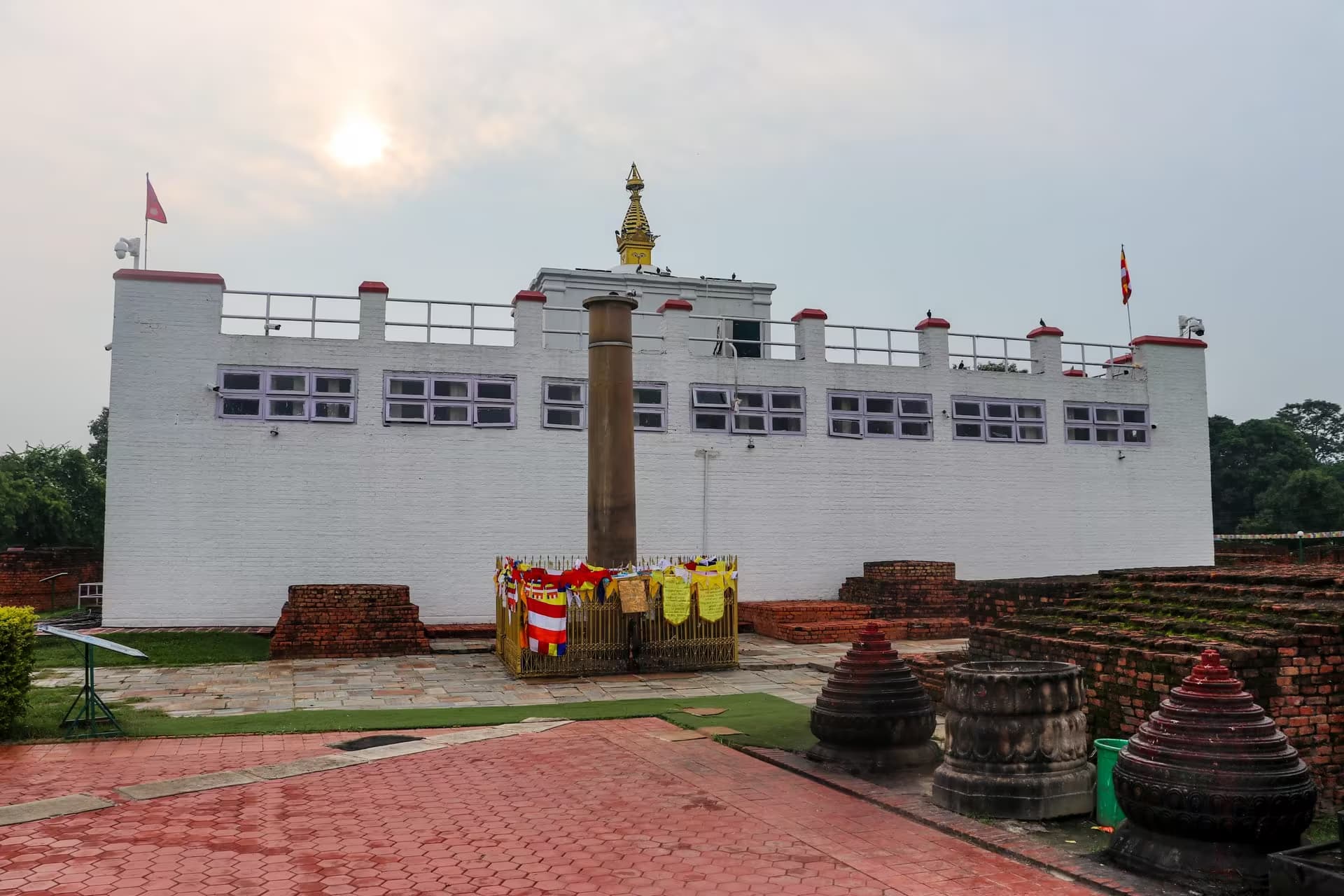
Just outside the temple stand the Sacred Bodhi Tree draped in prayer flags, the Puskarini Pond where Queen Mayadevi is said to have bathed before giving birth, and the Ashoka Pillar. Photography is not permitted inside the temple; silence is enforced by monks on duty. The temple is open daily and is the focal point of Buddha Jayanti (Vesak) celebrations each May.
Folio III
Nearby Sacred Sites
Places within a short walk that help turn this stop into a small sacred cluster.
Ashoka Pillar, Lumbini
The 249 BCE sandstone pillar raised by Emperor Ashoka beside the Maya Devi Temple — bearing the earliest known inscription identifying Lumbini as the birthplace of the Buddha.
Lumbini — Birthplace of Buddha
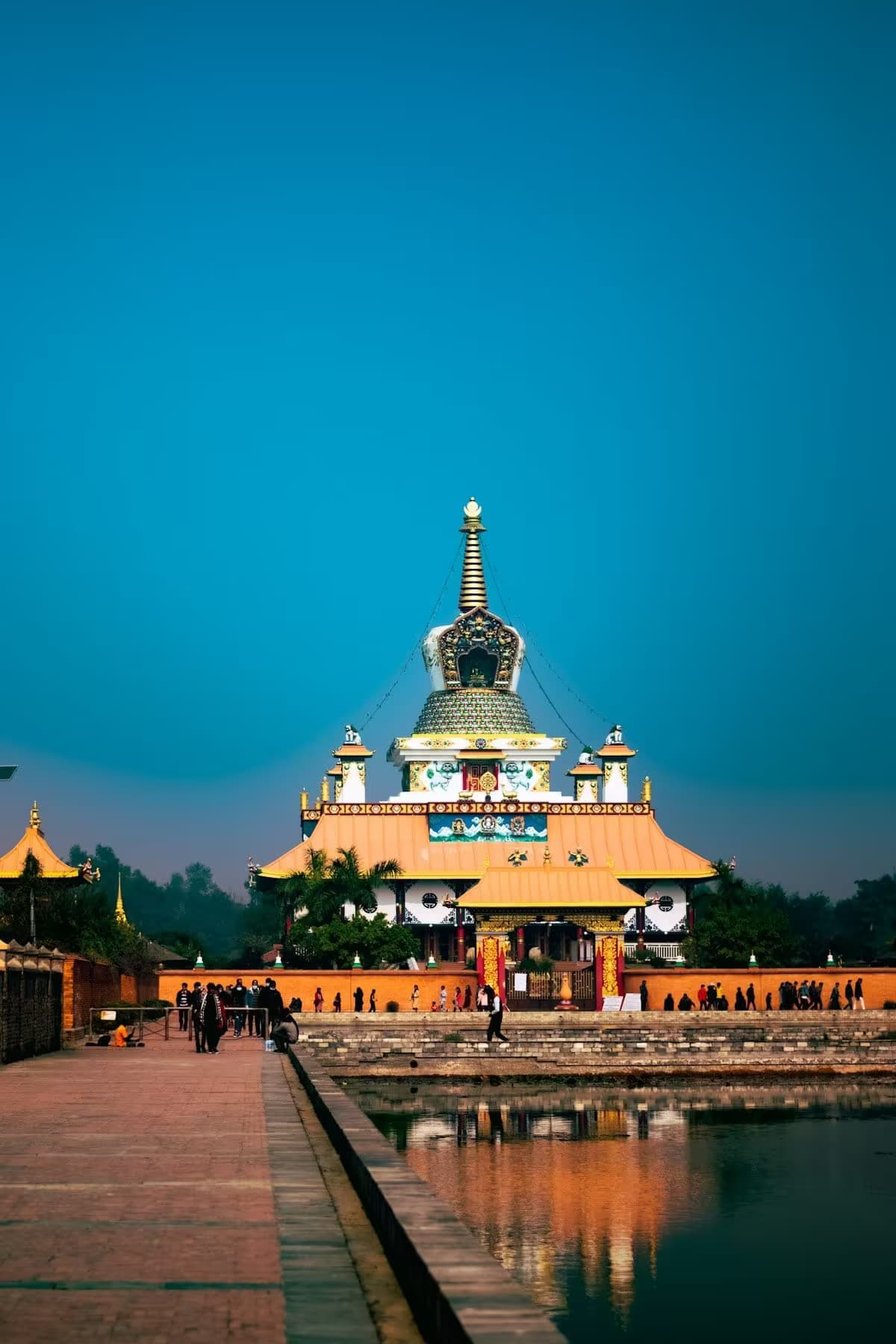
Birthplace of Siddhartha Gautama (Buddha), a UNESCO World Heritage Site and one of the holiest pilgrimage sites for Buddhists worldwide.

Cambodian Monastery, Lumbini
A Khmer-style Theravada monastery in the East Monastic Zone — a compact compound modelled on the great temples of Angkor, with a tiered pyramid tower and characteristic face towers.
Coda
Continue the Pilgrimage
Part of
Lumbini — Birthplace of Buddha
Planning this visit? Local operators publishing trips here can arrange it.
Elsewhere in this region
Help us get it right
Know Maya Devi Temple better than we do?
We write from research and reporting, and the ground changes faster than we can keep up. If something here is out of date, or you have been and would tell it differently, we would rather hear it.