Temple · Syncretic
Muktinath Temple
मुक्तिनाथ मन्दिर
Lord Vishnu / Guru Rinpoche·Ancient (exact date unknown)·Mustang
Sacred to both Hindus and Buddhists, this high-altitude temple at 3,710m in Mustang is one of the 108 Divya Desams of Lord Vishnu.
Dedicated to
Lord Vishnu / Guru Rinpoche
Period
Ancient (exact date unknown)
Hours
6:00 AM – 5:00 PM
Admission
Free
Neighborhood
Muktinath Valley
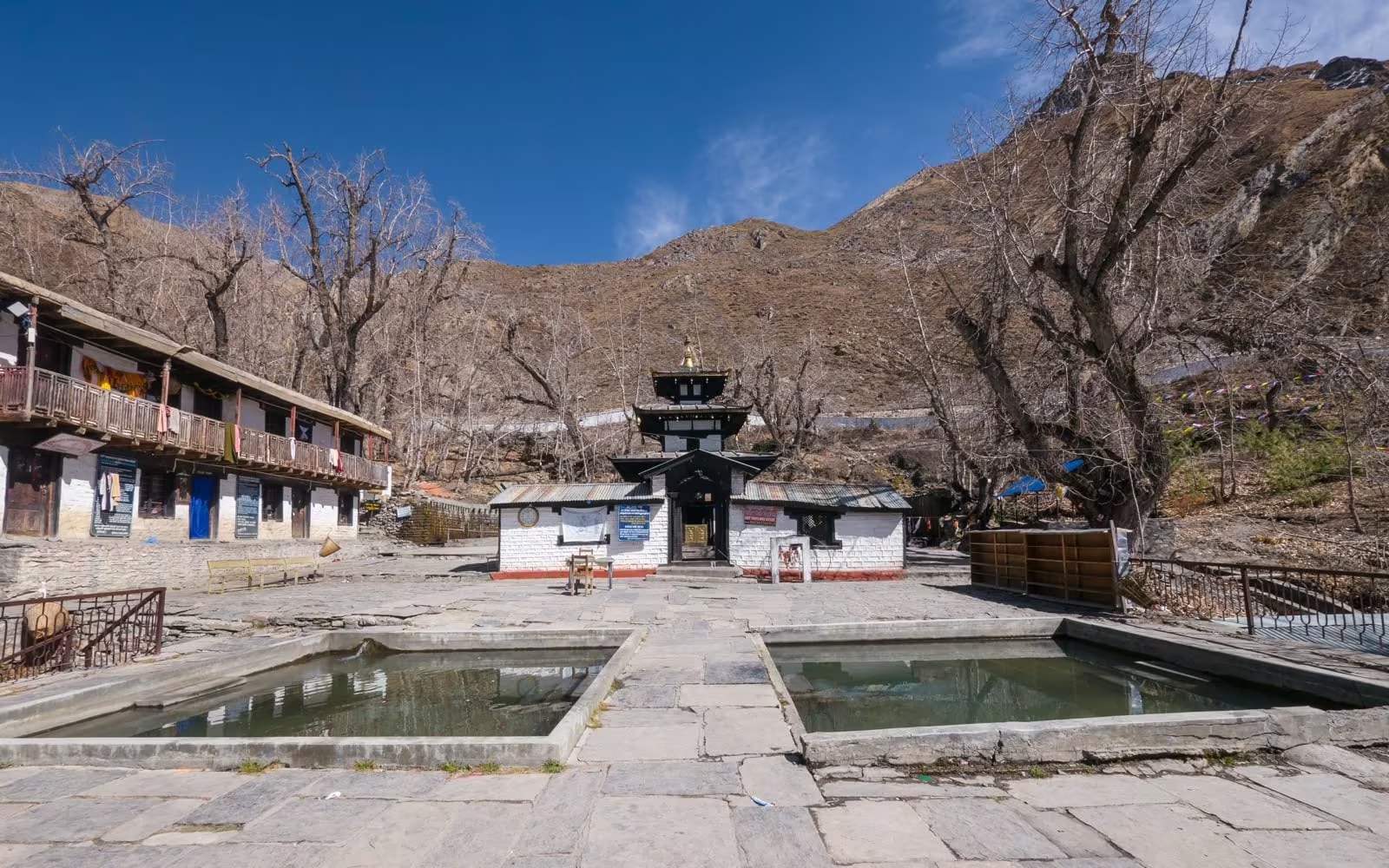
Muktinath stands at 3,710 metres in the wind-scoured high desert of Mustang, just below the Thorong La pass — and its name states its promise plainly: Mukti Kshetra, the place of liberation. Few shrines anywhere are sacred to two religions as completely as this one. Hindus and Buddhists worship the same shrine, bathe in the same waters, and tend the same flame, and the walk up through poplar groves to the temple, with Dhaulagiri's massif filling the southern sky, is one of the great arrival moments in Himalayan pilgrimage.
One shrine, two faiths
For Hindus — and especially for South India's Sri Vaishnava tradition — Muktinath is Thiru Saligramam, the only one of the 108 Divya Desams of Vishnu lying outside India, praised in the Tamil hymns of the Alvar poet-saints more than a thousand years ago. It is also counted among the eight Svayam Vyakta Kshetras, shrines where Vishnu is held to have manifested himself rather than been installed by human hands. For Tibetan Buddhists the same place is Chumig Gyatsa, the Hundred Springs — a site sanctified by Guru Rinpoche (Padmasambhava), who is said to have meditated here on his journey to Tibet, and a dwelling place of the dakinis and the 21 Taras. The syncretism is not theoretical: the temple's daily care has traditionally been in the hands of local Buddhist nuns, who light lamps for Vishnu and Lokeshvara alike. Stand in the courtyard at morning puja and you will hear Sanskrit and Tibetan prayer in the same thin mountain air.
The 108 waterspouts
Behind the pagoda-roofed main temple, a stone wall curves through the courtyard carrying 108 bull-headed spouts — the Muktidhara — pouring glacial spring water in a continuous line. Pilgrims, many having travelled weeks from the Indian plains, strip to dhotis and run the full row, letting every spout strike their head, then immerse in the two icy kunda pools before the temple door. The number runs through everything here: 108 Divya Desams, 108 beads on the mala, 108 spouts — completion, in both faiths' arithmetic. At this altitude the water is brutally cold in any season; watching grandmothers complete the circuit without breaking stride is a lesson in what devotion means.
Jwala Mai — the flame that burns on water
A short walk below the main temple, the dim Jwala Mai shrine (the Mebar Lhakhang, to Buddhists) shelters Muktinath's strangest wonder: a natural gas flame that burns continuously beside a flowing spring — fire dancing on water, with earth and air completing the elements. The flame has burned for as long as records of the site exist, and it is the reason ancient pilgrims judged this valley self-evidently holy. Hindus revere the flame; Buddhists honour the shrine's resident protectress. It is a small, dark, smoke-blackened room, and one of the most quietly powerful places in Nepal.
Shaligram country
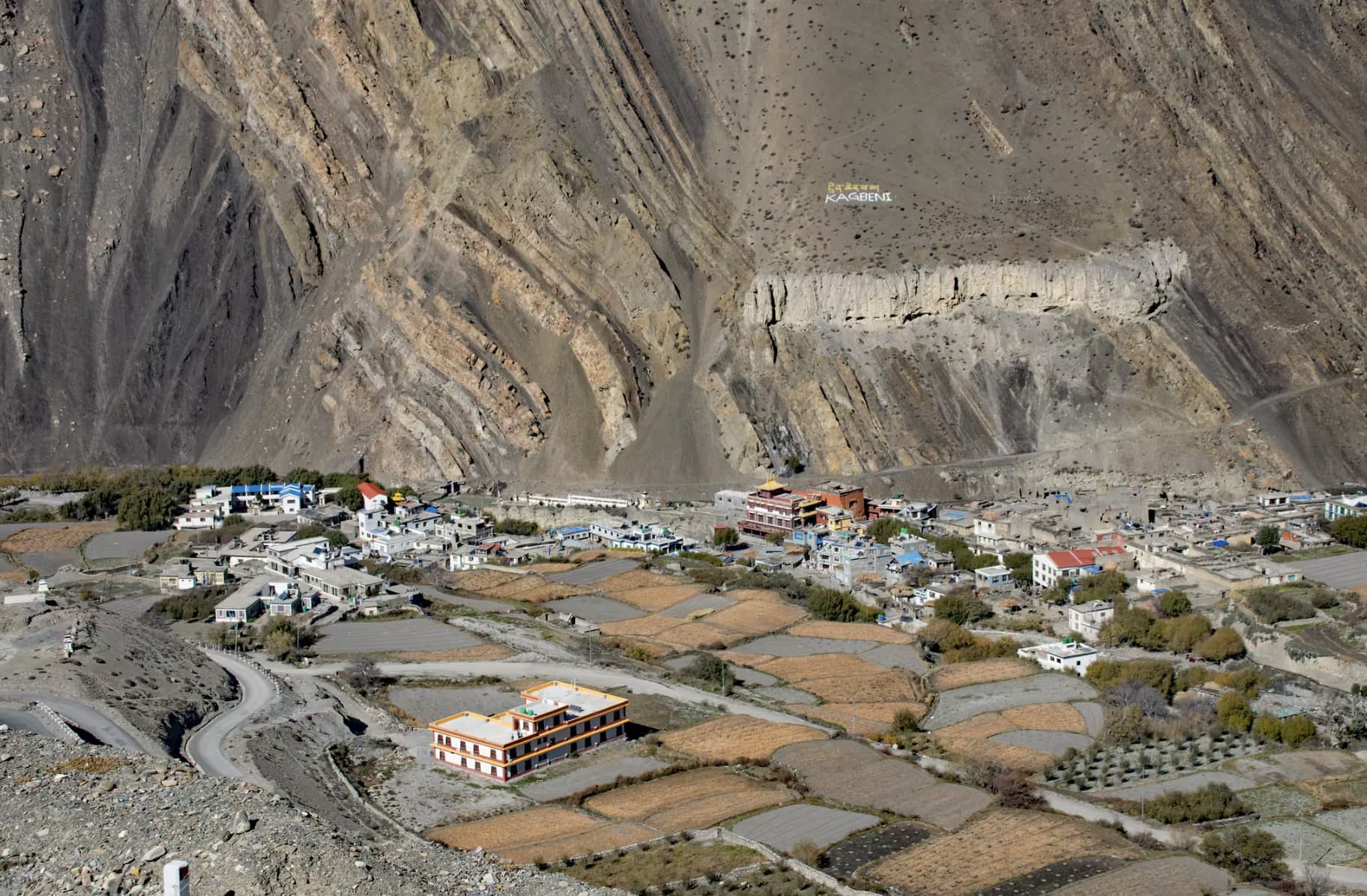
The Kali Gandaki river below Muktinath is the great traditional source of shaligram stones — the black ammonite fossils, spiral sea creatures from a vanished ocean floor lifted five kilometres into the sky, that Hindus venerate as natural embodiments of Vishnu. Pilgrims comb the riverbed near Kagbeni, the medieval mud-walled village at the river junction where families also perform shraddha rites for their ancestors, and shaligrams from this valley are treasured in Vaishnava temples and homes far beyond Nepal. The geology is the theology here: this valley was once seabed, and the fossils prove it.
The journey is the pilgrimage
Trekkers reach Muktinath on foot over the 5,416-metre Thorong La as the climactic descent of the Annapurna Circuit; pilgrims come up the Kali Gandaki by jeep or by flight to Jomsom from Pokhara, then drive the final hour to Ranipauwa village below the shrine. Either way, altitude deserves respect — 3,710 metres is high enough for sickness if you fly in and rush. Spring and autumn are the prime windows, with clear skies over Dhaulagiri and Nilgiri; Mustang's rain-shadow keeps the site accessible even in monsoon when the rest of Nepal is clouded. Muktinath also opens the door to upper Mustang's walled kingdom — continue toward the Upper Mustang trek and the cliff-dug sky caves — or descend the gorge and count it the crown of Nepal's Hindu temples and high-Himalayan sacred geography.
Access & Mobility
High-altitude site at 3,710m with cold, wind, steps, and final walking inside the temple precinct. Rapid ascent by road or flight can still trigger altitude symptoms.
- Vehicle
Jeep access reaches the Muktinath/Ranipauwa area; final movement to the temple is on foot.
- On foot
Older pilgrim walking approach from Kagbeni for fit, acclimatized travelers. Trail: muktinath-kagbeni-walk
- Helicopter
Charter helicopter access may be possible seasonally; verify operator availability and weather before planning.
Best visited in autumn and spring.autumn: best, -8°C to 10°C. Peak pilgrimage and trekking season. Stunning views of Dhaulagiri and Nilgiri. The eternal flame burns bright in dry air. monsoon: possible, 0°C to 15°C. Being in the rain shadow, Muktinath receives less rain than southern Nepal. Road access may be disrupted. Temple remains open. spring: best, -5°C to 12°C. Accessible via jeep from Jomsom or by trekking the Annapurna Circuit. The 108 water spouts flow well. Clear mountain views. winter: possible, -18°C to 3°C. Very cold but the temple remains open. Some water spouts may freeze. Road from Jomsom may be blocked by snow.
The Almanac
Being in the rain shadow, Muktinath receives less rain than southern Nepal. Road access may be disrupted. Temple remains open.
Coda
Continue the Pilgrimage
Guides that feature this place
- Itinerary11 min
A Spiritual Journey Through Nepal: Temples, Monasteries & Sacred Landscapes
A guide to Nepal's most powerful spiritual sites — from Hindu temples and Buddhist monasteries to sacred mountains and meditation retreats, with a suggested 2-week pilgrimage route.
- Regional8 min
Hindu Pilgrimage Circuit in Nepal: Temples, Routes, Festivals & Etiquette
A Hindu pilgrimage planning guide for Nepal covering Pashupatinath, Muktinath, Janaki Mandir, Manakamana, Pathibhara, Halesi, Baraha Kshetra, Devghat, Doleshwar, and major festival timing.
- Itinerary9 min
Nepal Pilgrimage Itinerary: Pashupatinath, Lumbini, Janakpur & Muktinath
A practical Nepal pilgrimage itinerary linking Pashupatinath, Janaki Mandir, Lumbini, and Muktinath with 3-5 day, 7 day, and 10-14 day route options.
Planning this visit? Local operators publishing trips here can arrange it.
Elsewhere in this region
 Destination
Kagbeni
 Guide
GuideHindu Pilgrimage Circuit in Nepal: Temples, Routes, Festivals & Etiquette
 Destination
Dhumba Lake
 Sacred Site
Kalika Bhagwati Temple, Baglung
 Guide
GuideNepal Pilgrimage Itinerary: Pashupatinath, Lumbini, Janakpur & Muktinath
 Destination
Damodar Kunda
 Guide
GuideA Spiritual Journey Through Nepal: Temples, Monasteries & Sacred Landscapes
Help us get it right
Know Muktinath Temple better than we do?
We write from research and reporting, and the ground changes faster than we can keep up. If something here is out of date, or you have been and would tell it differently, we would rather hear it.