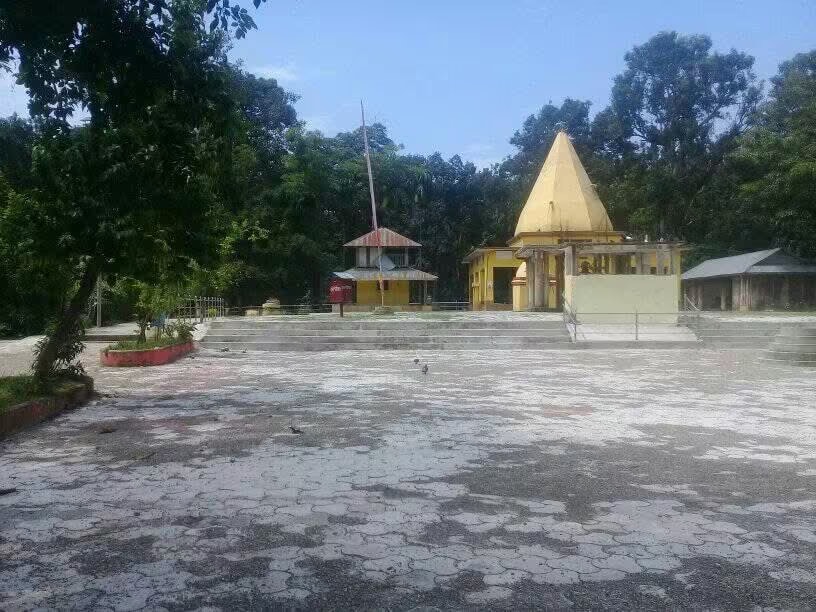
Temple · Hindu
Ramdhuni
रामधुनी
Lord Ram, worshipped at the perpetual dhuni fire·Legendary Treta Yuga association; the standing compound is largely of the last century·Sunsari
A Ram shrine inside protected sal forest in southern Sunsari, built around a dhuni fire said to have been lit during Ram's exile — and the site of one of eastern Nepal's largest melas.
Dedicated to
Lord Ram, worshipped at the perpetual dhuni fire
Period
Legendary Treta Yuga association; the standing compound is largely of the last century
Hours
Open daily from dawn to dusk; mela days run from before first light
Admission
Free
Climate
terai
Ramdhuni sits in a stand of protected sal forest in southern Sunsari, about fifteen kilometres west of Itahari, and the name carries the whole story: a dhuni is an ascetic's sacred fire, and the tradition here holds that Ram lit one on this spot during his exile in the Treta Yuga, leaving behind a pair of wooden sandals. A second strand of the legend has sages performing a great yagya here after the war in Lanka. The fire is treated as continuous — local belief credits a yogi remembered as Baba Vanskhadi with keeping Ram's dhuni alight and with beginning the practice of distributing its ash as prasad, which is still what pilgrims carry away.
The forest is as much the point as the shrine. Ramdhuni is unusual among Terai temples in being enclosed by mature sal rather than by a bazaar, and the shade, the birdsong and the quiet are why local families treat a visit as a picnic as well as a pilgrimage. The compound itself is modest: a cluster of small shrines and rest houses around the dhuni, added to piecemeal over the last century rather than built to any plan.
The crowds come for the melas. Ram Navami is the big one, drawing tens of thousands from across the eastern Terai and from Bihar over the border, with Makar Sankranti and Kartik Purnima the other principal gatherings. Outside those days it is one of the calmest religious sites in the region.
It fits naturally into the rest of Sunsari's sacred geography — Baraha Kshetra where the Koshi leaves the hills, Budhasubba at Dharan — and pairs with Koshi Tappu, about ten kilometres west, for anyone combining the shrine with birdwatching.
Best visited in spring and winter (Terai Plains region).autumn: good, 19°C to 31°C. Warm days, dry ground and a steady flow of local picnic parties, building to the Kartik Purnima gathering. A good time to combine the shrine with Koshi Tappu's returning migratory birds. monsoon: possible, 26°C to 34°C. Hot, wet and quiet. The forest is at its greenest and almost empty, but the access track is muddy and mosquitoes are relentless around dusk. spring: best, 21°C to 35°C. Ram Navami falls in this window and is the year's defining event here, with tens of thousands arriving from the eastern Terai and across the Bihar border. Outside the mela the sal forest is the coolest place for miles. winter: best, 9°C to 24°C. The most comfortable season in the Terai, and Makar Sankranti in mid-January brings the second of the big melas. Mornings can be genuinely foggy — the forest holds it until late.
The Almanac
Climate · Terai Plains
Hot, wet and quiet. The forest is at its greenest and almost empty, but the access track is muddy and mosquitoes are relentless around dusk.
Coda
Continue the Pilgrimage
Planning this visit? Local operators publishing trips here can arrange it.
Elsewhere in this region
Help us get it right
Know Ramdhuni better than we do?
We write from research and reporting, and the ground changes faster than we can keep up. If something here is out of date, or you have been and would tell it differently, we would rather hear it.