Temple · Syncretic
Rato Machhindranath Temple (Bunga Dyah)
रातो मच्छिन्द्रनाथ मन्दिर❊बुंगद्यः
Avalokiteshvara / Machhindranath (Red)·7th century CE (current structure later rebuilds)·Lalitpur
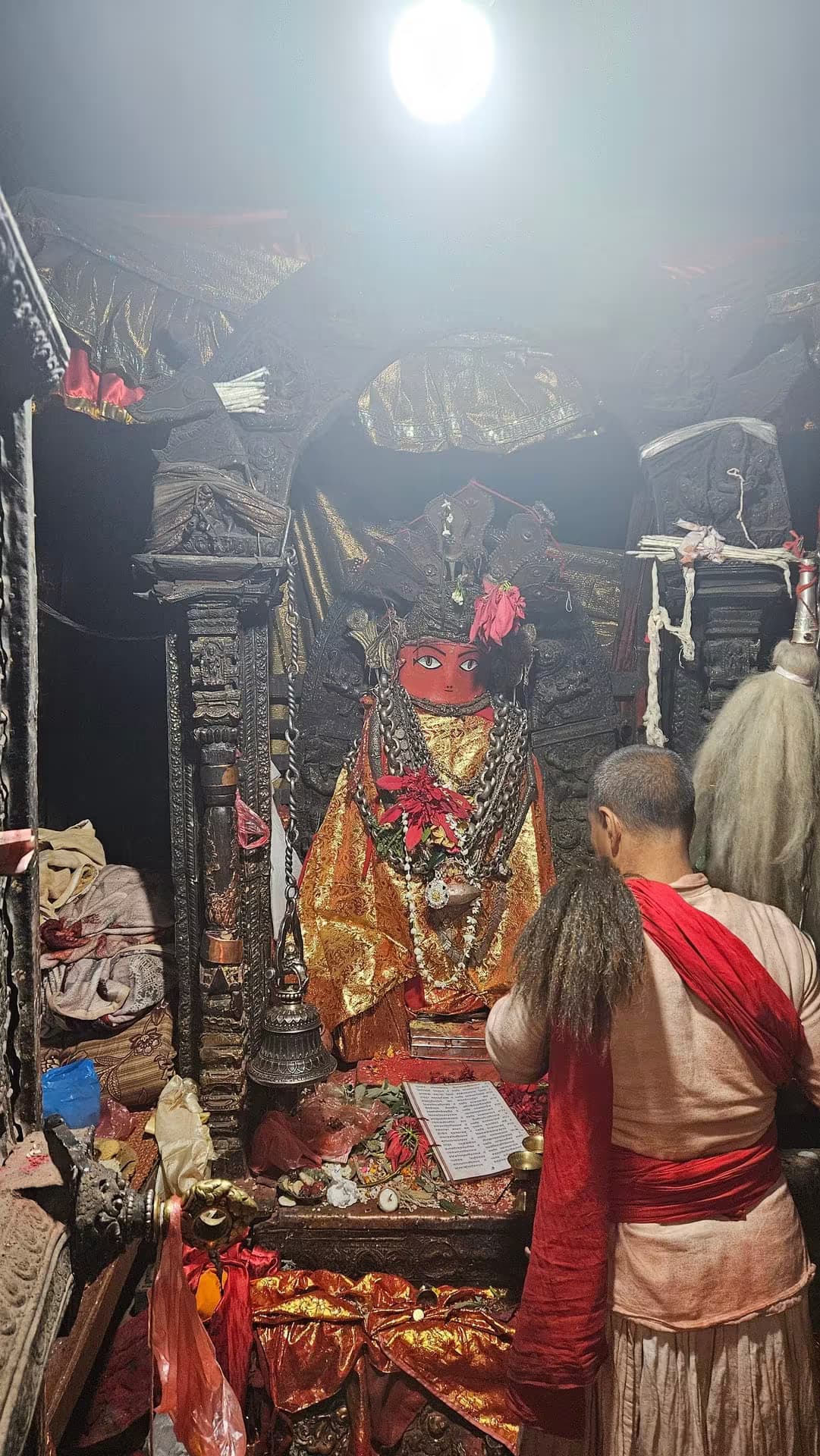
Home of Red Machhindranath (Bunga Dyah), the guardian rain-bringing deity of the Kathmandu Valley, who splits his time between the villages of Bungamati and Patan in an annual chariot festival that is one of Nepal's grandest religious spectacles.
Dedicated to
Avalokiteshvara / Machhindranath (Red)
Period
7th century CE (current structure later rebuilds)
Hours
6:00 AM – 7:00 PM
Admission
Free
Neighborhood
Bungamati
Rato Machhindranath Temple in Bungamati is the principal home of Red Machhindranath, known to the Newars as Bunga Dyah — the most important deity in the Kathmandu Valley's agricultural calendar, revered as the bringer of rain and protector of the harvest. Buddhists worship him as Avalokiteshvara Karunamaya, while Hindus venerate him as Machhindranath, a disciple of Shiva. For the valley's farming communities, his goodwill means the difference between abundance and drought.
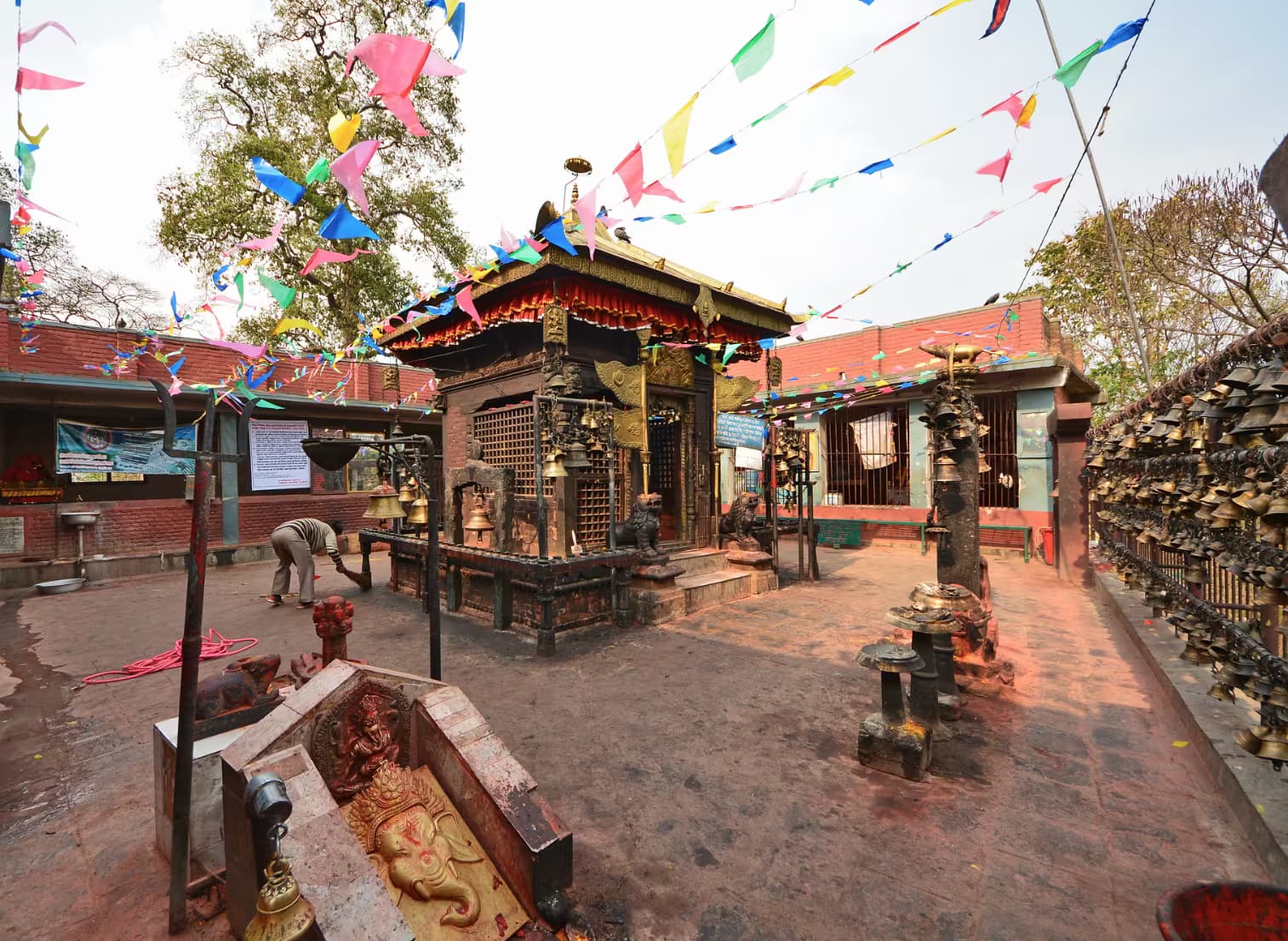
The temple stands in the centre of Bungamati, a compact and atmospheric Newar village on a plateau south of Patan. The current structure — a classic three-roofed Newar pagoda surrounded by stone lions, water spouts, and smaller shrines — sits in a courtyard that is the social and spiritual heart of the village. Bungamati's woodcarving tradition is evident everywhere, from the temple's struts to the window frames of the surrounding houses.
The Rato Machhindranath Jatra is one of Nepal's most spectacular religious festivals. Each spring, the deity is placed on a towering chariot — sometimes reaching 20 meters in height — and pulled from Pulchowk in Patan through the city's streets over several weeks, eventually arriving in Bungamati where the image spends the monsoon months. The culmination is the Bhoto Jatra, when a sacred jewelled vest is displayed before the crowds and the President of Nepal. The entire cycle celebrates the coming of the monsoon rains.
Visiting Bungamati offers a glimpse of valley life that has changed little in centuries. The village is a working settlement of farmers and woodcarvers, the temple courtyard doubles as a community gathering place, and the surrounding fields and traditional houses provide a vivid contrast to urban Kathmandu barely 10 kilometres to the north.
Folio III
Nearby Sacred Sites
Places within a short walk that help turn this stop into a small sacred cluster.
Coda
Continue the Pilgrimage
Part of
Bungamati
Planning this visit? Local operators publishing trips here can arrange it.
Elsewhere in this region
Help us get it right
Know Rato Machhindranath Temple (Bunga Dyah) better than we do?
We write from research and reporting, and the ground changes faster than we can keep up. If something here is out of date, or you have been and would tell it differently, we would rather hear it.