Temple · Hindu
Vishwanath Temple
विश्वनाथ मन्दिर
Lord Shiva (as Vishwanath)·Built 1627 AD by King Siddhi Narsingh Malla·Lalitpur
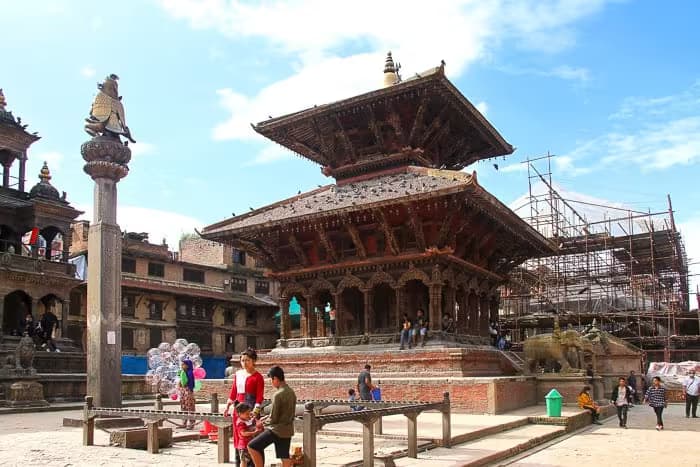
A handsome two-tiered Shiva pagoda in Patan Durbar Square, guarded by stone elephants and adorned with erotic roof-strut carvings in the classic Newar tradition.
Dedicated to
Lord Shiva (as Vishwanath)
Period
Built 1627 AD by King Siddhi Narsingh Malla
Hours
Dawn to dusk
Admission
Free
Neighborhood
Patan Durbar Square
The Vishwanath Temple is a two-tiered pagoda dedicated to Lord Shiva as Vishwanath — the Lord of the Universe. Built in 1627 AD during the reign of King Siddhi Narsingh Malla, it predates even the famous Krishna Mandir next door and represents one of the finest examples of Malla-era pagoda architecture.
Two large stone elephants kneel at the front entrance, serving as guardians of the sacred space. The temple's wooden roof struts are decorated with erotic carvings in the tradition common to Shiva temples across the Kathmandu Valley — a feature shared with Khajuraho-style temples in India. These tantric carvings are believed to ward off the goddess of lightning, who is said to be a chaste virgin embarrassed by such imagery.
At the rear of the temple sits a large brass Nandi (Shiva's bull mount), gazing devotedly toward the sanctum. Inside, the temple houses a Shivalinga. The Vishwanath Temple's position in the centre of the western temple row makes it a key landmark for orienting yourself within the square.
- Built by Siddhi Narsingh MallaBuilt 1627
Built the Vishwanath (Shiva) temple with its guardian stone elephants.
Folio III
Nearby Sacred Sites
Places within a short walk that help turn this stop into a small sacred cluster.
Krishna Mandir
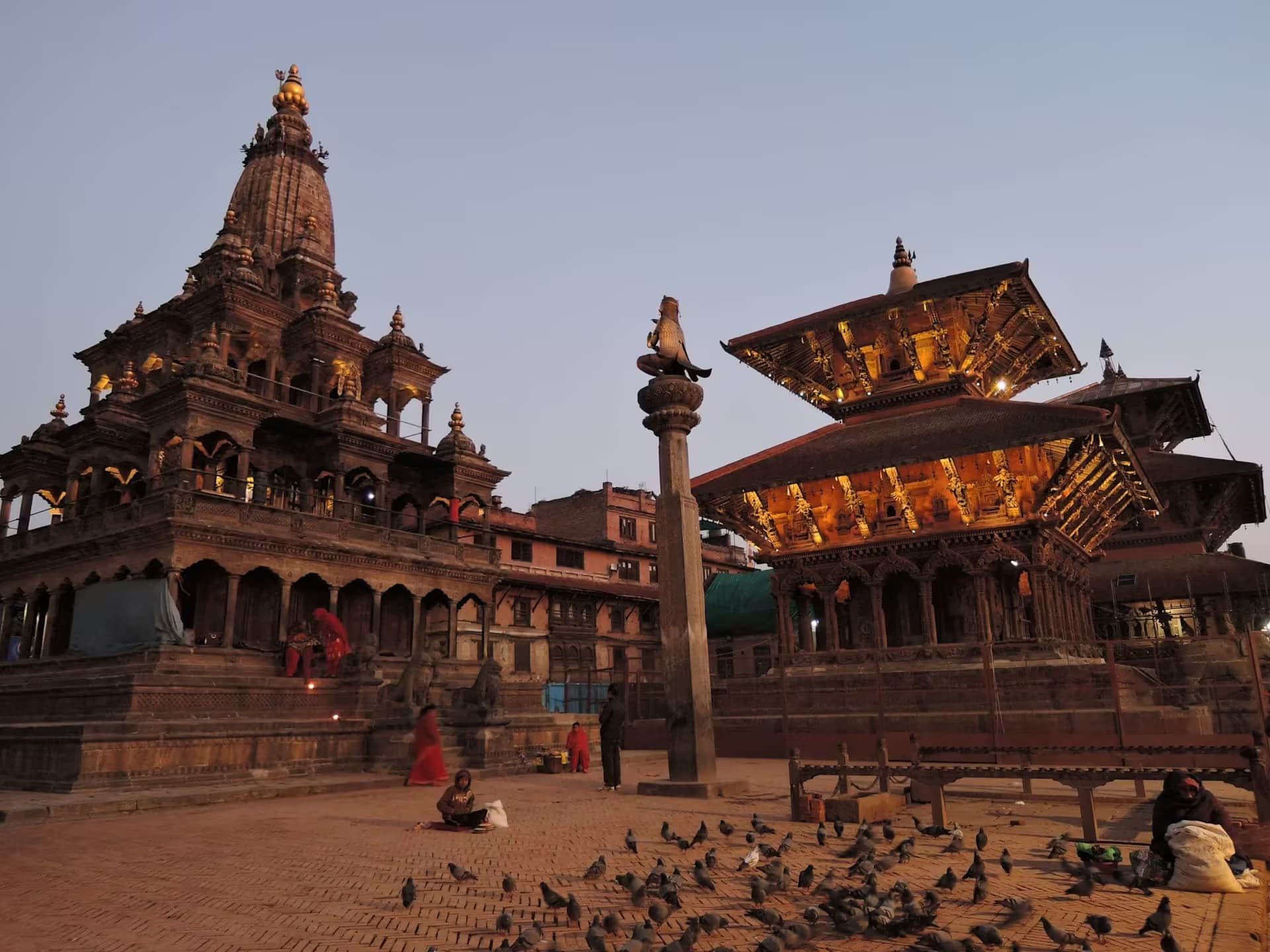
Nepal's finest stone shikhara temple, built in 1637 by King Siddhi Narsingh Malla — a three-tiered masterpiece with 21 golden pinnacles and exquisite Mahabharata and Ramayana bas-reliefs.
Hari Shankar Temple
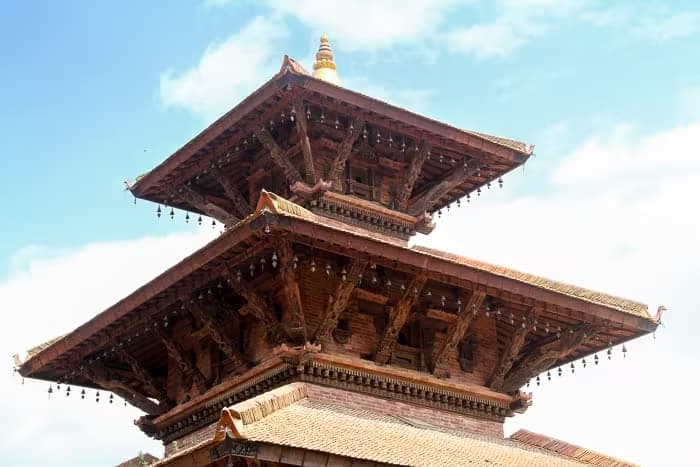
A three-tiered pagoda dedicated to the rare combined form of Vishnu and Shiva — built by a Malla princess and known for its vivid roof-strut carvings of hellish punishments.
Jagannarayan Temple (Char Narayan)
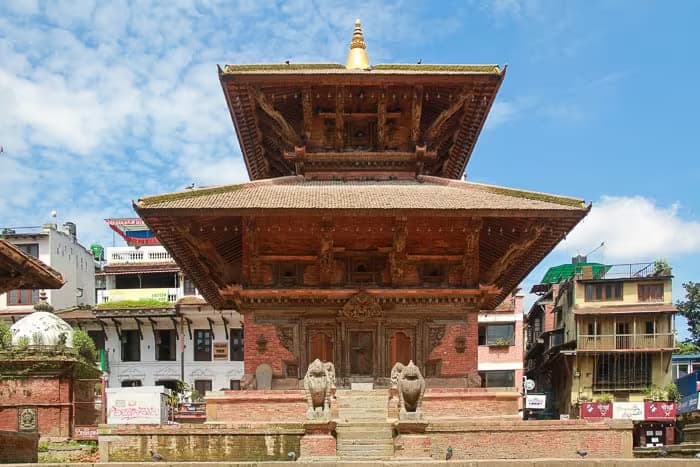
One of the oldest temples in Patan Durbar Square, this 1565 two-tiered Vishnu pagoda anchors the southern end of the temple row with erotic roof struts and ancient stone carvings.
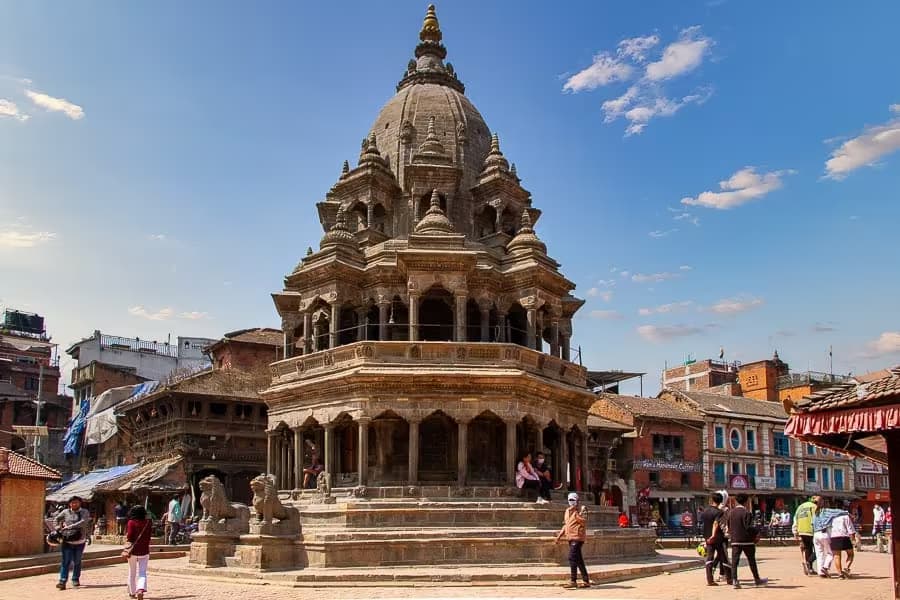
Chyasin Deval (Octagonal Krishna Temple)
A striking octagonal stone shikhara at the entrance to Patan Durbar Square — built as a memorial to the queens of King Yoganarendra Malla who committed sati upon his death.
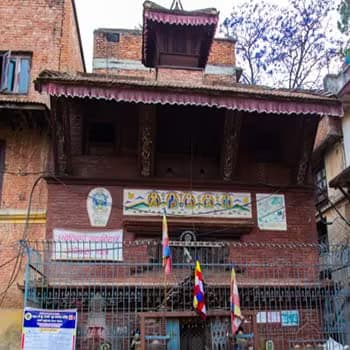
Jyo Bahal (Jyoti Varna Mahavihar)
Jyoti Varna Mahavihar (Jyo Bahal) is one of the 18 principal Newar Buddhist monastery courtyards of Patan, whose name evokes 'radiance' or 'light'.
Coda
Continue the Pilgrimage

Part of
Patan Durbar Square
Planning this visit? Local operators publishing trips here can arrange it.
Elsewhere in this region
Help us get it right
Know Vishwanath Temple better than we do?
We write from research and reporting, and the ground changes faster than we can keep up. If something here is out of date, or you have been and would tell it differently, we would rather hear it.