Gahana Pokhari
A historic pond in the ancient Licchavi heartland of Handigaun, home to Gahana Khojne Jatra — the Kathmandu Valley's vivid water ritual of searching for Tudaldevi's lost ornaments.
- Altitude
- 1,340 m
- Coordinates
- 27.721°, 85.330°
Current Weather
Gahana Pokhari ('Ornament Pond') is a historic water tank in Handigaun, one of the Kathmandu Valley's earliest urban settlements and long associated with the Varman, Gupta, and Licchavi periods before the rise of the Malla kingdoms. The pond's name comes from the legend that the goddess Tudaldevi, also called Tundal Devi, lost her ornaments (gahana) while bathing here with her sister goddesses. That story still gives the pond its living identity.
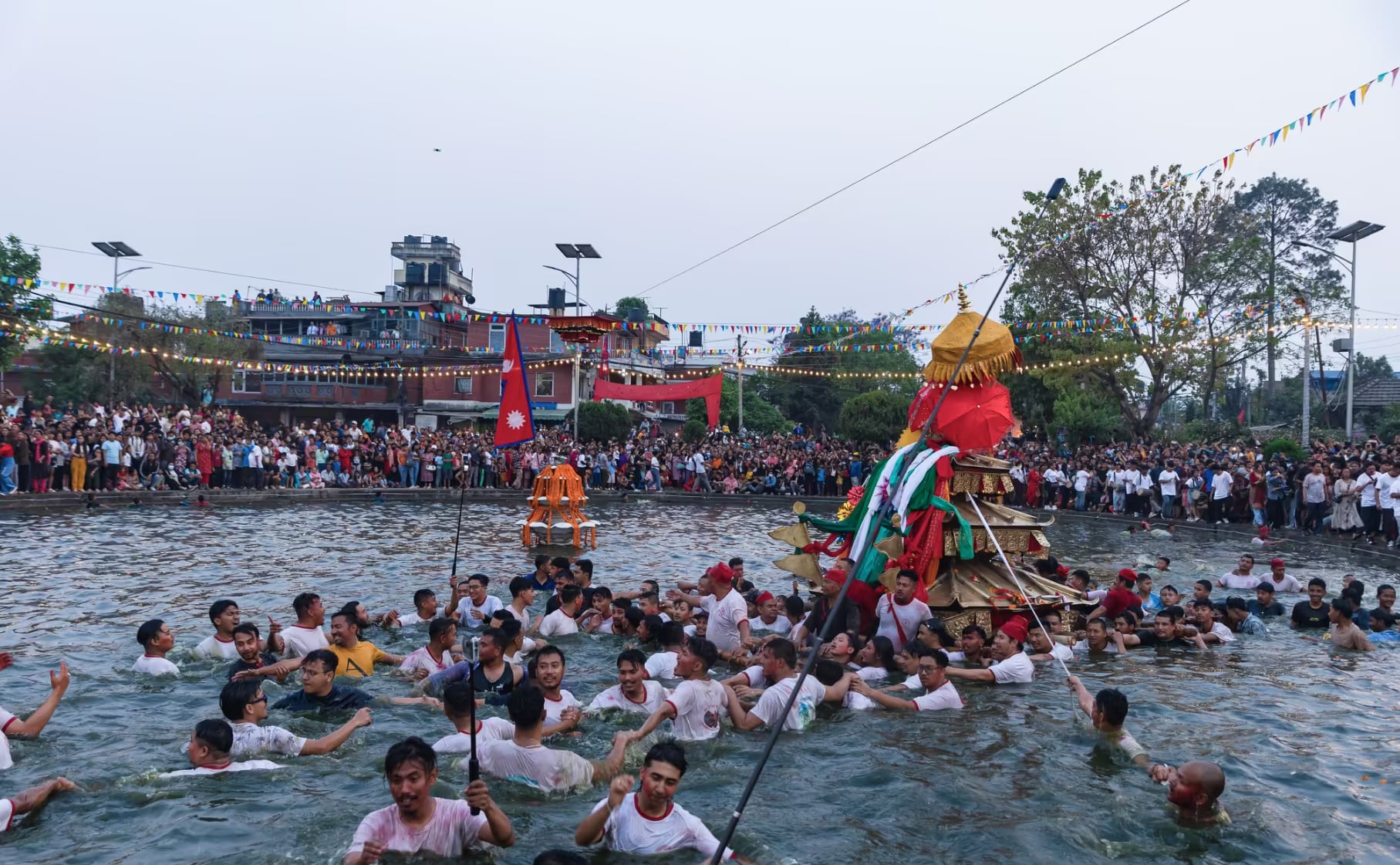
The pond's great event is Gahana Khojne Jatra — literally, the festival of searching for ornaments. Each year on Chaitra Shukla Ashtami (March/April), Tudaldevi's palanquin is carried from the Baluwatar/Chandol side through Handigaun toward the pond. Families wait along the route with offerings, musicians play Newar drums and wind instruments, and the streets around Handigaun Dabali take on the loose, crowded energy of a neighbourhood carnival.
At Gahana Pokhari the ritual becomes physical. The goddess's palanquin is taken into the water and carried around the pond while attendants enact the search for the lost jewels. Devotees crowd the banks, musicians circle the water, and the pond becomes a theatre of splash, sound, and ritual memory. For photographers and culture travellers, this is the moment to come for: the festival is specific to this pond, deeply local, and still far less documented in English than Kathmandu's better-known processions.
Handigaun matters beyond the festival. Archaeologists and historians treat the neighbourhood as a key clue to early Kathmandu urbanism because of its concentration of Licchavi inscriptions, excavated brick structures, and long-standing traditions that place ancient royal complexes in this area. In that reading, Gahana Pokhari is not just a pretty pond: it is a surviving water node in the landscape of the valley's pre-Malla capital, before Kathmandu, Patan, and Bhaktapur became the dominant royal cities.
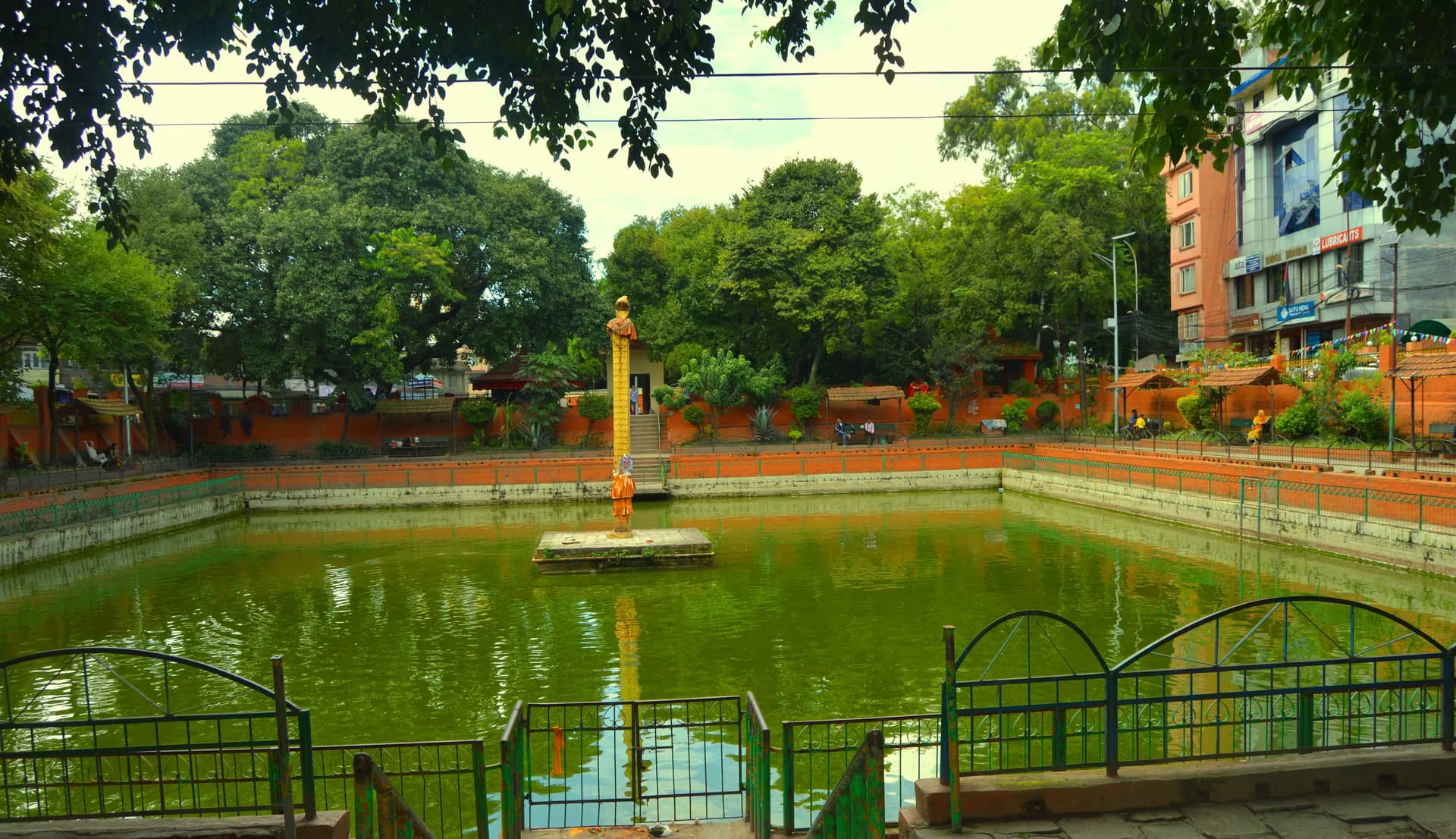
The pond likely served as a primary water reservoir for the old settlement, fed by local runoff, springs, and possibly older rajkulo canal systems. Its shrinking footprint shows the pressure of modern urban growth, but the ritual still holds the site in public memory. The small Ganesh shrine at the northeastern corner, the dense lanes around Handigaun, and the festival route toward Tudaldevi's shrine all help reveal how water, goddess worship, and urban settlement were woven together.
Use Gahana Pokhari as the anchor for a short Handigaun antiquities walk. Nearby points of interest include Tundal Devi Temple, Handigaun Dabali, Dhum Varahi/Dhumbarahi Temple, Dhana Ganesh, Satya Narayan Mandir, and the older lanes where Licchavi-period finds and local traditions cluster. Nag Pokhari in Naxal is about 10 minutes away on foot, making it easy to pair the two ponds into a northeastern Kathmandu water-heritage route.
Visit during Chaitra Shukla Ashtami if you want the full Gahana Khojne Jatra experience; arrive before the palanquin reaches the pond and expect crowds, water, music, and blocked lanes. Outside festival day, autumn and winter mornings are best for a quieter look at the pond and for walking the Handigaun-Naxal heritage circuit.
Location
Planning this trip? Local operators publishing trips here can arrange it.
Elsewhere in this region
Help us get it right
Know Gahana Pokhari better than we do?
We write from research and reporting, and the ground changes faster than we can keep up. If something here is out of date, or you have been and would tell it differently, we would rather hear it.