Nilgiri North
7,061m
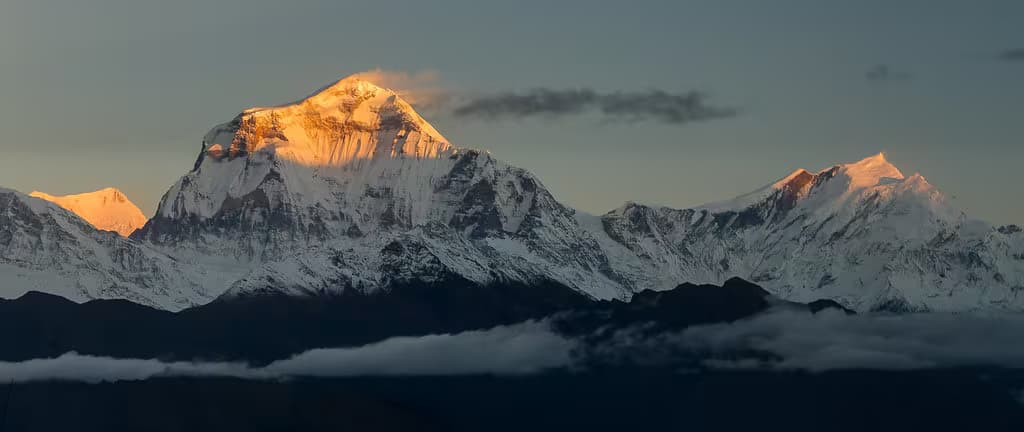
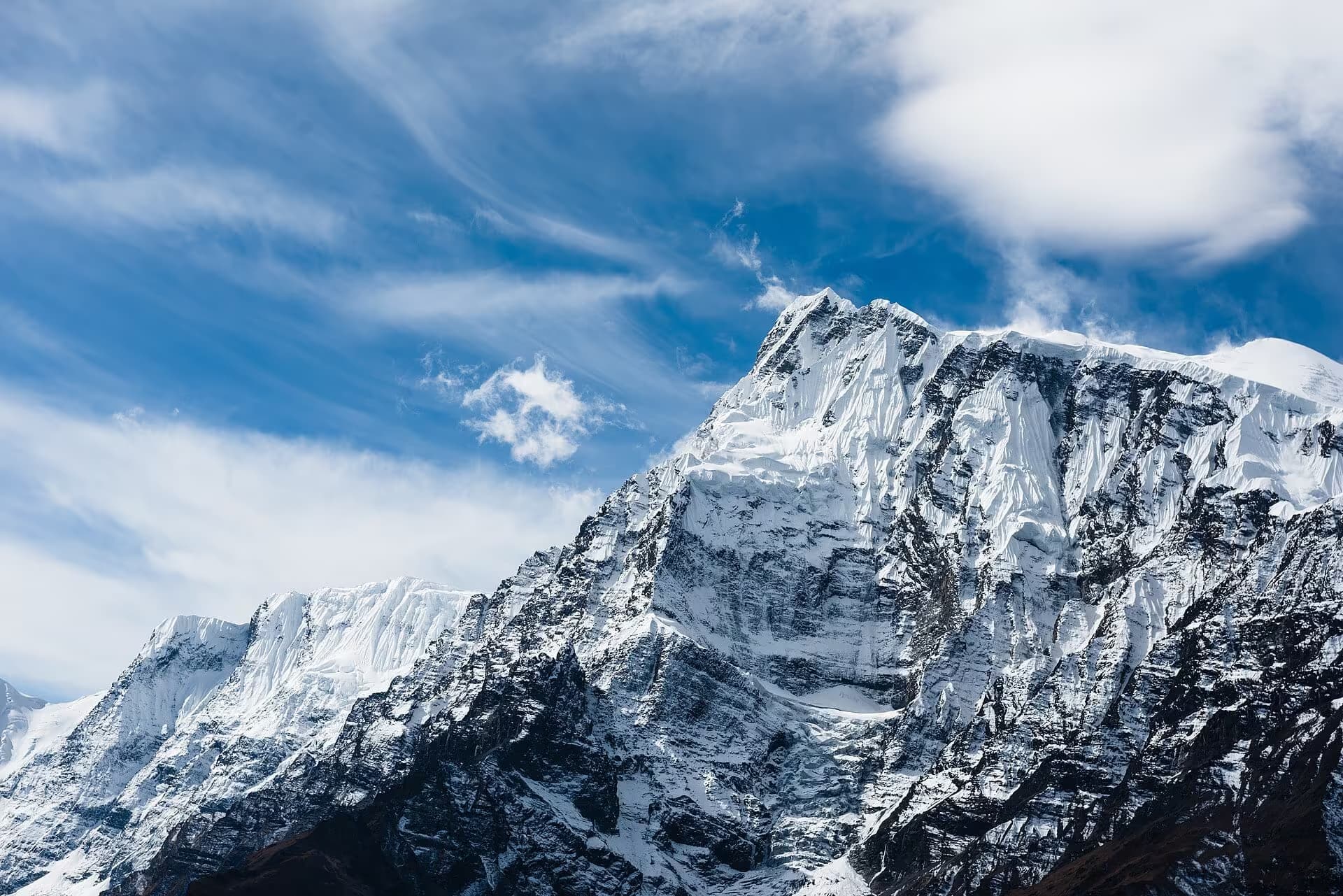
The 'Blue Mountain' at 7,061m — the dominant peak of the Kali Gandaki Valley, towering over Jomsom and the Annapurna Circuit.
Mountain Weather
Nilgiri North (7,061m) is the highest of the three Nilgiri peaks — Nilgiri North (7,061m), Nilgiri Central (6,940m), and Nilgiri South (6,839m) — which together form one of the most dramatic mountain walls in the Nepal Himalaya. The name means 'Blue Mountain' in Sanskrit, a reference to the deep indigo hue the peaks take on in the clear mountain light of the Kali Gandaki Valley.
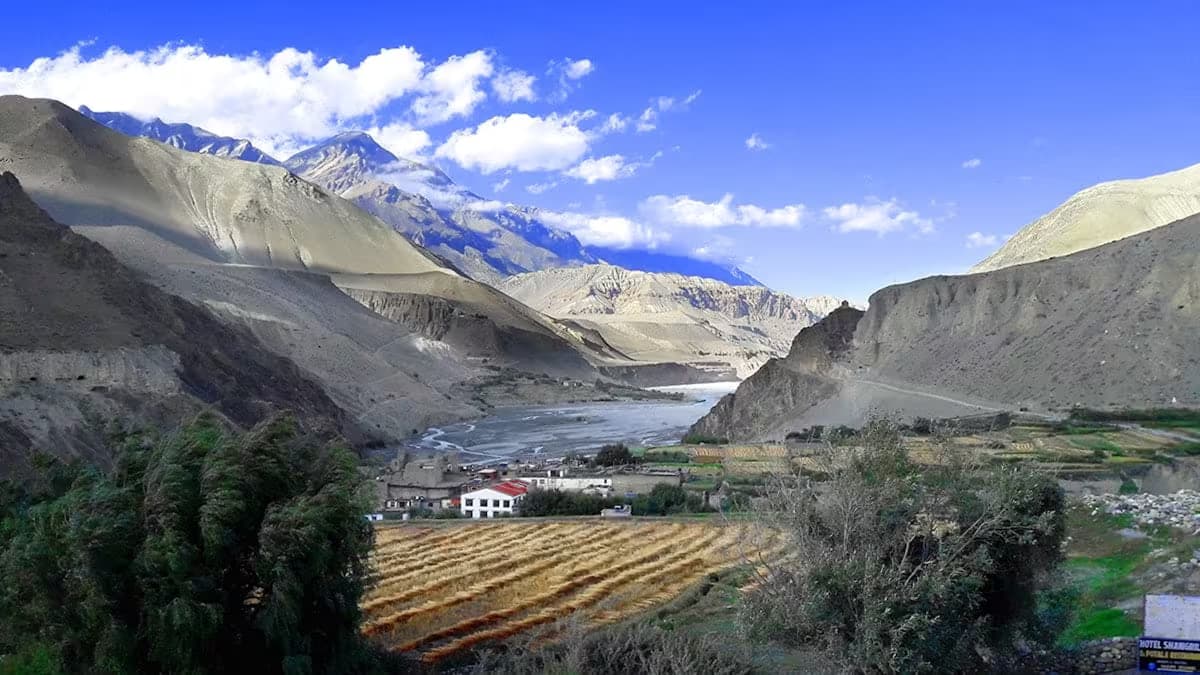
The Nilgiri massif dominates the skyline from Jomsom (2,743m) and the entire upper Kali Gandaki corridor, one of the deepest valleys in the world wedged between Dhaulagiri (8,167m) to the west and Annapurna I (8,091m) to the east. First climbed in October 1962 by a Japanese expedition via the north ridge, Nilgiri North remains a technically challenging objective (D grade) due to its steep mixed terrain and unpredictable Kali Gandaki wind patterns funneling through the valley.
The mountain forms the visual centerpiece of the Annapurna Circuit's western section. Trekkers descending from the Thorong La pass (5,416m) are greeted by Nilgiri's towering north face as they enter the Mustang region. The town of Jomsom, accessible by road from Pokhara, provides easy base access. From Jomsom, the view of Nilgiri's massive snow-and-ice north face rising over 4,300m above the valley floor is one of the most dramatic mountain-to-vertical-drop ratios in the Himalaya. The peak is also sacred to the Thakali people of Mustang, who have traded through the Kali Gandaki corridor for centuries. Best seasons: spring (April-May) and autumn (October-November).
Location
Planning this climb? Local operators publishing trips here can arrange it.
Elsewhere in this region
Help us get it right
Know Nilgiri North better than we do?
We write from research and reporting, and the ground changes faster than we can keep up. If something here is out of date, or you have been and would tell it differently, we would rather hear it.