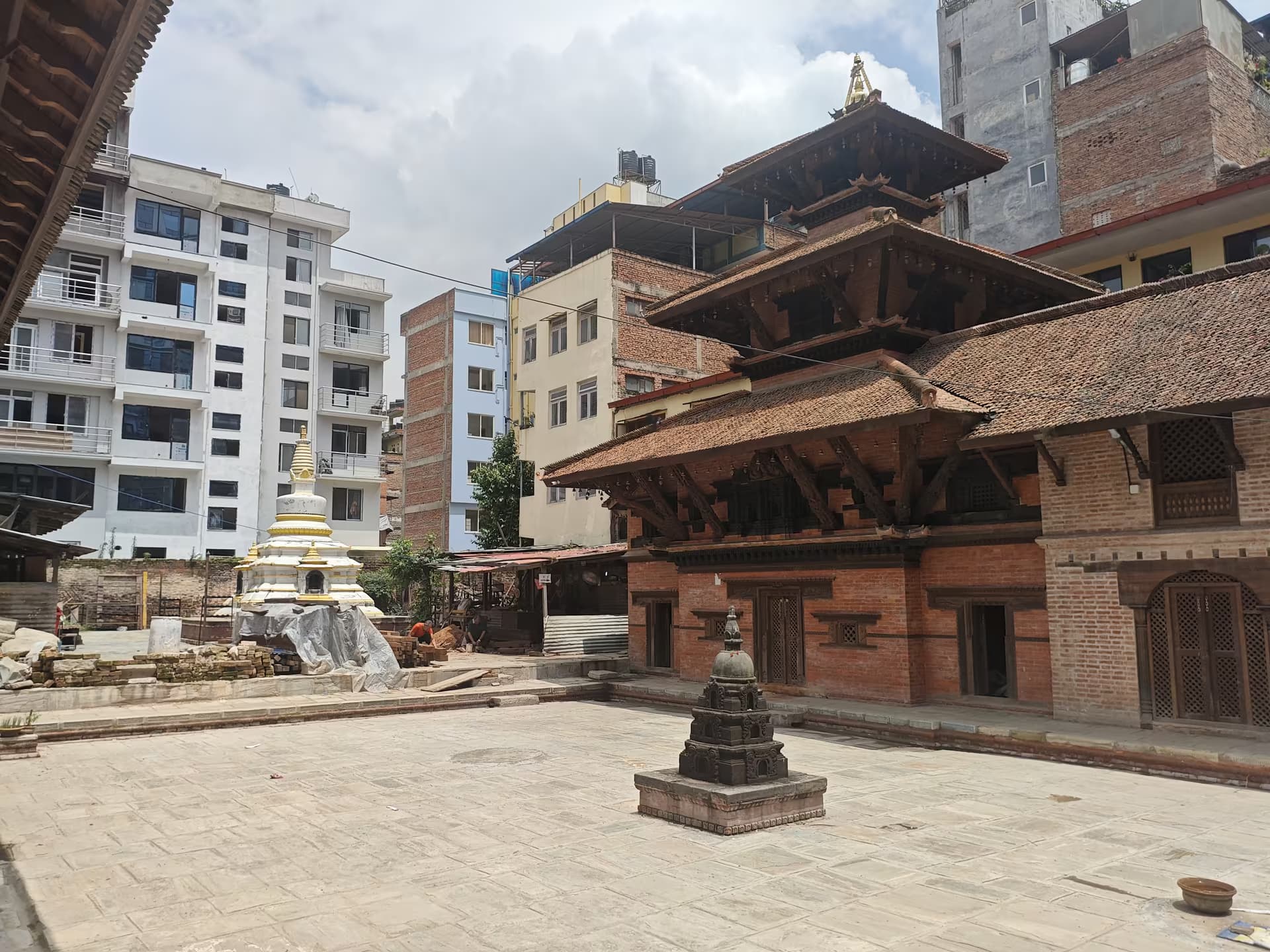
Bahal · Buddhist
Bhagwan Bahal (Vikramashila Mahavihar)
भगवान बहाल
Singha Sarthabahu / Shakyamuni Buddha·Ancient (rebuilt 1041 CE by Atisha)·Kathmandu
Claimed to be the oldest monastery in the Kathmandu Valley, rebuilt by the great Indian master Atisha in 1041 CE and home to a 7-foot gold statue and a priceless Prajnaparamita manuscript.
Dedicated to
Singha Sarthabahu / Shakyamuni Buddha
Period
Ancient (rebuilt 1041 CE by Atisha)
Hours
6:00 AM – 6:00 PM
Admission
Free
Neighborhood
Thamel, central Kathmandu
Bhagwan Bahal, formally Vikramashila Mahavihar and known locally as Thambahi, is held to be among the oldest Buddhist monasteries in the Kathmandu Valley — 'the eldest bihar,' by local reckoning. The neighbourhood grew up around it, and its name is the root of Thamel itself: Thamagram in Lichhavi times became Thabahil, and then Thamel. Thousands of travellers now pass its gate every day without knowing one of the valley's most storied Buddhist sites stands a few steps off the tourist street.
At its heart is not a conventional Buddha image but Singha Sartha Bahu (Singha Sartha Aju), a merchant hero worshipped as an incarnation of Karunamaya-Avalokiteshvara. His legend is famous: leading a trading caravan into Tibet, his men were lured by beautiful women who were in truth flesh-eating demonesses — given away by their backward-turned feet. Karunamaya appeared to him in the flame of an oil lamp, warned him, and carried the survivors home as a flying horse; those who looked back were snatched away, and Singha Sartha alone came through to found the monastery. His roughly seven-foot gold image, restored in 1996, is carried through the city in procession. Unusually among the valley's bahals, the monastery is looked after by the Pradhan clan rather than a Bajracharya–Shakya sangha.
The bahal was long a waystation for monks travelling between India and Tibet; the great Bengali master Atisha (Dipankara Shrijnana of Nalanda) is said to have stopped here in 1041 on his way to Tibet and to have had a hand in rebuilding it. Among its treasures is a celebrated Prajnaparamita manuscript dated to 1223, originally in five volumes of which four survive, penned in Ranjana script in gold ink on dark, insect-resistant paper — and still handled only with mask and gloves.
Folio III
Nearby Sacred Sites
Places within a short walk that help turn this stop into a small sacred cluster.
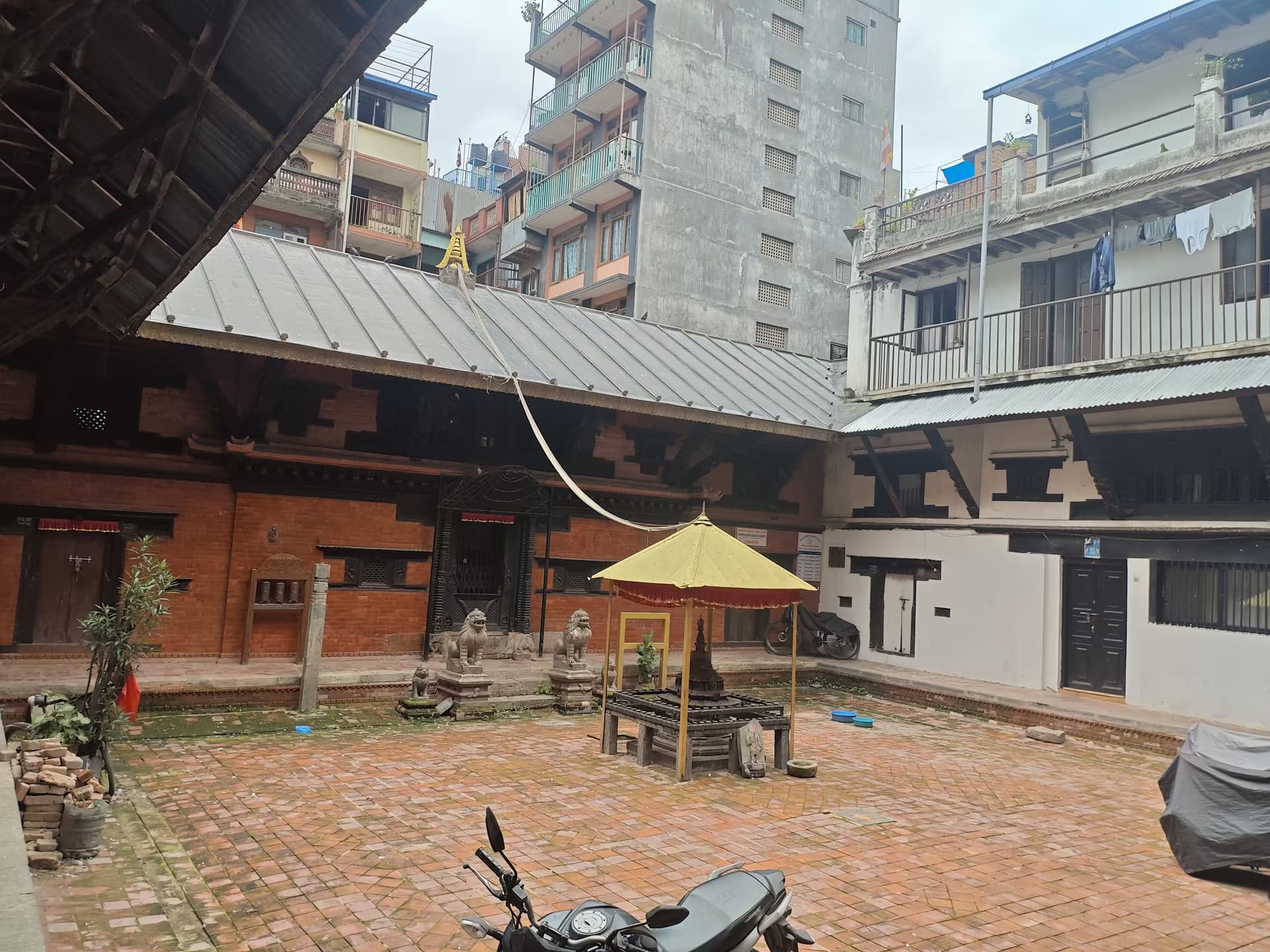
Karunapur Mahavihar (Musya Baha)
A Newar Buddhist courtyard monastery known locally as Musya Baha, in the Jyatha quarter of central Kathmandu, a short walk from Thamel.
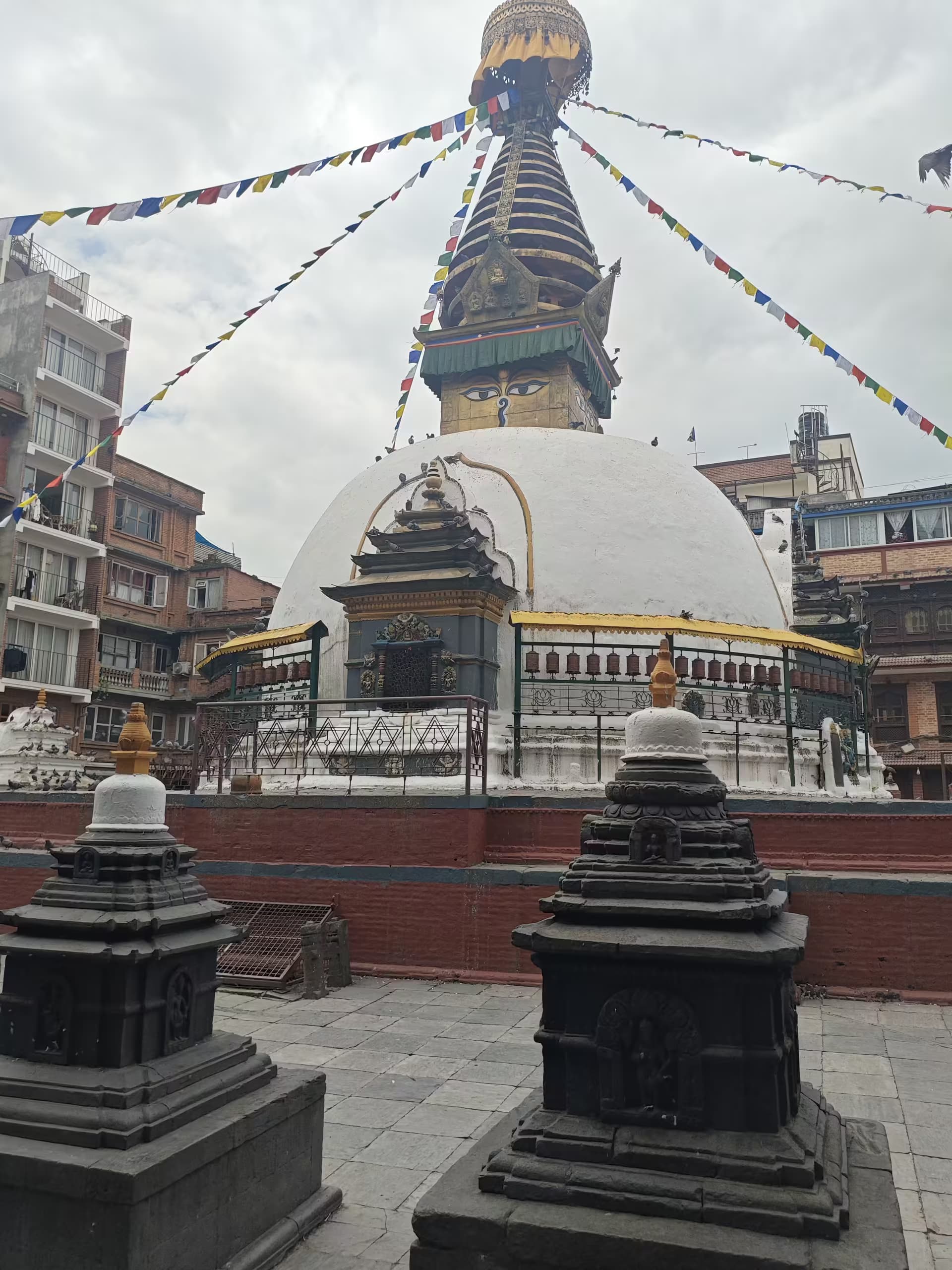
Dharmakirti Bahal (Sighal Bahal / Kathesimbhu)
A Newar Buddhist courtyard just south of Thamel, built around the 17th-century Kathesimbhu Stupa — a miniature replica of Swayambhu — and today home to the Dharmakirti Theravada nunnery.
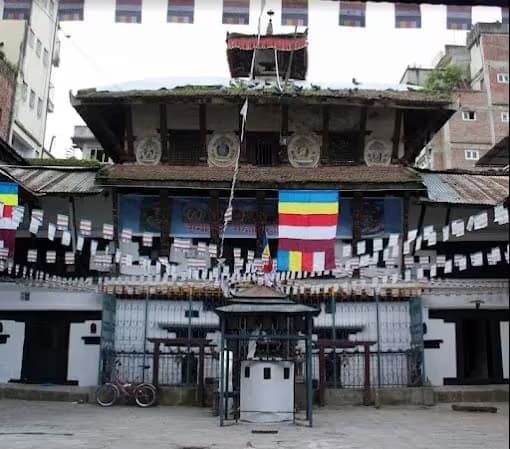
Kwa Bahal (Maitripur Mahavihar)
The 'mother bahal' of Kathmandu's 18 principal monasteries, home to Kwapa Dya — the presiding deity of the entire mahavihar network — and one of the Valley's oldest scholastic centers for Vajrayana Buddhism.
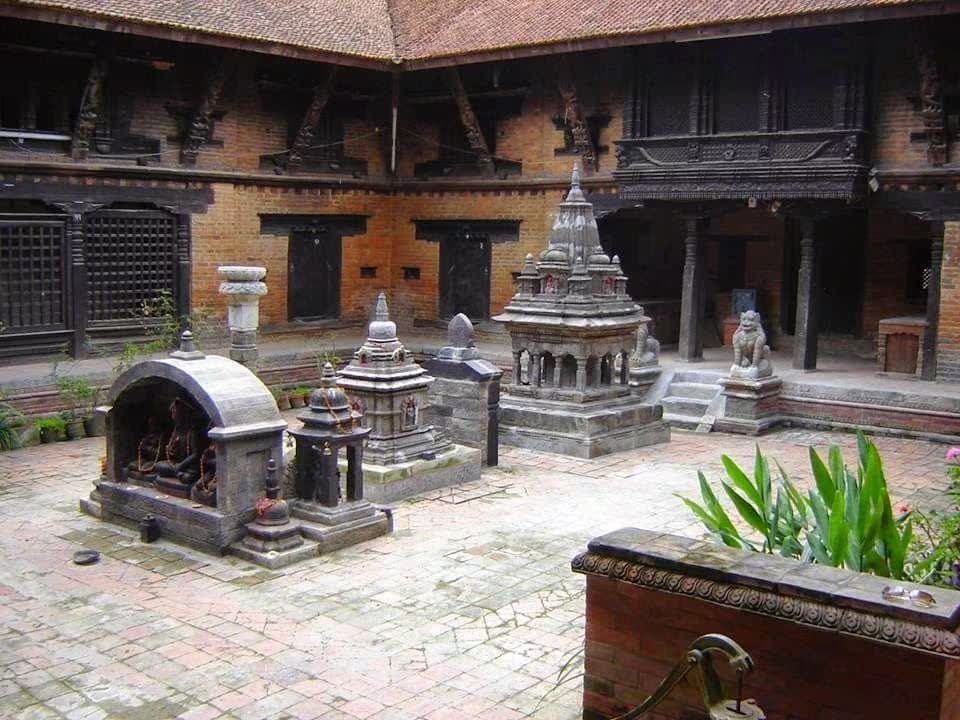
Chusya Bahal (Gunakar Mahavihar)
A well-preserved 1662 monastery built by a Nepal-Tibet trader, one of the finest surviving examples of traditional Newar Buddhist monastic architecture in Kathmandu.
Coda
Continue the Pilgrimage
Planning this visit? Local operators publishing trips here can arrange it.
Elsewhere in this region
Help us get it right
Know Bhagwan Bahal (Vikramashila Mahavihar) better than we do?
We write from research and reporting, and the ground changes faster than we can keep up. If something here is out of date, or you have been and would tell it differently, we would rather hear it.