Temple · Hindu
Chandeshwori Temple, Banepa
चण्डेश्वरी मन्दिर
Chandeshwori — a fierce form of Durga, counted among the Navadurga, who slew the demon Chanda·Foundation attributed by local tradition to King Ananda Malla; the standing three-tiered pagoda dates to a 17th-century rebuilding·Kavrepalanchok
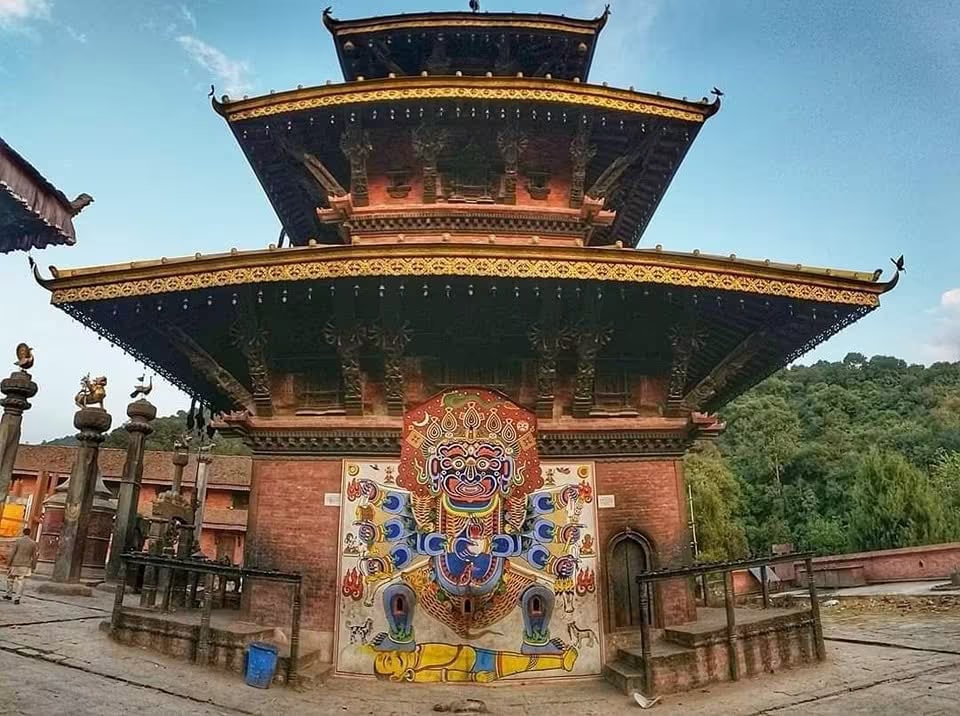
Banepa's presiding goddess in a three-tiered pagoda above the Punyamata, its west wall carrying a Bhairava mural repainted by hand each year — the anchor of Chandeshwori Jatra.
Dedicated to
Chandeshwori — a fierce form of Durga, counted among the Navadurga, who slew the demon Chanda
Period
Foundation attributed by local tradition to King Ananda Malla; the standing three-tiered pagoda dates to a 17th-century rebuilding
Hours
Dawn to dusk daily; the busiest worship is early morning and on the Baisakh Purnima festival days
Admission
Free
Neighborhood
Chandeshwori, on the Punyamata river north-east of the old bazaar
Chandeshwori stands about a kilometre north-east of Banepa's old bazaar, on the bank of the Punyamata, beside the pool at Ghokechaur. It is the presiding shrine of Banepa and the fixed point around which the whole of Chandeshwori Jatra turns.
The goddess and the name
The goddess is a fierce form of Durga, counted locally among the Navadurga. The name comes from the demon Chanda, whom she killed — Chanda-ishvari, lord of Chanda — and the killing is the subject of a relief on the temple itself. The local telling insists the demon had a boon that made him unkillable by any man, which is why a goddess had to do it; that detail is the whole reason the town's biggest festival belongs to her rather than to a male deity.
The building
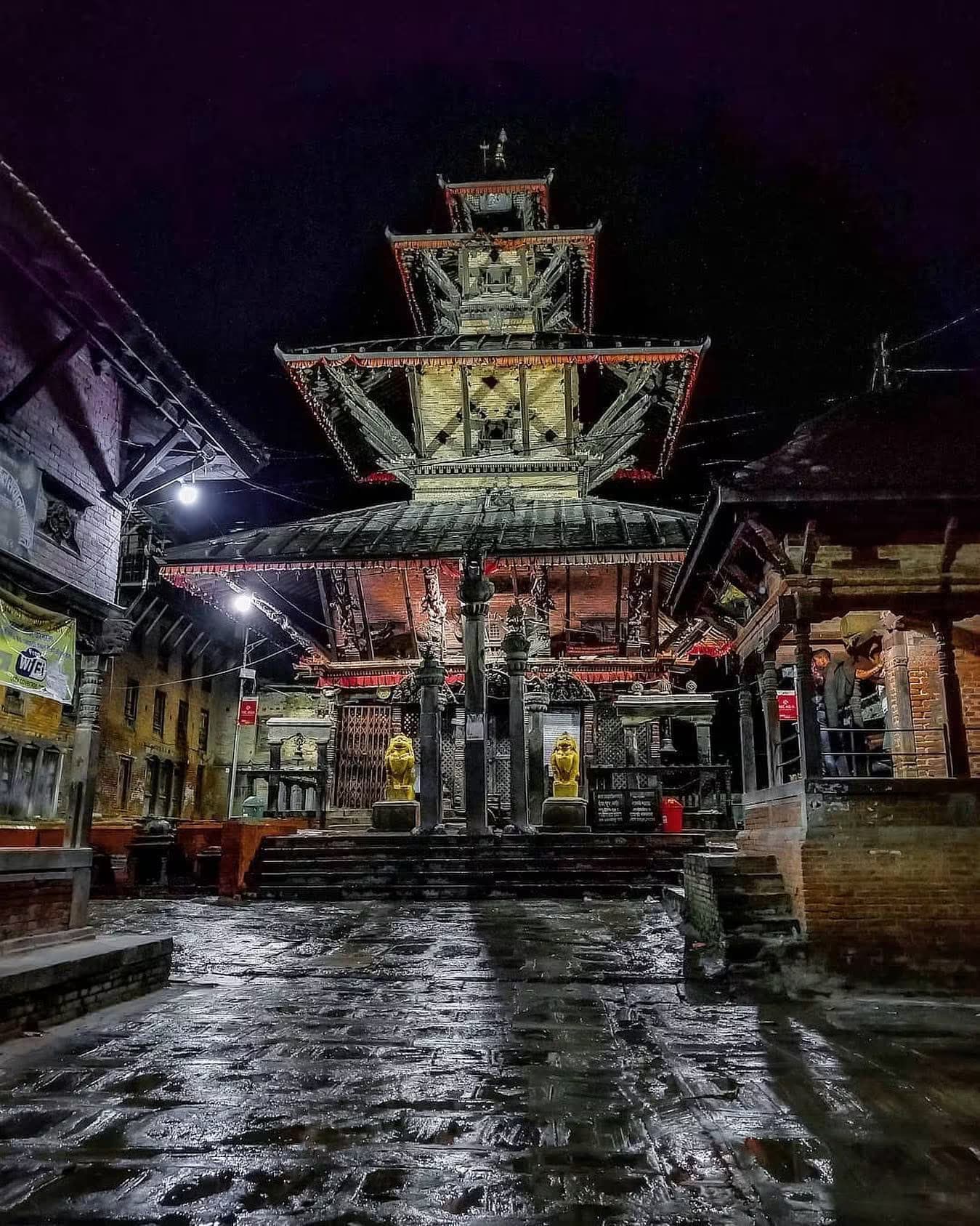
The present structure is a three-tiered pagoda, generally dated to a seventeenth-century rebuilding of a much older foundation. Local tradition credits the original endowment to King Ananda Malla, the same figure the town credits with walling Banepa behind eight gates and founding the seven towns of the valley — a legendary rather than a documented attribution, but one that is repeated on site and matters to how Banepa understands itself.
In the small shrine standing in front of the main temple is a lingam said to have grown from the demon's body after the goddess killed him, and the local telling points at the big rocks down by the river as the marks the fight left. The roof struts carry the Ashta Matrika — the eight mother goddesses — paired with the Ashta Bhairava, and the woodwork is worth more time than most visitors give it.
The Bhairava on the west wall
The thing people come to photograph is not the pagoda but the enormous painted Bhairava on the west wall — a Masan Bhairav, the Bhairava in his burning-ground aspect. It is repainted rather than restored, redone by hand on a regular cycle rather than conserved as a historic surface, which is why the colours are always saturated and why the figure shifts slightly from decade to decade. It is often described as the largest painted Bhairava in the Nepal Mandala; whether or not that survives measurement, it is unmistakably the largest thing in Banepa.
Going during the jatra
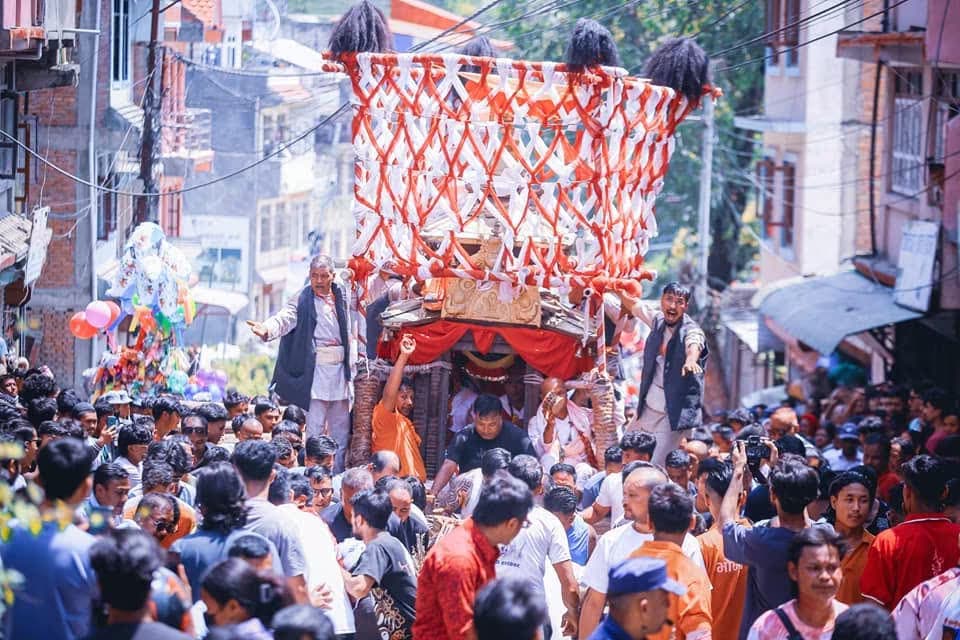
The festival runs three days from Baisakh Purnima, the April/May full moon, and the first day's chariot procession leaves from here. If you want the temple rather than the crowd, come on any other morning — it is quiet, free, and ten minutes' walk from the Arniko Highway.
Around it
Banepa itself is the walk down; Nala Bhagwati is three kilometres north-west, and the pairing of the two goddesses is a natural half-day. Panauti and Dhulikhel are each within twenty minutes by road.
Access & Mobility
Reached on a paved lane off the Arniko Highway, about a ten-minute walk from Banepa bus stop. The courtyard is level; the final approach from the river side is by stone steps.
- Vehicle
- On foot
Best visited in autumn.autumn: best, 10°C to 25°C. Clear, comfortable and the best light on the Bhairava mural. Dashain brings heavy local worship without the jatra crowds. monsoon: possible, 19°C to 28°C. Green and very quiet. The Punyamata runs high below the temple and the ghat steps are slippery; the courtyard itself is fine. spring: good, 12°C to 28°C. Warm and hazy, but this is the season that matters — Chandeshwori Jatra runs three days from the Baisakh Purnima full moon and the town fills. winter: good, 2°C to 18°C. Cold mornings, empty courtyard, sharp air. The best time to look at the woodwork without anyone in the way.
The Almanac
Green and very quiet. The Punyamata runs high below the temple and the ghat steps are slippery; the courtyard itself is fine.
Coda
Continue the Pilgrimage
Part of
Banepa
Related
Connected places and entries worth pairing
Planning this visit? Local operators publishing trips here can arrange it.
Elsewhere in this region
Help us get it right
Know Chandeshwori Temple, Banepa better than we do?
We write from research and reporting, and the ground changes faster than we can keep up. If something here is out of date, or you have been and would tell it differently, we would rather hear it.