
Temple · Hindu
Kalika Bhagwati Temple, Baglung
कालिका भगवती मन्दिर, बागलुङ
Kalika (Bhagwati) — the goddess in her fierce form·Traditionally founded 1591 BS (c. 1534 CE); present structures rebuilt and extended since·Baglung
Baglung's great goddess temple, set in a protected sal grove above the Kali Gandaki — the ritual centre of the district at Dashain and Chaite Dashain.
Dedicated to
Kalika (Bhagwati) — the goddess in her fierce form
Period
Traditionally founded 1591 BS (c. 1534 CE); present structures rebuilt and extended since
Hours
Dawn to dusk; busiest on the ninth day of Dashain and at Chaite Dashain
Admission
Free
Neighborhood
Kalika forest, Baglung Municipality
Kalika Bhagwati is the presiding goddess of Baglung and the temple that gives the district its ritual centre. It stands just south-east of Baglung bazaar on high ground above the Kali Gandaki, inside a stand of old sal and chap forest that the temple's own trust has protected for centuries — the grove is as much of the site as the shrine, and one of the few pieces of undisturbed mid-hill forest left this close to a district headquarters.
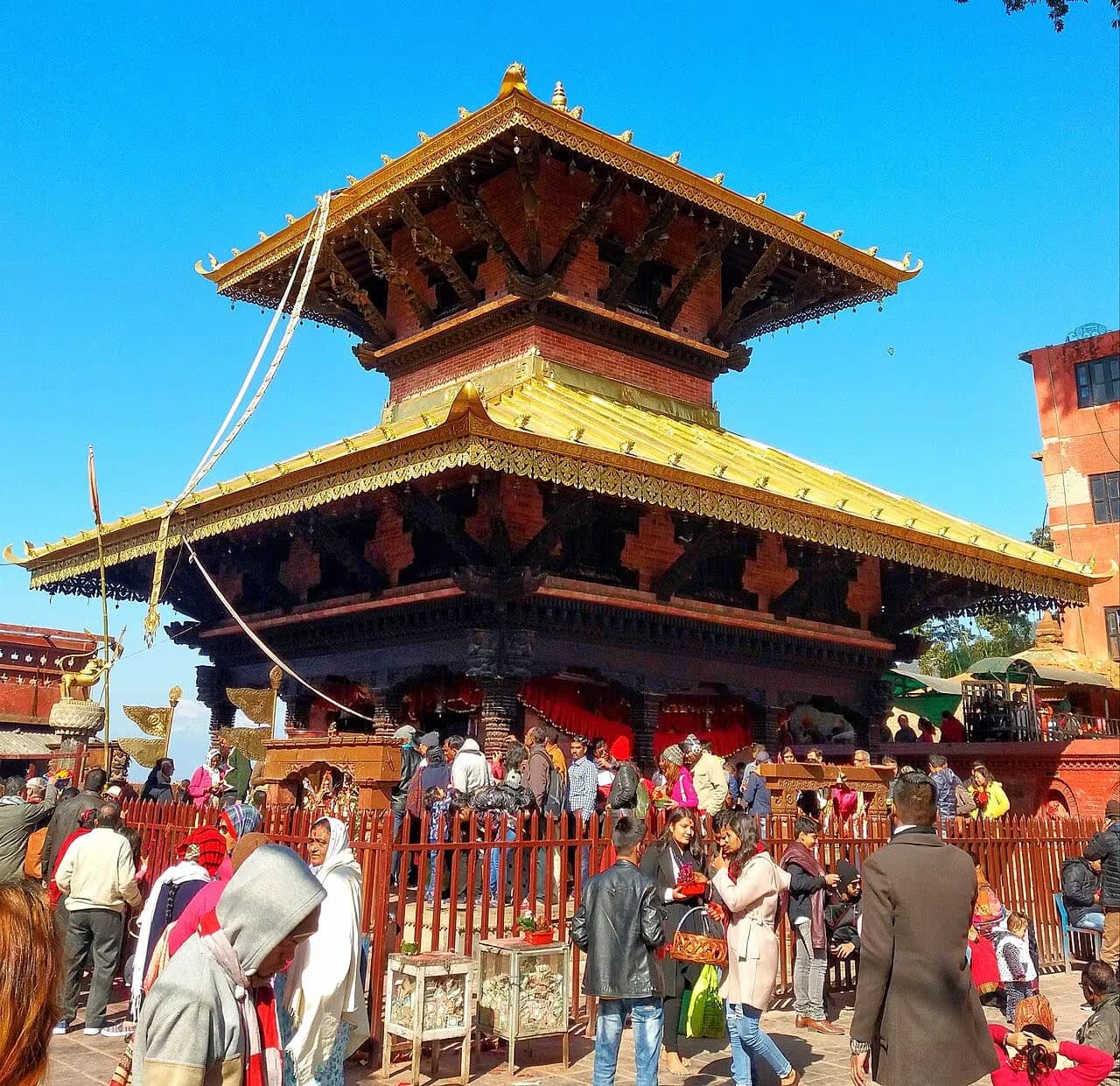
The shrine itself is a three-tiered pagoda of brick and timber, its roofs hung with red and yellow cloth, standing on a broad paved courtyard with smaller shrines around the edge. The deity is Kalika, the goddess in one of her fiercest forms, and the temple is a Shakti site rather than a monument. Local tradition puts its founding in 1591 BS (about 1534 CE), but the two accounts of how it came to be here do not agree, and both are worth knowing. One credits Mani Mukunda Sen of Palpa, who is said to have built it at the wish of his daughter after her marriage. The other, the version told most often in Baglung itself, credits Pratap Narayan Singh Malla of Parbat: he received an idol of Kalika as part of his wife's dowry, the wedding procession sheltered overnight in this forest, and the next morning nobody could lift the idol from the spot — so the king built her a temple where she had chosen to stay.
The temple's year turns on two festivals. Dashain, through the bright fortnight of Ashwin, is the larger, and Baglung Kalika is one of western Nepal's major Dashain destinations — the ninth day in particular draws crowds from across Baglung, Parbat, Myagdi and Gulmi. Chaite Dashain, on the eighth day of the bright fortnight of Chaitra, is the spring counterpart and is in some ways the more distinctively local of the two. Teej and Navaratri are observed here as well.
Animal sacrifice has been part of worship at Kalika for as long as the temple has existed, and visitors should expect to encounter it during Dashain. The practice has also been reformed in part: pigeon sacrifice was ended in April 2016, and pigeons brought as offerings are now released within the temple grounds instead.
The temple is an easy visit by Nepali standards — Baglung sits on the Pokhara–Beni road, roughly three to four hours from Pokhara, and the shrine is a short ride and a walk from the bazaar. That makes it the most accessible of the western hills' major goddess temples, and a natural stop on the way up the Kali Gandaki towards Beni, Myagdi and Mustang.
Access & Mobility
Road access reaches close to the temple from Baglung bazaar, but the final approach is on steps and uneven stone paths through the forest. Manageable for most visitors; difficult for wheelchairs and very crowded during Dashain.
- Vehicle
Baglung is on the Pokhara–Beni highway, roughly three to four hours from Pokhara; the temple is a short ride from the bazaar.
- On foot
Walkable from Baglung bazaar in well under an hour, ending on steps through the protected grove.
Coda
Continue the Pilgrimage
Related
Connected places and entries worth pairing
Guides that feature this place
Planning this visit? Local operators publishing trips here can arrange it.
Elsewhere in this region
Help us get it right
Know Kalika Bhagwati Temple, Baglung better than we do?
We write from research and reporting, and the ground changes faster than we can keep up. If something here is out of date, or you have been and would tell it differently, we would rather hear it.