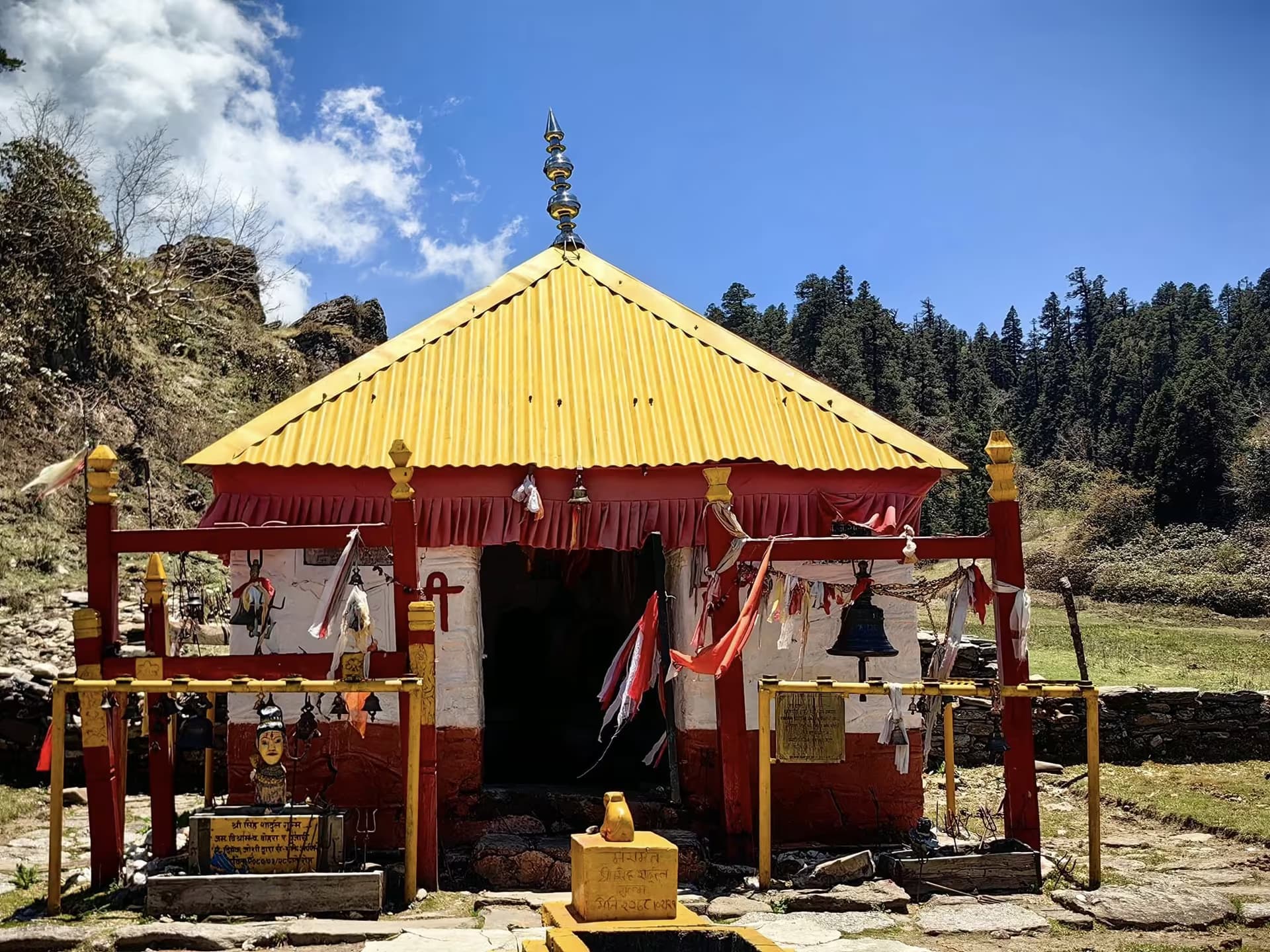
Shrine · Hindu
Khaptad Ashram
Khaptad Baba; meditation and Hindu ascetic practice·20th-century ascetic retreat associated with Khaptad Baba·Bajhang
Remote highland ashram associated with Khaptad Baba inside Khaptad National Park, a far-western Nepal pilgrimage retreat.
Dedicated to
Khaptad Baba; meditation and Hindu ascetic practice
Period
20th-century ascetic retreat associated with Khaptad Baba
Hours
Open access subject to national park access and weather
Admission
Free
Climate
himalayan
Khaptad Ashram is the meditation retreat associated with Khaptad Baba, the revered Hindu ascetic whose long residence in the high meadows helped shape Khaptad's spiritual identity. The ashram sits within Khaptad National Park, a remote plateau landscape of grasslands, forests, small shrines, and seasonal pilgrimage paths.
Unlike Nepal's city temples, Khaptad Ashram is a retreat destination. Pilgrims come for quiet, meditation, and the memory of Khaptad Baba rather than daily temple spectacle. The wider plateau includes Triveni, Sahashra Linga, and other sacred points visited during local fairs and devotional walks.
Access is demanding and weather dependent. Visitors normally combine road travel to the far-western hill districts with one or more days on foot inside the park, so the ashram should be planned as a highland pilgrimage rather than a casual shrine stop.
Access & Mobility
Remote highland site requiring vehicle travel plus walking inside Khaptad National Park; not suitable for visitors who cannot manage uneven trails and basic facilities.
- On foot
Final access is on foot inside Khaptad National Park; route choice depends on roadhead and season. Trail: khaptad-ashram-approach
Coda
Continue the Pilgrimage
Guides that feature this place
Planning this visit? Local operators publishing trips here can arrange it.
Elsewhere in this region
Help us get it right
Know Khaptad Ashram better than we do?
We write from research and reporting, and the ground changes faster than we can keep up. If something here is out of date, or you have been and would tell it differently, we would rather hear it.