Shrine · Hindu
Triveni Dham, Khaptad
त्रिवेणी धाम, खप्तड
Shiva; the sacred confluence of the Akashganga, Swarnaganga and Nilaganga·Long-established Hindu confluence pilgrimage; closely associated with Khaptad Baba in the 20th century·Bajhang
The sacred three-river confluence at the heart of the Khaptad plateau, with a Shiva temple and the far west's biggest high-meadow fair at Ganga Dashahara.
Dedicated to
Shiva; the sacred confluence of the Akashganga, Swarnaganga and Nilaganga
Period
Long-established Hindu confluence pilgrimage; closely associated with Khaptad Baba in the 20th century
Hours
Open-air site, subject to national park access and weather; effectively closed by snow in winter. Main worship at Ganga Dashahara, at the Jestha full moon
Admission
Free
Climate
himalayan
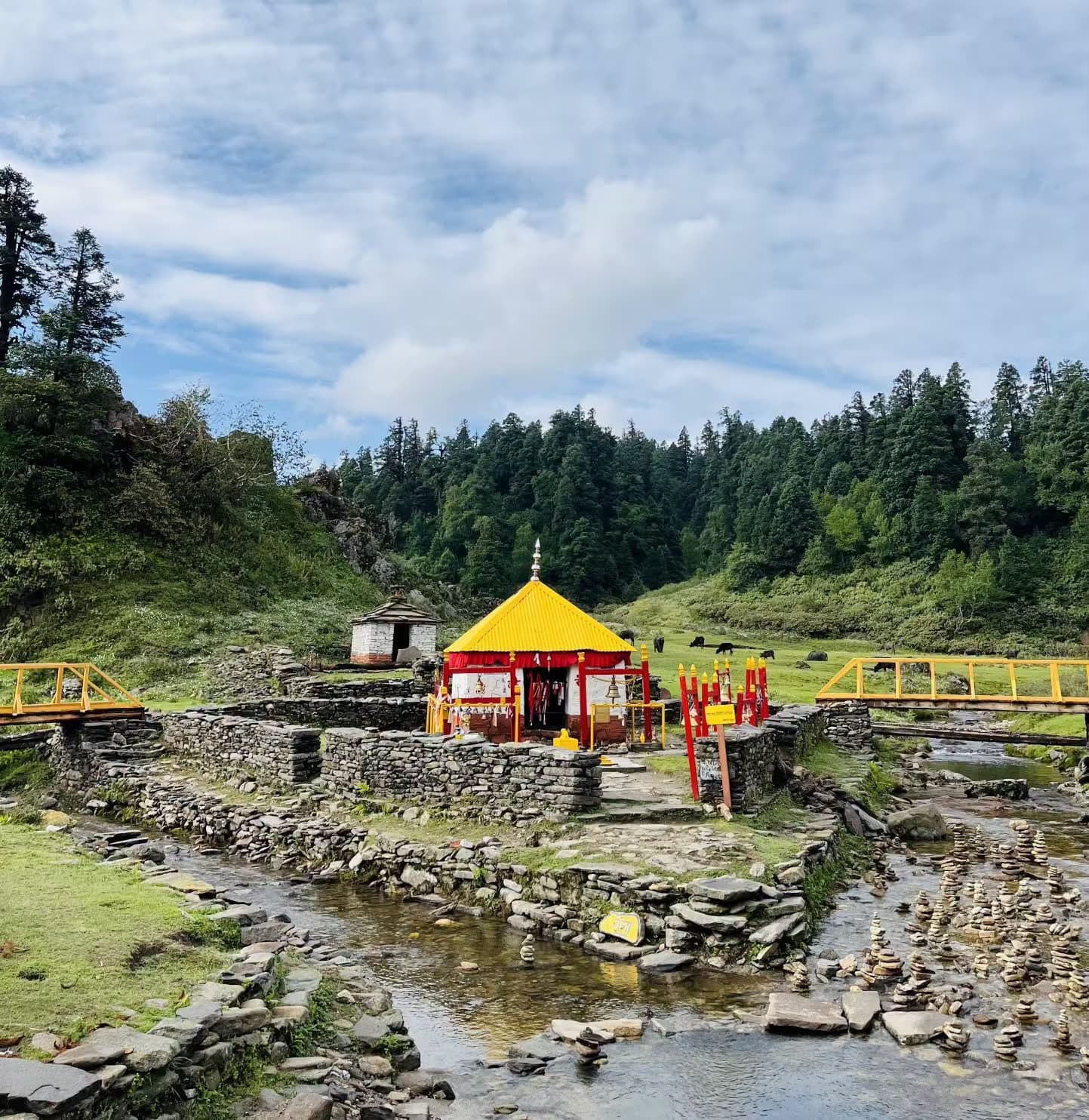
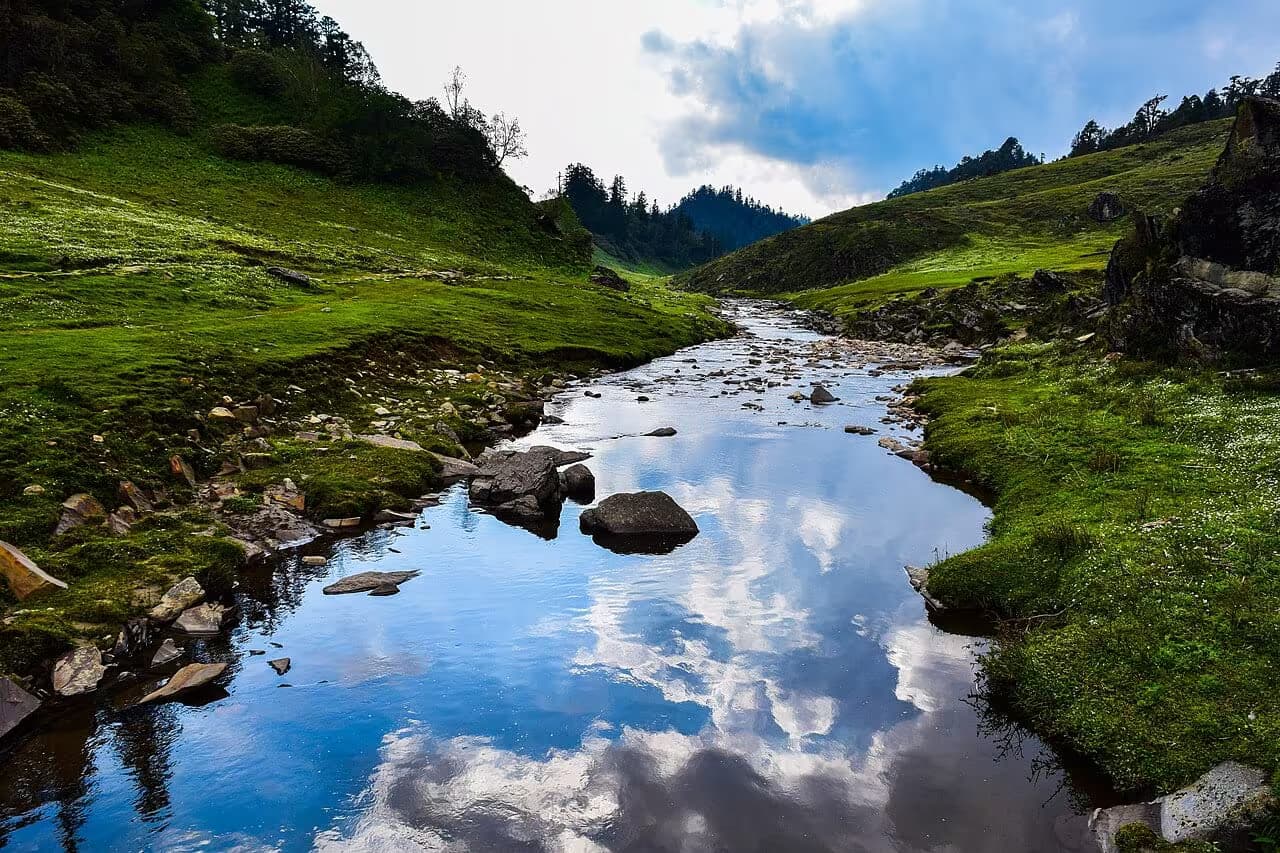
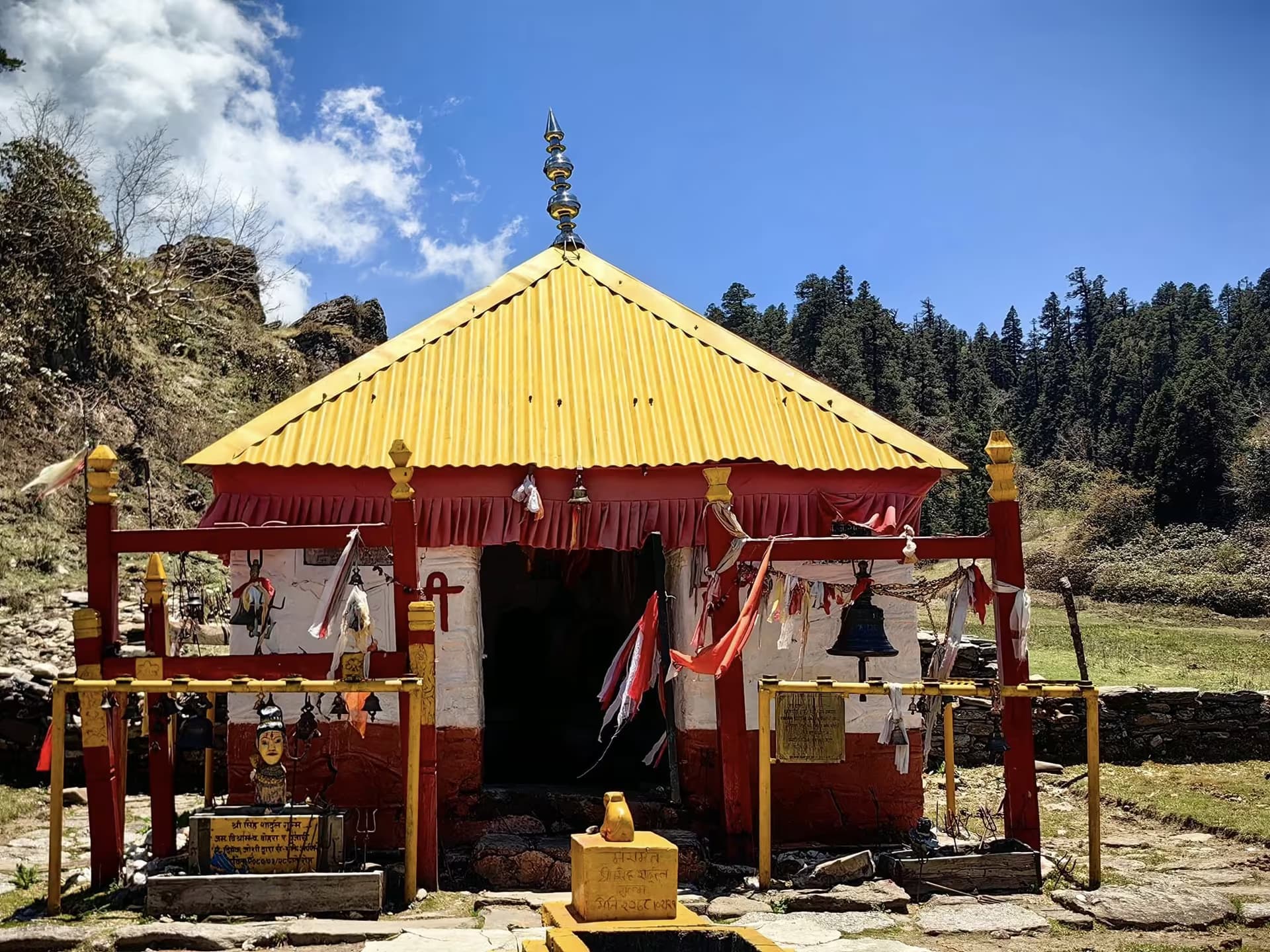
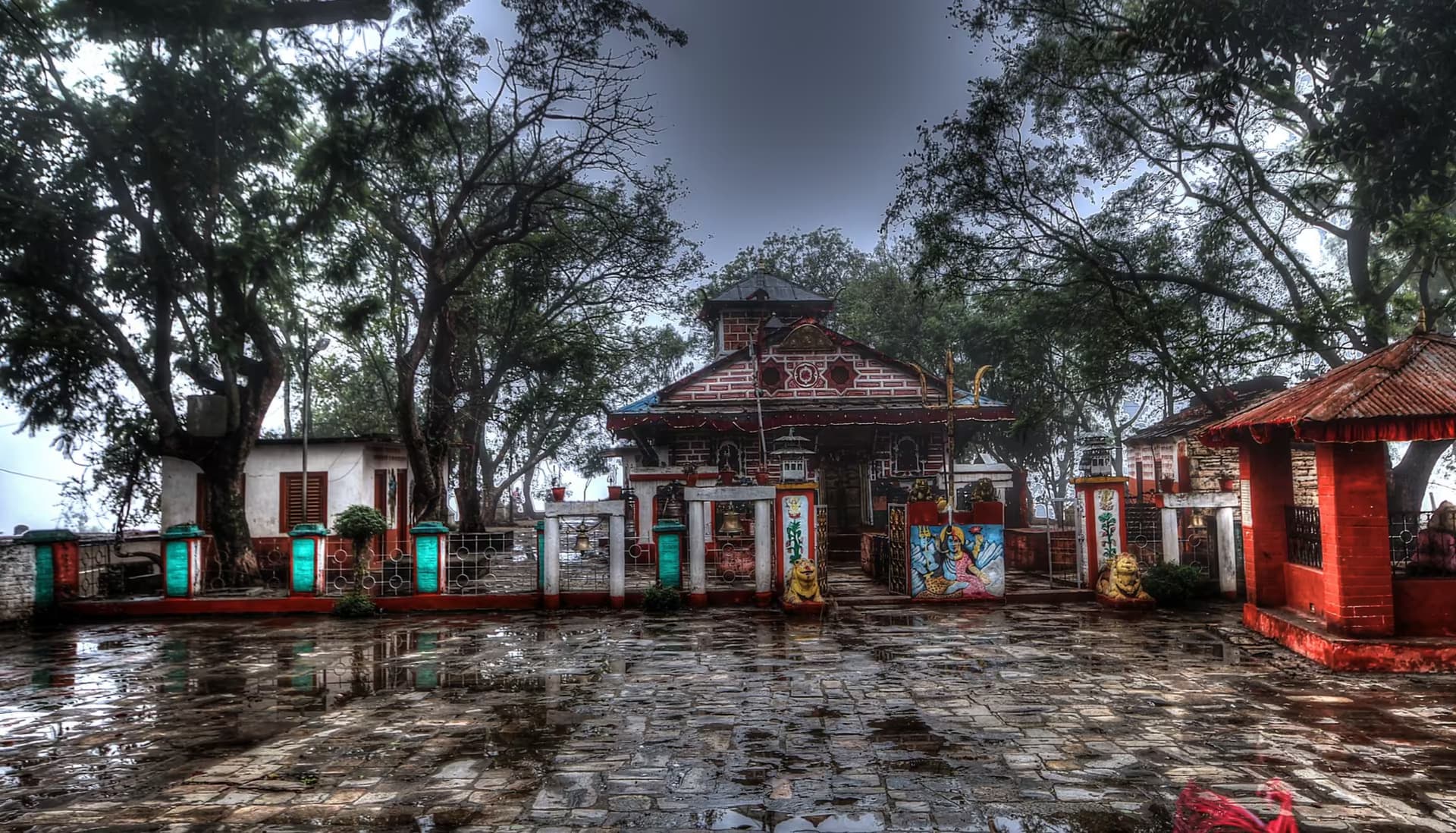
Triveni is the sacred centre of the Khaptad plateau — the point where three streams meet at around 3,000 metres inside Khaptad National Park, with a Shiva temple beside the water. The three are named for what they are said to carry: Akashganga from the east, Swarnaganga down from the Sahasra Linga ridge, and Nilaganga from the north. A confluence of three rivers is holy across the subcontinent, and this is the far west's own, set not in a valley town but in open high grassland.
It sits close to the park headquarters and to Khaptad Ashram, and the two are really one pilgrimage: Khaptad Baba lived at Triveni, and the plateau's spiritual identity grew around this water rather than around a building. Sahasra Linga, the park's highest point at about 3,200 metres, is the third station on the same circuit and holds its own fair.
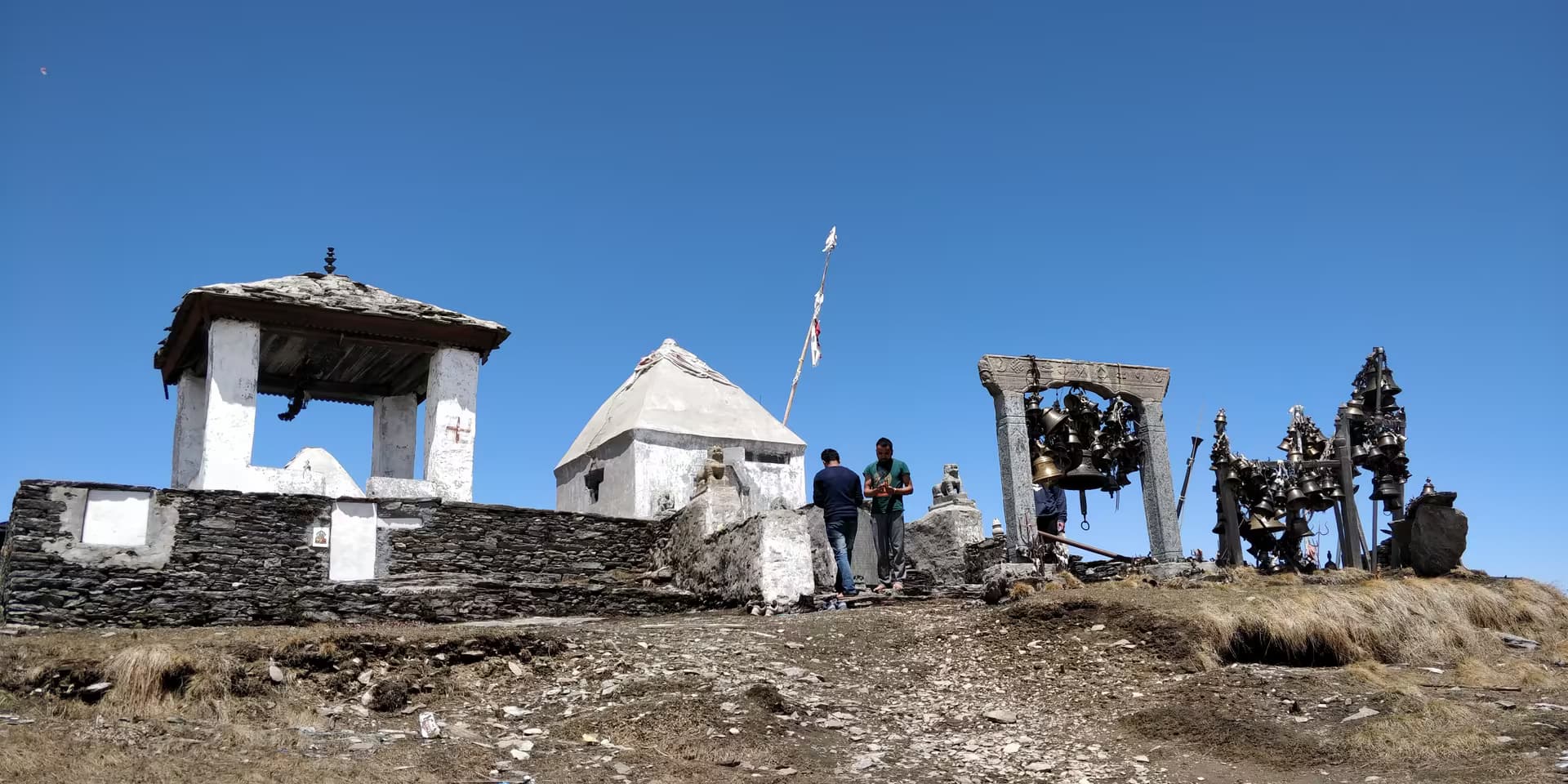
The year's one great gathering is Ganga Dashahara, at the Jestha full moon in late May or June, when thousands of pilgrims walk in from Doti, Bajhang, Bajura and Achham for a fair on the meadows and ritual bathing at the confluence. Outside that window Triveni is quiet, and for much of the winter it is snowbound and effectively closed.
Getting here is the same commitment as the ashram: a road journey into the far-western hills followed by a day or more on foot inside the park. The standard approaches are from Silgadhi in Doti, about 50 km out, or Chainpur in Bajhang, about 32 km — both finishing on foot. National park entry rules apply, and the park's long-standing convention of not walking after sunset or before sunrise is worth respecting.
One note on the name: this is not the Triveni Dham at Triveni Susta in Nawalparasi, on the Indian border, which is a separate and much larger Terai pilgrimage.
Access & Mobility
Remote highland site at around 3,000m reached by road into the far-western hills plus a day or more on foot inside Khaptad National Park. No vehicle access to the confluence, basic facilities only, and no medical or rescue cover. Not suitable for visitors who cannot manage sustained walking on uneven trails.
- Vehicle
Road reaches Silgadhi in Doti or Chainpur in Bajhang; neither reaches the plateau itself.
- On foot
Roughly 50 km on foot from Silgadhi or 32 km from Chainpur to the park headquarters area; route and roadhead vary by season. Trail: khaptad-ashram-approach
Coda
Continue the Pilgrimage
Related
Connected places and entries worth pairing
Guides that feature this place
Planning this visit? Local operators publishing trips here can arrange it.
Elsewhere in this region
Help us get it right
Know Triveni Dham, Khaptad better than we do?
We write from research and reporting, and the ground changes faster than we can keep up. If something here is out of date, or you have been and would tell it differently, we would rather hear it.