Temple · Hindu
Badimalika Temple
बडीमालिका मन्दिर
Bhagwati (Badimalika / Malika Devi, a form of Durga)·Long-established Shakti pilgrimage; present stone shrine rebuilt and extended over time·Bajura
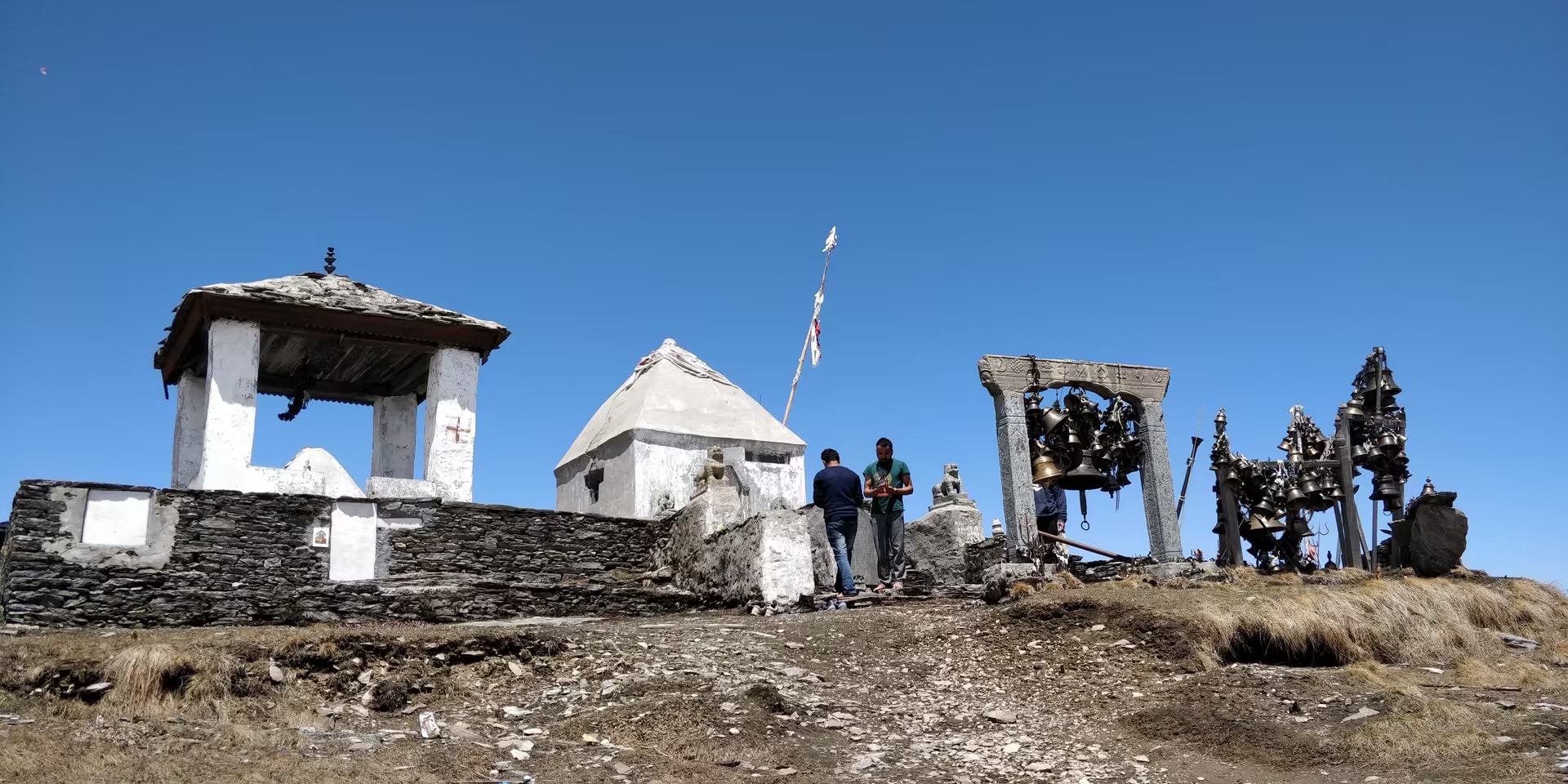
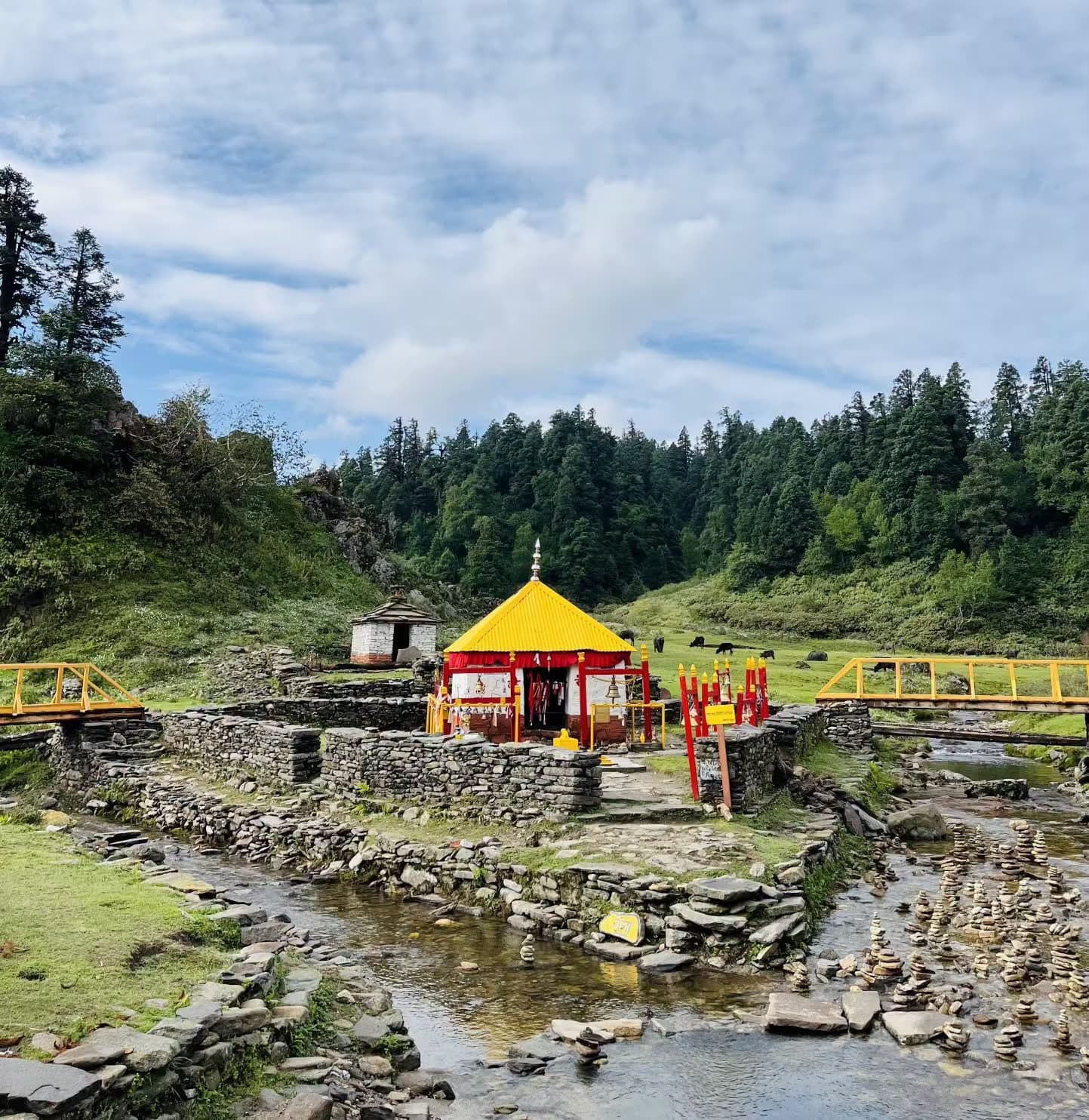
A stone shrine to Bhagwati at 4,200m on the Malika meadows of Bajura — the Far West's most important pilgrimage, walked to en masse at Janai Purnima.
Dedicated to
Bhagwati (Badimalika / Malika Devi, a form of Durga)
Period
Long-established Shakti pilgrimage; present stone shrine rebuilt and extended over time
Hours
Open air site, accessible on foot roughly May to October; effectively closed by snow in winter. Main worship at the Janai Purnima full moon in August
Admission
Free
Neighborhood
Malika meadows, Triveni Municipality
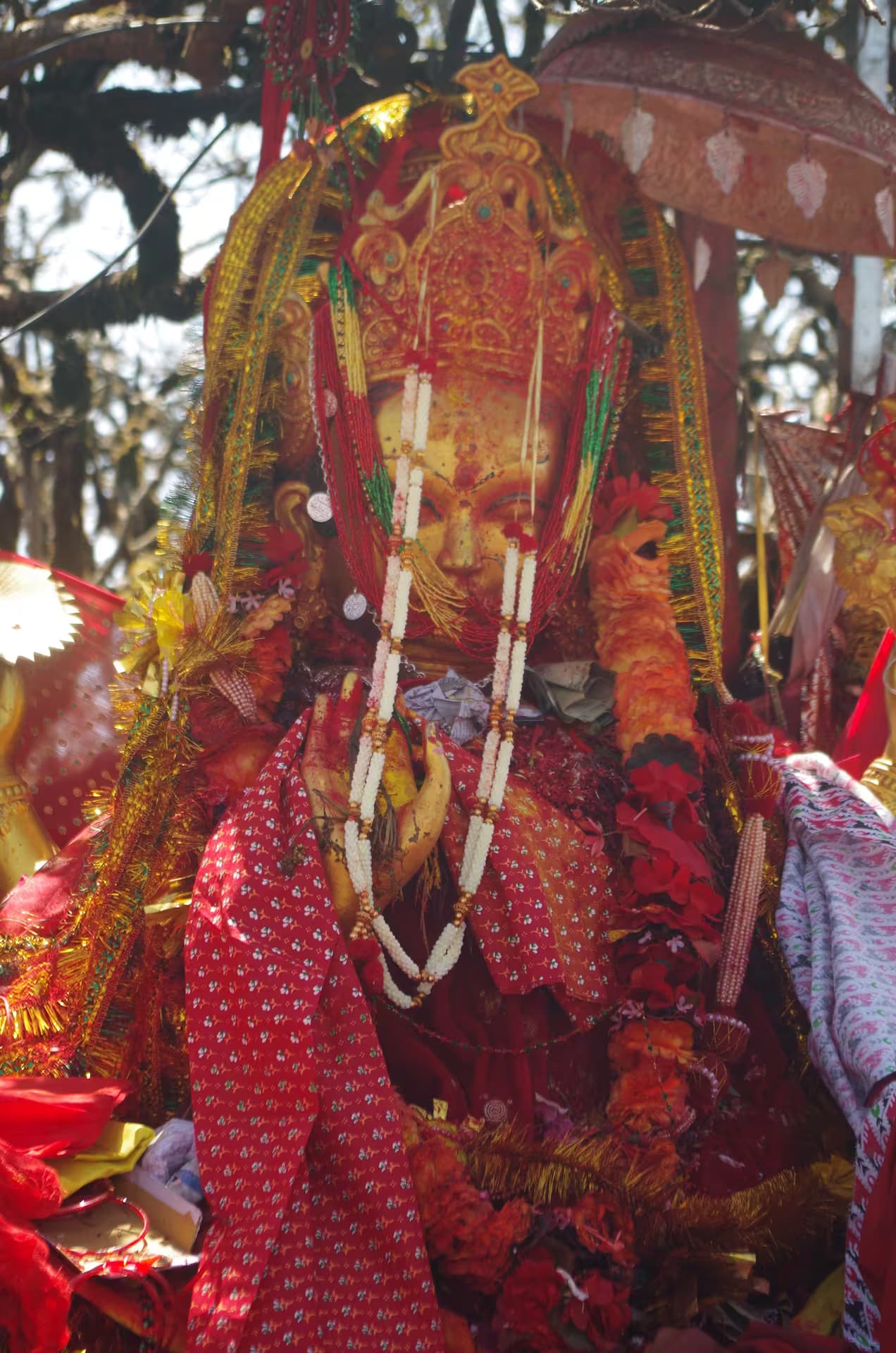
Badimalika is the great goddess shrine of Nepal's Far West, standing at about 4,200 metres on the high Malika meadows of Triveni Municipality in Bajura district, Sudurpaschim Province. The temple is dedicated to Bhagwati — the goddess in her Malika form — and is counted among the region's principal Shakti sites. It is not a building in the architectural sense so much as a stone enclosure on an alpine ridge, roofless to the sky, which is exactly how devotees describe its power.
The origin story places Badimalika within the Sati myth cycle: when Shiva carried the body of Sati across the world and her remains fell to earth in pieces, the left shoulder is said to have come to rest on this ridge. That claim links Badimalika to the pan-Himalayan network of Shakti Peeths and explains why pilgrims travel here from Achham, Doti, Bajhang, Kalikot and the Indian hill districts across the Mahakali.
The pilgrimage peaks at Janai Purnima, the August full moon, when many thousands of pilgrims converge on the meadows for the Malika Chaturdashi fair — an overnight gathering of song, offering and Deuda dancing at an altitude where most visitors are short of breath. A second, smaller gathering takes place at Ganga Dashahara. Outside these windows the site is empty, snowbound from roughly November to April, and the meadows are used for summer grazing.
Getting there is a walk, not a drive. Standard approaches begin from Martadi, the Bajura district headquarters, or from Nateshwari and Triveni, and take roughly three to five days each way through subtropical forest, rhododendron belt, and finally open alpine pasture — a full ecological cross-section of Nepal compressed into a few days. Tribeni Patan, the broad meadow below the shrine, is the usual final camp. There are no lodges on the upper route; pilgrims camp, or shelter in seasonal tea tents pitched for the festival.
This is a hard, high, weather-exposed pilgrimage with no rescue infrastructure and no acclimatisation built into the standard itinerary. It rewards travellers who treat it as a serious mountain undertaking and as someone else's act of devotion first.
Access & Mobility
High-altitude alpine shrine at about 4,200m reached only by a multi-day walk from Martadi, Nateshwari or Triveni. No road access, no lodges on the upper route, no medical facilities and no rescue cover. Altitude sickness is a real risk and the standard pilgrim itinerary allows little acclimatisation. Not suitable for travellers with cardiac or respiratory conditions, or for anyone who cannot manage several consecutive days of steep walking.
- Vehicle
Road reaches Martadi and, seasonally, trailhead villages in Triveni Municipality; the shrine itself has no vehicle access.
- On foot
Three to five days on foot each way from Martadi, Nateshwari or Triveni, camping at Tribeni Patan below the shrine.
Best visited in monsoon.autumn: good, -3°C to 10°C. The best weather of the year for the walk in: clear, stable and almost empty once the fair is over. The seasonal tea tents come down, so carry everything you need. monsoon: best, 2°C to 12°C. The pilgrimage season. Janai Purnima at the August full moon brings many thousands onto the meadows for the Malika Chaturdashi fair. It is also the wettest, muddiest walking of the year — a devotional window rather than a comfortable one. spring: possible, -6°C to 8°C. Snow lingers on the upper meadows well into May and the shrine is usually only reachable at the very end of the season. The lower approaches from Martadi open earlier. winter: avoid, -15°C to 0°C. Snowbound and effectively closed. No shelter, no tea tents and no rescue cover anywhere on the upper route.
The Almanac
The pilgrimage season. Janai Purnima at the August full moon brings many thousands onto the meadows for the Malika Chaturdashi fair. It is also the wettest, muddiest walking of the year — a devotional window rather than a comfortable one.
Coda
Continue the Pilgrimage
Related
Connected places and entries worth pairing
Planning this visit? Local operators publishing trips here can arrange it.
Elsewhere in this region
Help us get it right
Know Badimalika Temple better than we do?
We write from research and reporting, and the ground changes faster than we can keep up. If something here is out of date, or you have been and would tell it differently, we would rather hear it.