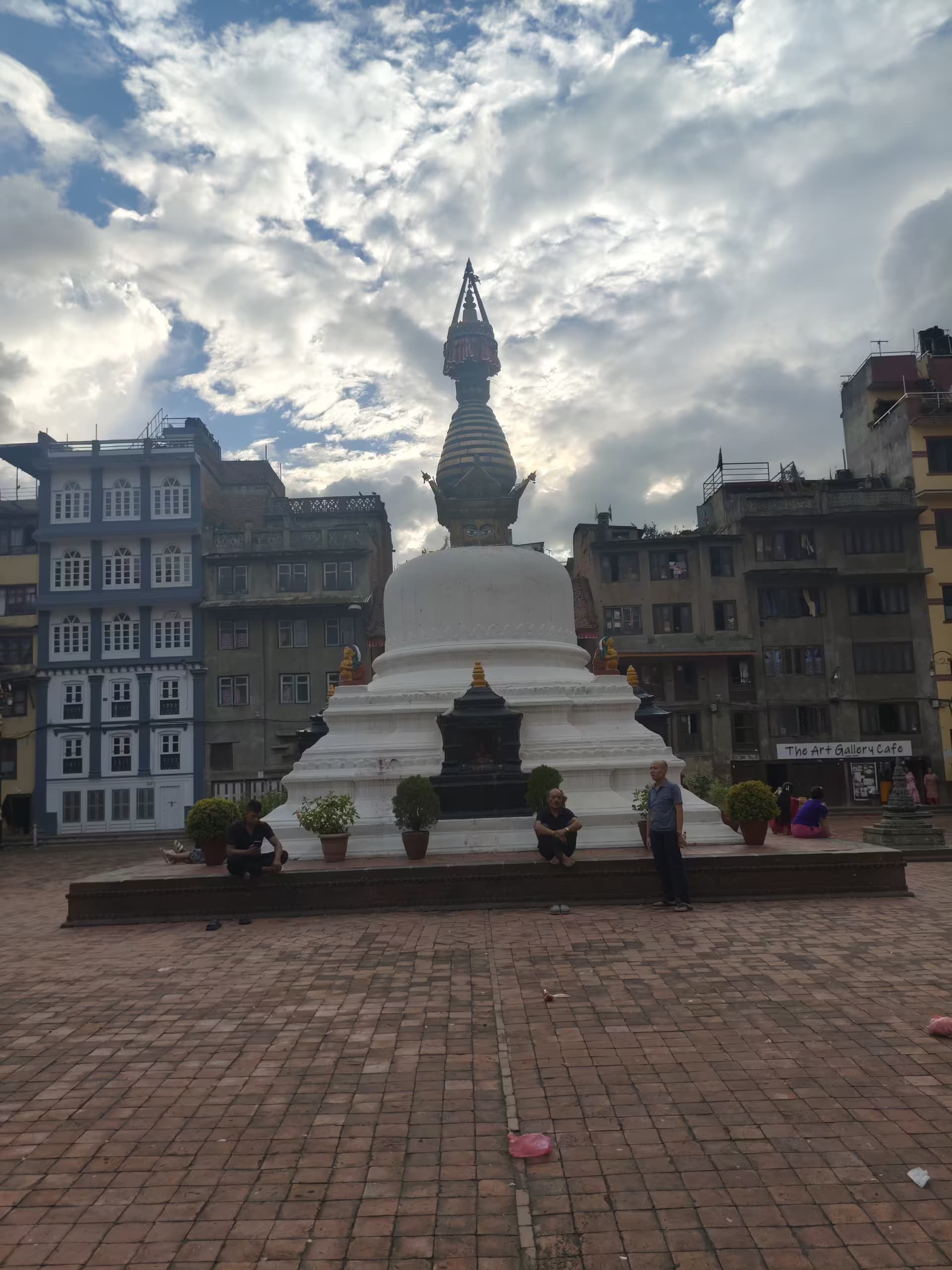
Bahal · Buddhist
Yetakha Bahal (Bhaskarakirti Mahavihar)
यतखा बहाल❊येतखा बहा:
Akshobhya Buddha·11th century CE (torana dated 900-1030 CE)·Kathmandu
Home to the oldest known wooden torana in the Kathmandu Valley (radiocarbon-dated 900-1030 CE) and stunning yaksha struts — a vast monastery courtyard hiding in plain sight near Durbar Square.
Dedicated to
Akshobhya Buddha
Period
11th century CE (torana dated 900-1030 CE)
Hours
Open courtyard (accessible during daytime)
Admission
Free
Neighborhood
Near Hanumandhoka Durbar Square, accessible via lane from Maju Dewal toward Naradevi
Yetakha Bahal, formally Sri Bhaskarakirti Mahavihar, is one of the most architecturally significant Buddhist monasteries in Kathmandu. Located just a five-minute walk from Hanumandhoka Durbar Square, this vast quadrangle — larger than a football field — centers on a white Buddhist stupa surrounded by around 80 residential buildings.
The monastery's greatest treasure is the wooden torana (decorative gateway panel) of the main shrine, radiocarbon-dated to 900-1030 CE, making it the oldest known wooden torana in the entire Kathmandu Valley. The panel depicts the Buddha preaching to an assembly, framed by mythological makaras and a kirtimukha, with a rocky background evoking Himalayan peaks — the only known torana showing a Himalayan scene.
The three-storey Dyo-chhen (deity house) features four magnificent carved-wood struts in the form of yaksha and yakshini figures, dating to the 12th-13th century. The ground floor houses an Akshobhya Buddha idol, while the upper chamber remains a sacred, restricted space.
A nineteenth-century inscription names the monastery Bhaskara Malla Mahavihara after a Kathmandu king who reigned from 1700 to 1722, though local tradition attributes its founding to the queen of King Bhaskara Deva in the 11th century. The Dyo-chhen was jointly restored by the Kathmandu Valley Preservation Trust (KVPT) and UNESCO between 2002 and 2006.
Folio III
Nearby Sacred Sites
Places within a short walk that help turn this stop into a small sacred cluster.
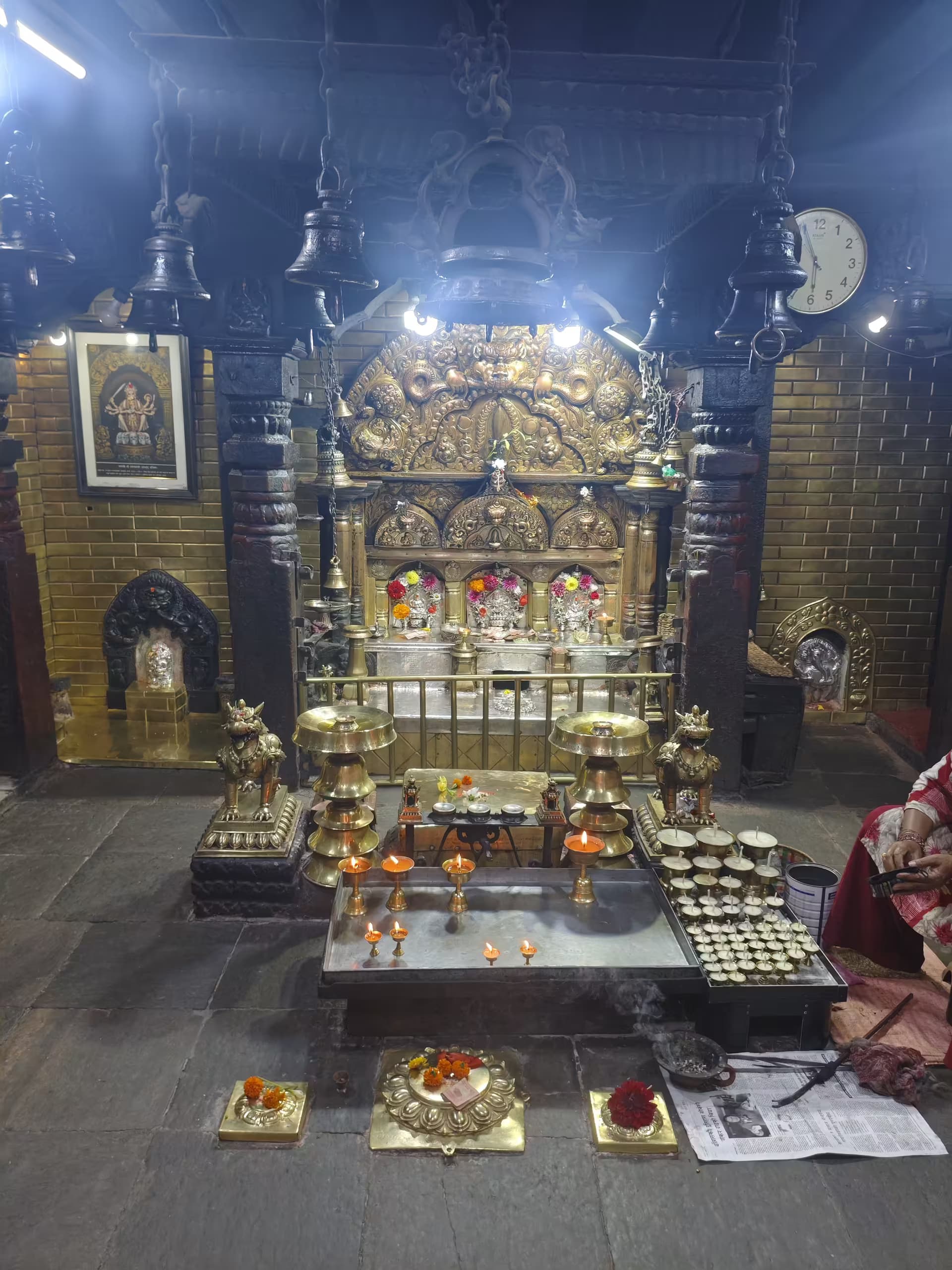
Naradevi Temple
An old inner-Kathmandu goddess temple near Durbar Square, worshipped as Sweta Kali and known to Newars as Nyata Ajima.
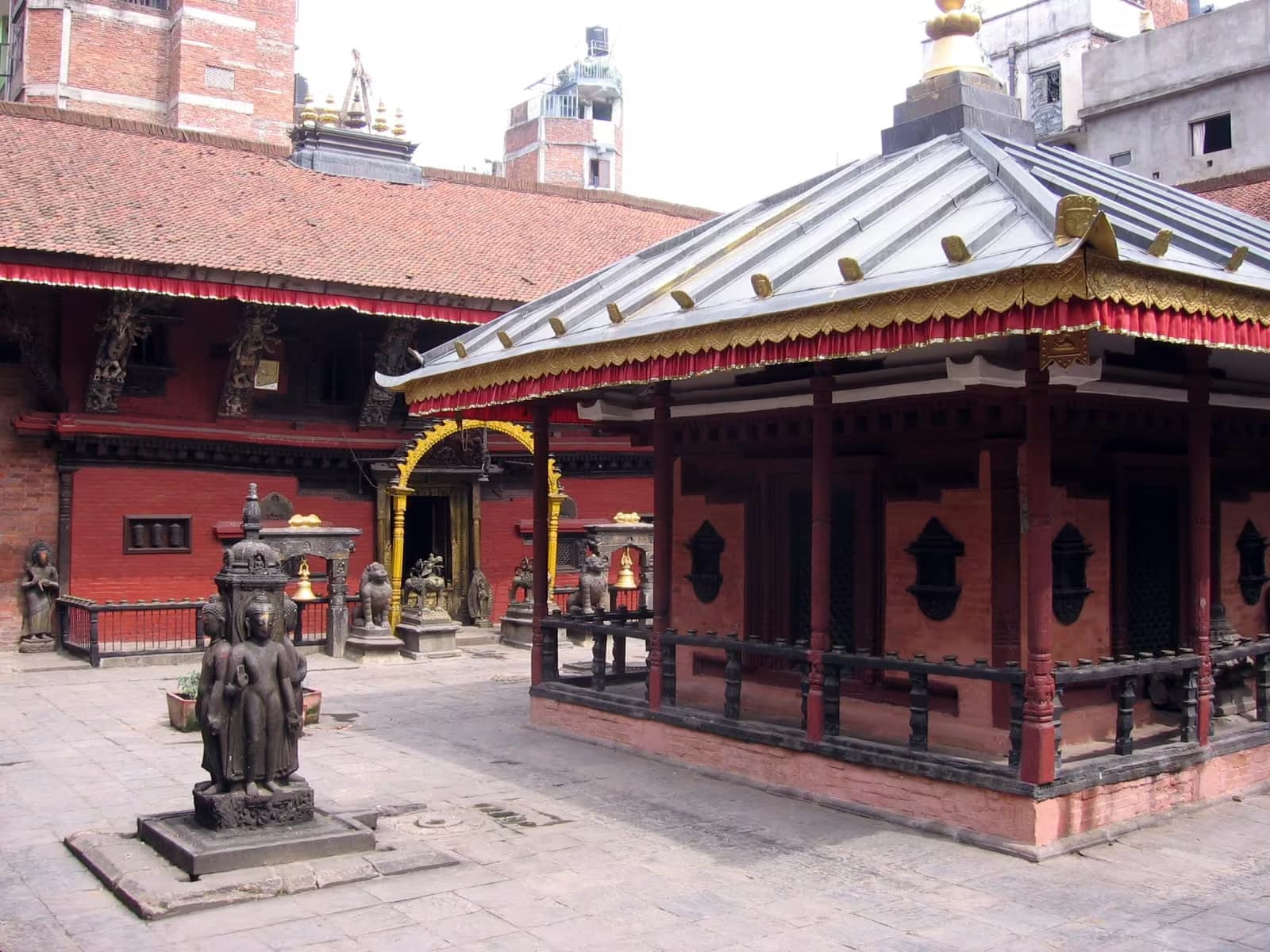
Itum Bahal (Keshchandra Mahavihar)
Kathmandu's largest Buddhist monastery complex with hidden courtyards, brass plaques depicting the Gurumapa legend, and a golden window relic.
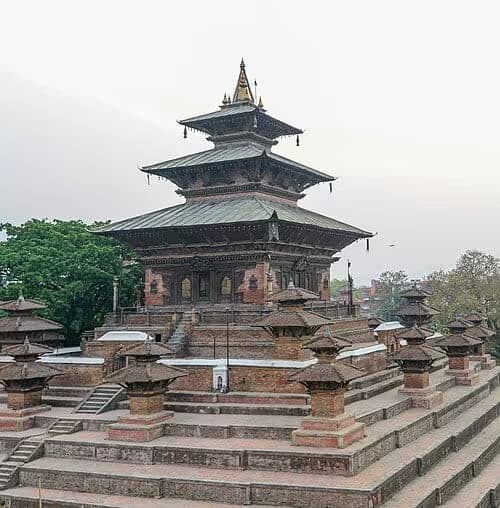
Taleju Temple
The tallest temple in Kathmandu Durbar Square — a 36-metre triple-roofed pagoda dedicated to the tutelary goddess of the Malla kings, open to Hindus only on Dashain's ninth day.
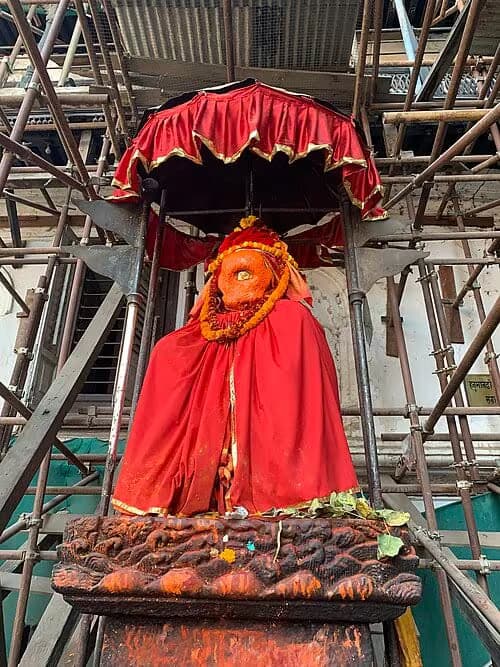
Hanuman Statue (Hanuman Dhoka)
The standing stone figure of Hanuman draped in a red cloak at the entrance to the old royal palace — the image that gave Hanuman Dhoka its name.
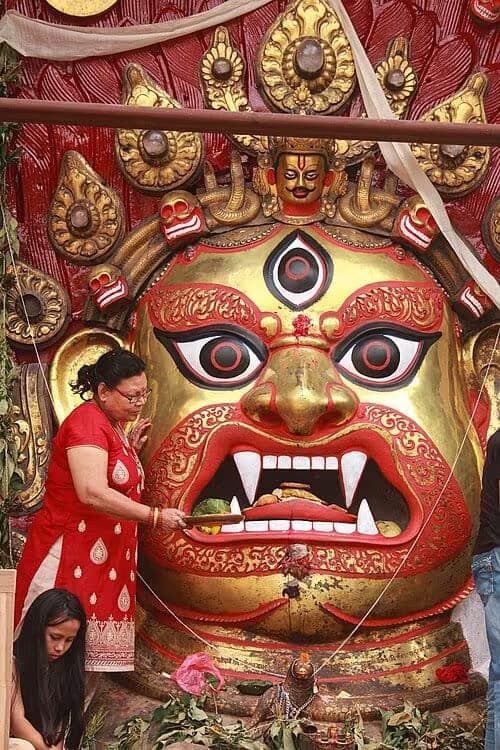
Swet Bhairav
A giant gilded head of White Bhairav hidden behind a lattice screen for most of the year, dramatically revealed only during the eight days of Indra Jatra.
Coda
Continue the Pilgrimage
Planning this visit? Local operators publishing trips here can arrange it.
Help us get it right
Know Yetakha Bahal (Bhaskarakirti Mahavihar) better than we do?
We write from research and reporting, and the ground changes faster than we can keep up. If something here is out of date, or you have been and would tell it differently, we would rather hear it.