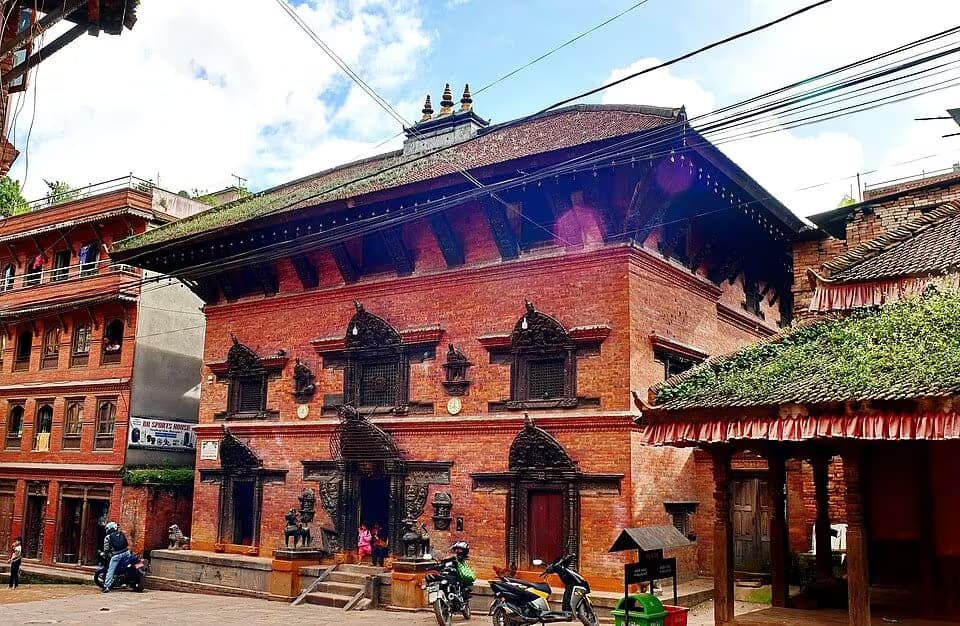
Temple · Hindu
Navadurga Temple (Nava Durga Dyo Chhen)
नवदुर्गा मन्दिर
Nine forms of Durga (Navadurga)·Tradition established 1445 AD by King Subarna Malla·Bhaktapur
The sacred temple-house where Bhaktapur's legendary Nava Durga dance masks are created, consecrated, and displayed — the spiritual epicentre of the city's unique tantric masked dance tradition.
Dedicated to
Nine forms of Durga (Navadurga)
Period
Tradition established 1445 AD by King Subarna Malla
Hours
Varies; masks are on display during the Navadurga dance season (October–June)
Admission
Free
Neighborhood
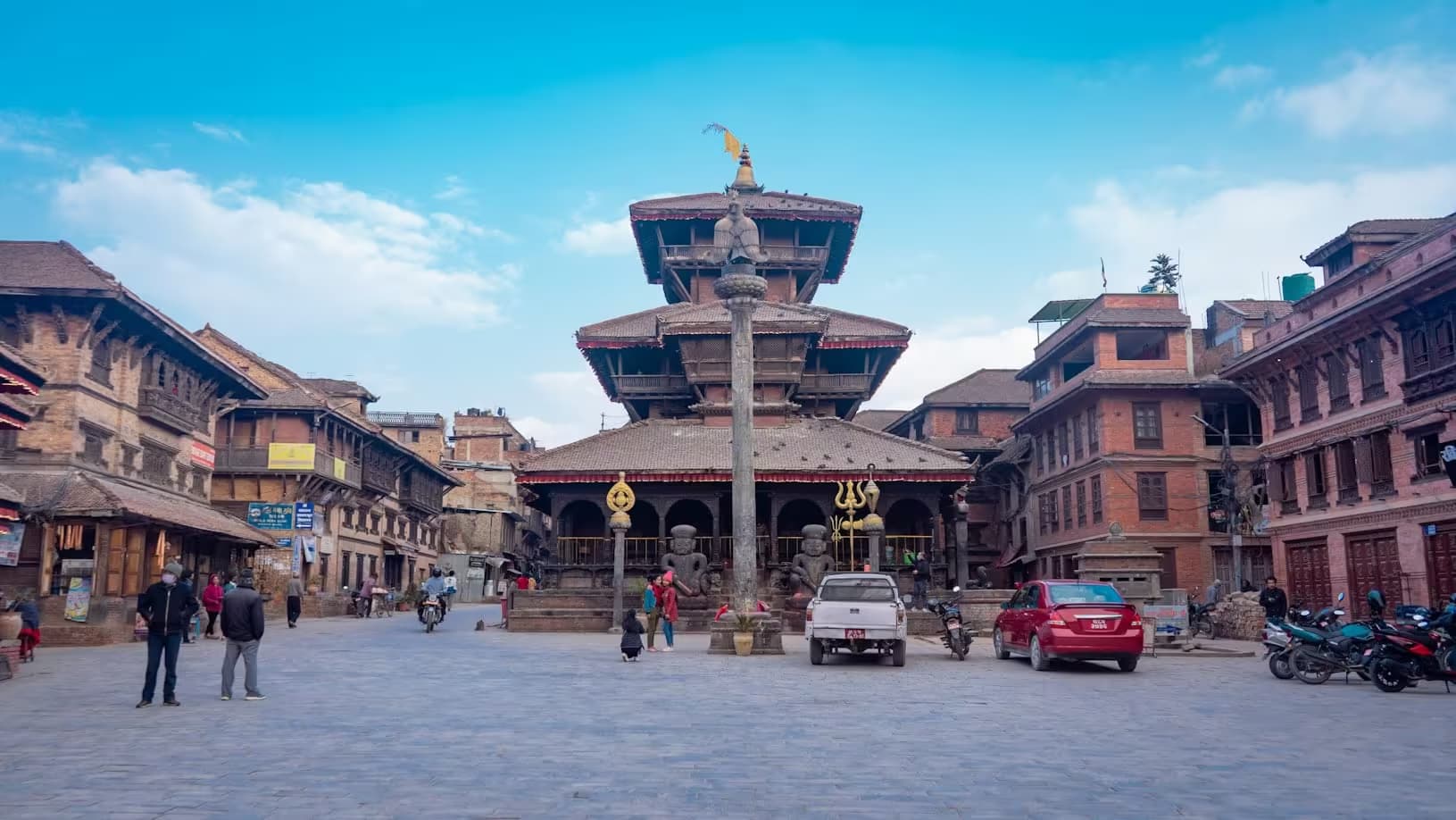
Gachhen, east of Dattatraya Square
The Navadurga Temple, known locally as the Nava Durga Dyo Chhen (god-house), is the spiritual headquarters of Bhaktapur's most distinctive cultural tradition — the Navadurga masked dance that has been performed continuously since the 15th century.
Located in the Gachhen neighbourhood east of Dattatraya Square, this temple-house is where the sacred clay masks representing the nine manifestations of Goddess Durga are ritually created, consecrated through tantric ceremonies, and displayed for devotees. Rather than a single shrine's pantheon, the nine are a living protective mandala wrapped around the old city: eight goddesses guard the cardinal and intercardinal directions from their own open-air power-seats (pithas), while the ninth holds the still centre. Brahmayani keeps the east and Maheshwari the southeast; Kaumari (Kumari) the south and fierce Bhadrakali the southwest — Bhaktapur substitutes Bhadrakali for the classical Vaishnavi; boar-faced Varahi the west and Indrayani the northeast; bone-painted Mahakali, whose shrine is the largest of the set, the north, and Mahalakshmi the northwest. At the heart sits Tripurasundari, the mandala's central power point. Through the ten nights of Dashain the goddesses are worshipped in turn, and it is their masks — reborn each year — that carry this mandala out into the streets as the dance.
Though the pantheon is called Nava (nine) Durga, the danced troupe is larger — roughly fifteen characters. Moving alongside the goddesses are the black-masked, black-clad Bhairava; the beautiful, elaborately crowned Seto (White) Bhairav, the only figure permitted to dance opposite Mahakali; and the inseparable guardians Sima (a tiger) and Duma (a lion), messengers of death and bodyguards of Shiva who circle and roar together. Even the mask colours carry meaning — red for power, yellow for wisdom, white for purity, and black for the demonic.
Local legend gives the dance a tantric origin: an adept named Sunanda Acaju is said to have captured the nine goddesses with his spells and kept them hidden, until his wife unwittingly set them free — whereupon they burst into the lanes dancing for joy, which is why the Navadurga still come out to the people rather than staying shut inside a temple. The tradition was formally established by King Subarna Malla in 1445 AD. Each year, new masks are crafted by Chitrakar artisans from sacred clay collected from Sakja field northeast of the city. Taleju's priest (Karmacharya) breathes life into the masks through tantric rituals, after which they are brought to the Dyo Chhen at Gachhen for display and veneration.
The Banamala Guthi (clan guild) are the exclusive performers of the Navadurga dance, which takes place over approximately 90 performances annually across Bhaktapur's squares and streets — from after Dashain in October through Bhalbhal Ashtami in June. At the cycle's end, the masks are ceremonially cremated in a ritual called Bhagasti, only to be reborn anew the following year.
Visitors can see the temple exterior and, during certain periods, observe the displayed masks. The Navadurga tradition represents one of the last living tantric masked dance cycles in the Kathmandu Valley.
Folio III
Nearby Sacred Sites
Places within a short walk that help turn this stop into a small sacred cluster.
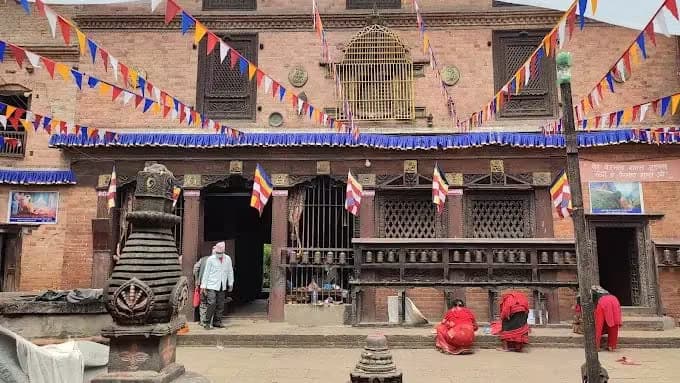
Dipankar Mahavihar
A hidden gem deep in Bhaktapur's alleys, housing the city's principal Dipankara Buddha alongside Hindu deities in a beautifully syncretic setting.
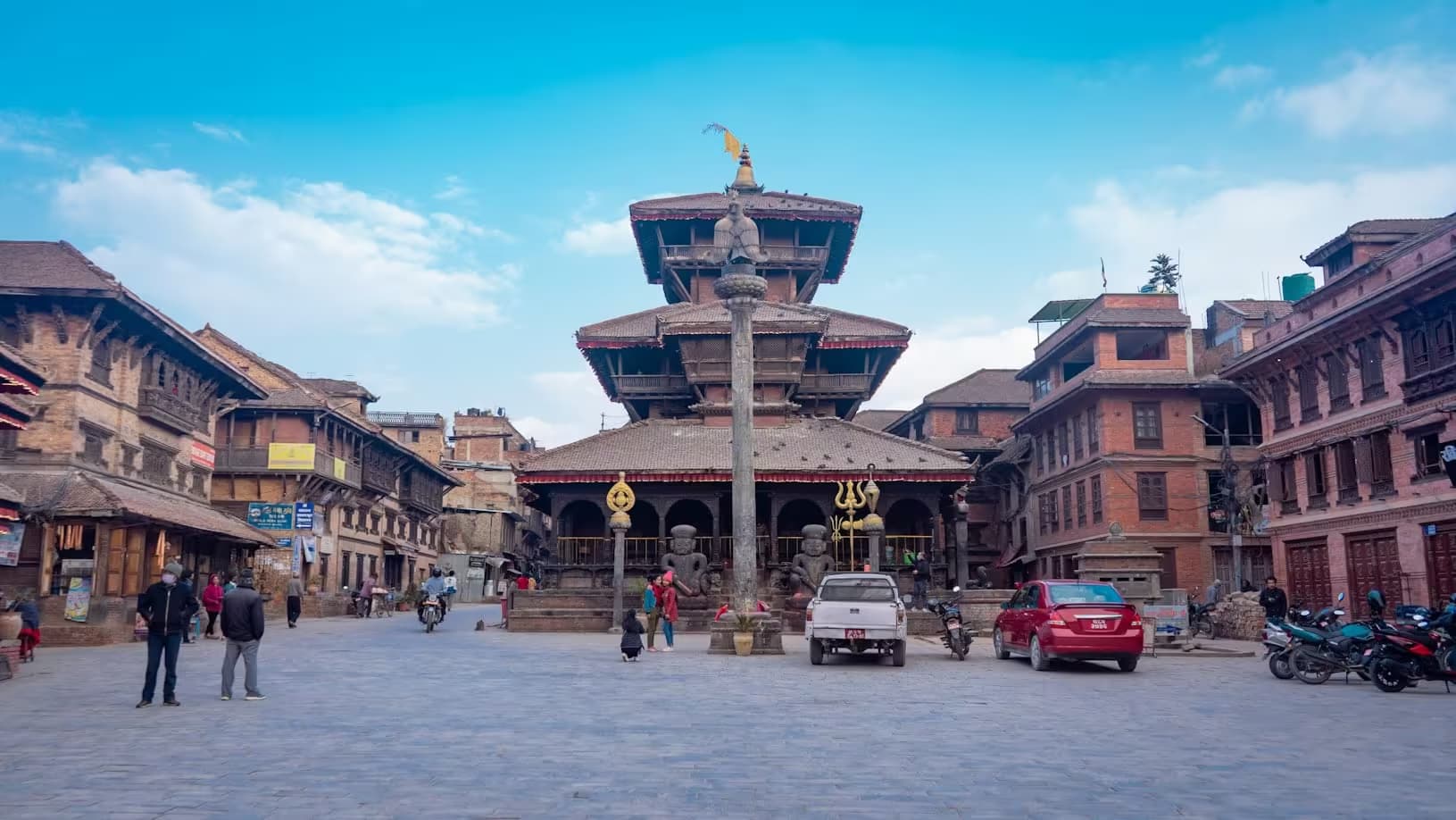
Dattatraya Temple
Bhaktapur's landmark three-storey pagoda in Dattatraya Square, dedicated to the combined trinity form of Brahma, Vishnu, and Shiva and central to the old Tachapal quarter.
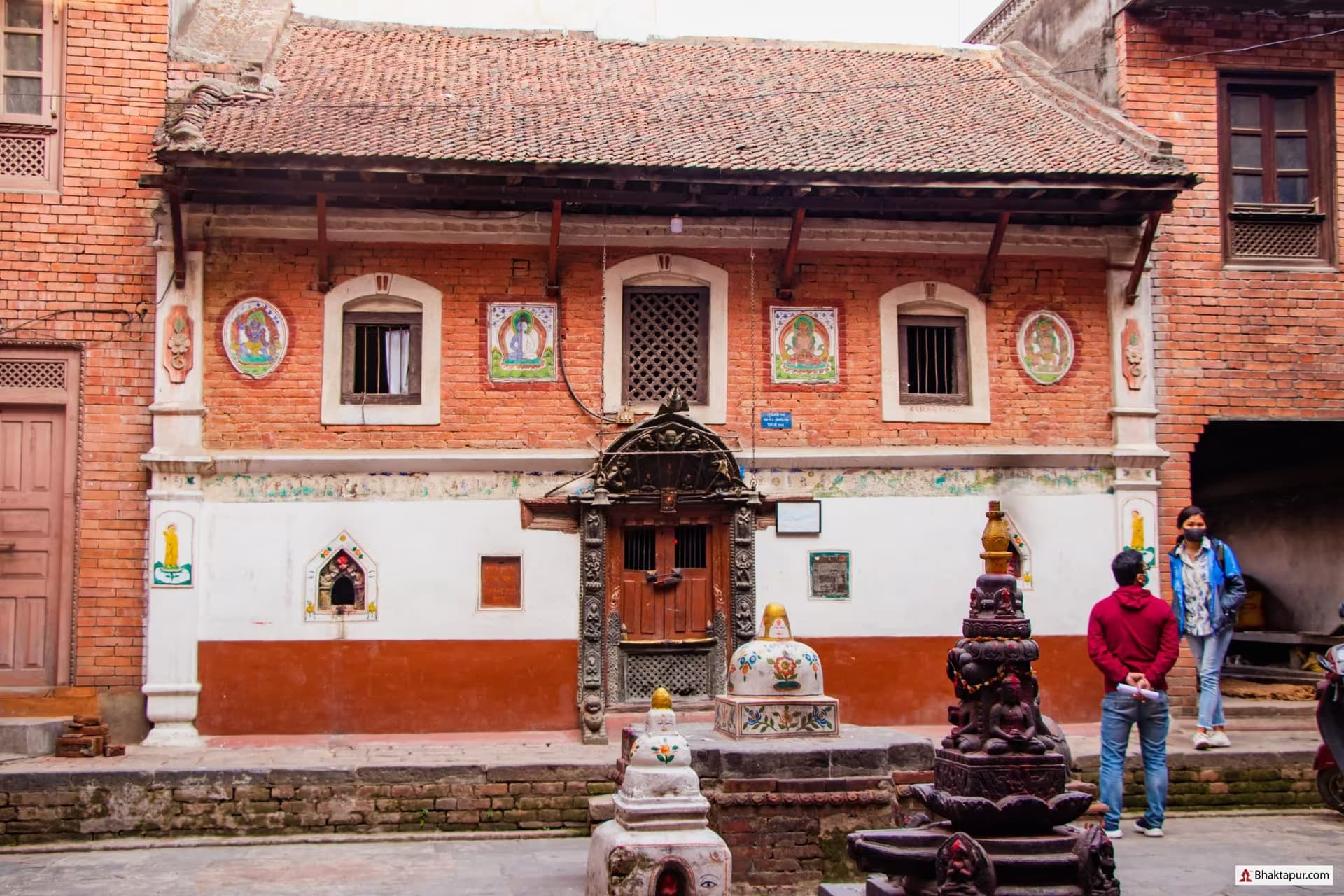
Tom Bahal (Aadipadma Mahavihar)
The oldest bahal in Bhaktapur and starting point of the Samyak Mahadan and Panchara rituals — a living center of Newar Buddhist ceremonial life in the city.
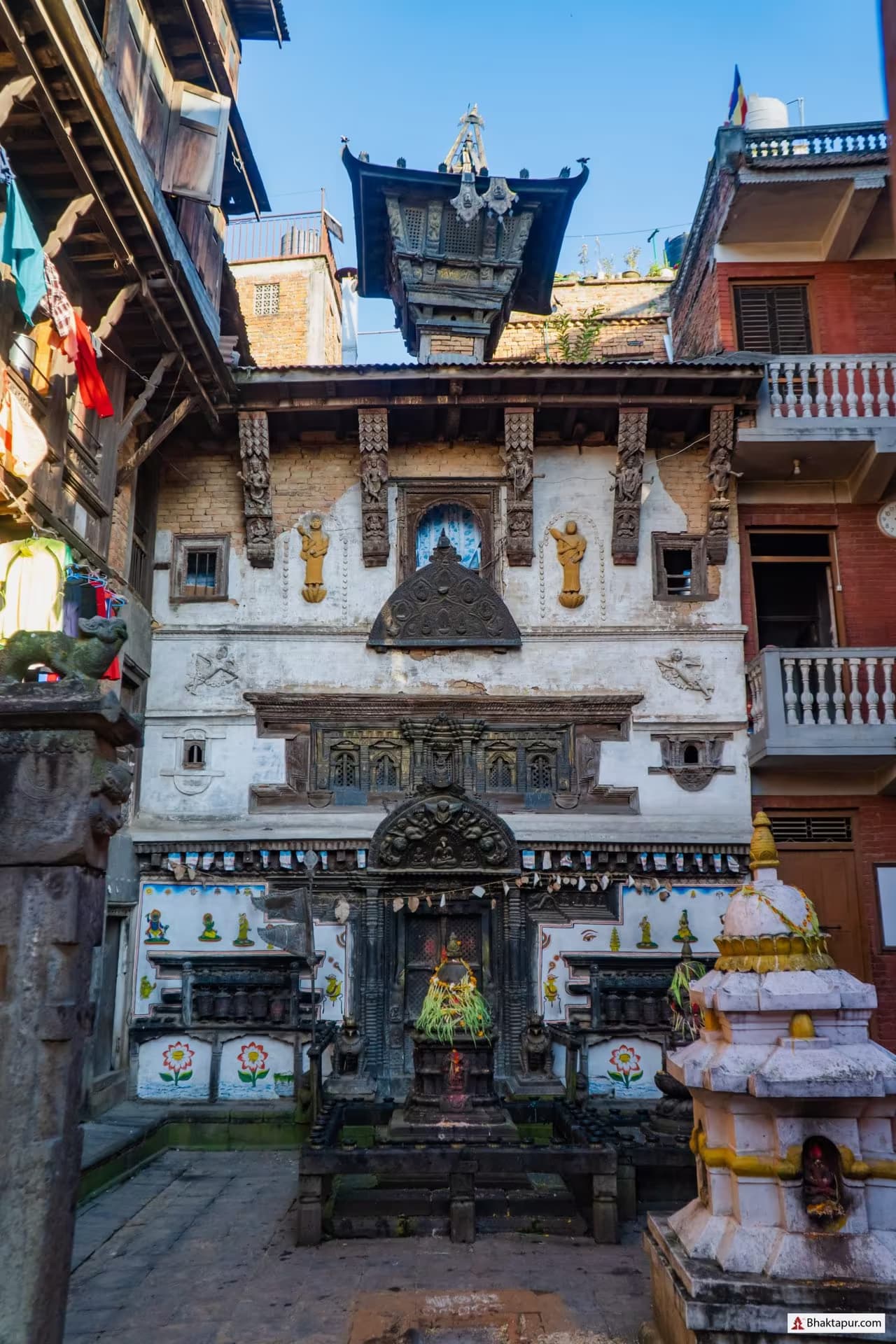
Indra Varna Mahavihar (Inabaha)
One of the five major mahavihars of Bhaktapur, located at Inacho Chowk and housing a Dipankar Buddha — an important node in the city's Buddhist ceremonial network.
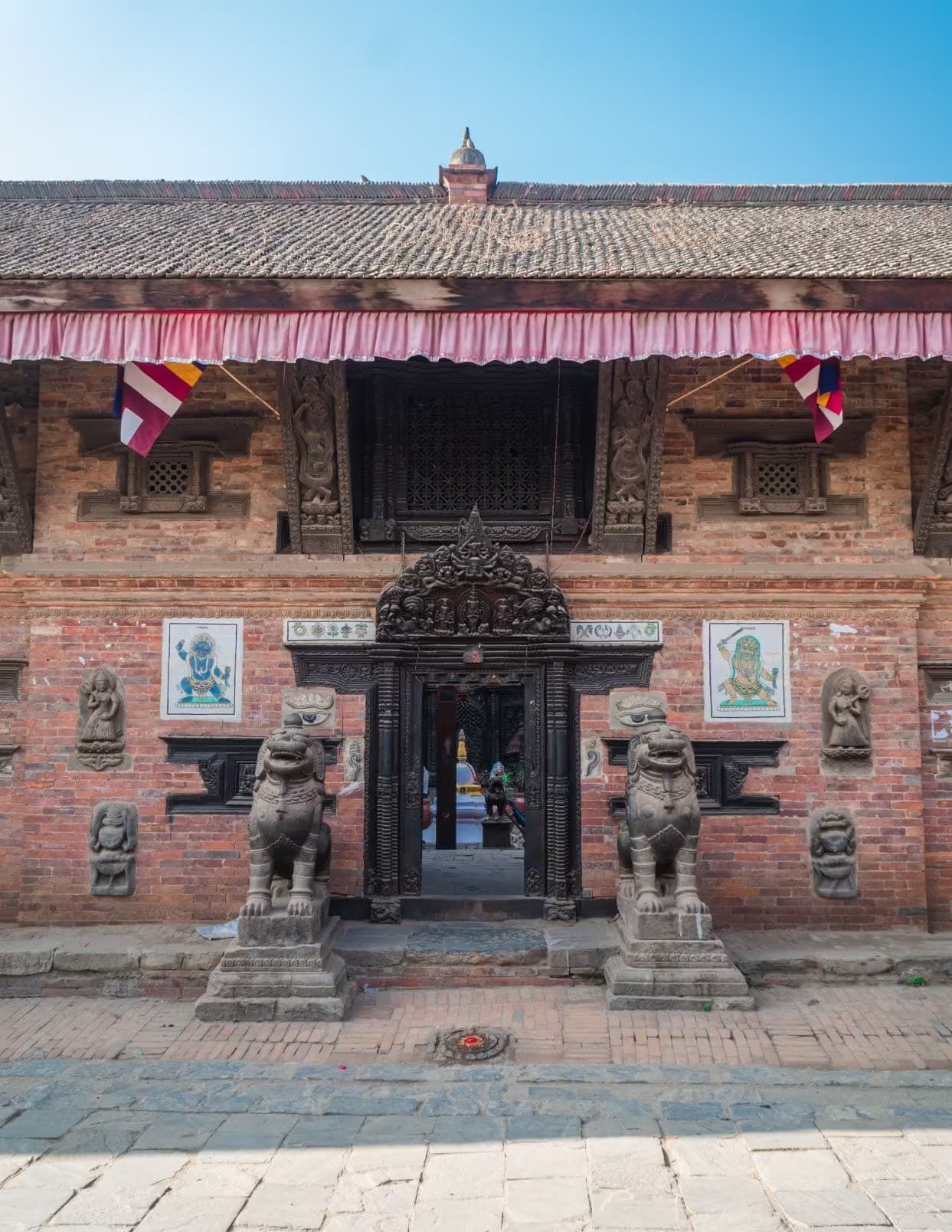
Chatur Varna Mahavihar
Bhaktapur's most visited mahavihar near Durbar Square, built in 1492 with a fascinating mix of Buddhist and Hindu guardian figures.
Coda
Continue the Pilgrimage
Guides that feature this place
Planning this visit? Local operators publishing trips here can arrange it.
Elsewhere in this region
Help us get it right
Know Navadurga Temple (Nava Durga Dyo Chhen) better than we do?
We write from research and reporting, and the ground changes faster than we can keep up. If something here is out of date, or you have been and would tell it differently, we would rather hear it.