Deepening the Fast
Kharna intensifies the discipline: the vrati fasts from sunrise to sunset, taking no food or water. At sunset, a specific meal is prepared and eaten — kheer (rice pudding made with milk and jaggery) and chapati (flatbread) — offered first to Chhathi Maiya and then consumed. This is the last food and water the vrati will take for 36 hours; the meal functions as both sustenance and sacrament. The body is being provisioned for the long passage ahead. The simplicity and sweetness of the kheer — milk, rice, the unrefined sweetness of jaggery — makes the threshold meal a moment of sensory awareness that the 36-hour fast will heighten by contrast.
The Kheer Preparation
The cooking is done with ritual attention. The kheer is made with new rice, fresh milk, and jaggery, cooked on a clean stove using vessels kept only for Chhath. The preparation is not rushed; the vrati or a devoted family member cooks in a state of focused care. The kheer is first offered to the deity, then shared with family and neighbors as prasad. This sharing establishes community: the vrati's fast is supported by those who eat with her, who receive the blessing of her offering and become, through that sharing, participants in her devotion.
The Evening Threshold
After the meal, the 36-hour nirjala fast begins. The vrati will not eat or drink again until the dawn offering on the fourth day. The moment — the last sip of water, the last bite of chapati — carries its full weight. The family gathers around it. The vrati's commitment is acknowledged and supported. What follows is the festival's most demanding physical passage, and the community's presence at this threshold reinforces what Chhath insists on throughout: the fast is not solitary endurance but a devotion held collectively, the vrati's body the instrument but the whole family the offering.
Related
Connected places and entries worth pairing
Deities & Presences



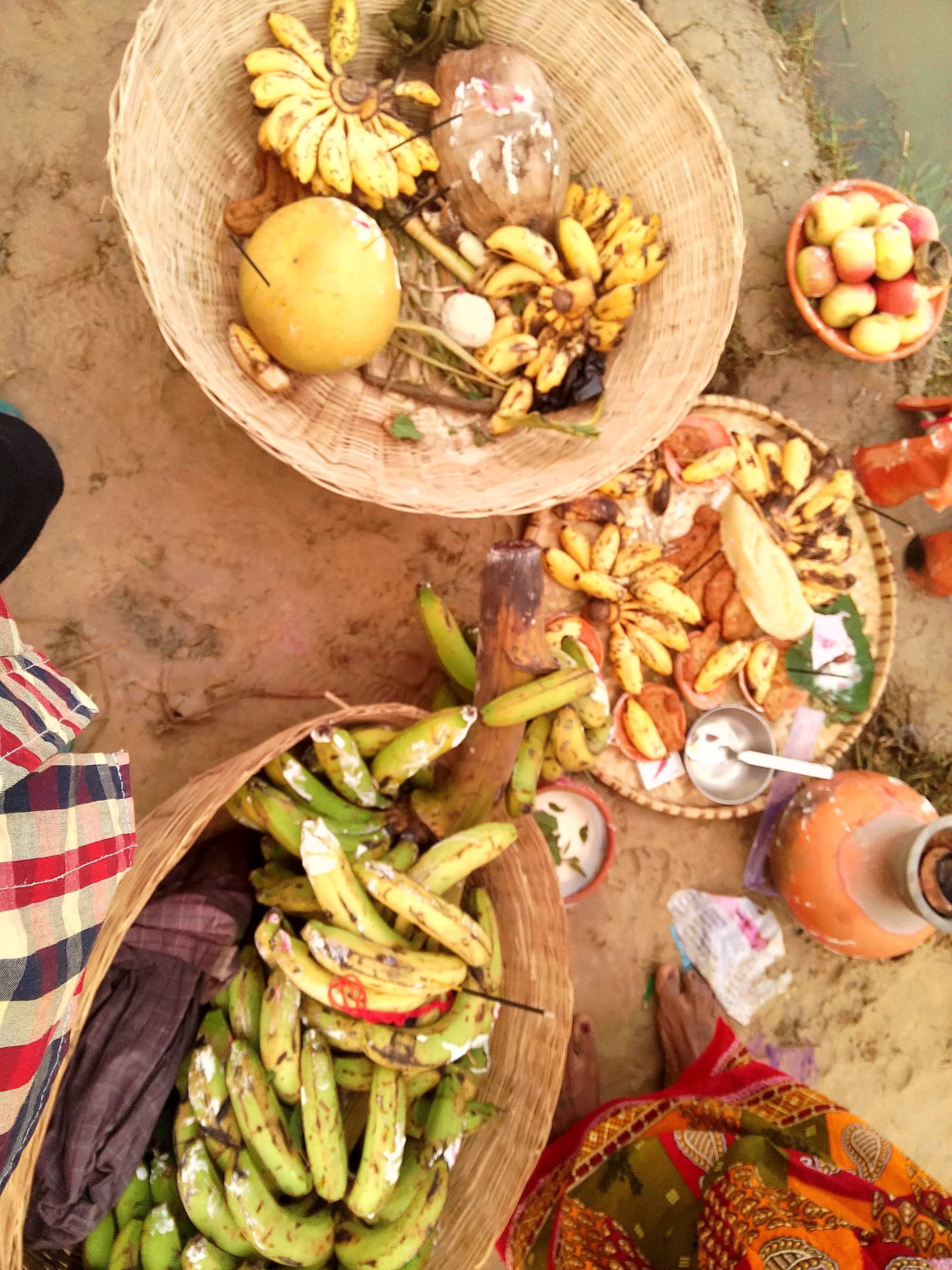
Part of Chhath Puja