The Theology of Sun Worship
Chhath is an ancient Hindu solar festival with deep Vedic and folk roots in which Surya and Chhathi Maiya are approached directly, without priest or idol — a tradition whose aniconic, priestless worship connects modern devotees to one of the oldest forms of religious practice in South Asia.
Surya and Chhathi Maiya
Surya, the sun god, is one of the oldest deities in the Vedic pantheon — the visible, daily source of all life, present in every sunrise and required for every harvest. Chhathi Maiya — literally "Mother Sixth," for the sixth day of the lunar fortnight on which Chhath falls — is widely identified with Shashthi Devi, the protector of newborns and infants in the Hindu pantheon. This identification explains why Chhath vratis so frequently fast for a child's health or recovery: the goddess who receives the offering is the same goddess who guards children from illness. Together Surya and Chhathi Maiya receive Chhath's offerings. The theology is direct — the sun is visible; the offering is made to what can be seen; no priest, no temple, no idol mediates between the devotee and the divine.
Vedic and Folk Roots
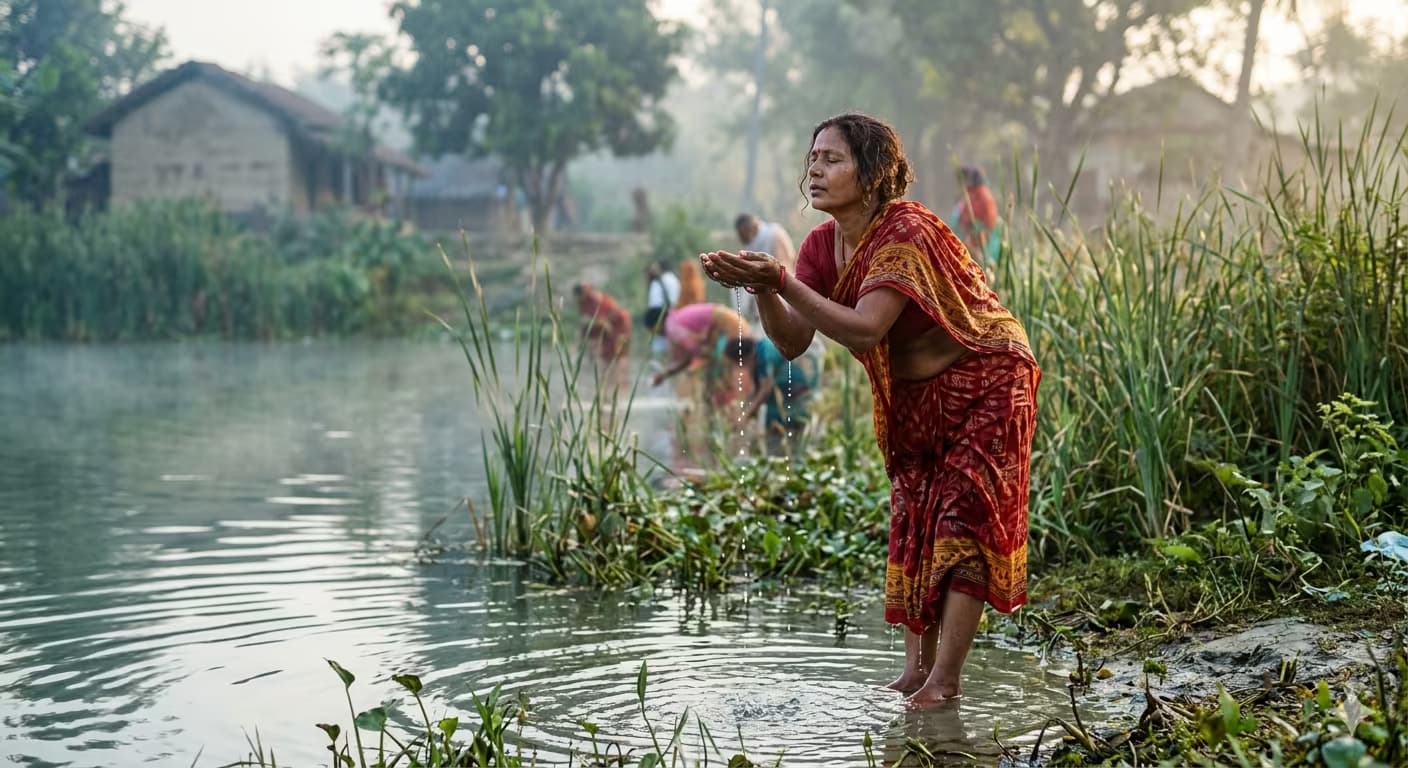
Chhath is among the oldest documented forms of solar worship in South Asia. The Rig Veda includes hymns to Surya, and the festival's direct, aniconic worship — offerings made by the devotee herself to the visible sun, without priest or intermediary — preserves a pattern of religious practice with deep continuity into the Vedic period. While rooted in this tradition, Chhath also incorporates folk elements from the Terai and Gangetic plain, and local practices vary. What is constant is the directness: the relationship between the vrati and the sun is unmediated, personal, and conducted at the water's edge.
No Priest Required
Chhath's most theologically distinctive feature is its absence of priestly mediation. There is no priest, no Sanskrit mantra that only the initiated can recite, no temple structure that controls access to the divine. The vrati herself — almost always a woman — performs all rituals directly. The sun is visible to everyone; the water is accessible; the offerings are prepared at home. This directness is at odds with the priest-mediated worship of most Hindu temple traditions, and it gives Chhath a democratic, accessible character unusual among major South Asian festivals. The vrati's authority is her own devotion, and that is sufficient.
The Sun and the Harvest
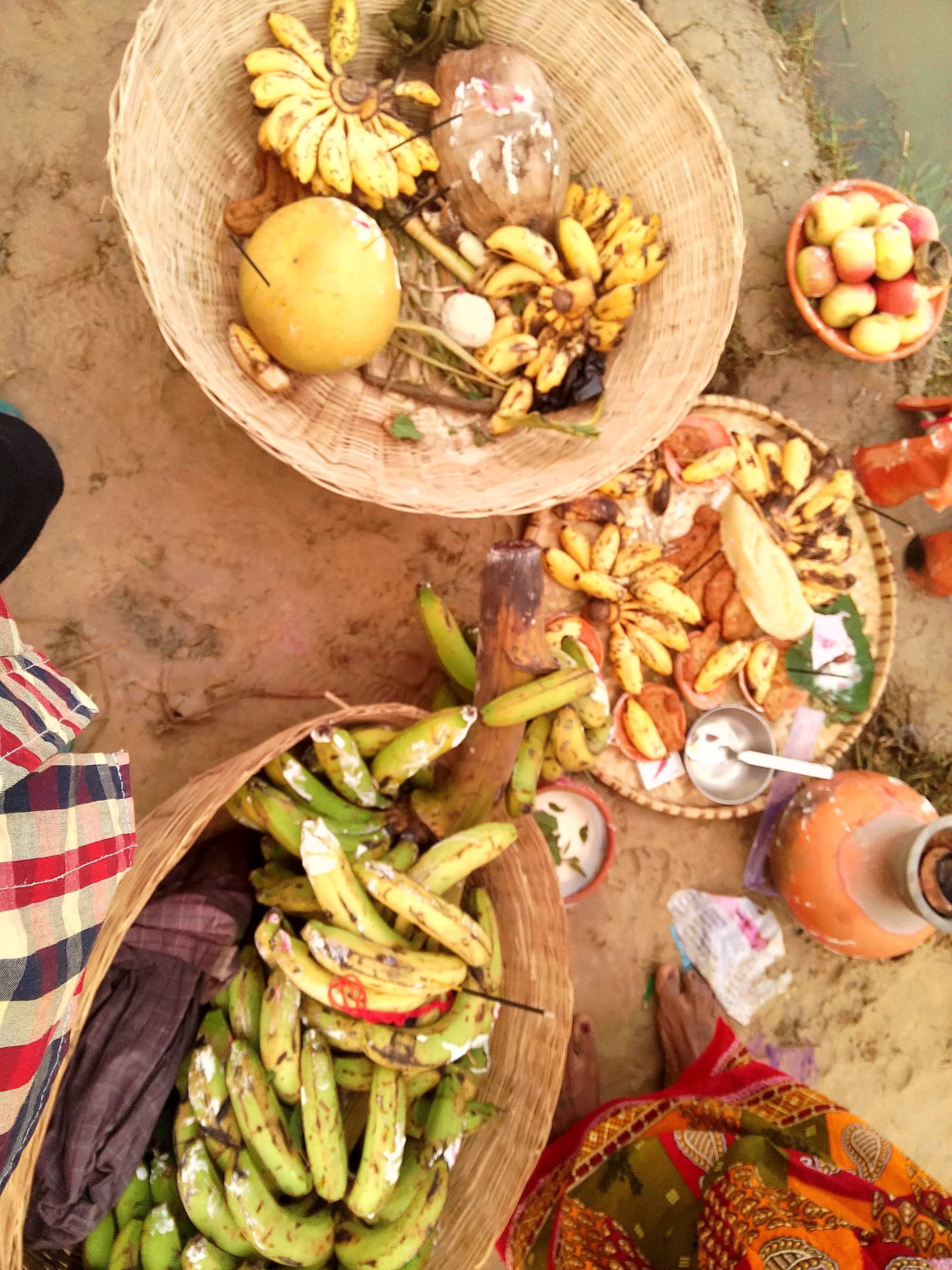
Chhath falls at the end of the Kartik harvest, when the new rice has been gathered and the granaries are full. The sun — which ripened the crops — is thanked for its work. The offerings include the harvest's own products: fruits, sugarcane, sweet potato, rice. The cycle is closed in the most direct way possible: the sun provides the conditions; the crops grow; the devotee takes the crops back to the water's edge and offers them to the light that made them. Chhath's sun worship is not abstract theology — it is the annual settling of an account between a community and the source of its food.
Related
Connected places and entries worth pairing


Part of Chhath Puja