Maha Shivaratri
महाशिवरात्रि
Also known as: Shivaratri, The Great Night of Shiva
The Great Night of Shiva draws hundreds of thousands of devotees and sadhus to Pashupatinath Temple for an all-night vigil of prayer, fasting, and bonfires.
Location
Pashupatinath Temple, Kathmandu
Duration
1 days
Month (Local)
Falgun
Month (AD)
February/March
Highlights
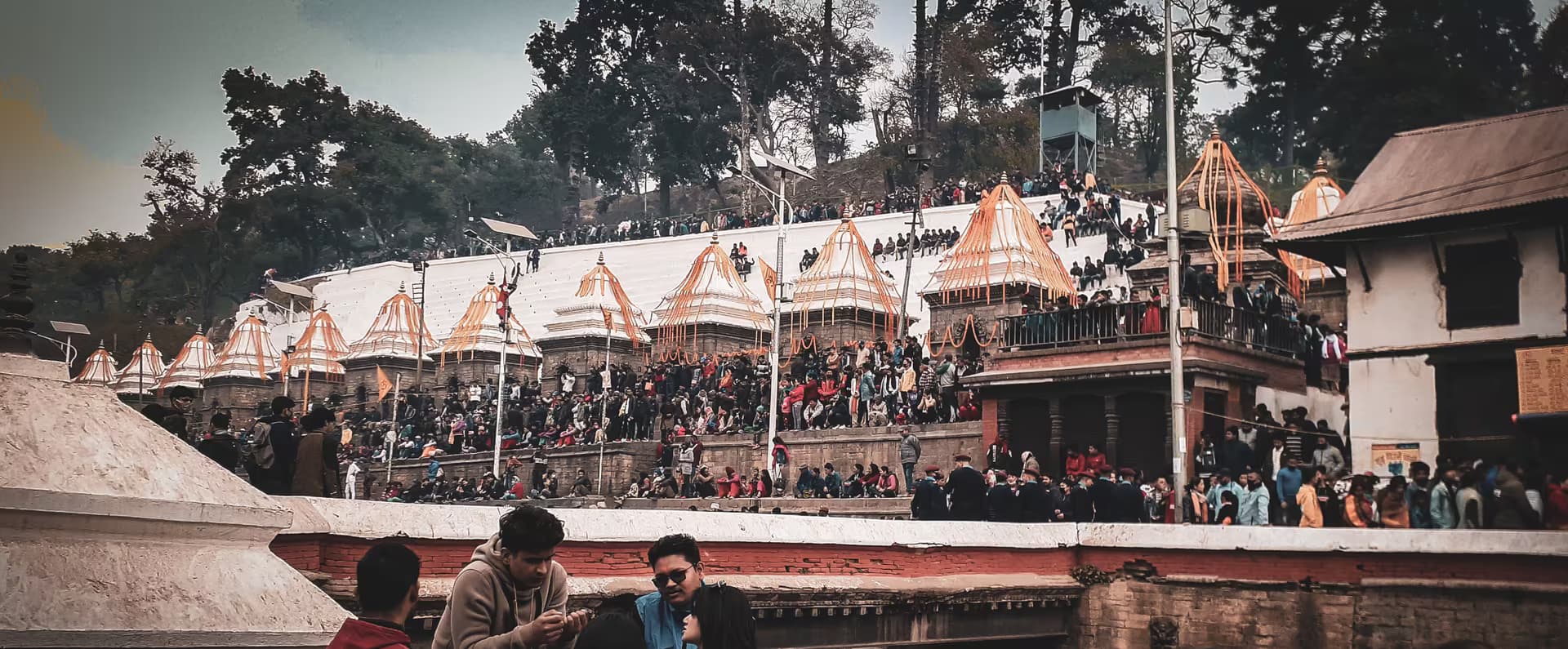
Thousands of sadhus gathered at Pashupatinath from across South Asia. All-night prayer vigil with bonfires and chanting. Ritual bathing at dawn in the Bagmati River. Massive mela with food stalls along the riverbanks.
Tips for Visitors
Go in the afternoon to photograph sadhus (tip NPR 50-100 if you photograph them). The main vigil starts after dark — dress very warmly. Non-Hindus cannot enter the main temple but can observe from the eastern bank. Expect extreme crowds — keep valuables secure. Arrive by 3 PM for the best experience.
Maha Shivaratri is one of Nepal's most electrifying religious events — a night dedicated to Lord Shiva that transforms Pashupatinath Temple into a vast open-air gathering of faith, smoke, and devotion. Hundreds of thousands of Hindu pilgrims from Nepal and India converge on the temple complex, along with thousands of sadhus (holy men) who arrive weeks in advance from across South Asia.
The atmosphere is extraordinary. Ash-smeared Naga babas (naked ascetics) sit around smoldering fires, dreadlocked sadhus perform elaborate rituals, and the air fills with the scent of incense, cannabis smoke (legally consumed by sadhus on this day), and sandalwood. Devotees fast all day and stay awake through the night, chanting 'Om Namah Shivaya' and pouring milk, water, and bel leaves on Shiva lingams.
The festival begins at dawn with ritual bathing in the Bagmati River. As night falls, thousands of oil lamps and bonfires illuminate the temple grounds. The main event is the all-night vigil (jagaran) at the main Shiva lingam inside Pashupatinath — though only Hindus may enter the inner sanctum, the surrounding ghats and platforms offer a powerful experience to all visitors.
Outside the temple, a massive mela (fair) fills the riverbanks with food stalls, ferris wheels, and vendors. The energy is raw and ancient — this is one of those festivals where you feel the unbroken thread connecting modern Nepal to rituals practiced for thousands of years.
Deities & Presences


Guides that feature this place
- Seasonal7 min
Best Time for a Nepal Pilgrimage: Festivals, Weather & Crowds
A pilgrimage-focused seasonal guide to Nepal covering weather, crowds, festival timing, high-altitude access, Terai heat, and when to visit major sacred sites.
- Regional8 min
Hindu Pilgrimage Circuit in Nepal: Temples, Routes, Festivals & Etiquette
A Hindu pilgrimage planning guide for Nepal covering Pashupatinath, Muktinath, Janaki Mandir, Manakamana, Pathibhara, Halesi, Baraha Kshetra, Devghat, Doleshwar, and major festival timing.
Elsewhere in this region
Help us get it right
Know Maha Shivaratri better than we do?
We write from research and reporting, and the ground changes faster than we can keep up. If something here is out of date, or you have been and would tell it differently, we would rather hear it.