The Myth of the Night
Shivaratri commemorates the night Shiva performed the Tandava — the cosmic dance of creation and destruction that sustains the universe between its cycles. It is also understood as the night of Shiva's marriage to Parvati. Staying awake honors both: the devotee witnesses the cosmic dance and celebrates the divine wedding. To sleep on Shivaratri is to miss the moment of divine presence — the theological equivalent of falling asleep during the most important event in the cosmos. The vigil is an act of attention, and attention, in this theology, is itself a form of worship.
The Ritual Rhythm
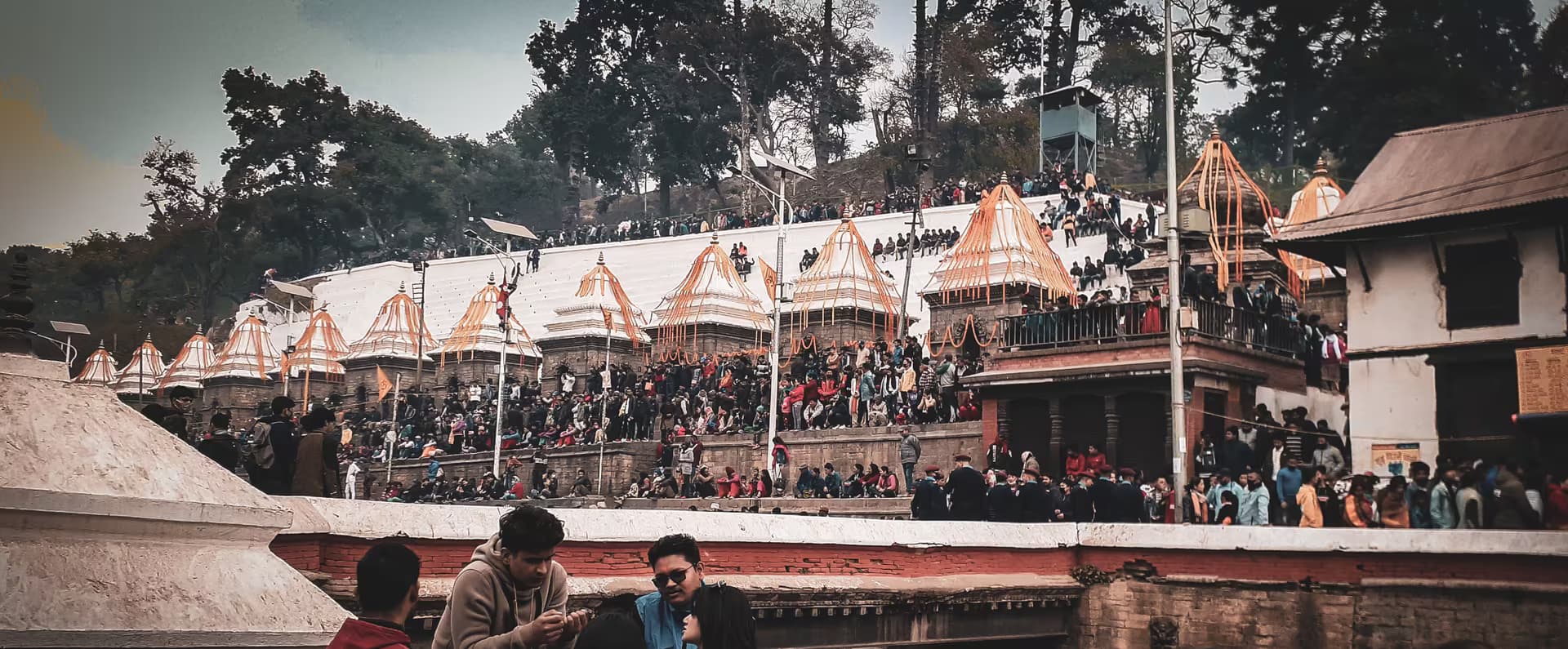
The night has a prescribed structure. The evening begins with ritual bathing at the Bagmati ghats, followed by the first puja of the Shiva lingam. Through the night, four pujas are performed (prahar puja), each marking a three-hour watch. Between pujas, chanting continues — Om Namah Shivaya in waves, led by priests and picked up by the crowds until the mantra becomes the sound of the entire complex. The February cold makes the bonfires essential, and the firelight on ancient stone creates an atmosphere that has been unchanged for centuries: darkness, flame, chanting, the smell of incense and wood smoke.
The Lingam Offerings
What is offered throughout the vigil is specific and scriptural: milk (representing purity), water (the Ganga, which Shiva caught in his matted hair to save the world from its force), bel leaves (bilva, sacred to Shiva and always offered in threes), sandalwood paste, rice, and flowers. For Hindu devotees permitted inside the main temple, the approach to the lingam is direct — pouring, placing, touching — more physically engaged than the mediated darshan of many temple traditions. Non-Hindus cannot enter Pashupatinath's inner sanctum but observe the vigil from the surrounding ghats and courtyards, close enough to hear the chanting and feel the fire.
Dawn
The vigil ends with first light: the final puja at dawn, the breaking of the day-long fast, devotees emerging from the temple into a Kathmandu morning that looks ordinary but feels transformed. The experience of having stayed awake all night in the presence of Shiva — the cold, the firelight, the sustained chanting — creates a collective intimacy among those who kept vigil. They disperse into the city carrying the night's residue: ash on the forehead, the mantra still running silently, the smell of incense in their clothes, and the particular quality of attention that comes from having given one entire night to a single act of devotion.
Related Places & Sites
sacred site
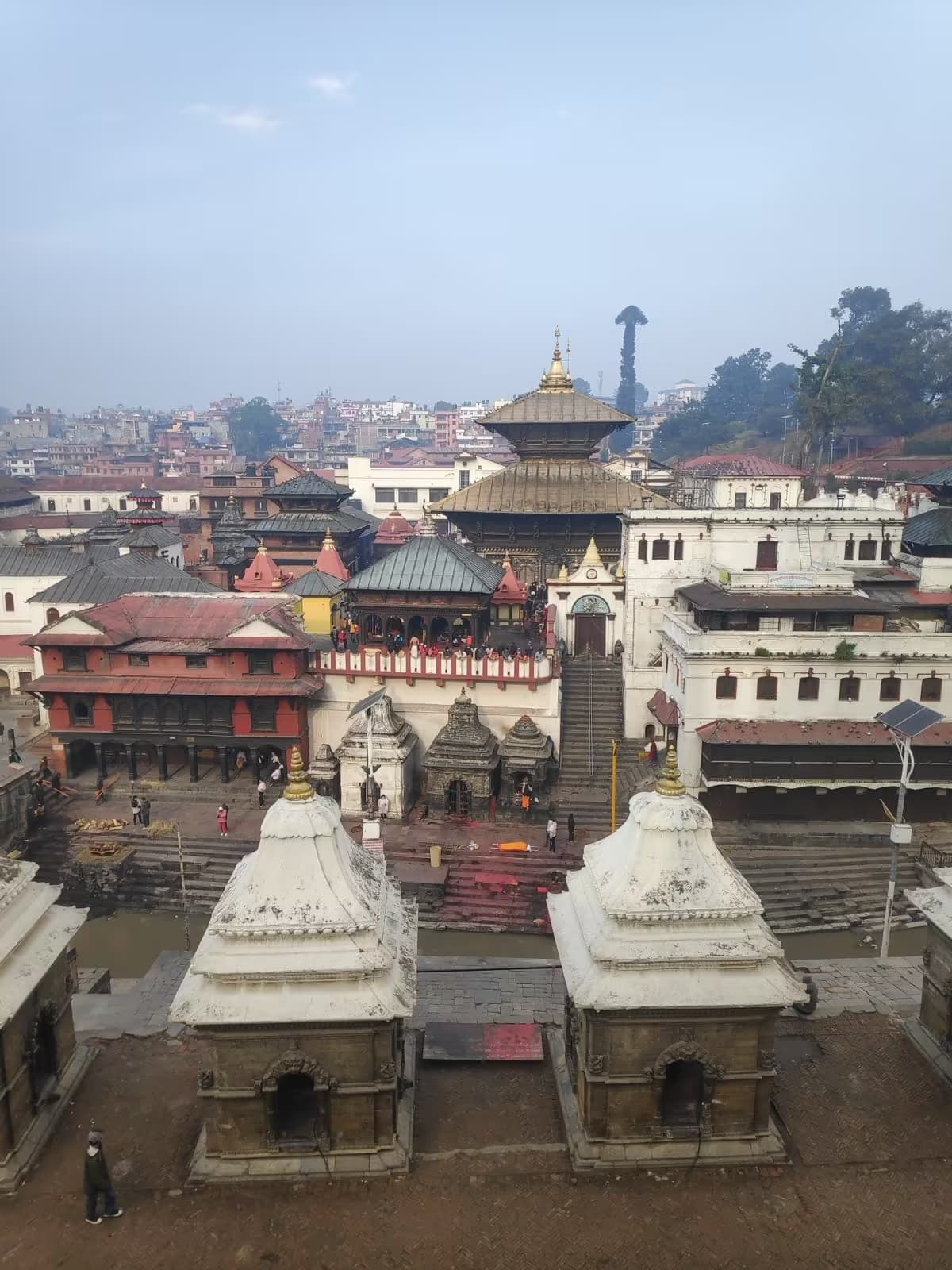
Pashupatinath TempleAll-night vigil held within the temple complex — four prahar pujas through the night, bonfires on the ghats until dawn
Deities & Presences


Rituals & Ceremonies

Part of Maha Shivaratri