The Sadhus of Pashupatinath
Thousands of sadhus — Hindu holy men who have renounced worldly life — converge on Pashupatinath from across South Asia for Shivaratri, arriving weeks early to claim their spots: ash-smeared Naga babas, dreadlocked Aghoris, and orange-robed ascetics, each representing a different path of Shiva devotion.
The Gathering
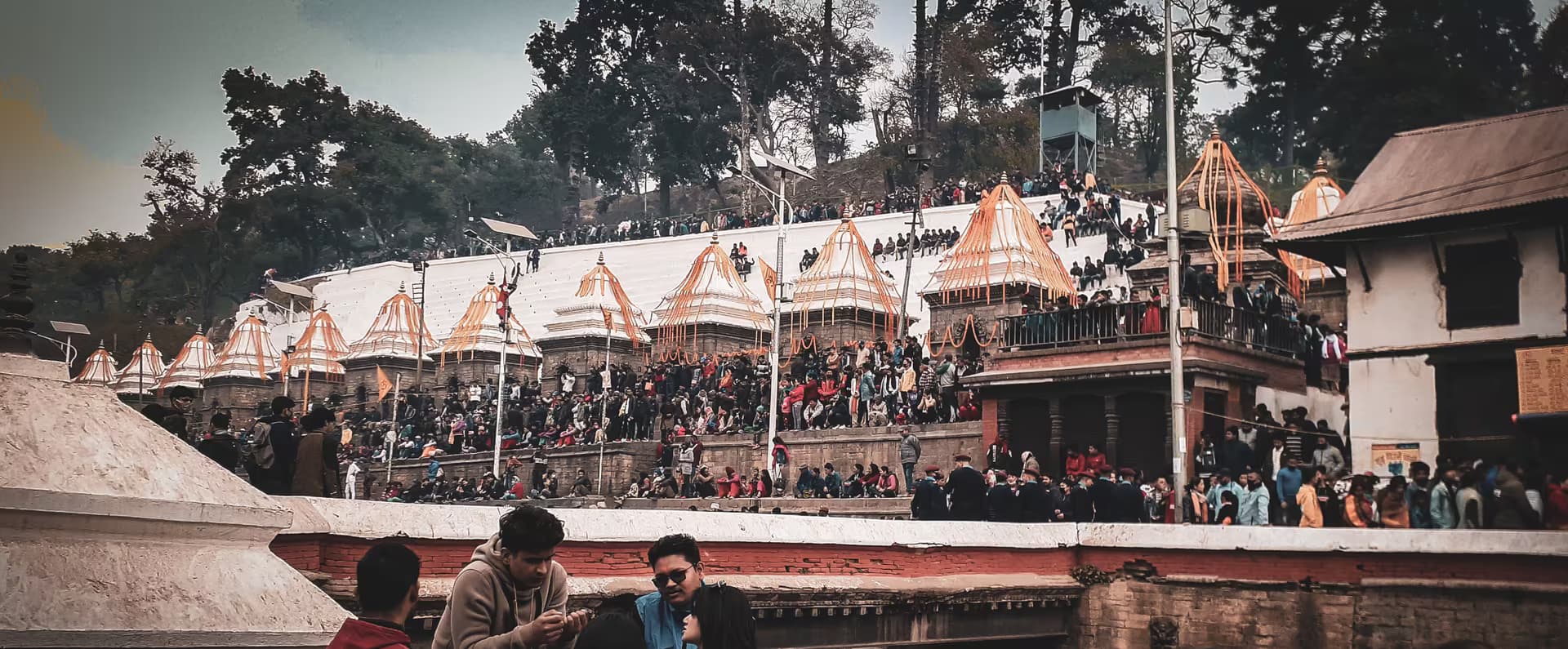
Thousands of sadhus from Nepal, India, and beyond arrive at Pashupatinath in the weeks before Shivaratri. They come by train, bus, and on foot; they set up camps along the Bagmati's banks, in the forest above the temple, in the courtyards and ghats. The gathering is one of the largest assemblies of ascetics in the world — a temporary city of renunciates built around the permanent city of the dead. The sadhus arrive early to claim their traditional spots, and by Shivaratri night the entire temple complex is ringed with the smoke of their fires and the sound of their chanting.
Types of Sadhus
The traditions visible at Shivaratri span the breadth of Shaivite asceticism. Naga babas — naked, ash-smeared, wearing only rudraksha beads — have hardened their bodies through decades of exposure. Aghoris embrace the taboo as a path beyond duality: skull bowls, cremation-ground meditation, deliberate transgression of the boundaries that bind ordinary consciousness. The orange-robed Shaivas and Vaishnavas represent the mainstream of renunciate life. Nath yogis — also called Kanphata, the split-eared — carry their defining mark: a split earlobe holding large kundal earrings, a permanent gesture of initiation. Udasi Sikh ascetics who revere Shiva are also present. Each tradition has its own encampment, its own practices, its own lineage of teachers.
The Sadhu as Living Shiva
On Shivaratri, the sadhu is not merely a devotee of Shiva but an embodiment of him. The ash on the Naga baba's body is Shiva's ash; the matted hair is Shiva's hair; the cannabis smoked in the chillum is Shiva's prasad. Devotees approach sadhus for blessing not as intermediaries but as temporary manifestations — the line between worshipper and worshipped dissolves. To receive a sadhu's blessing on Shivaratri is to receive Shiva's. The theology is not metaphorical but literal, and the sadhus carry it with an authority earned through decades of practice.
The Economy of Holiness
Sadhus pose for photographs (expecting a small tip — NPR 50–100), offer blessings, share chillums with pilgrims. This exchange is not considered commercial corruption; it is the traditional relationship between renunciates and householders. The householder gives material support — money, food, blankets — and the sadhu gives spiritual capital: blessing, wisdom, the presence of holiness. On Shivaratri this exchange is at its most intense, the demand for blessing matching the supply of accumulated austerity.
The Cannabis Question
Cannabis is generally illegal in Nepal, but during Shivaratri it is openly used and tolerated among sadhus as Shiva's prasad. The chillum passes from sadhu to pilgrim; smoke curls through the temple air alongside incense. Law enforcement maintains a deliberate distance on festival grounds. For visitors accustomed to cannabis prohibition, the sight of holy men openly smoking near police is disorienting — and a window into a different framework for sacred intoxicants, where the substance is not recreational but sacramental, not indulgence but offering.
Related Places & Sites
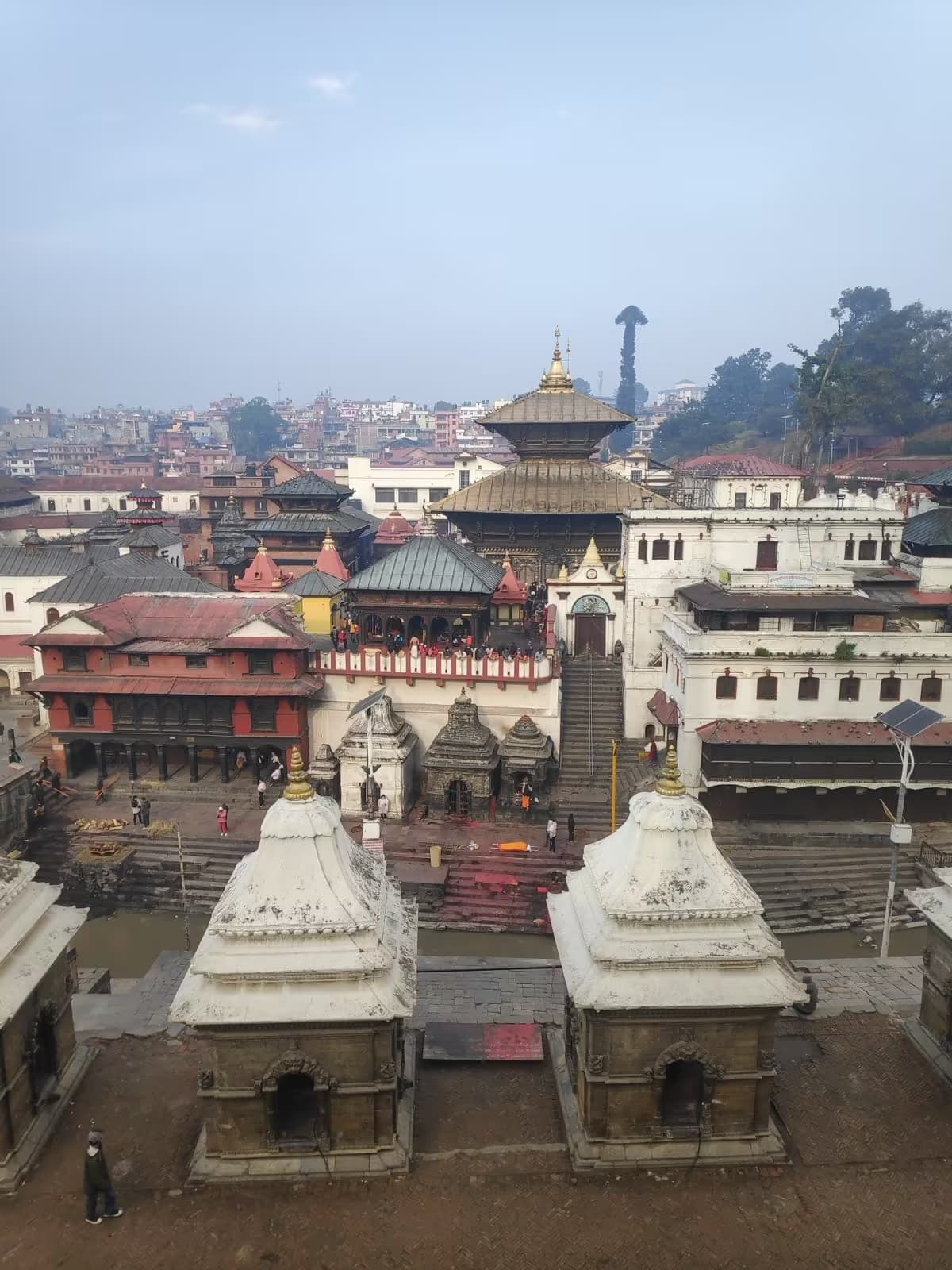
sacred site
Pashupatinath TemplePrimary gathering site for thousands of sadhus during Shivaratri — camps established weeks before the festival along the Bagmati's banks
Deities & Presences


Part of Maha Shivaratri