
Monastery · Buddhist
Zhong Hua Chinese Buddhist Monastery
चिनियाँ बौद्ध मन्दिर
Shakyamuni Buddha (Chinese Mahayana tradition)·Built by the Buddhist Association of China, opened 2000·Rupandehi
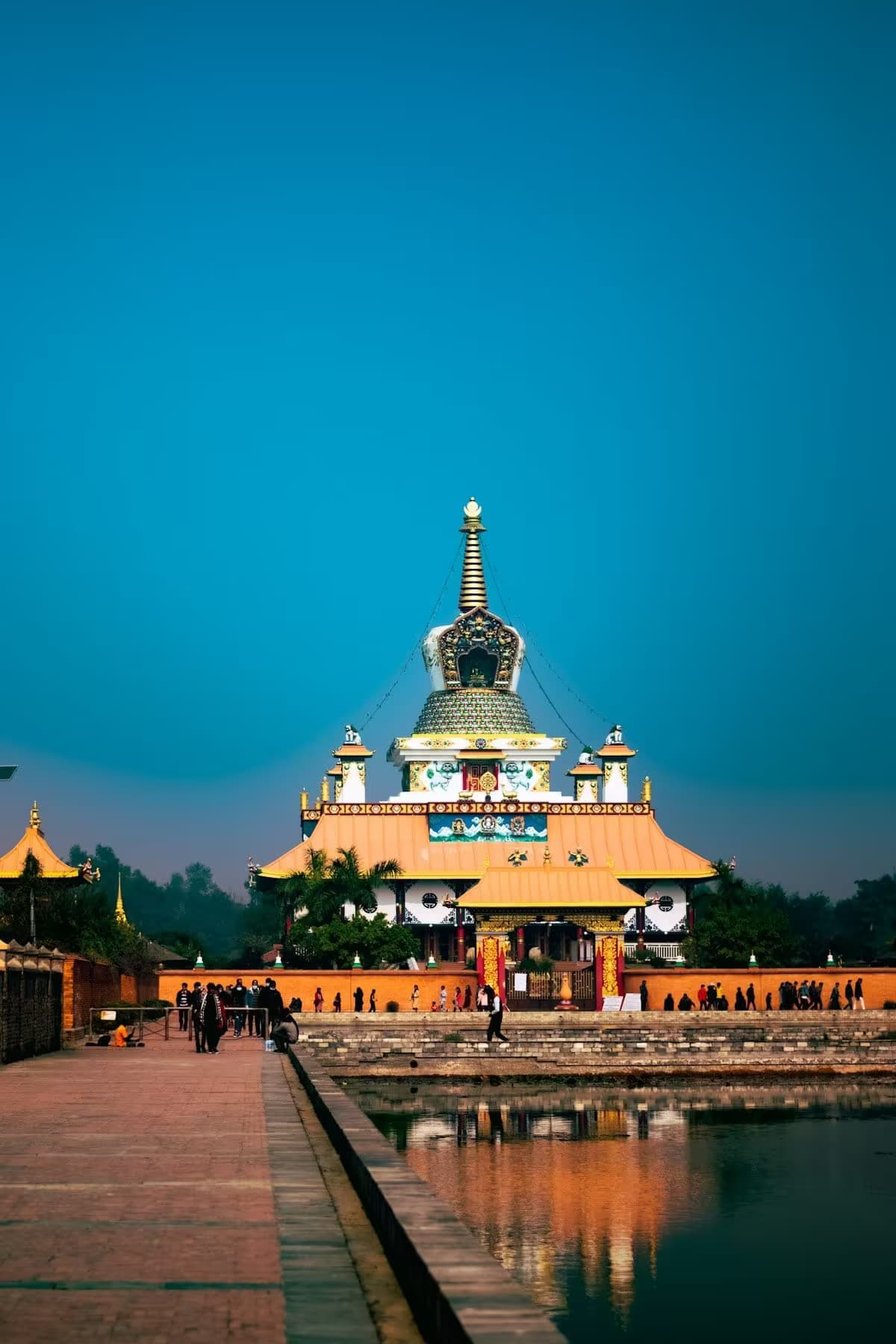
A grand Ming-style monastic complex in the West Monastic Zone — one of the largest and most elaborate monasteries in Lumbini, with ornate red-and-gold roofs and imposing gateway pavilions.
Dedicated to
Shakyamuni Buddha (Chinese Mahayana tradition)
Period
Built by the Buddhist Association of China, opened 2000
Hours
06:00 – 18:00
Admission
Free
Neighborhood
West Monastic Zone, Lumbini
The Zhong Hua Chinese Buddhist Monastery (中华寺, Zhōnghuá Sì) is one of the most ambitious international projects in the Lumbini Development Zone. Built by the Buddhist Association of China and opened in 2000, it sits in the West Monastic Zone (reserved for Mahayana traditions) and is modelled on the great imperial Buddhist monasteries of Ming-dynasty Beijing, particularly the Forbidden City's temple precincts.
The compound is organised around a traditional Chinese central axis: an outer paifang-style gateway, a Heavenly Kings Hall guarded by four painted statues of the lokapalas, a large Mahavira Hall housing the Shakyamuni Buddha flanked by Amitabha and Medicine Buddha, and a rear Dharma Hall. Roofs are tiled in glazed yellow and green ceramics with upward-curving eaves, and the woodwork is painted in characteristic Chinese red, gold and jade-green.
The monastery supports a small resident monastic community and is open daily to visitors. It is busiest during Chinese Buddhist festivals such as Vesak (佛诞) in May and Ullambana (盂蘭盆節) in late summer, when public chanting ceremonies are held in the main hall. Alongside the Korean Dae Sung Shakya Sa and the German Great Lotus Stupa, it is usually the highlight of any West Monastic Zone walking tour.
Folio III
Nearby Sacred Sites
Places within a short walk that help turn this stop into a small sacred cluster.

Korean Buddhist Temple, Dae Sung Shakya Sa
A large Mahayana monastery in the West Monastic Zone, built by the Korean Jogye Order — one of the biggest monastic compounds in Lumbini, with colourful painted eaves and a giant seated Buddha.

Great Lotus Stupa (German Monastery)
The largest stupa in Lumbini — a dramatic Tibetan-style mandala stupa built by the German Tara Foundation, with a richly painted inner chamber and sweeping white outer walls.

Sri Lankan Monastery, Lumbini
The Sri Lankan Theravada monastery in the East Monastic Zone — a white Sinhalese-style *vihara* with a dagoba-shaped stupa and resident Theravada monks.

Cambodian Monastery, Lumbini
A Khmer-style Theravada monastery in the East Monastic Zone — a compact compound modelled on the great temples of Angkor, with a tiered pyramid tower and characteristic face towers.

Royal Thai Buddhist Monastery, Lumbini
A striking all-white marble monastery in the East Monastic Zone — built by the Royal Thai government in classical Thai temple style, with a soaring multi-tiered roof and golden finials.
Coda
Continue the Pilgrimage
Part of
Lumbini — Birthplace of Buddha
Planning this visit? Local operators publishing trips here can arrange it.
Elsewhere in this region
Help us get it right
Know Zhong Hua Chinese Buddhist Monastery better than we do?
We write from research and reporting, and the ground changes faster than we can keep up. If something here is out of date, or you have been and would tell it differently, we would rather hear it.