
Monastery · Buddhist
Sri Lankan Monastery, Lumbini
श्रीलंकन बौद्ध विहार
Shakyamuni Buddha (Sri Lankan Theravada tradition)·Built by the Mahabodhi Society of Sri Lanka·Rupandehi
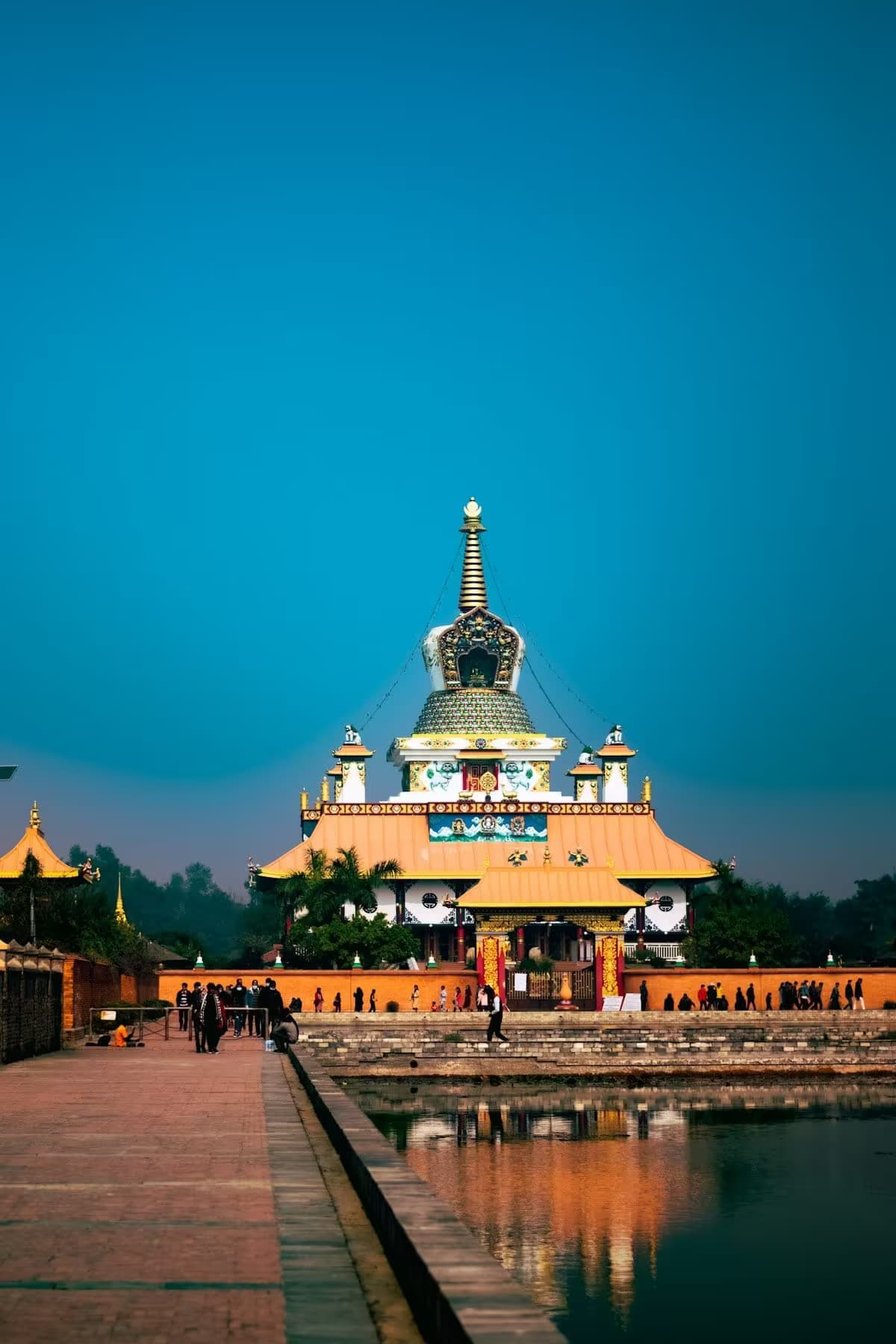
The Sri Lankan Theravada monastery in the East Monastic Zone — a white Sinhalese-style *vihara* with a dagoba-shaped stupa and resident Theravada monks.
Dedicated to
Shakyamuni Buddha (Sri Lankan Theravada tradition)
Period
Built by the Mahabodhi Society of Sri Lanka
Hours
06:00 – 18:00
Admission
Free
Neighborhood
East Monastic Zone, Lumbini
The Sri Lankan Monastery at Lumbini is one of the quieter but architecturally purest monasteries in the East Monastic Zone, built and maintained by the Mahabodhi Society of Sri Lanka and affiliated Theravada organisations. It is constructed in classical Sinhalese temple style, with a whitewashed rectangular vihara (shrine hall) on a stepped base and a distinctive bell-shaped dagoba (Sri Lankan-style stupa) nearby.
Inside the main shrine, a large standing and a seated Buddha image in the serene Anuradhapura style dominate the altar; the walls carry murals of the Buddha's life and episodes from Sri Lankan Buddhist history — including the arrival of Mahinda Thera in Sri Lanka. The dagoba outside is painted plain white and is one of the easiest places in Lumbini to perform a calm, quiet pradakshina (circumambulation).
The monastery runs regular Pali chanting in the Sri Lankan tradition and offers simple accommodation for visiting Theravada pilgrims and meditators. It is busiest during Vesak (May) — the most important Sri Lankan Buddhist festival — when the compound is decorated with lanterns and oil lamps. A short walk from the Royal Thai Monastery.
Folio III
Nearby Sacred Sites
Places within a short walk that help turn this stop into a small sacred cluster.

Royal Thai Buddhist Monastery, Lumbini
A striking all-white marble monastery in the East Monastic Zone — built by the Royal Thai government in classical Thai temple style, with a soaring multi-tiered roof and golden finials.

Great Lotus Stupa (German Monastery)
The largest stupa in Lumbini — a dramatic Tibetan-style mandala stupa built by the German Tara Foundation, with a richly painted inner chamber and sweeping white outer walls.

Korean Buddhist Temple, Dae Sung Shakya Sa
A large Mahayana monastery in the West Monastic Zone, built by the Korean Jogye Order — one of the biggest monastic compounds in Lumbini, with colourful painted eaves and a giant seated Buddha.

Cambodian Monastery, Lumbini
A Khmer-style Theravada monastery in the East Monastic Zone — a compact compound modelled on the great temples of Angkor, with a tiered pyramid tower and characteristic face towers.

Zhong Hua Chinese Buddhist Monastery
A grand Ming-style monastic complex in the West Monastic Zone — one of the largest and most elaborate monasteries in Lumbini, with ornate red-and-gold roofs and imposing gateway pavilions.
Coda
Continue the Pilgrimage
Part of
Lumbini — Birthplace of Buddha
Planning this visit? Local operators publishing trips here can arrange it.
Elsewhere in this region
Help us get it right
Know Sri Lankan Monastery, Lumbini better than we do?
We write from research and reporting, and the ground changes faster than we can keep up. If something here is out of date, or you have been and would tell it differently, we would rather hear it.