
Monastery · Buddhist
Korean Buddhist Temple, Dae Sung Shakya Sa
कोरियन बौद्ध मन्दिर
Shakyamuni Buddha (Korean Mahayana / Jogye Order)·Built by the Korean Jogye Order, early 2000s·Rupandehi
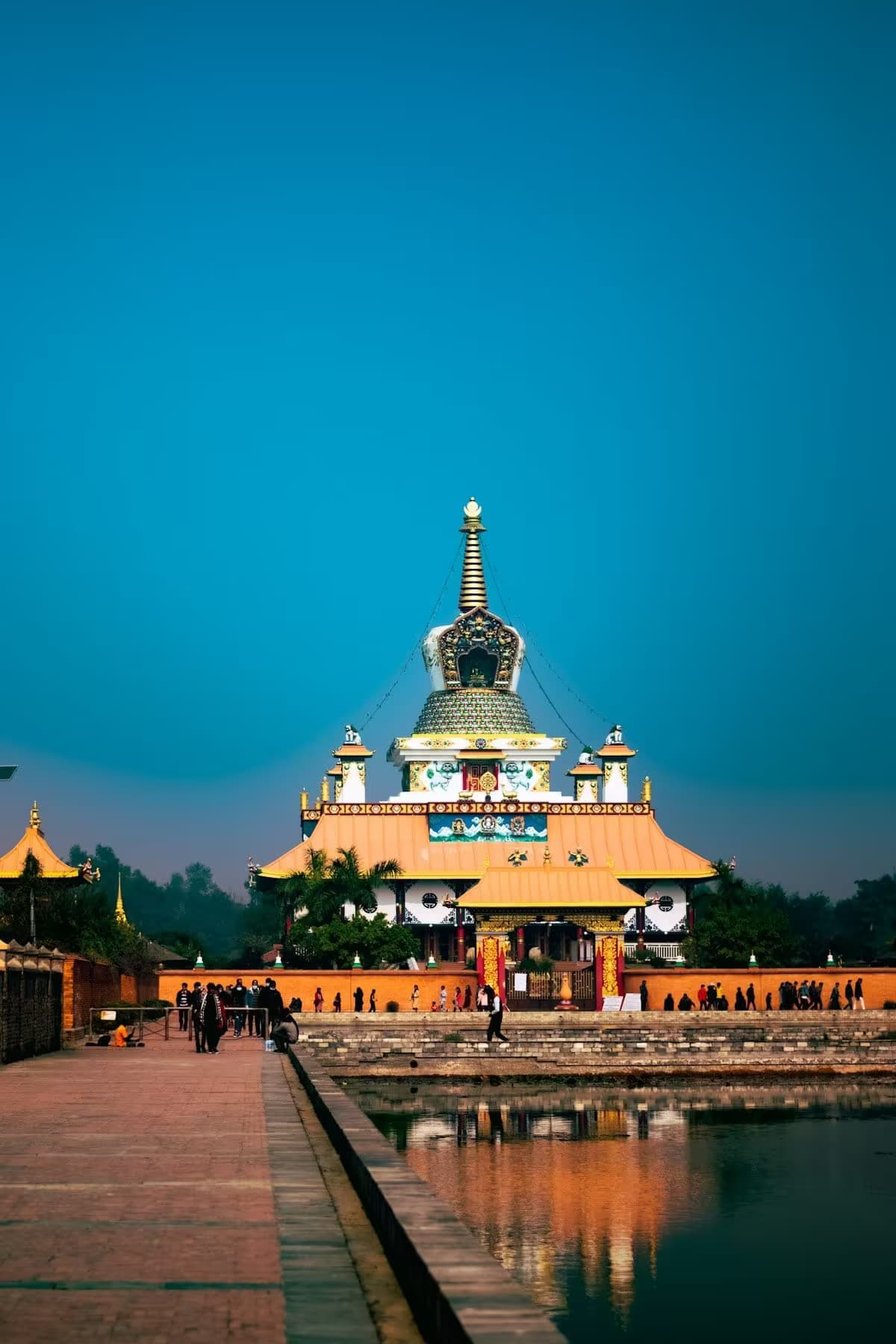
A large Mahayana monastery in the West Monastic Zone, built by the Korean Jogye Order — one of the biggest monastic compounds in Lumbini, with colourful painted eaves and a giant seated Buddha.
Dedicated to
Shakyamuni Buddha (Korean Mahayana / Jogye Order)
Period
Built by the Korean Jogye Order, early 2000s
Hours
06:00 – 18:00
Admission
Free
Neighborhood
West Monastic Zone, Lumbini
The Korean Buddhist Temple at Lumbini — formally Dae Sung Shakya Sa (대성석가사, "Great Holy Shakyamuni Temple") — was built by the Jogye Order, the dominant Mahayana Buddhist order of South Korea. It stands in the West Monastic Zone (reserved for Mahayana traditions) on the western side of Kenzo Tange's central canal and is among the largest monastic compounds in Lumbini.
The main prayer hall is built in traditional Korean palace-temple style, with upward-curving tiled roofs, brightly painted dancheong eaves (green, red and blue geometric patterns), and elaborately carved wooden gable ends. Inside, a large gilded Buddha sits on a central altar flanked by Amitabha and Medicine Buddha images, with walls covered in Mahayana murals. A separate meditation hall and a sizeable guesthouse block serve visiting practitioners.
The monastery runs regular Seon (Korean Zen) meditation retreats and daily chanting services, and is one of the more active centres of lay practice in Lumbini. It is especially busy during Buddha's Birthday (Seokga Tansinil) in April/May, when the Korean community hangs thousands of lotus lanterns across the courtyards. The site is about 15–20 minutes on foot from the Maya Devi Temple via the western pilgrim walkway.
Folio III
Nearby Sacred Sites
Places within a short walk that help turn this stop into a small sacred cluster.

Zhong Hua Chinese Buddhist Monastery
A grand Ming-style monastic complex in the West Monastic Zone — one of the largest and most elaborate monasteries in Lumbini, with ornate red-and-gold roofs and imposing gateway pavilions.

Great Lotus Stupa (German Monastery)
The largest stupa in Lumbini — a dramatic Tibetan-style mandala stupa built by the German Tara Foundation, with a richly painted inner chamber and sweeping white outer walls.

Sri Lankan Monastery, Lumbini
The Sri Lankan Theravada monastery in the East Monastic Zone — a white Sinhalese-style *vihara* with a dagoba-shaped stupa and resident Theravada monks.

Cambodian Monastery, Lumbini
A Khmer-style Theravada monastery in the East Monastic Zone — a compact compound modelled on the great temples of Angkor, with a tiered pyramid tower and characteristic face towers.

Royal Thai Buddhist Monastery, Lumbini
A striking all-white marble monastery in the East Monastic Zone — built by the Royal Thai government in classical Thai temple style, with a soaring multi-tiered roof and golden finials.
Coda
Continue the Pilgrimage
Part of
Lumbini — Birthplace of Buddha
Planning this visit? Local operators publishing trips here can arrange it.
Elsewhere in this region
Help us get it right
Know Korean Buddhist Temple, Dae Sung Shakya Sa better than we do?
We write from research and reporting, and the ground changes faster than we can keep up. If something here is out of date, or you have been and would tell it differently, we would rather hear it.