
Monastery · Buddhist
Great Lotus Stupa (German Monastery)
जर्मन बौद्ध विहार
Amitabha Buddha; mandala stupa for world peace·Built by the German Tara Foundation, opened 2010·Rupandehi
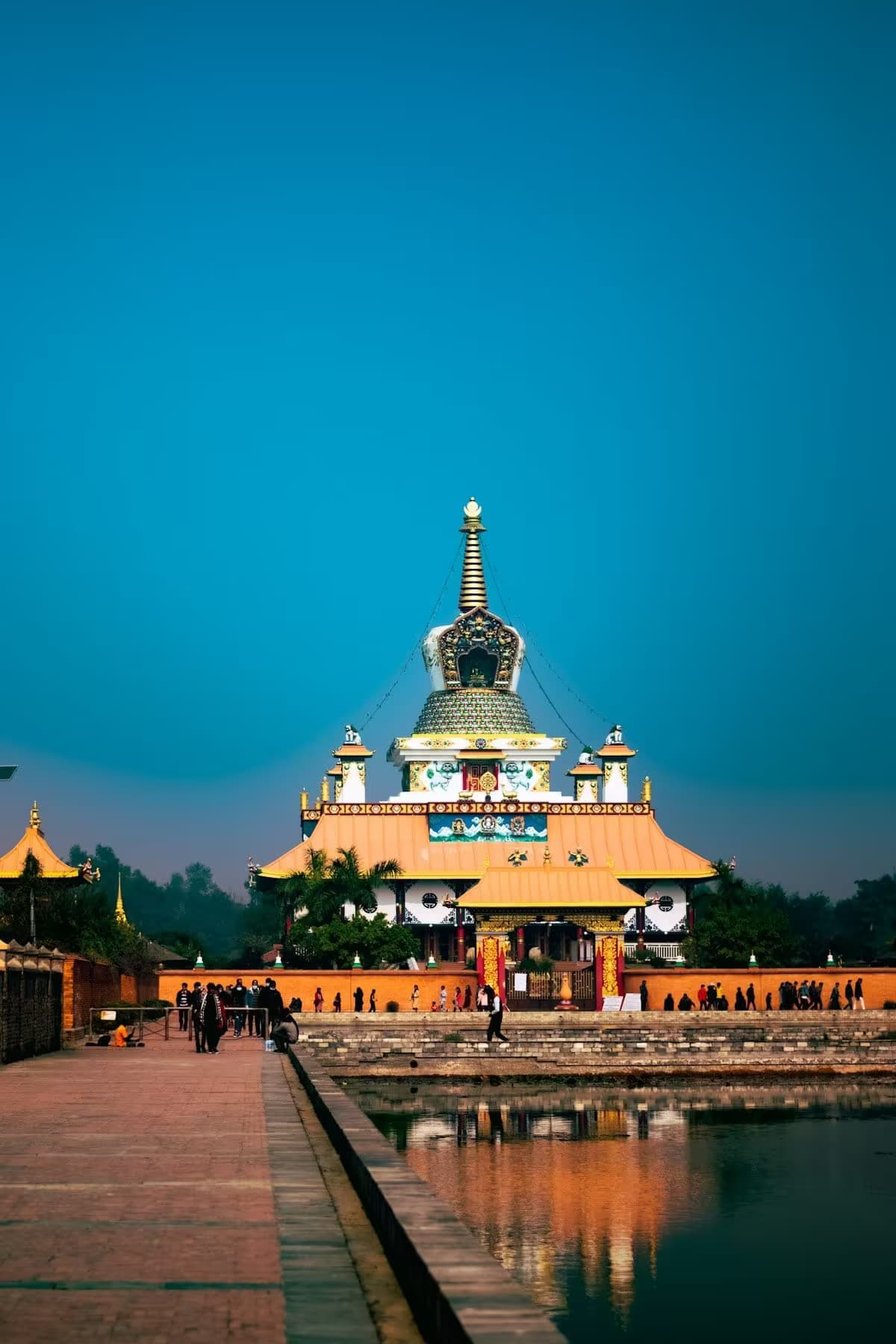
The largest stupa in Lumbini — a dramatic Tibetan-style mandala stupa built by the German Tara Foundation, with a richly painted inner chamber and sweeping white outer walls.
Dedicated to
Amitabha Buddha; mandala stupa for world peace
Period
Built by the German Tara Foundation, opened 2010
Hours
06:00 – 17:30
Admission
Free
Neighborhood
West Monastic Zone, Lumbini
The Great Lotus Stupa — popularly known as the German Monastery or simply German Stupa — was built by the German Tara Foundation (Tara Stiftung) in the West Monastic Zone of Lumbini and opened in 2010. Designed by the Nepali master craftsman Kunzang Namgyel in consultation with the German patrons, it is the largest and most elaborate stupa in the Lumbini master plan and one of the finest examples of modern Tibetan vajrayana mandala architecture anywhere.
The stupa is a full three-dimensional mandala: a broad circular base symbolising earth, four cardinal gateways with lion guardians, a bulbous dome (anda) representing water, a stepped harmika representing fire, and a 13-ringed spire for air and the progressive stages of enlightenment, crowned by a gilded finial. The exterior is painted brilliant white with gold and red trim. Unusually for stupas, the interior is open to the public: an octagonal main chamber is covered floor to ceiling in vivid hand-painted murals depicting the Buddha's life, scenes from the Lotus Sutra, and the deities of the Tibetan pantheon.
A large adjoining temple hall houses a central Amitabha Buddha image in the Tibetan style, backed by a richly carved and gilded torana. The foundation runs regular meditation retreats and dharma teachings in Tibetan and English. Best visited in the morning when the light falls on the east-facing murals; wear socks — the interior floor is often cold stone.
Folio III
Nearby Sacred Sites
Places within a short walk that help turn this stop into a small sacred cluster.

Zhong Hua Chinese Buddhist Monastery
A grand Ming-style monastic complex in the West Monastic Zone — one of the largest and most elaborate monasteries in Lumbini, with ornate red-and-gold roofs and imposing gateway pavilions.

Korean Buddhist Temple, Dae Sung Shakya Sa
A large Mahayana monastery in the West Monastic Zone, built by the Korean Jogye Order — one of the biggest monastic compounds in Lumbini, with colourful painted eaves and a giant seated Buddha.

Sri Lankan Monastery, Lumbini
The Sri Lankan Theravada monastery in the East Monastic Zone — a white Sinhalese-style *vihara* with a dagoba-shaped stupa and resident Theravada monks.

Cambodian Monastery, Lumbini
A Khmer-style Theravada monastery in the East Monastic Zone — a compact compound modelled on the great temples of Angkor, with a tiered pyramid tower and characteristic face towers.

Royal Thai Buddhist Monastery, Lumbini
A striking all-white marble monastery in the East Monastic Zone — built by the Royal Thai government in classical Thai temple style, with a soaring multi-tiered roof and golden finials.
Coda
Continue the Pilgrimage
Part of
Lumbini — Birthplace of Buddha
Planning this visit? Local operators publishing trips here can arrange it.
Elsewhere in this region

Help us get it right
Know Great Lotus Stupa (German Monastery) better than we do?
We write from research and reporting, and the ground changes faster than we can keep up. If something here is out of date, or you have been and would tell it differently, we would rather hear it.