Temple · Hindu
Kalinchowk Bhagwati
कालिन्चोक भगवती
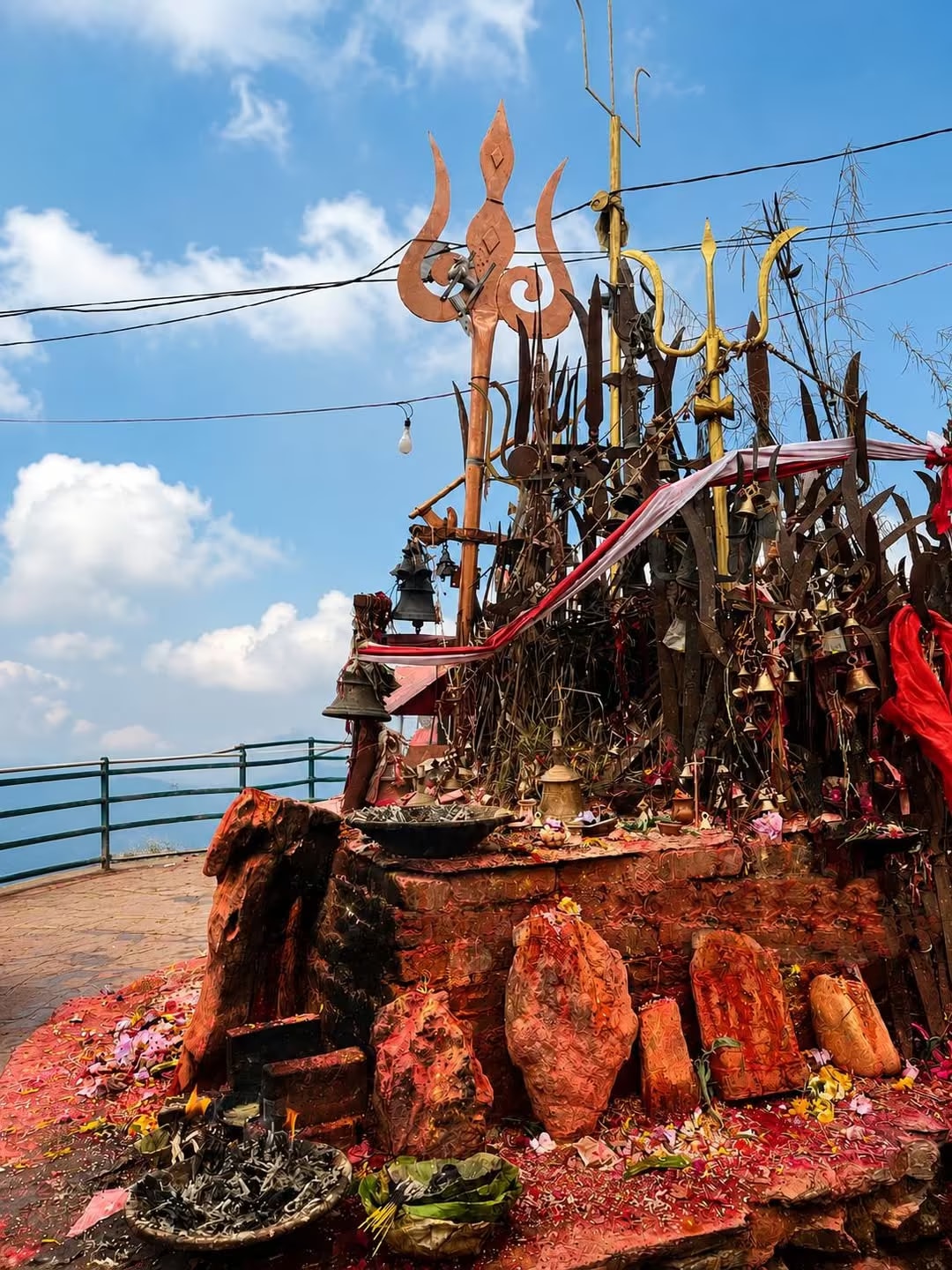
Bhagwati (Kali), with Shiva's trident and the Kalinchowk kunda spring·Long-established Shakti and Shaiva hill shrine; open-air site with no dated structure·Dolakha
An open-air trident shrine to Bhagwati on the 3,842m summit rock above Kuri, with a spring held to source the Sun Koshi — Dolakha's great Janai Purnima and Dashain pilgrimage.
Dedicated to
Bhagwati (Kali), with Shiva's trident and the Kalinchowk kunda spring
Period
Long-established Shakti and Shaiva hill shrine; open-air site with no dated structure
Hours
Open-air summit shrine, accessible daylight hours year-round; the path may be impassable with ice after heavy snow. Main worship at Janai Purnima in August and through Dashain in September–October
Admission
Free
Neighborhood
Kalinchowk danda, above Kuri Village
Kalinchowk Bhagwati sits on bare rock at 3,842 metres, the highest point of the Kalinchowk danda in Dolakha. There is no building in the ordinary sense — the shrine is an open-air platform of trident-studded stone, ringed by bells and years of accumulated offerings, with the wind coming across it unbroken. It is the reason the whole hill has a name, and for most of its history it was known to almost nobody outside the district.
The goddess and the spring
The deity is Bhagwati in her Kali aspect, and the shrine's most distinctive feature is not the icon but the water. A small spring — the kalinchowk kunda — issues from the rock beside the shrine and is held to be a source of the Sun Koshi; pilgrims treat the water as holy and carry it away, and the shrine's Shaiva association runs through it, with Shiva's trident planted repeatedly across the summit rock.
Local tradition connects the site to the wider Shakti geography of the middle hills, and the goddess here is petitioned for the usual things: children, recovery from illness, success in an examination or a court case. Offerings are left where they fall, which is why the summit rock is a dense thicket of tridents, bells and cloth.
Janai Purnima and Dashain
Two moments in the year fill the summit. At Janai Purnima, the full moon of Shrawan-Bhadra in August, pilgrims come up in numbers for ritual bathing at the kunda — the same full moon that draws crowds to Gosaikunda across the range. The second is Dashain, when the goddess's own festival brings sustained worship through the nine nights, and animal sacrifice is still offered here.
The rest of the year the shrine is busiest not with pilgrims but with winter visitors from Kathmandu, for whom the walk to the top is part of a snow trip rather than a vow. Both groups share the same rock, and on a January Saturday the difference is not always visible.
Getting up
The shrine is about a kilometre from Kuri Village and roughly 340 metres above it, and there are two ways to cover that. The stepped path takes forty minutes to an hour, is steep in its upper section, and becomes genuinely hazardous when snow packs to ice — every winter produces falls. The cable car from Kuri covers the same ground in about ten minutes and has transformed who can reach the shrine: elderly pilgrims and families with small children now make it up routinely, which was not true before it opened.
Winter walkers should treat the ice seriously. The steps are unrailed in places, the exposure is real, and the descent is where people get hurt. If the path is iced and you are not confident, take the cable car down.
Before you go up
The summit is above 3,800 metres and there is no shelter on it. Wind chill in December and January is severe and visitors regularly arrive in clothing suited to Kathmandu, which is the most common cause of a very short visit. There is no medical facility on the danda; the nearest is at Charikot, several hours down a rough road.
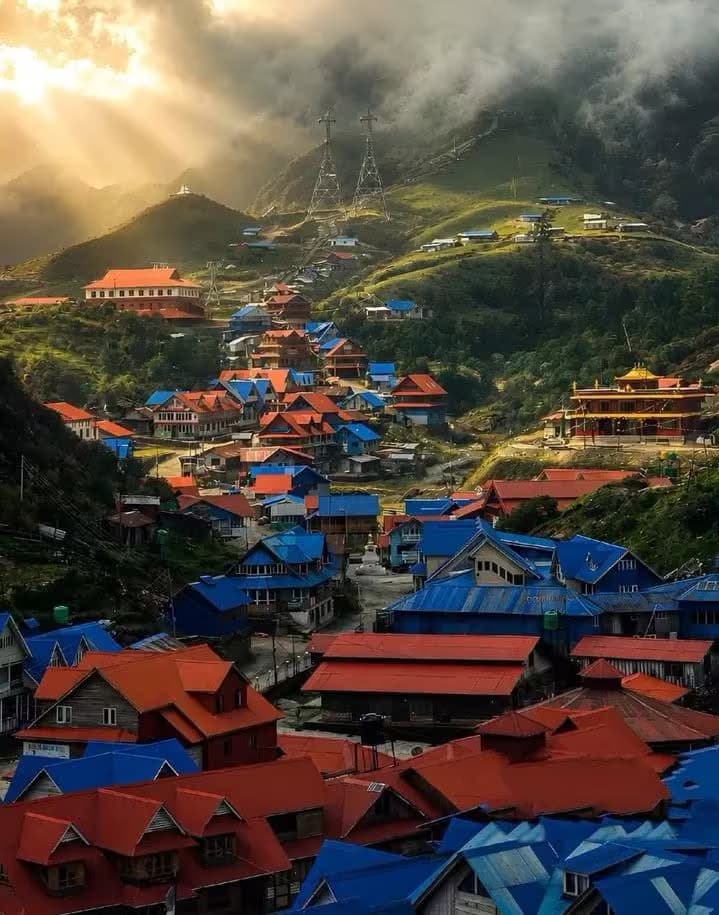
The base for a visit is Kalinchowk — Kuri Village, where the lodges, the food and the cable car station are.
Access & Mobility
At about 3,842m, reached from Kuri Village by a steep stepped path of forty minutes to an hour or by cable car in about ten minutes. The cable car makes the shrine reachable for elderly pilgrims and small children; the path does not. No shelter, no railings on parts of the steps, and no medical facility on the danda — the nearest is at Charikot. Severe wind chill in winter and a real risk of falls on iced steps.
- Vehicle
Jeep from Charikot to Kuri Village on a rough track; no vehicle access above Kuri.
- Cable car
Cable car from Kuri to the summit shrine, about ten minutes; the usual way up for pilgrims who cannot manage the steps.
- On foot
Stepped path from Kuri, forty minutes to an hour, steep and icy in winter.
Best visited in autumn.autumn: best, -1°C to 11°C. Dashain fills the summit for the nine nights of the goddess's own festival, and the post-monsoon air gives the clearest views. The most important worship season of the year here. monsoon: good, 7°C to 15°C. Janai Purnima at the August full moon brings the ritual bathing crowd to the kunda. No view, wet steps and a hard drive up — come for the pilgrimage, not the panorama. spring: good, 0°C to 12°C. The quietest time to actually see the shrine, with the winter crowd gone and the path clear. Late snow is possible into March. winter: good, -9°C to 3°C. Busy with Kathmandu snow visitors rather than pilgrims. The stepped path ices and falls happen every year; take the cable car down if you are not confident, and expect severe wind chill on the open summit rock.
The Almanac
Janai Purnima at the August full moon brings the ritual bathing crowd to the kunda. No view, wet steps and a hard drive up — come for the pilgrimage, not the panorama.
Coda
Continue the Pilgrimage
Part of
Kalinchowk
Related
Connected places and entries worth pairing
Janai Purnima
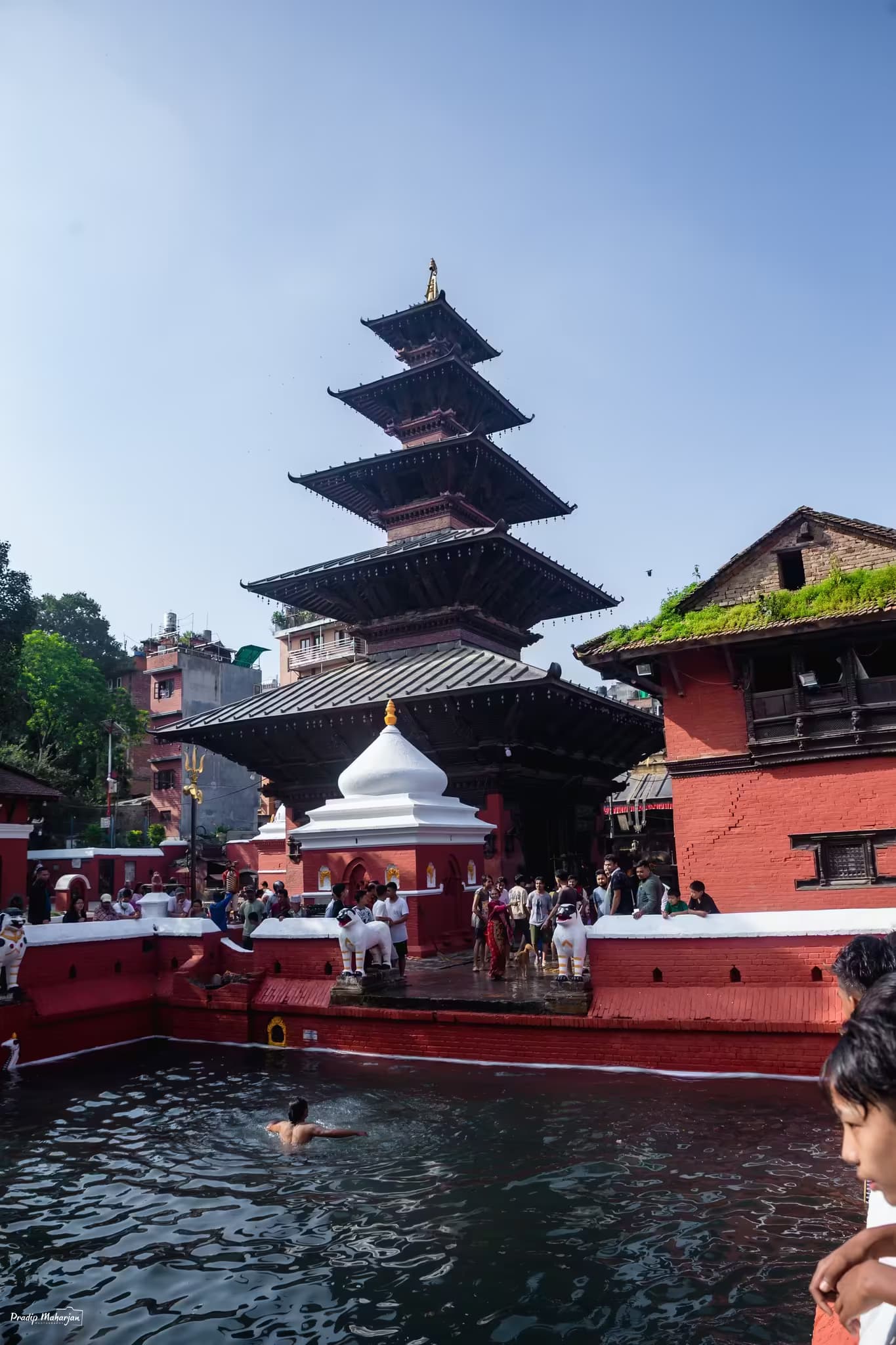
The August full moon that brings the ritual bathing crowd to the kunda beside the shrine
Dashain (Vijaya Dashami)
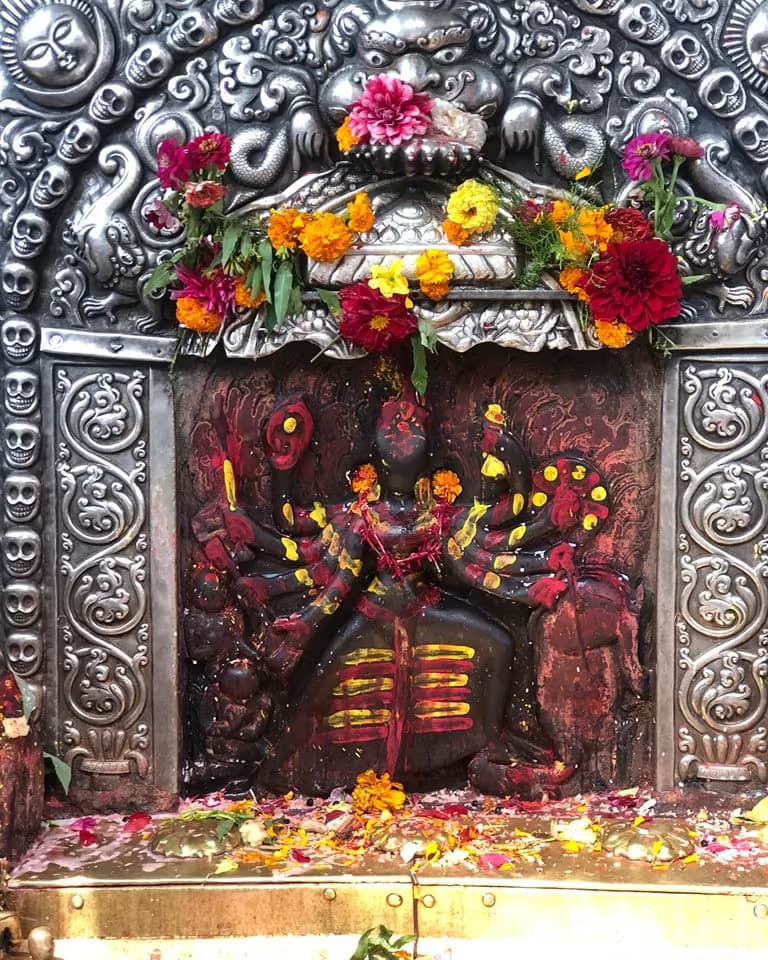
The goddess's own festival, and the shrine's principal worship season
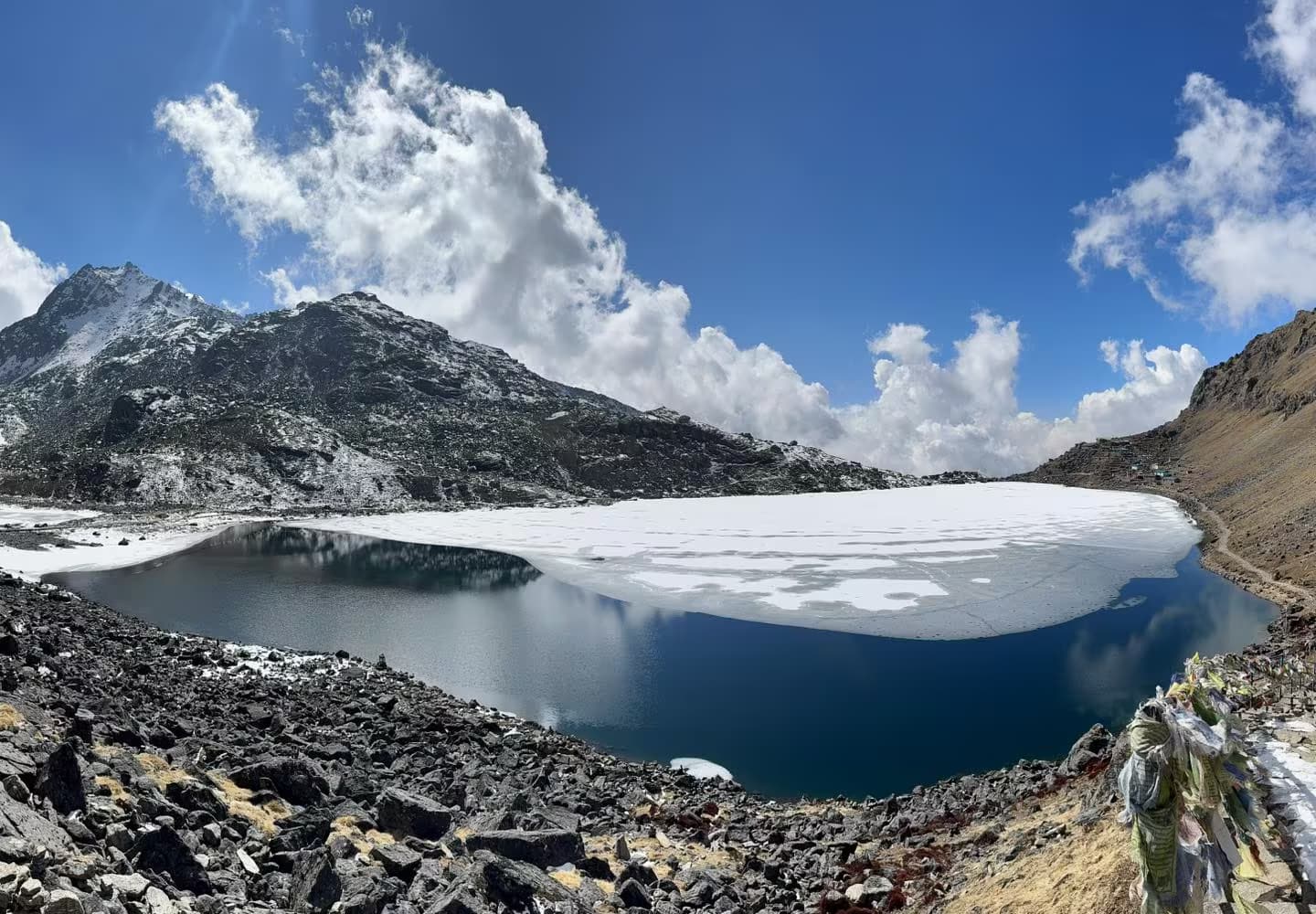
Gosaikunda
The other great Janai Purnima bathing site of the central Himalaya, across the range in Rasuwa
Planning this visit? Local operators publishing trips here can arrange it.
Elsewhere in this region
Help us get it right
Know Kalinchowk Bhagwati better than we do?
We write from research and reporting, and the ground changes faster than we can keep up. If something here is out of date, or you have been and would tell it differently, we would rather hear it.