Nag Panchami
नाग पञ्चमी
Also known as: Naag Panchami, Nag Pancham, Naga Panchami, Nagpanchami, Nag Panchami Vrata, Nag Panchami Barta, Shrawan Shukla Panchami
The monsoon day the Kathmandu Valley pays the nagas their rent — a printed serpent pasted above every doorway, milk poured at the serpent ponds, and prayers for rain that arrives and then stops.
Location
Kathmandu Valley and nationwide
Duration
1 days
Month (Local)
Shrawan
Month (AD)
July/August
Highlights
Printed naga images pasted above the main doorway of the house and worshipped where they hang — then left there for a full year. Milk, flowers, vermilion and rice offered at the threshold and at the valley's serpent ponds. Serpent ponds active for the day: Nag Pokhari in Naxal, Nag Pokhari in Bhaktapur, Nagdaha in Lalitpur. Taudaha, the lake left behind for the serpent king Karkotaka when the valley was drained. Prayers for rain that arrives and then stops, and for protection from snakebite through the wet months.
Tips for Visitors
Go in the morning — the doorway puja and pond offerings happen early, and by afternoon the day looks ordinary. Nag Pokhari in Naxal is the easiest focal point in Kathmandu; Nag Pokhari beside Bhaktapur Durbar Square is the finest for its naga stonework. There is no procession and no chariot: the best use of the day is walking the old lanes of Patan or Bhaktapur watching households fix the paper serpents above their doors. Ask before photographing a family at their own threshold — this is a domestic rite, not a public performance. No live snakes are involved anywhere in the Nepali observance. It is a vrata rather than a public holiday, so transport, shops and offices run normally.
Nag Panchami is the day the Kathmandu Valley remembers that it used to be a lake. On the fifth day of the bright fortnight of Shrawan, Nepali households honour the nagas — the serpent deities who own the water: the springs, the ponds, the stone spouts, the rain itself. It is one of the quietest festivals in the Nepali year and one of the most widely kept, because almost nothing about it happens in the street. It happens on the doorframe of the house.
When it falls
Nag Panchami is Shrawan Shukla Panchami, the fifth day of the waxing moon in the lunar month of Shrawan — July or August, at the height of the monsoon. It is a single day, and it is a vrata (a fasting observance) rather than a public holiday, so offices and shops open as usual and the observance sits around the working day. It lands roughly ten days before Janai Purnima and about a week after Gathamuga: Charhe, placing it inside the dense monsoon cluster of the Newar and Hindu calendar. Check the dates panel above for the exact day this year — it moves with the lunar calendar, and Nepali and Indian panchangas sometimes differ by a day on it.
The naga above the door
The central act is domestic and takes minutes. A printed picture of the nagas — usually a knot of coiled, many-hooded serpents on cheap coloured paper, sold in bazaars and outside temples in the days beforehand — is fixed above the main doorway of the house, high on the lintel. It is pasted up with cow dung or a rice-flour paste, then worshipped where it hangs: milk, flowers, vermilion, rice grains and a lit wick offered at the threshold.
There it stays. The picture is left in place for the whole year, weathering through the monsoon and the dry season, and is replaced by the next one on the following Nag Panchami. Walk any old lane in Kathmandu, Patan or Bhaktapur in, say, March and look up at the doorframes: the faded serpents still taped above the doors are last August's.
Two things distinguish the Nepali observance from what a visitor may have read about elsewhere in South Asia. No live snakes are involved — the nagas are worshipped as an image, a carving or a painted board, not as animals brought out for the day. And the offering that matters is milk, poured at the image, at a naga stone, or at the edge of a pond, not into any burrow.
What people ask for is practical: protection from snakebite through the wet months when snakes and people share the same ground, and — more importantly in a farming country — rain that arrives and then stops. Nagas withhold water when they are offended and release it when they are honoured, so a drought and a flood are the same complaint.
Why serpents, in a valley that was a lake
The Kathmandu Valley's founding story is a drainage story. Before there were cities here there was a lake, and the bodhisattva Manjushri cut the gorge at Chobhar with his sword to let the water out. The nagas who lived in the lake had to be rehoused, and the serpent king Karkotaka was settled in what water was left behind — Taudaha, the small dark lake just south of Kathmandu on the Dakshinkali road, where he is said to live still. That is why Taudaha is never fished and why its water is treated as belonging to someone.
Read the valley with that story in hand and the nagas are everywhere. They coil around the spouts of the hiti stone waterworks, because a naga is what a water source has instead of a deed. They are cut into temple struts and doorway tympana. They ring the royal bathing tanks. Water in this valley has an owner, and Nag Panchami is the day the rent is paid.
Where to see it
The festival is domestic, so the public side of it is concentrated at the serpent ponds — the nag pokhari, of which the valley has several.
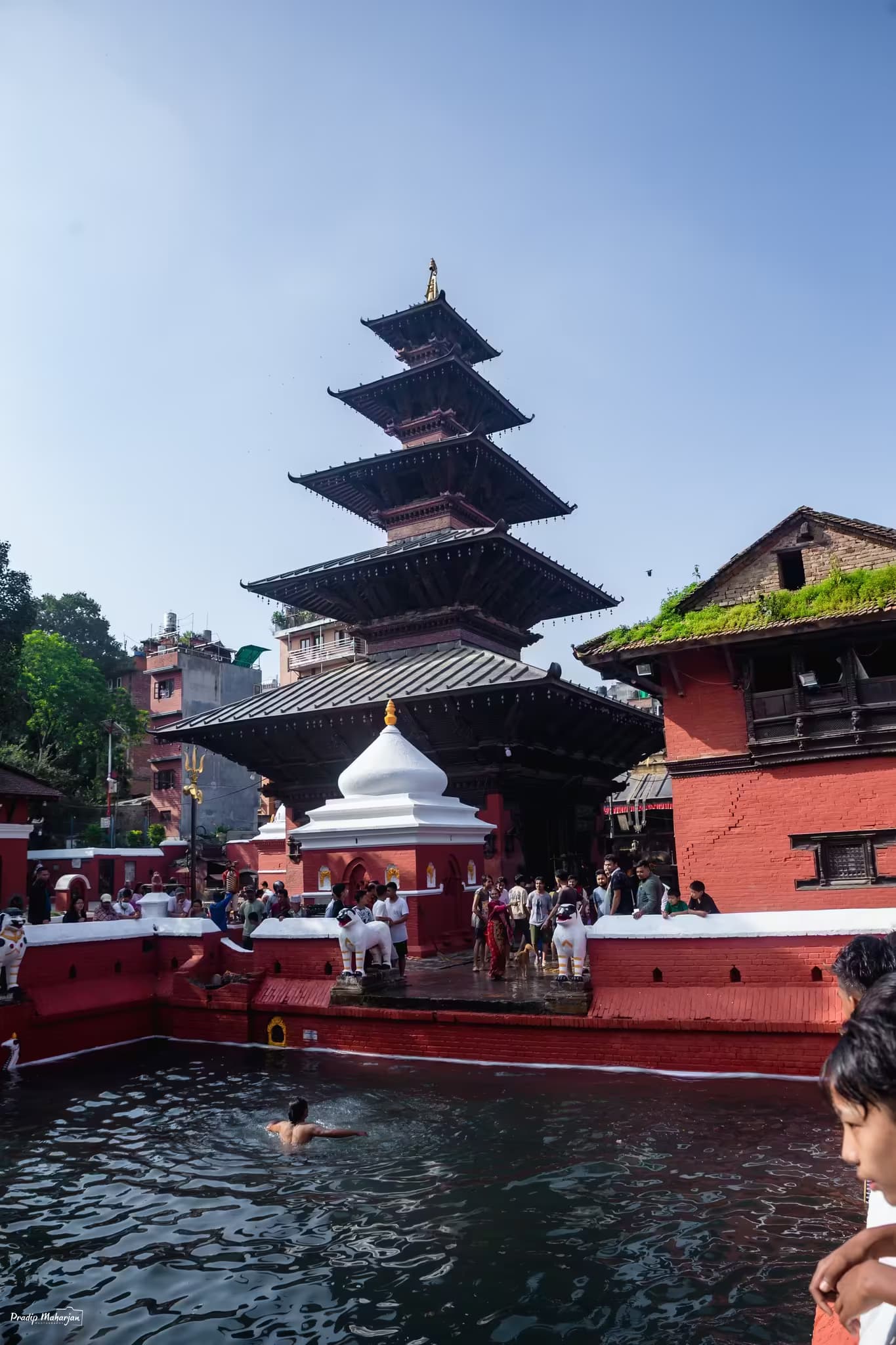
- Nag Pokhari, Naxal — the most accessible in Kathmandu, a walled historic tank in a quiet park with a tall multi-hooded naga king rising from the water. Ordinarily a place people sit and read; on Nag Panchami it fills with people making offerings at the water's edge.
- Nag Pokhari, Bhaktapur — beside the royal palace at Bhaktapur Durbar Square, and the finest of them as an object: a Malla-era tank whose stonework is thick with naga sculpture. Come for the carving as much as the ritual.
- Nagdaha — a natural lake at Dhapakhel in Lalitpur, revered as a serpent pond and busy with local worshippers rather than visitors.
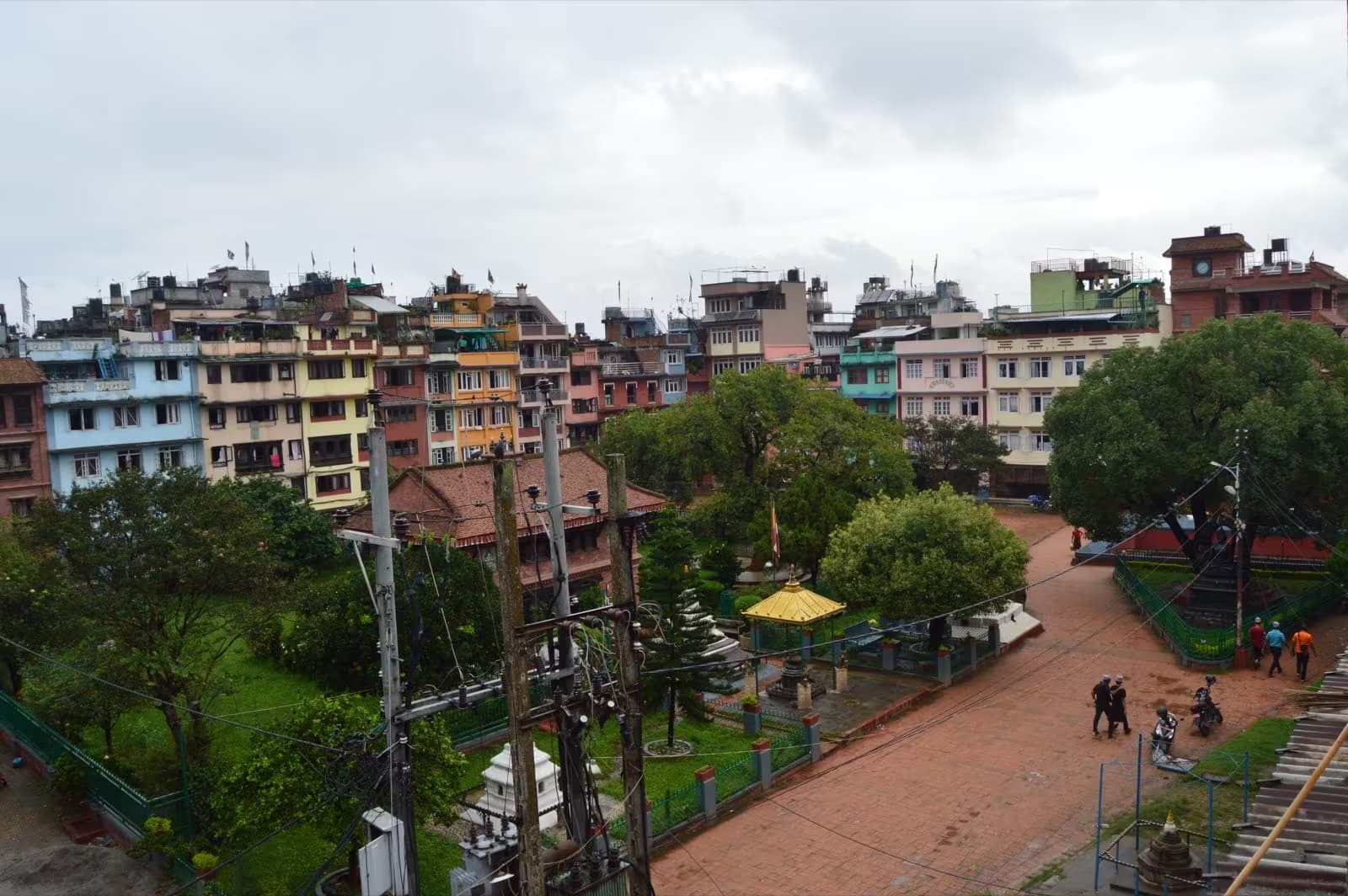
- Nag Bahal — the great open courtyard in Patan named for its naga, worth walking through on the day if you are already in the old city.
None of these produces a procession or a chariot. What you will see is a steady traffic of people arriving with a small brass jug of milk and a paper packet of flowers, doing the thing, and leaving.
Visiting
Go in the morning, which is when the doorway puja and the pond offerings happen; by afternoon the day looks ordinary again. The most rewarding way to spend it is not at a single site but walking the old lanes of Patan or Bhaktapur early and watching households do it — the ladder against the wall, the paste, the paper, the milk. Ask before photographing a family at their own threshold; this is not a public performance and is not staged for anybody.
If you are in Kathmandu for a stretch of the monsoon, Nag Panchami is a good day to start noticing the valley's water heritage, and the hiti in particular. The connection between the serpents on the spout and the serpents on the doorframe is the whole argument of the festival, and it is easier to see on the one day a year when the offerings are fresh.
Related
Connected places and entries worth pairing
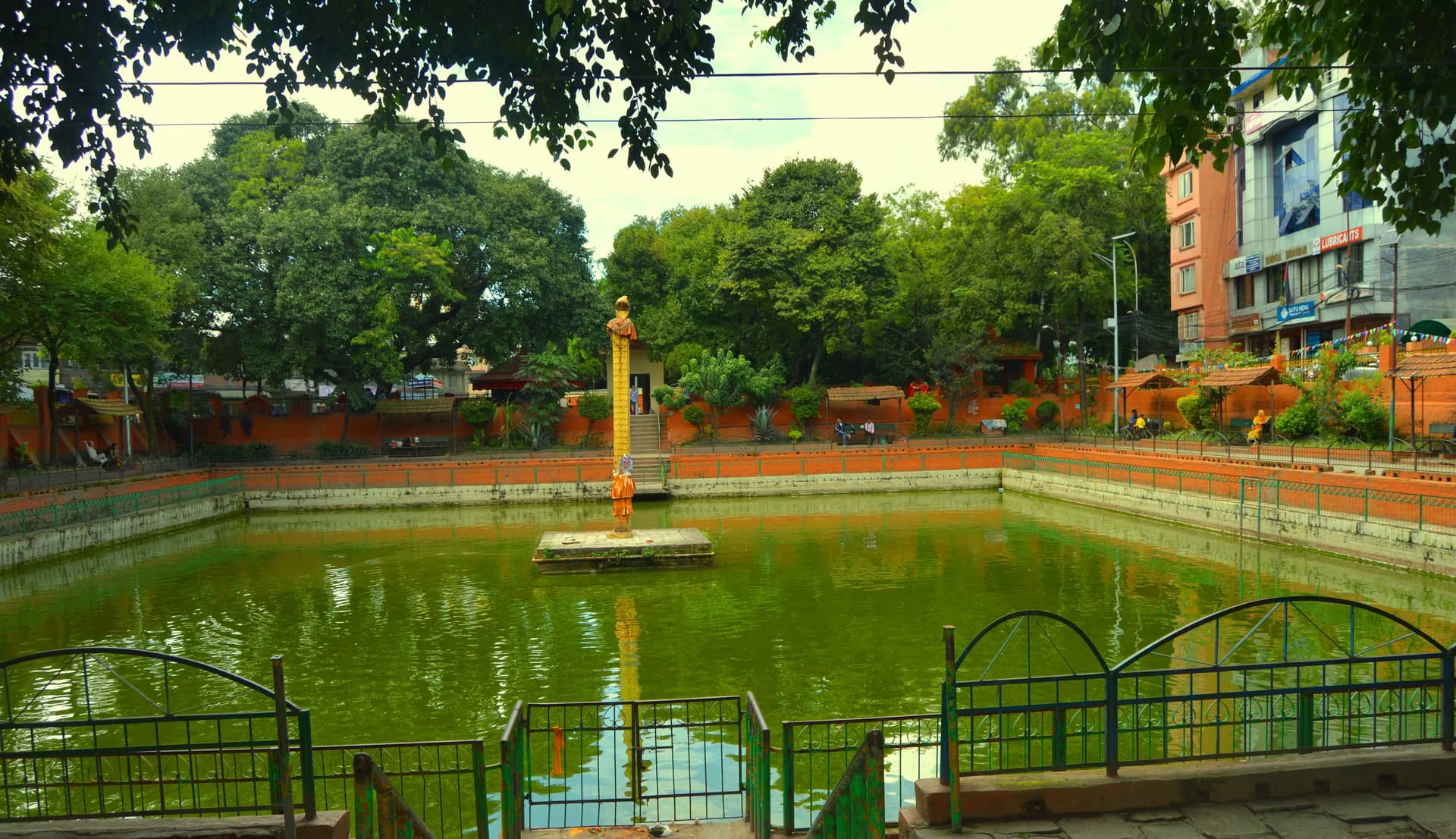
Nag Pokhari (Naxal)
The most accessible serpent pond in Kathmandu, and the day's focal point in the city
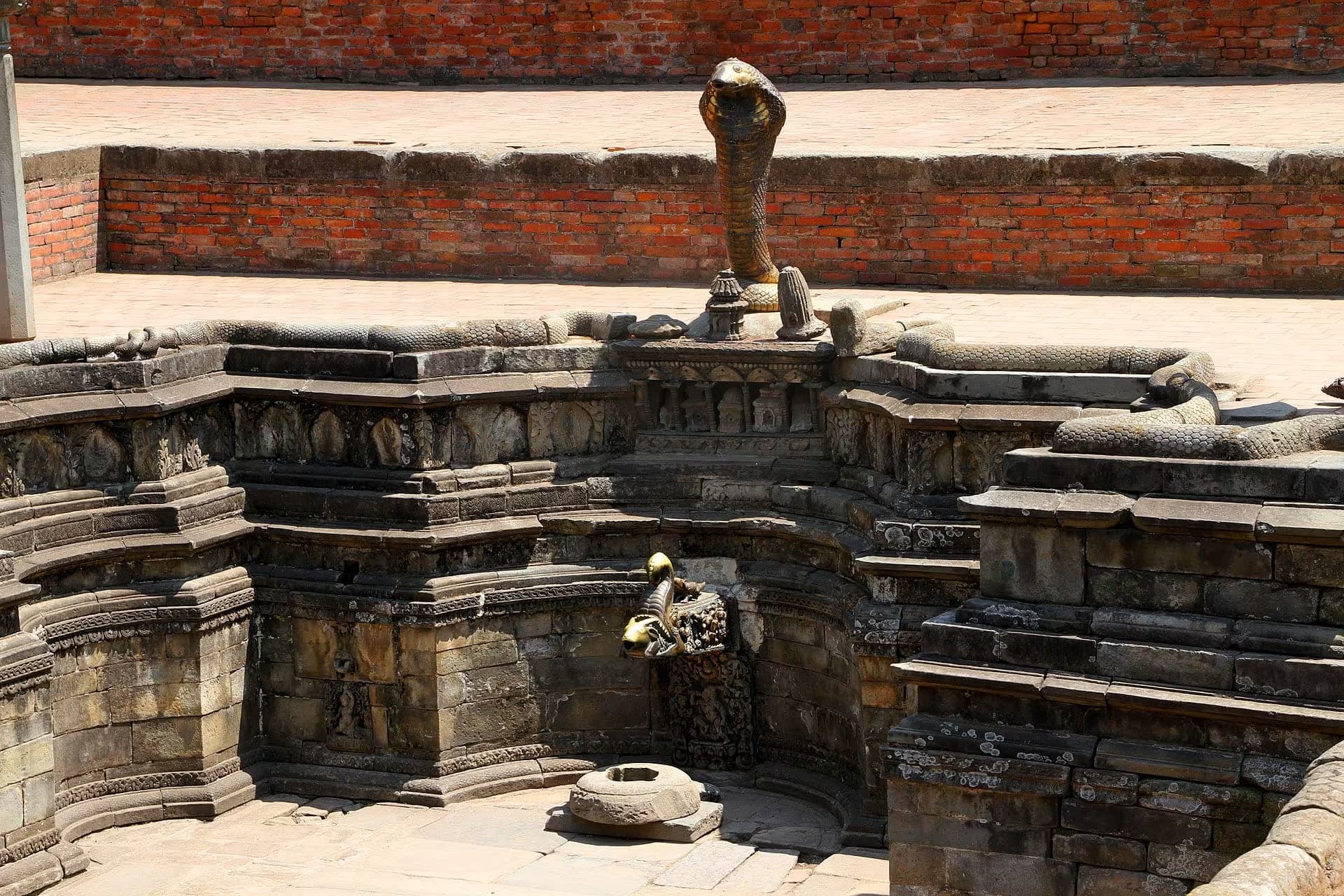
Nag Pokhari
Bhaktapur's royal serpent tank, the finest of the valley's nag pokhari for its naga stonework
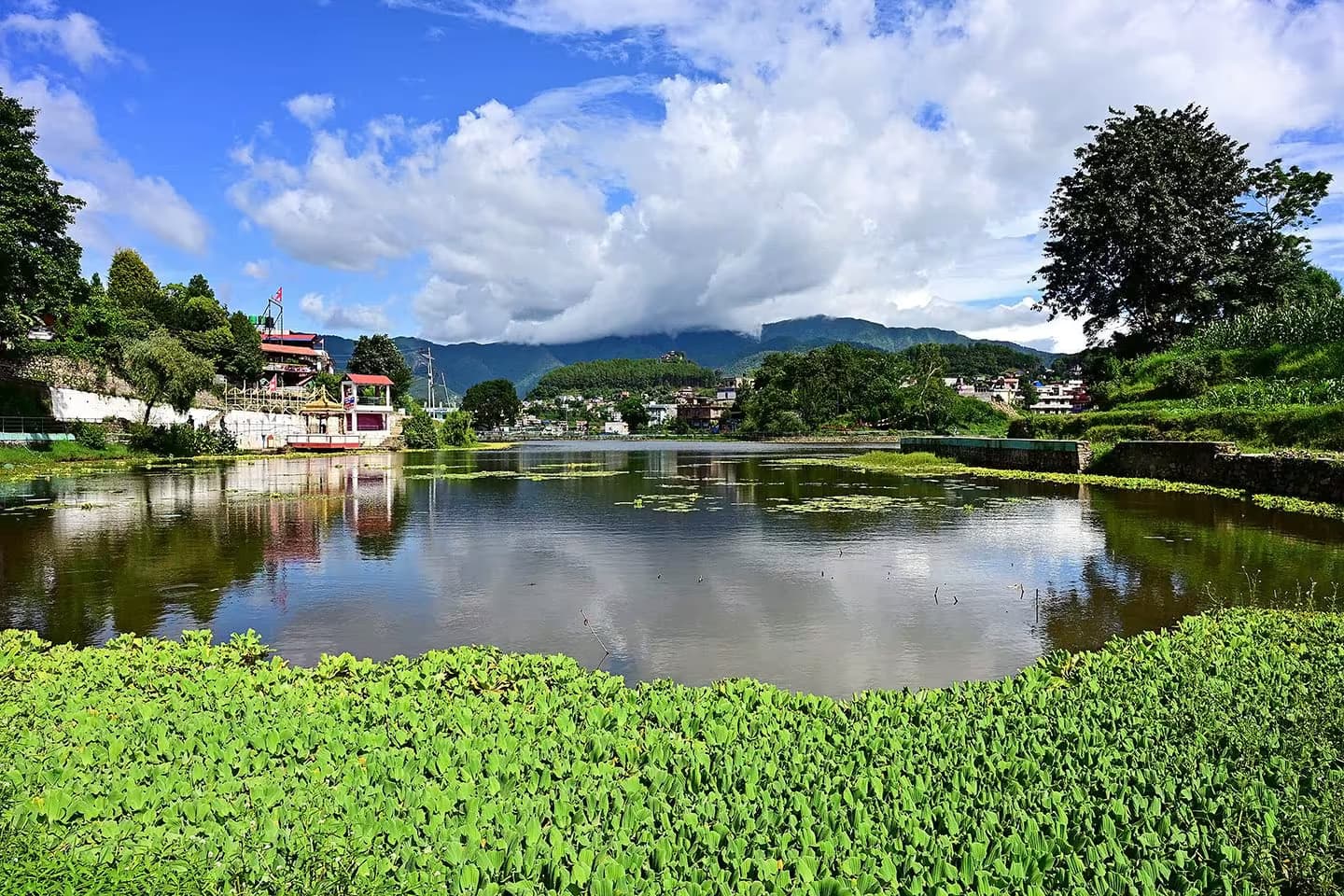
Nagdaha
The Dhapakhel serpent lake in Lalitpur, busy with local worshippers on the day
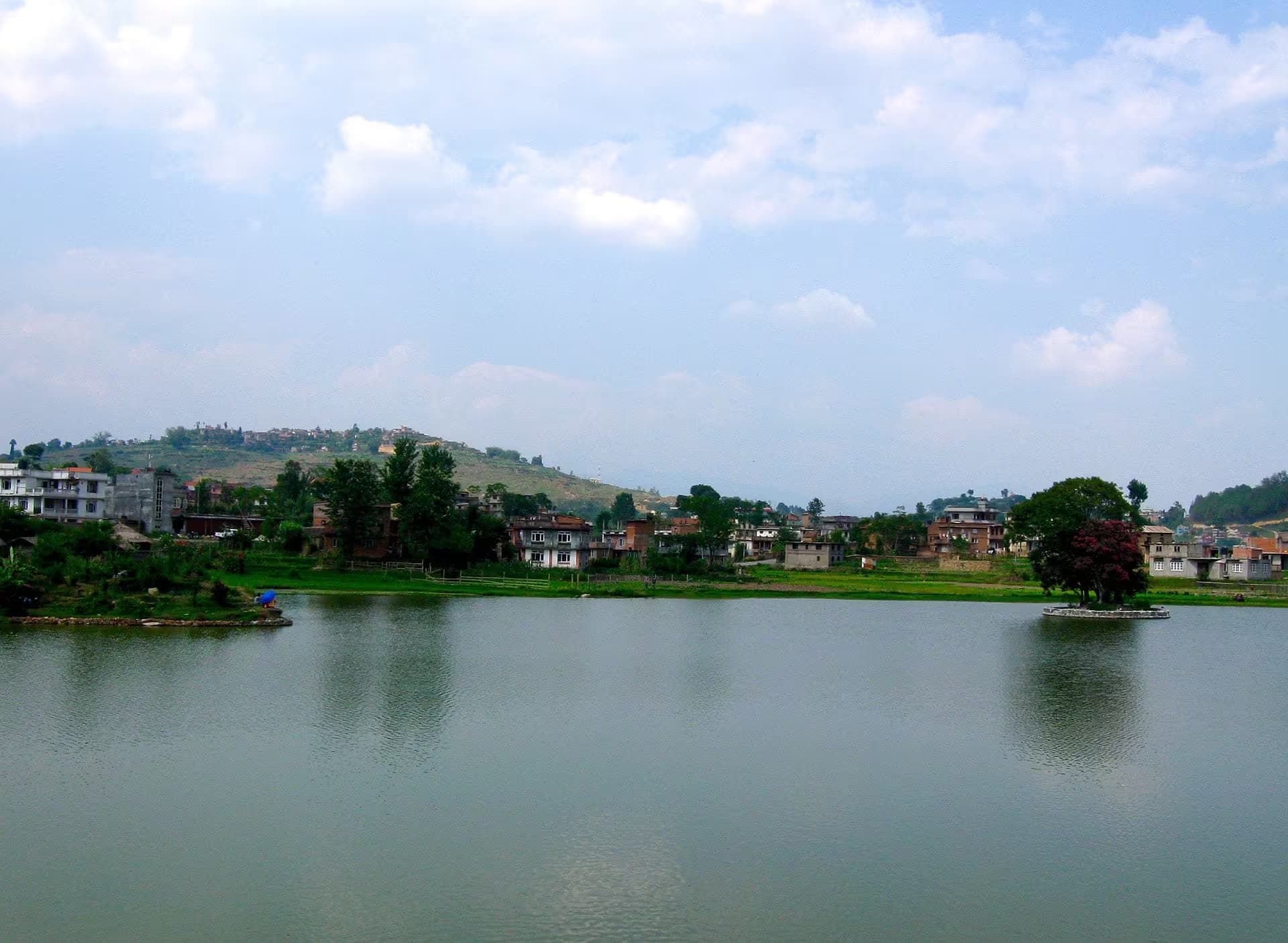
Taudaha Lake
The lake left for the serpent king Karkotaka when Manjushri drained the valley
Nag Bahal (Nagbahal)
The Patan courtyard named for its naga
Janai Purnima
The full moon of Shrawan, roughly ten days after the serpents go up above the doors
Gathamuga: Charhe
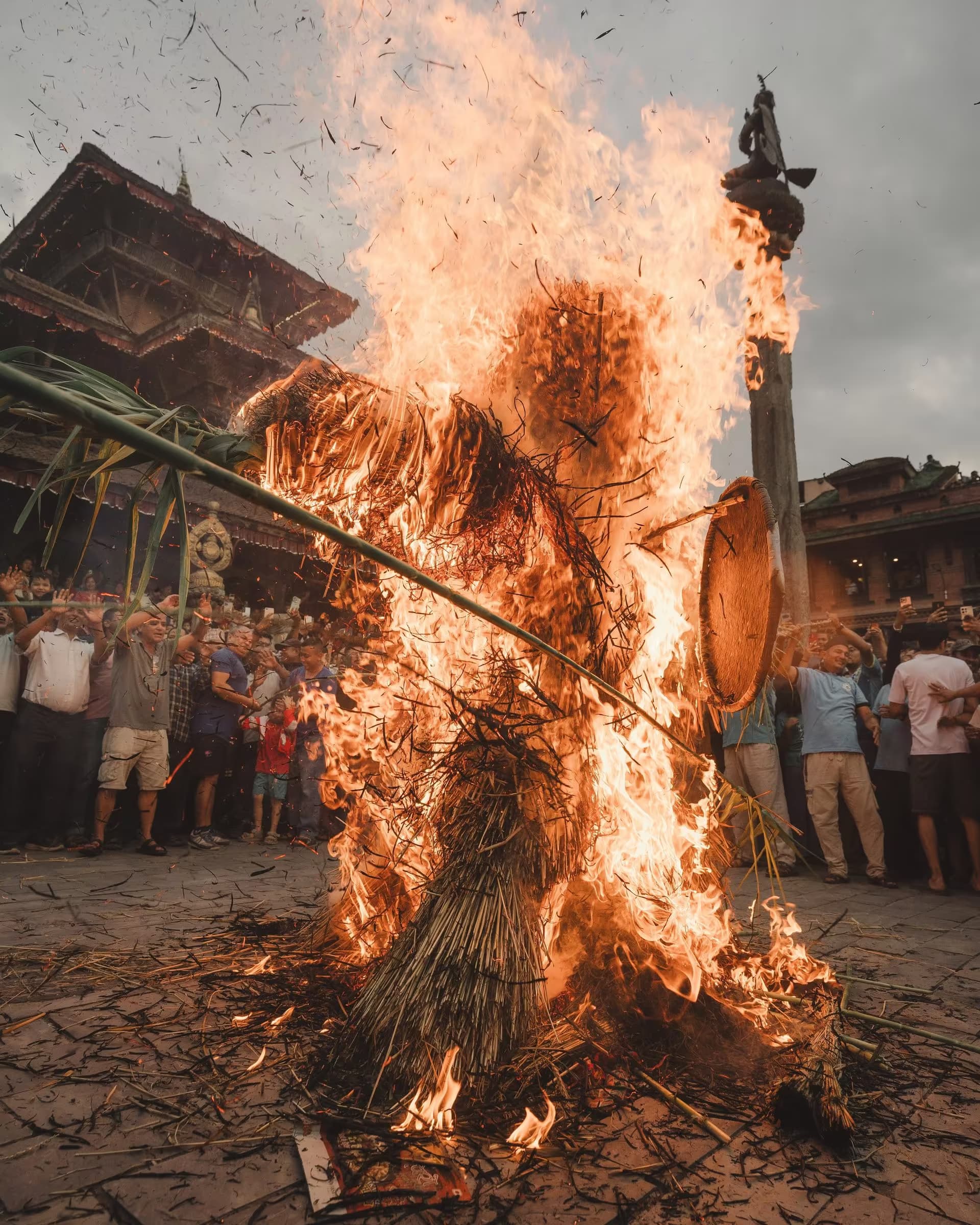
The demon-burning night about a week earlier, opening the same monsoon cluster

Sithi Nakha
The valley's other water festival — the wells and spouts cleaned in Jestha, their nagas honoured in Shrawan
Elsewhere in this region
Help us get it right
Know Nag Panchami better than we do?
We write from research and reporting, and the ground changes faster than we can keep up. If something here is out of date, or you have been and would tell it differently, we would rather hear it.