Temple · Hindu
Kumbheshwar Temple
कुम्भेश्वर मन्दिर
Shiva, as Kumbheshwar·Core dated 1392 CE (Jayasthiti Malla); upper tiers later·Lalitpur
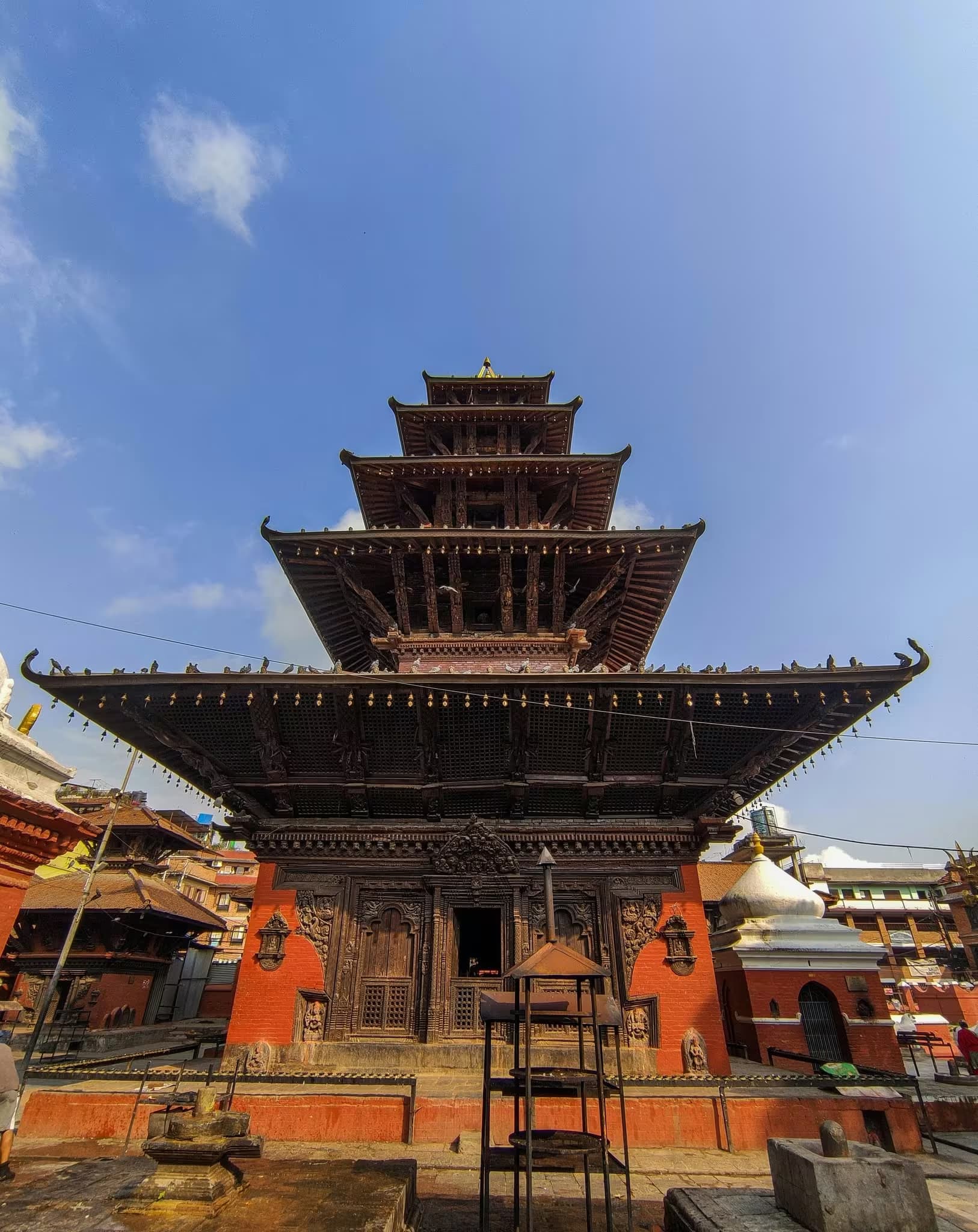
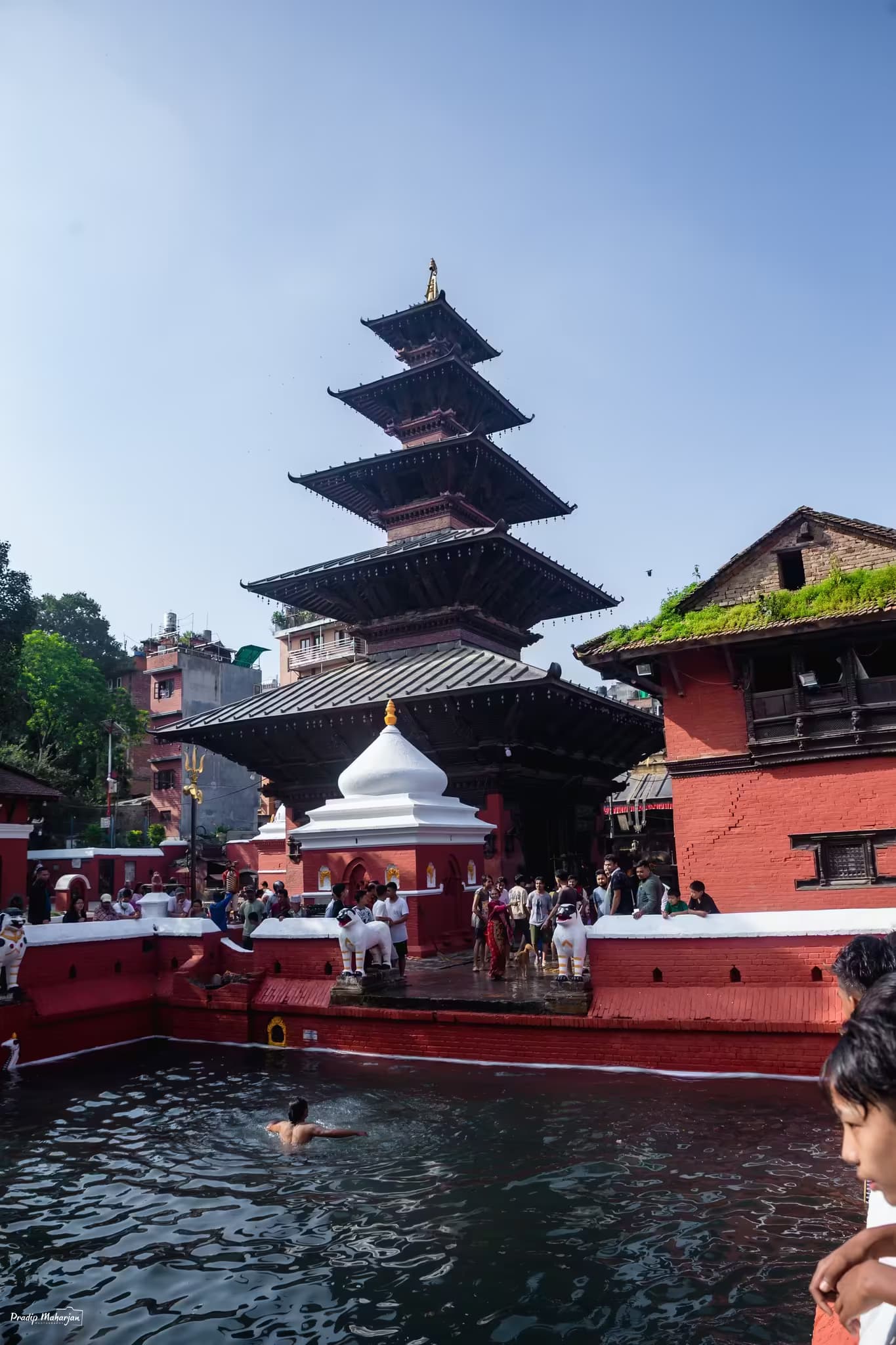
Patan's five-tiered Shiva temple — one of only two five-storey pagodas in the Kathmandu Valley — built around a spring-fed tank believed to run underground from Gosainkunda, and the focal point of Janai Purnima.
Dedicated to
Shiva, as Kumbheshwar
Period
Core dated 1392 CE (Jayasthiti Malla); upper tiers later
Hours
Roughly 5:00 AM – 8:00 PM
Admission
Free
Neighborhood
Kumbheshwar, north Patan
Kumbheshwar is the oldest surviving temple in Patan and one of the two five-tiered pagodas in the Kathmandu Valley — the other is Nyatapola in Bhaktapur. It stands in a wide open compound north of the palace, and unlike almost every other major temple in the city it is not hemmed in by lanes: you see the whole five-storey stack of roofs at once, rising over a walled tank.
The tank that comes from Gosainkunda
The temple's importance rests on its water. A spring feeds the tank in the compound, and the belief held here is that it runs underground from Gosainkunda, the high alpine lake below Langtang where Shiva is said to have plunged to cool the poison he swallowed at the churning of the ocean. That belief has a very practical consequence: a pilgrim who cannot make the days-long walk to Gosainkunda can bathe at Kumbheshwar and receive the same merit. It is one of the clearest examples in the valley of a mountain pilgrimage given a city proxy.
Janai Purnima
On Janai Purnima, the full moon of Shrawan, this compound is the busiest religious space in Lalitpur. A silver-and-gold lingam is installed on a platform in the middle of the tank, thousands come to bathe and to have the janai renewed or a protective doro tied on the wrist, and sadhus gather here in numbers seen at few other valley festivals. Arrive by seven in the morning or you will see the crowd rather than the rite. The day falls inside the Buddhist holy month of Gunla, which is part of why Patan observes it so intensely.
The building
The core of the temple is dated to 1392 CE, in the reign of Jayasthiti Malla, with the upper tiers added later; the structure survived the 1934 and 2015 earthquakes with repair rather than rebuilding. The compound also holds shrines to Bagalamukhi, Unmatta Bhairav and others, so the site functions as a small sacred quarter rather than a single temple. The Kumbheshwar Technical School, long associated with the neighbourhood, sits beside it.
Visiting
About ten minutes' walk north of Patan Durbar Square through the old lanes. Free. Non-Hindus should not enter the inner sanctum but the compound, the tank and the pagoda are open to all. Combine it with Ibahi Thur a few minutes further north, the Golden Temple and Baglamukhi.
Folio III
Nearby Sacred Sites
Places within a short walk that help turn this stop into a small sacred cluster.
Baglamukhi Temple
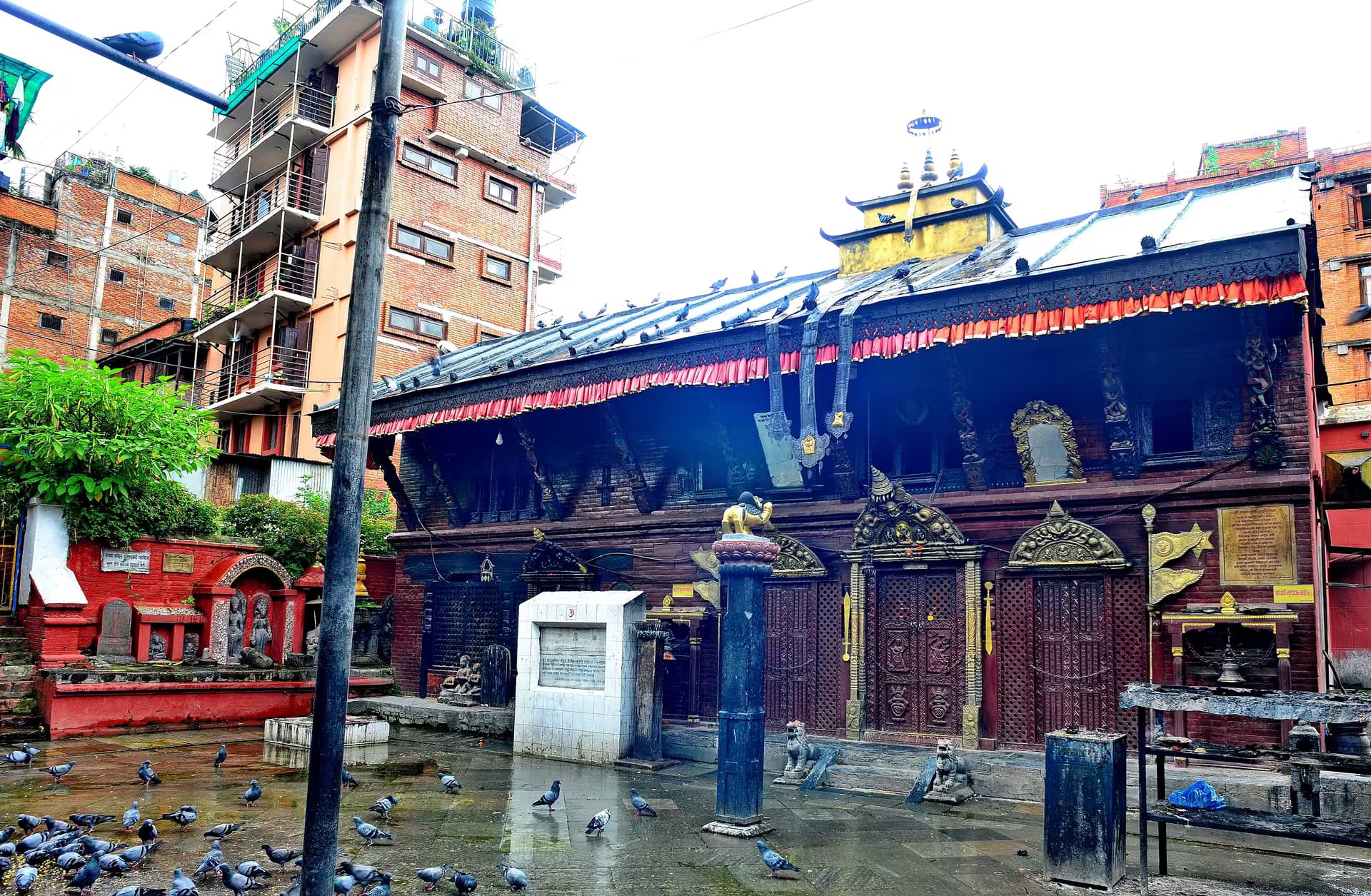
A revered tantric goddess temple in Patan dedicated to Baglamukhi, the Mahavidya of stambhana, known for Thursday puja, dispute-resolution prayers, and its sacred Kumbheshwar-side complex.
Dhum Bahal (Gunalakshmi Mahavihar)
One of the traditional 18 bahals of Patan, Dhum Bahal (Gunalakshmi Mahavihar) is a historic Newar Buddhist monastery courtyard in the old city of Lalitpur.
Ibahi Thur (Northern Ashoka Stupa)
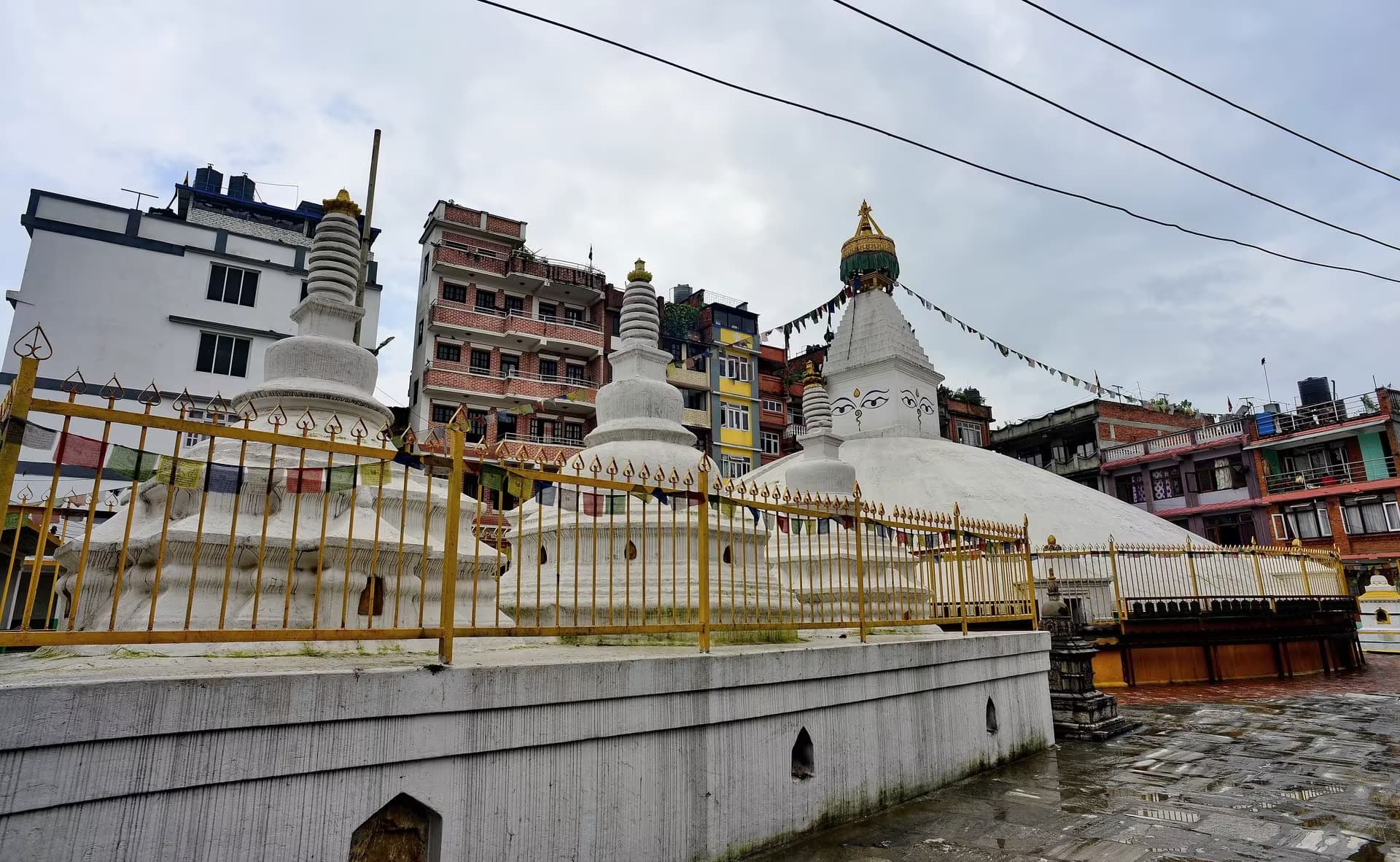
The northern of Patan's four Ashoka stupas, in the lanes above Kumbheshwar — the one embedded most deeply in the old Newar city.
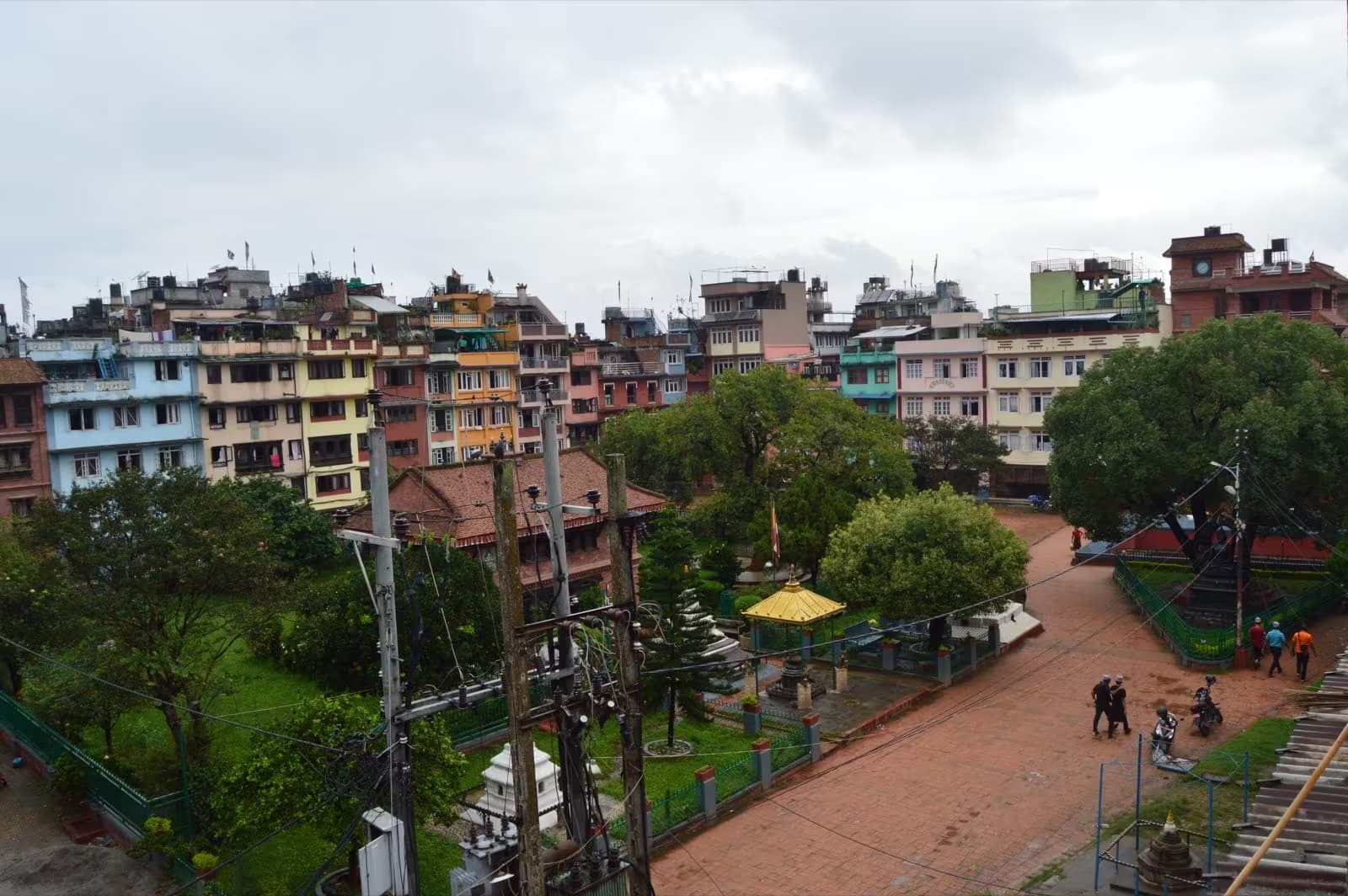
Nag Bahal (Nagbahal)
One of Patan's oldest Buddhist courtyards and the gathering site for the Samyak Mahadan festival, where all Dipankara Buddha images from across Patan are assembled.
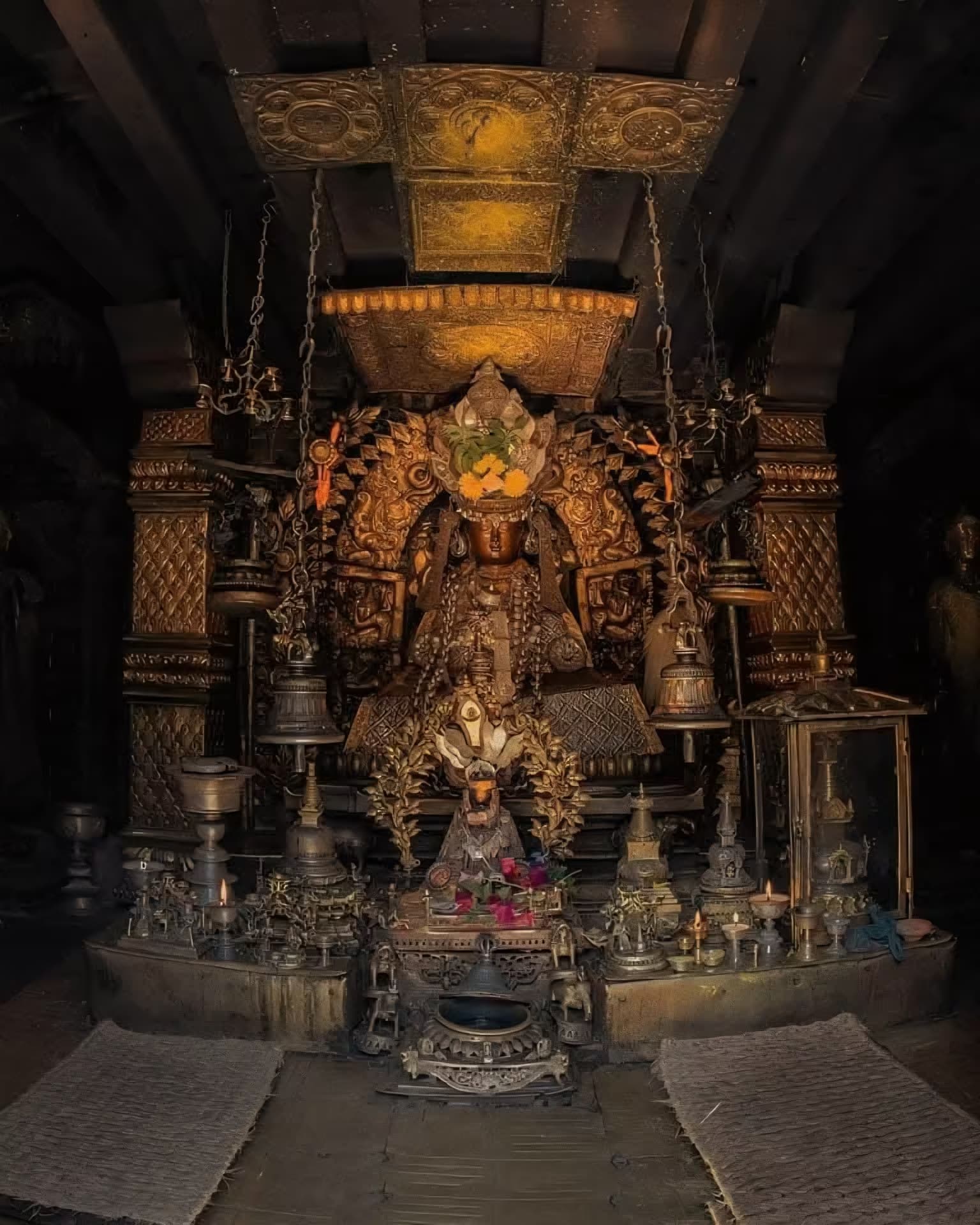
Hiranya Varna Mahavihar (Golden Temple)
Patan's celebrated Golden Temple — a 12th-century Newar Buddhist bahal sheathed in gilded copper, with a rotating boy priest and an 800-year-old Prajnaparamita manuscript.
Coda
Continue the Pilgrimage
Related
Connected places and entries worth pairing
Planning this visit? Local operators publishing trips here can arrange it.
Elsewhere in this region
Help us get it right
Know Kumbheshwar Temple better than we do?
We write from research and reporting, and the ground changes faster than we can keep up. If something here is out of date, or you have been and would tell it differently, we would rather hear it.