Stupa · Buddhist
Pulchowk Ashoka Stupa (Pulchowk Thur)
पुल्चोक थुर
Buddhist stupa; Dhyani Buddha shrines at the cardinal points·Attributed by tradition to Ashoka, 3rd century BCE; the mound itself is undated·Lalitpur
The western of Patan's four great grass-covered stupas — the *thur* that mark the old limits of the city and anchor every Buddhist circuit walked inside it, including Matya.
Dedicated to
Buddhist stupa; Dhyani Buddha shrines at the cardinal points
Period
Attributed by tradition to Ashoka, 3rd century BCE; the mound itself is undated
Hours
Open at all times
Admission
Free
Neighborhood
Pulchowk, Patan
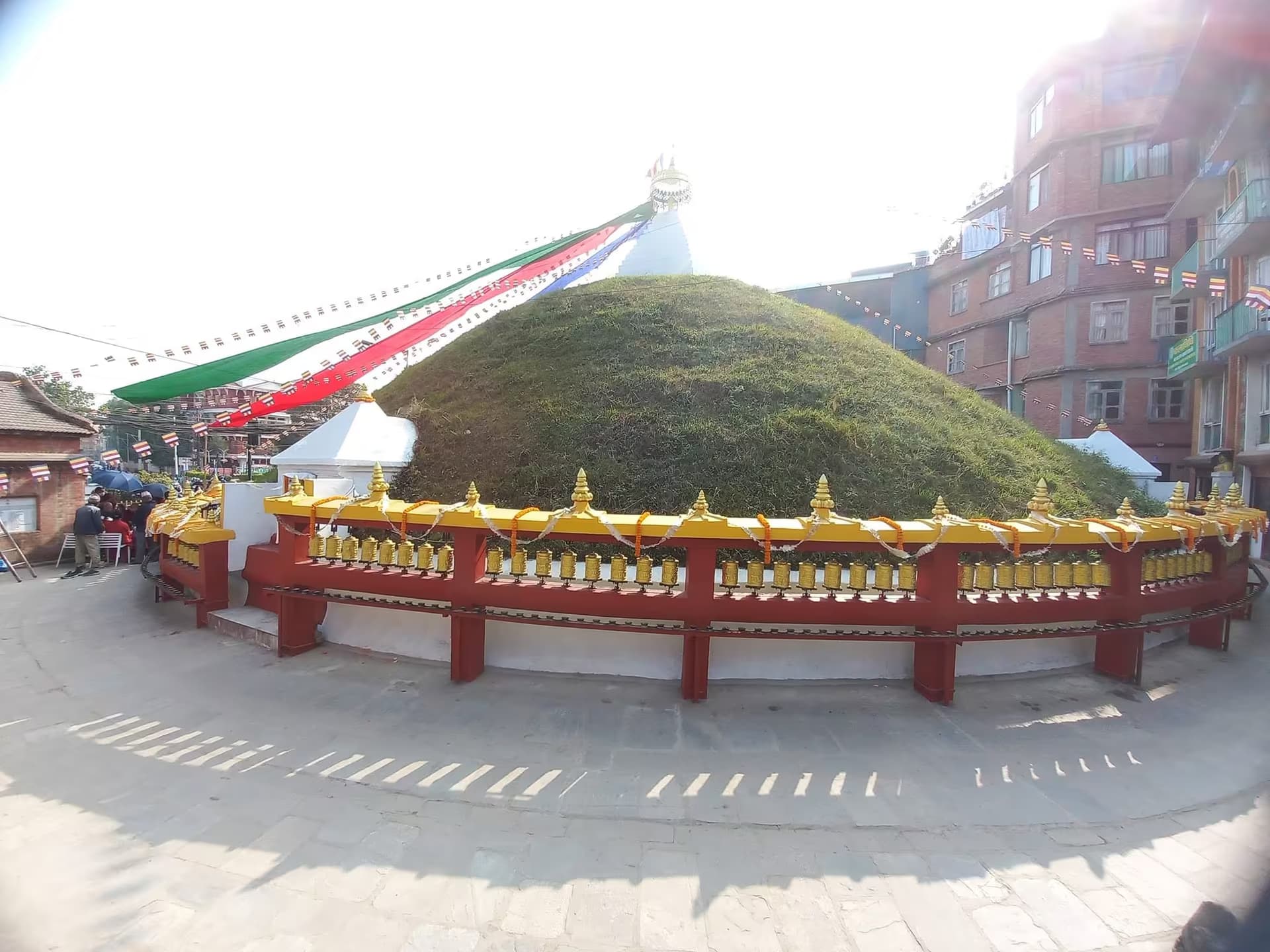
Patan is ringed by four enormous stupas, one at each edge of the old city — three of them grassed earth mounds, the fourth plastered and whitewashed. Newars call them thur, and local tradition attributes them to the Mauryan emperor Ashoka, said in the valley chronicles to have visited Nepal Mandala with his daughter Charumati in the 3rd century BCE. None of the four has been excavated to a date, and scholars are cautious about the attribution — but nothing else in Lalitpur is credibly older, and the four together are the armature the city's Buddhist geography is built on.
The western thur
This is the western anchor, in Pulchowk, on the approach into Patan from the Bagmati bridges. Like Lagan and Teta it is a plain hemispherical earth mound, grassed over and far larger than it looks from any single side, with a whitewashed harmika and spire on top and small shrines set into the base at the cardinal points. A ring of prayer wheels in a red and gold railing runs right round it. There is no gate, no ticket and no interior. It is a piece of the city rather than a monument to it — children play on the slope, the base carries lamps and offerings on festival mornings, and traffic runs past on all sides.
Why the four matter together
The thur define a square, and Patan's Buddhist ritual life happens inside it. On Matya, the day-long Festival of Lights held the day after Gai Jatra, the procession's route hangs on these four points and fills in every shrine between them — around 1,400 of them by the traditional reckoning. Walking the four thur in a morning is the shortest possible version of that circuit, and a good way to grasp the scale of the old city before you get lost in its lanes.
Visiting
Five minutes on foot from Patan Durbar Square heading west. Free, open, and best combined with the other three — Lagan Thur to the south, Teta Thur to the east and Ibahi Thur to the north. The chaitya beside Pim Bahal Pokhari, a few minutes away, is a separate and much later structure, often confused with this one.
Folio III
Nearby Sacred Sites
Places within a short walk that help turn this stop into a small sacred cluster.
Coda
Continue the Pilgrimage
Planning this visit? Local operators publishing trips here can arrange it.
Elsewhere in this region
Help us get it right
Know Pulchowk Ashoka Stupa (Pulchowk Thur) better than we do?
We write from research and reporting, and the ground changes faster than we can keep up. If something here is out of date, or you have been and would tell it differently, we would rather hear it.