Stupa · Buddhist
Lagan Thur (Lagankhel Ashoka Stupa)
लगन थुर
Buddhist stupa; Dhyani Buddha shrines at the cardinal points·Attributed by tradition to Ashoka, 3rd century BCE; the mound itself is undated·Lalitpur
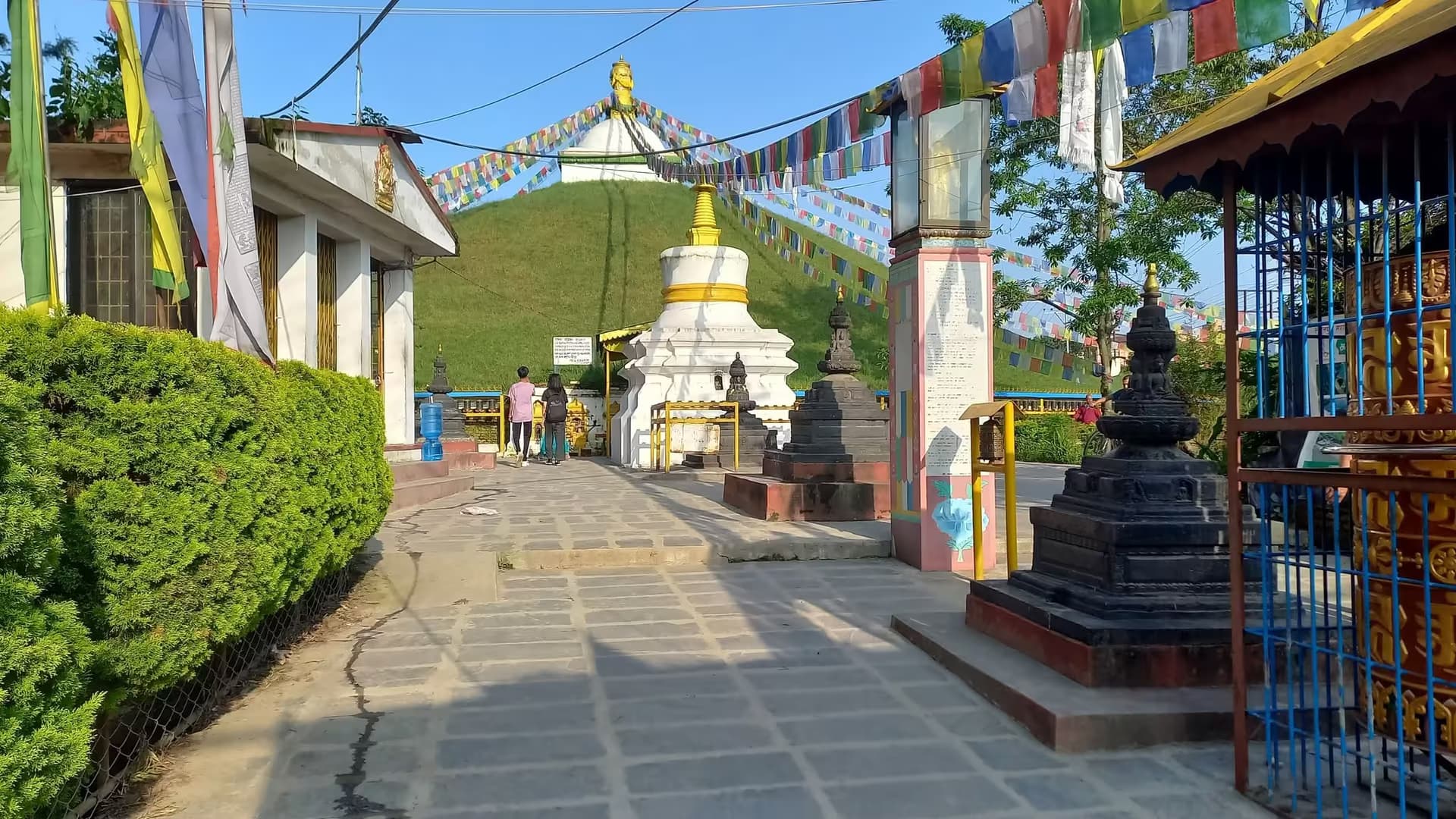
The southern of Patan's four Ashoka stupas, at the Lagankhel crossroads beside Saptapatal Pokhari — the busiest and most built-around of the four.
Dedicated to
Buddhist stupa; Dhyani Buddha shrines at the cardinal points
Period
Attributed by tradition to Ashoka, 3rd century BCE; the mound itself is undated
Hours
Open at all times
Admission
Free
Neighborhood
Lagankhel, Patan
The southern thur of Patan's four great mounds stands at Lagankhel, where the roads south out of the city meet. Local tradition attributes all four to the Mauryan emperor Ashoka; no excavation has dated them, but they are without serious rival the oldest religious structures in Lalitpur, and they fix the corners of the city's Buddhist geography.
A stupa inside a junction
Of the four, this is the one the modern city has pressed hardest against. Buses turn around beside it, the bus park and market are a few steps away, and the grassed mound sits in the middle of it with its whitewashed spire above the shopfronts. Immediately west lies Saptapatal Pokhari, the great pond whose name and legend are tied to the neighbourhood's ritual life, and the Batuk Bhairav shrine holds the crossroads itself — so a five-minute stop here takes in a stupa, a sacred tank and a working Bhairav shrine without leaving one junction.
On the Matya circuit
Matya, Patan's day-long Festival of Lights, anchors on the four thur and touches every Buddhist shrine between them. Lagan Thur is the southern turn of that circuit, and on the day the mound is circled continuously from before dawn until long after dark.
Visiting
About fifteen minutes' walk south of Patan Durbar Square, or any Lagankhel-bound bus. Free and always open. The other three are Pulchowk Thur to the west, Teta Thur to the east and Ibahi Thur to the north.
Folio III
Nearby Sacred Sites
Places within a short walk that help turn this stop into a small sacred cluster.
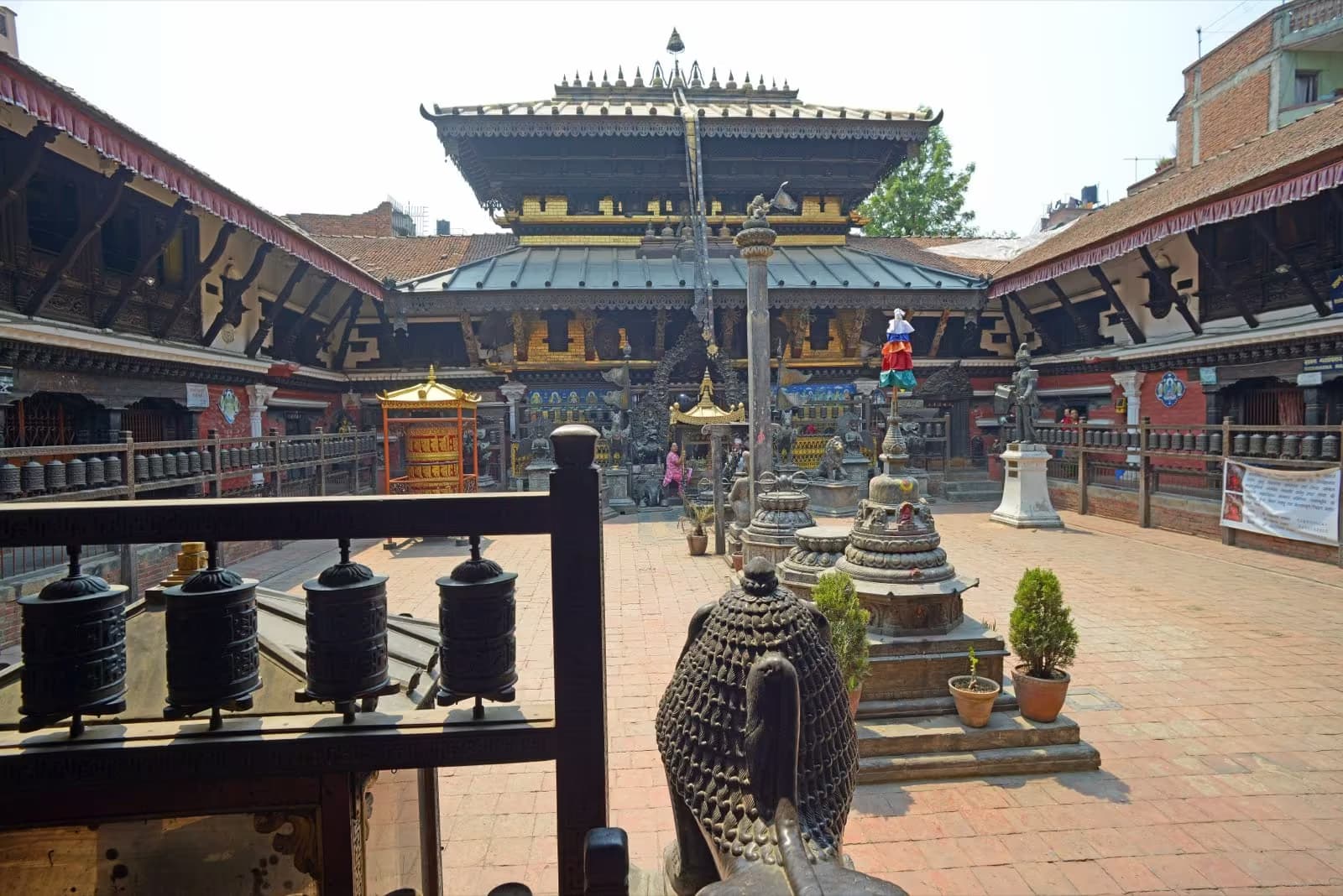
Rudravarna Mahavihar (Okubahal)
An ancient 6th-century Newar Buddhist monastery in Patan with three interconnected courtyards, renowned for its exquisite stone and metal sculptures.
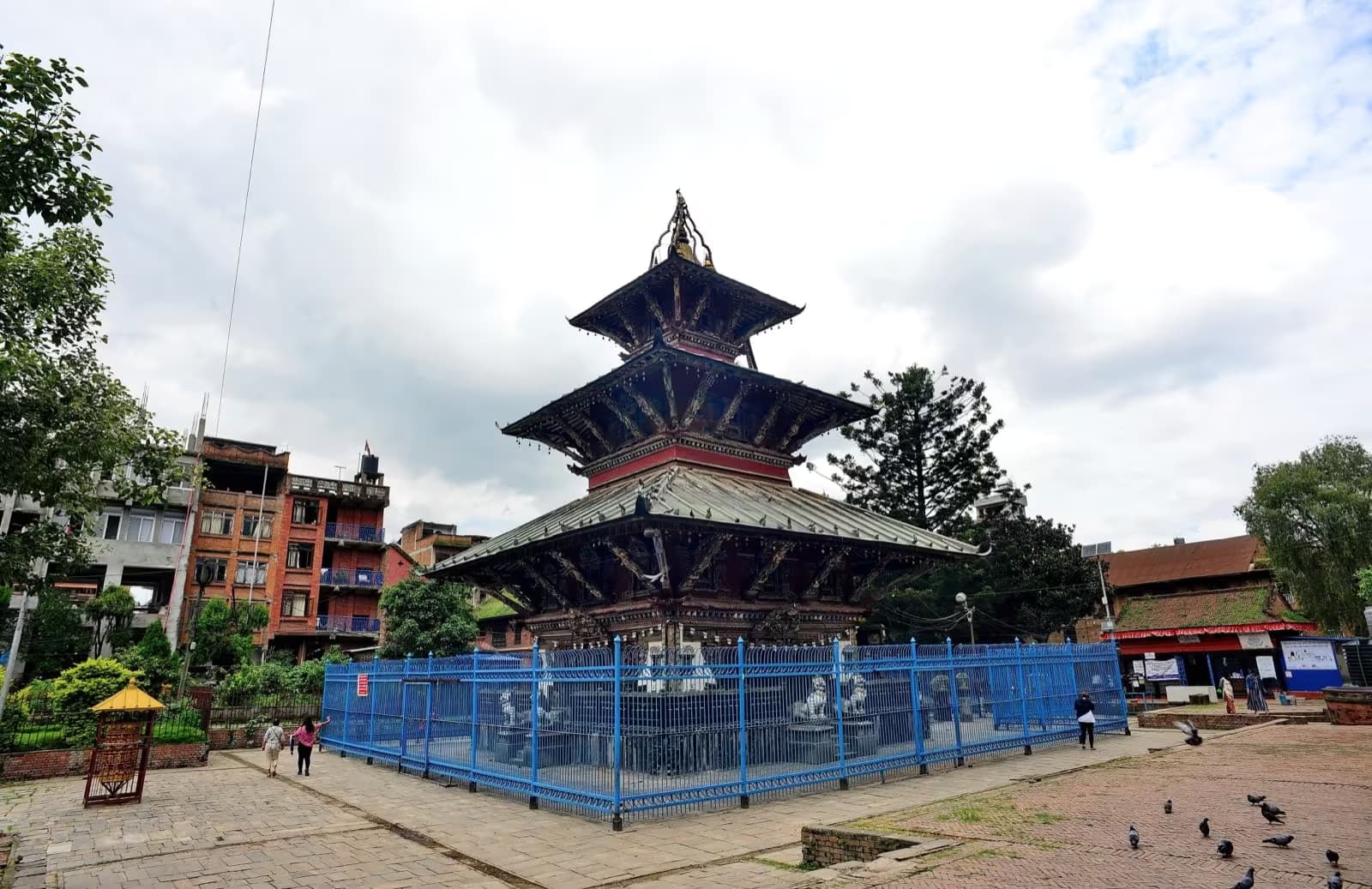
Tanga Bahal (Jestha Varna Mahavihar)
One of Patan's oldest and most principal vihars, located opposite the Rato Machhindranath Temple's monastery near Mangal Bazaar.
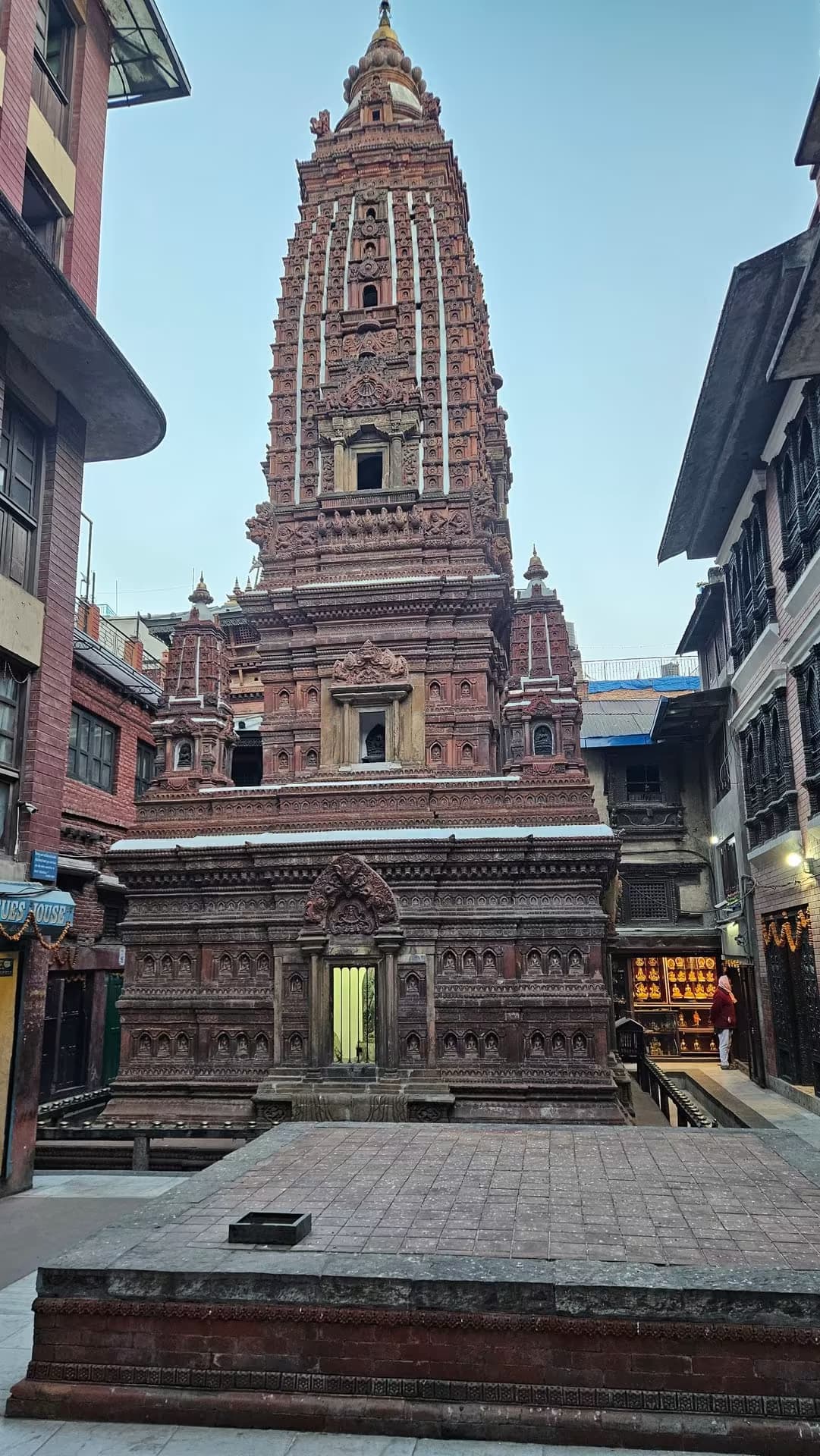
Mahabouddha Temple (Temple of a Thousand Buddhas)
A unique shikhara-style tower entirely covered in terracotta tiles, each bearing a hand-carved image of Buddha, modeled after the Mahabodhi Temple in Bodh Gaya.
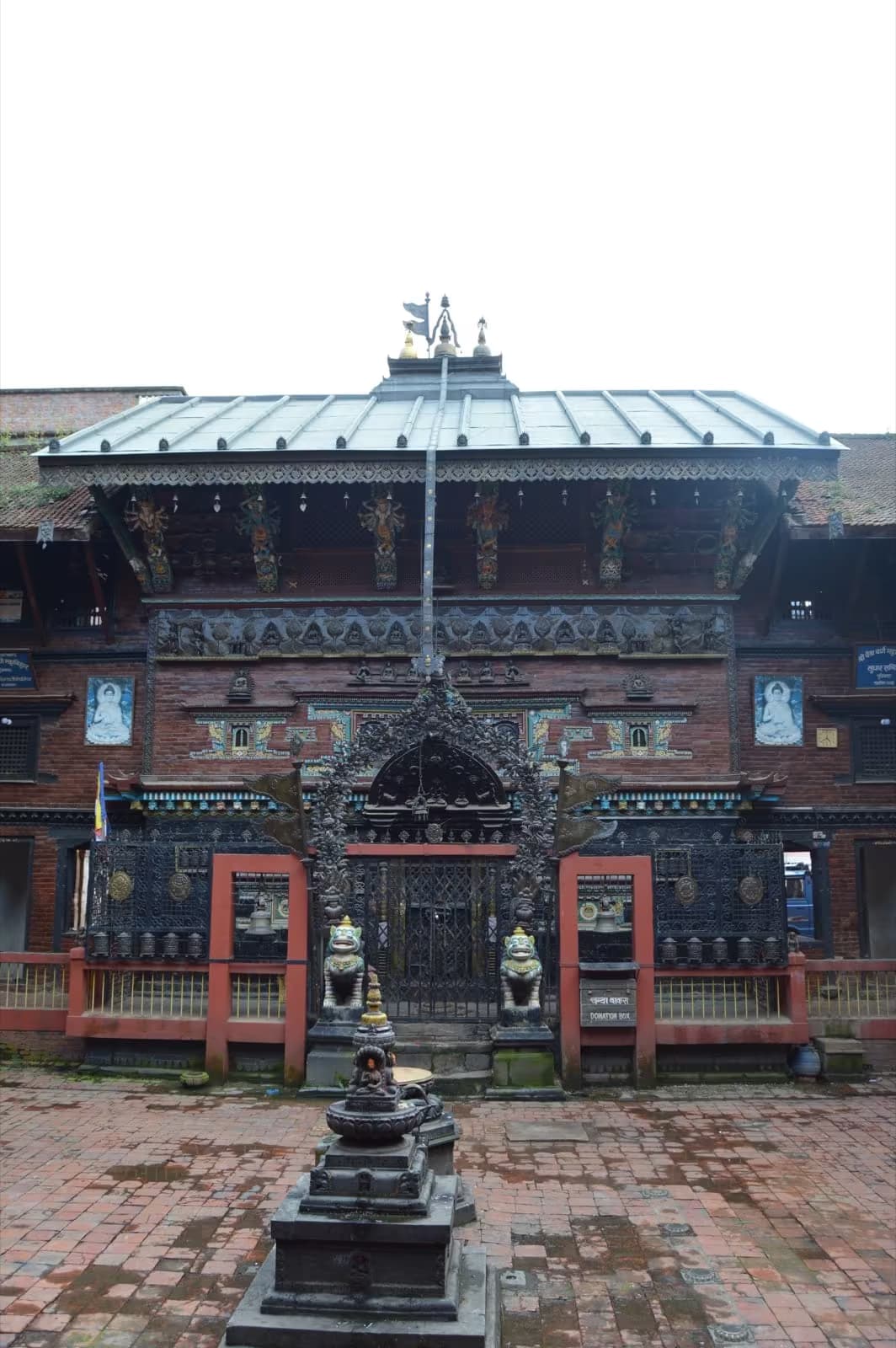
Guji Bahal (Vaishravarna Mahavihar)
One of the 18 principal mahavihars of Patan, named after Vaishravana (Kubera), the Buddhist guardian king of the north and deity of wealth.
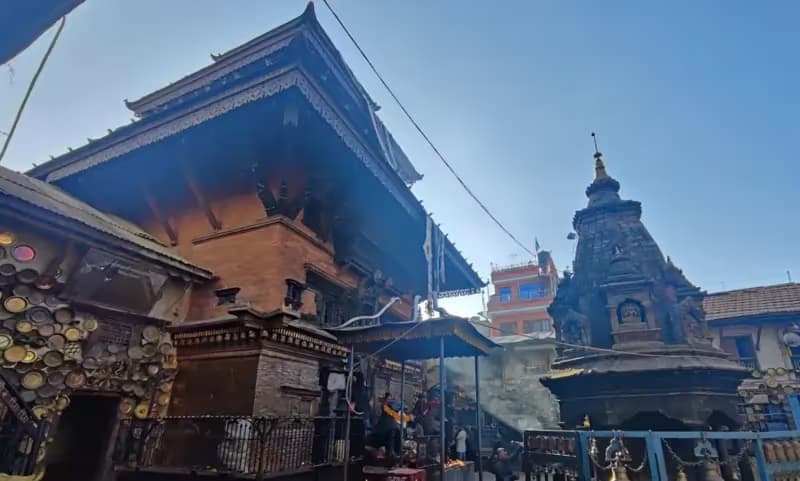
Co Bahal (Kacchapal Giri Mahavihar)
Kacchapal Giri Mahavihar (Co Bahal) is one of the 18 traditional bahals of Patan — the 'Tortoise Mountain Monastery', completing the sacred network of Newar Buddhist courtyards.
Coda
Continue the Pilgrimage
Planning this visit? Local operators publishing trips here can arrange it.
Elsewhere in this region
Help us get it right
Know Lagan Thur (Lagankhel Ashoka Stupa) better than we do?
We write from research and reporting, and the ground changes faster than we can keep up. If something here is out of date, or you have been and would tell it differently, we would rather hear it.