The Vow of Parvati
The fast is rooted in mythology: Parvati's penance to win Shiva as her husband. According to the Haritalika Teej story, Parvati's father had promised her hand to Vishnu; she fled to the forest with her close friend and performed severe austerities until Shiva accepted her. The nirjala fast — nir (without) + jala (water) — re-enacts this devotion: the woman's body becomes the site of Parvati's penance, and the hoped-for reward — a husband's long life, or a good husband to come — is understood as Shiva's grace given in response to her sacrifice. The fast is not merely a practice but a re-living of a divine story.
The Physical Demand
Nirjala means complete abstention: no water, no food, often for 24 hours from the end of Dar Khane Din until the next morning's puja. For many women this includes continuing ordinary household work through the day. For the elderly or those with health conditions, modified fasts (fruit only, water allowed) are accepted — the tradition acknowledges the body's limits while preserving the devotional intention. But the ideal is complete abstention, and many women observe it fully. The physical difficulty is part of the devotional logic: the body's hunger becomes prayer. Thirst becomes offering. What the body gives up, the goddess receives.
The Temple Vigil
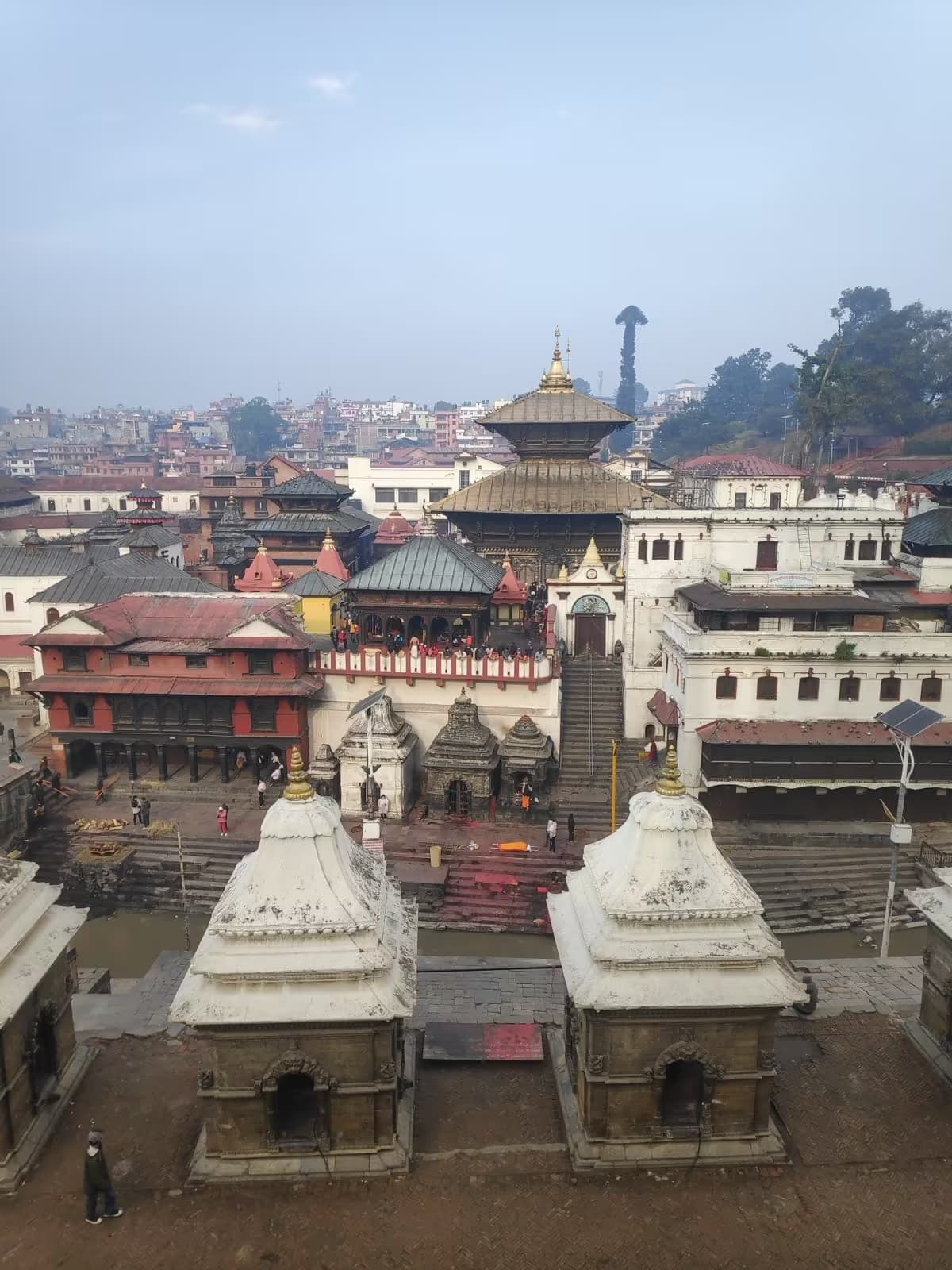
The day's centre is temple visitation, primarily Pashupatinath. Queues of women in red stretching for kilometers, the temple complex transformed by color, the chanting of Shiva's names audible from outside the gates, the offering of flowers and bel leaves at Shiva lingams. The women's presence fills the temple in a way that reconfigures its usual dynamics — for this one day, Pashupatinath belongs visibly to women. The queue itself becomes a ritual space: hours of waiting sustained by singing, conversation, and the shared commitment that runs through every woman in the line.
Songs and Solidarity
Throughout the fast, women sing together. The Teej songs sustain them through hunger — songs about Parvati, about the joys and difficulties of marriage, about female friendship and solidarity. The fast's austerity makes the community visible: women leaning on each other literally and metaphorically, sharing the experience across households and generations. The day's difficulty is not faced alone. What makes the nirjala fast remarkable is not only its physical demand but the fact that tens of thousands of women undertake it simultaneously — the collective dimension transforms individual endurance into communal devotion.
Related Places & Sites
sacred site
Pashupatinath TempleThe nirjala fast day's center is temple visitation at Pashupatinath — the queues of women in red fill the complex from early morning
Related
Connected places and entries worth pairing
Deities & Presences

Dances


Part of Teej (Haritalika Teej)