Teej Songs
Teej has its own musical tradition — songs passed through generations and a booming contemporary recording industry that releases new Teej tracks each festival season, creating cultural anthems that soundtrack the fasting, dancing, and communal solidarity of women across Nepal.
Traditional Teej Songs
The older repertoire of Teej songs (Teej ko geet) has been passed from mother to daughter for generations, sung in Nepali and regional languages with refrains that anyone who has attended the festival knows by heart. The lyrics cover Parvati's story, the experience of married life in its hardships and joys, and the bond between women. The singing style is often call-and-response — a lead singer and a group chorus — and the melodies are designed to sustain collective energy through long hours. These songs are not written down but carried in memory, living in the women who know them and passed on in the act of singing together.
The Modern Teej Industry
Alongside the traditional repertoire, a commercial phenomenon has grown: professional recordings released in the weeks before Teej, played everywhere — radio, YouTube, buses, shops, gathering halls. Major folk singers build careers around their annual Teej releases; the songs are anticipated, debated, and ranked. The range is wide: devotional songs addressed to Parvati and Shiva, playful songs about the pleasures of the feast, and — increasingly — songs about women's rights, domestic violence, and gender equality. The festival's cultural sanction provides cover for speech that might be harder in other contexts, and Teej songs have become one of Nepal's most significant vehicles for women's public expression.
The Soundtrack of the Day
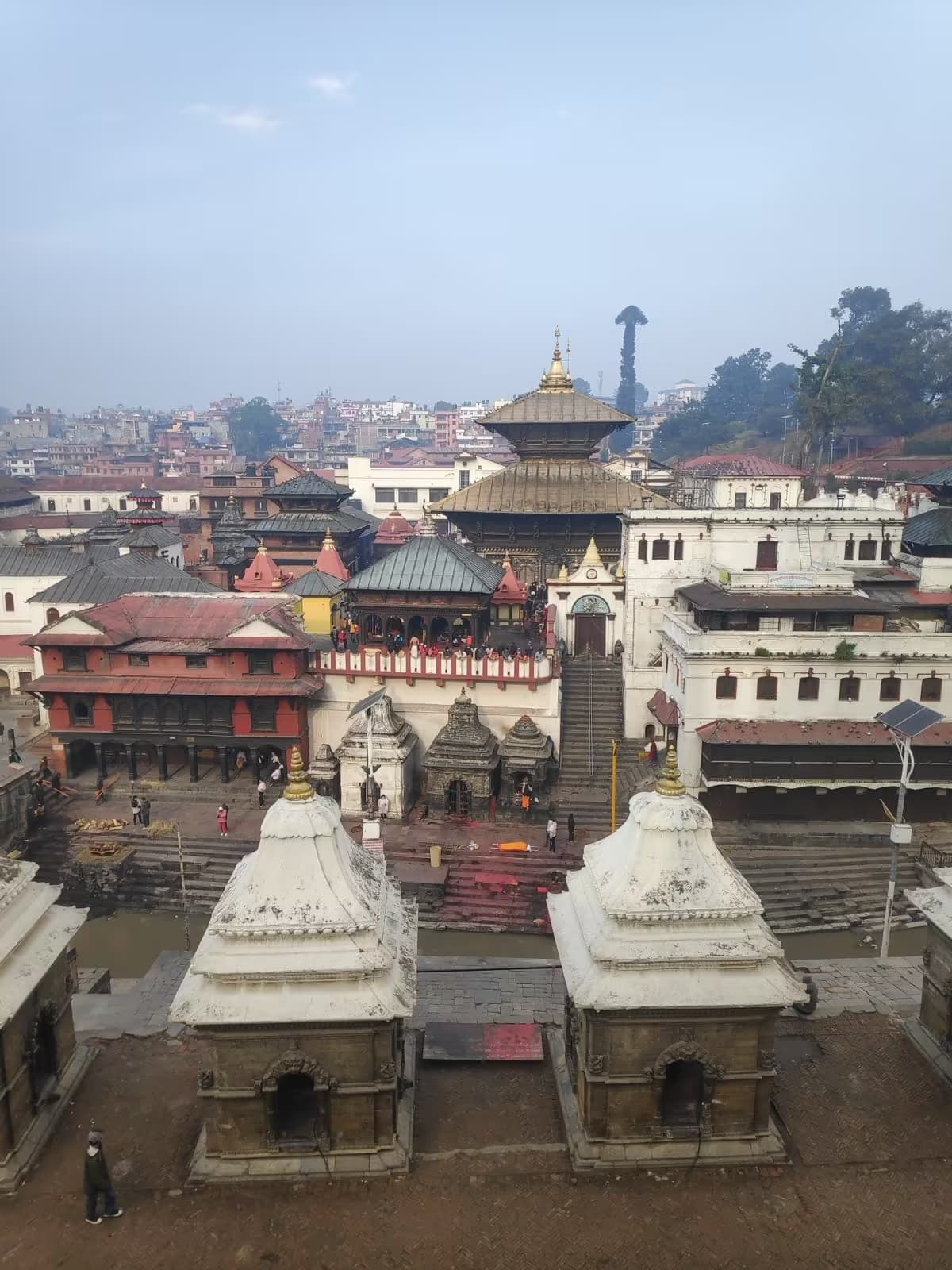
Teej songs function as communal infrastructure throughout the festival. At Dar Khane Din, they fill the gathering halls and keep women dancing past midnight. During the fast day, they sustain women through the Pashupatinath queue — portable speakers, phones, women singing from memory. At the temple, impromptu circles form around anyone who begins a familiar chorus. The songs are a shared resource: anyone can join; the chorus belongs to everyone. They transform Teej from a silent endurance test into a musical event — the sound of women's collective voice filling the streets and temple grounds of Nepal each year.
Related
Connected places and entries worth pairing


Part of Teej (Haritalika Teej)