Parvati and the Haritalika Vow
At the theological heart of Teej is Parvati — the goddess whose forest penance to win Shiva as her husband is re-enacted by every woman who fasts, whose red sari is the festival's signature colour, and whose story of female agency and devotion gives Teej its name (Haritalika: "abducted by her female friend").
The Haritalika Story
Parvati, daughter of King Himavan, was promised in marriage to Vishnu by her father. Unwilling to accept the arrangement, she fled to the forest with her close friend — harit (abduction) + alika (female friend), hence Haritalika. In the forest she performed extraordinary penance: standing on one leg for years, exposed to sun and rain, eating only leaves, then giving up the leaves, then giving up water. Her austerities were so intense that the gods trembled. Shiva, moved by her devotion, appeared and accepted her as his consort. The story makes Teej a festival of female determination: Parvati is not passive, not a prize to be awarded. She chooses her own husband through the force of her will, exercised through the only instrument available to her — her body's endurance.
Parvati's Symbolism
Parvati holds multiple dimensions simultaneously, and all of them resonate through Teej. She is the ideal wife (pativrata), utterly devoted to her chosen husband. She is the ascetic whose penance rivals any sadhu's. She is the goddess of fertility and abundance whose union with Shiva sustains the cosmos. And she is the daughter who defies her father's marriage arrangement. These dimensions are not contradictory — they coexist in the same figure, and Teej activates all of them. Women who fast on Teej are not merely imitating Parvati; they are temporarily embodying her, participating in her power. The red sari, the fasting body, the temple queue — each is a way of becoming Parvati for the festival's duration.
Parvati and Women's Agency
In a society with prescribed gender roles, Parvati's story provides a cultural script for female choice. She refuses the marriage arranged by her father. She chooses her husband through her own action. Her penance is the mechanism of her agency — not rebellion in the ordinary sense, but a discipline so complete and so devoted that it compels the god himself to respond. The contemporary Teej songs that address women's rights, domestic violence, and gender equality are not a break from tradition but an extension of Parvati's original defiance. The goddess who said no to an unwanted marriage becomes the patron of women who say no to unwanted conditions. The myth contains the movement.
From Myth to Ritual
Every element of the four-day Teej cycle maps onto the myth. Dar Khane Din is the feast Parvati's friend provided before the penance — the community's support before the austerity begins. The nirjala fast is Parvati's own austerity, re-lived in every fasting woman's body. The temple queue at Pashupatinath is the moment of Shiva's acceptance — the culmination of the devotion. Rishi Panchami is Parvati's purification after her ordeal. The festival is not about Parvati — it is Parvati's story lived again, by women who become her for three days each year.
Related Places & Sites
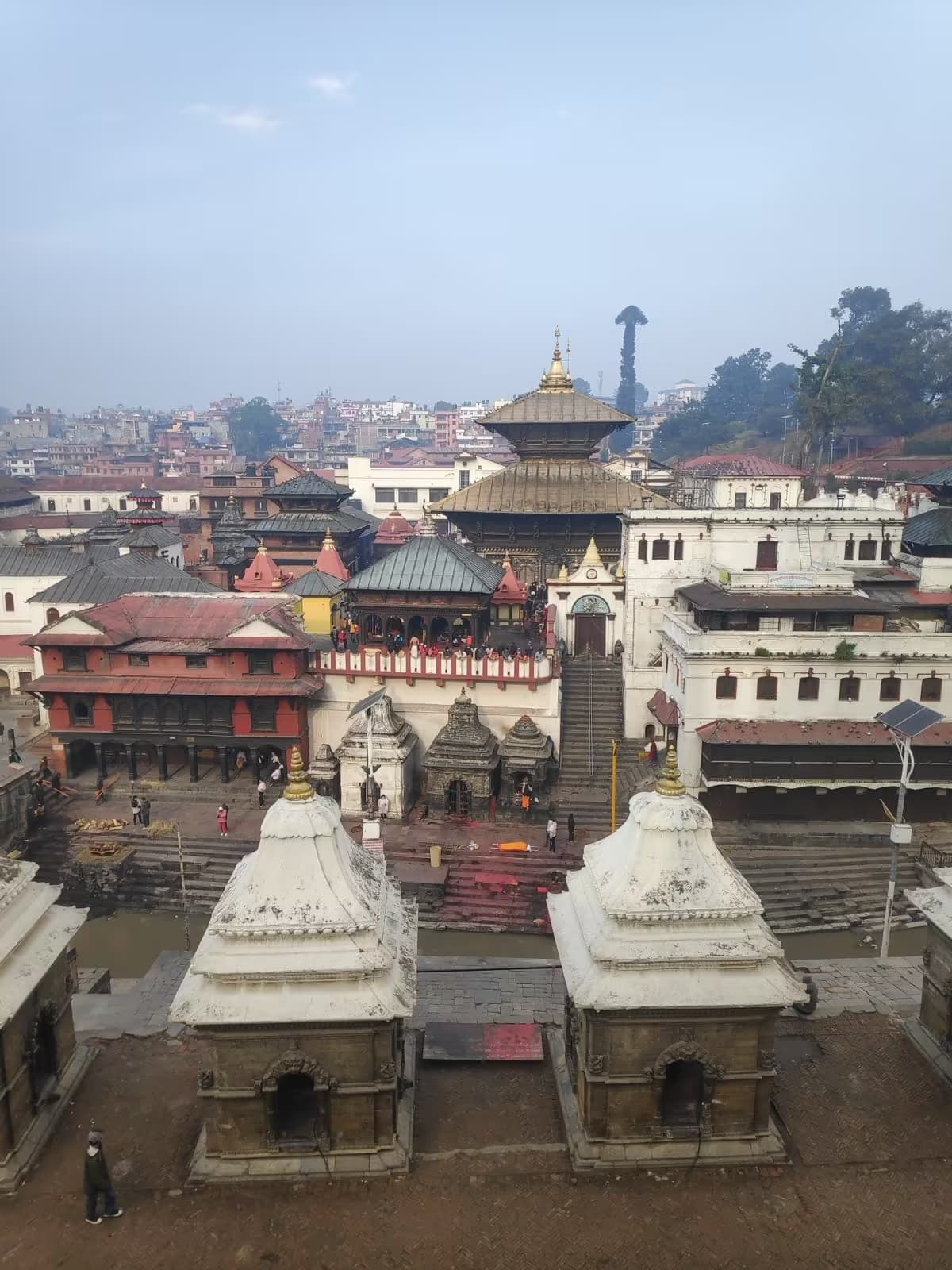
sacred site
Pashupatinath TempleParvati's penance and acceptance by Shiva are re-enacted at Pashupatinath — the temple is the stage for her story and the site of the fast's culminating darshan
Related
Connected places and entries worth pairing


Part of Teej (Haritalika Teej)