The Geography of Devotion
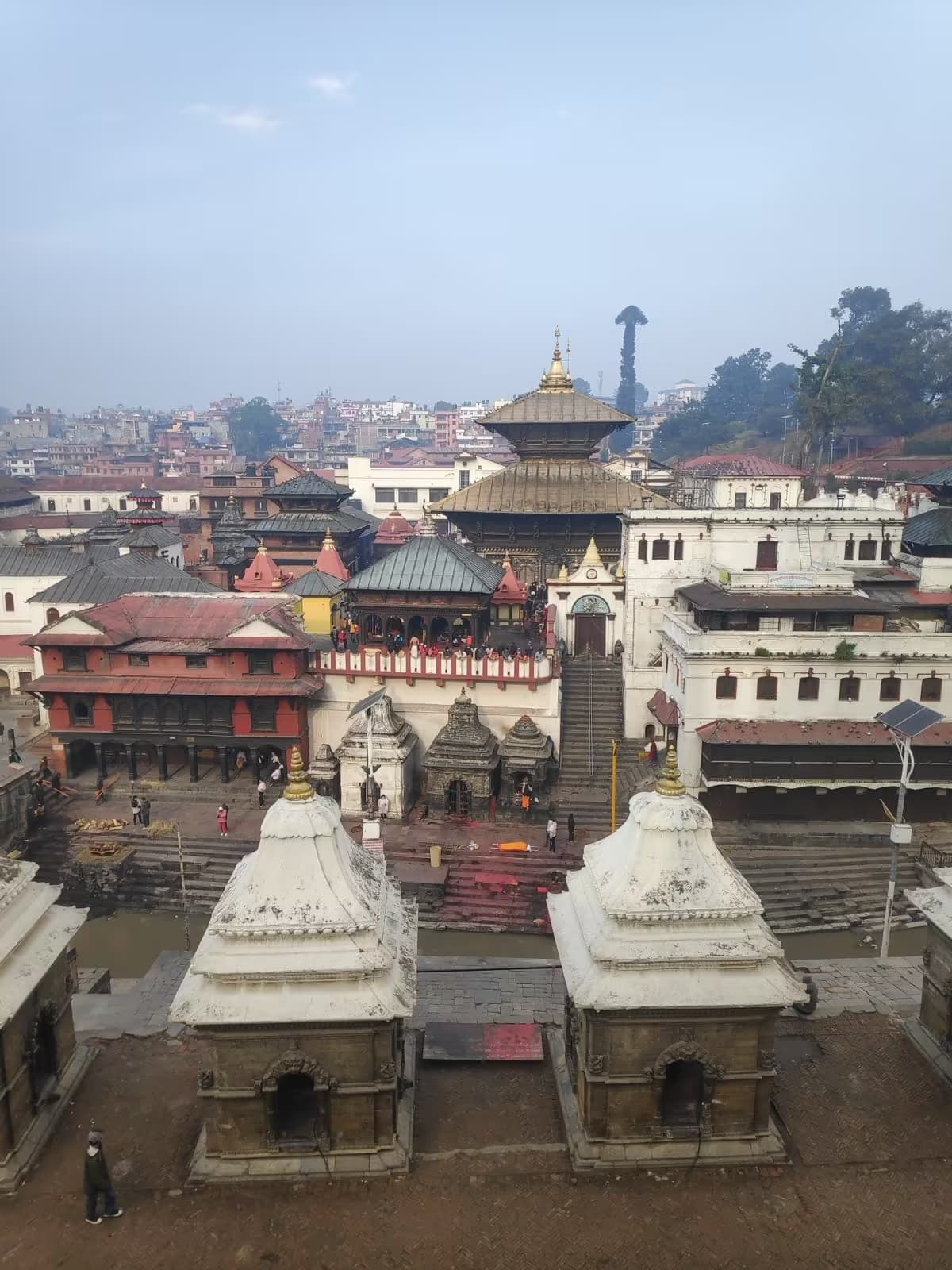
Teej day maps Pashupatinath's full geography with women's presence. The main temple (non-Hindus observe from the eastern bank) receives the longest queues; the ghats along the Bagmati River fill with women performing ritual bathing; the surrounding hillside and forested areas become resting grounds where groups sit between temple visits, sharing food brought for after the fast breaks. The courtyards fill with impromptu singing circles. The temple complex — normally a space where male priests, sadhus, and funeral rites set the dominant tone — is on Teej overtaken by women's color and sound.
The Queue and the Darshan
Women wait hours in the sun to enter the temple — supporting each other through the wait, sustaining themselves with singing. The moment of darshan — seeing the Shiva lingam — is understood as the fast's culmination: the devotional purpose of everything that preceded it. What they pray for is specific: a husband's health and long life, or, for the unmarried, a husband with Shiva's qualities. The exchange is ancient and intimate. The hours spent in the queue are not wasted time but extended devotion — the waiting itself a form of offering.
The Bagmati Rituals
Women descend to the river ghats for ritual bathing, cupping water from the holy Bagmati in their hands. The act is not elaborate — a moment at the water's edge, an offering — but it connects Teej to the broader Shaivite tradition of river worship that runs through the temple's entire sacred geography. The visual result is among the festival's most striking: red saris at the waterline, temple spires rising above, the smoke of cremation ghats drifting further downstream. Pashupatinath's full spectrum — life, death, devotion, water — is compressed into a single frame.
A Temple Reconfigured
For 364 days, Pashupatinath's public face is predominantly male: male priests, male sadhus, male-dominated funeral rites, male pilgrims in the majority. On Teej, women's presence is overwhelming and primary. The temple does not become a different place — the same stones, the same lingam, the same river — but it becomes a place seen differently. This temporary reconfiguration is part of what makes Teej significant beyond its devotional meaning: once a year, one of South Asia's most sacred sites belongs, visibly and completely, to women.
Related Places & Sites
sacred site
Pashupatinath TemplePrimary Teej pilgrimage site — women queue for hours to offer prayers at the Shiva lingam, the temple complex transformed by tens of thousands of women in red
Related
Connected places and entries worth pairing
Deities & Presences

Dances

Rituals & Ceremonies


Part of Teej (Haritalika Teej)