Purification After Intensity
After the charged atmosphere of the nirjala fast and the Pashupatinath vigil, Rishi Panchami restores balance. Women bathe with dati mato — tooth-cleansing clay — and brush their teeth with Datiwan twigs, branches from specific sacred plants considered purifying. The practice addresses the traditional understanding that menstruation creates ritual impurity; women who fasted while menstruating complete their purification on this day. Many contemporary women observe Rishi Panchami as a cultural tradition rather than a literal impurity rite — the purification understood as a restoration of wholeness after the body's intense discipline rather than a remedy for pollution. Both readings coexist, held without contradiction by women who observe the day in their own terms.
The Seven Rishis
The day is dedicated to the Saptarishi — the seven great sages of Vedic tradition: Kashyapa, Atri, Bharadwaja, Vishwamitra, Gautama, Jamadagni, and Vashishtha. Women offer prayers to the rishis and to the goddess Parvati in her purified form. The ritual logic connects female bodily discipline to the broader cosmic order maintained by the sages — a theological move that places women's fasting within the framework of universal dharma. For many women, Rishi Panchami is the formal close of the Teej cycle: the day the red sari is put away, the gold jewelry returned to storage, and ordinary life resumed. The festival's formal boundary is drawn by this act of purification.
Return to the Everyday
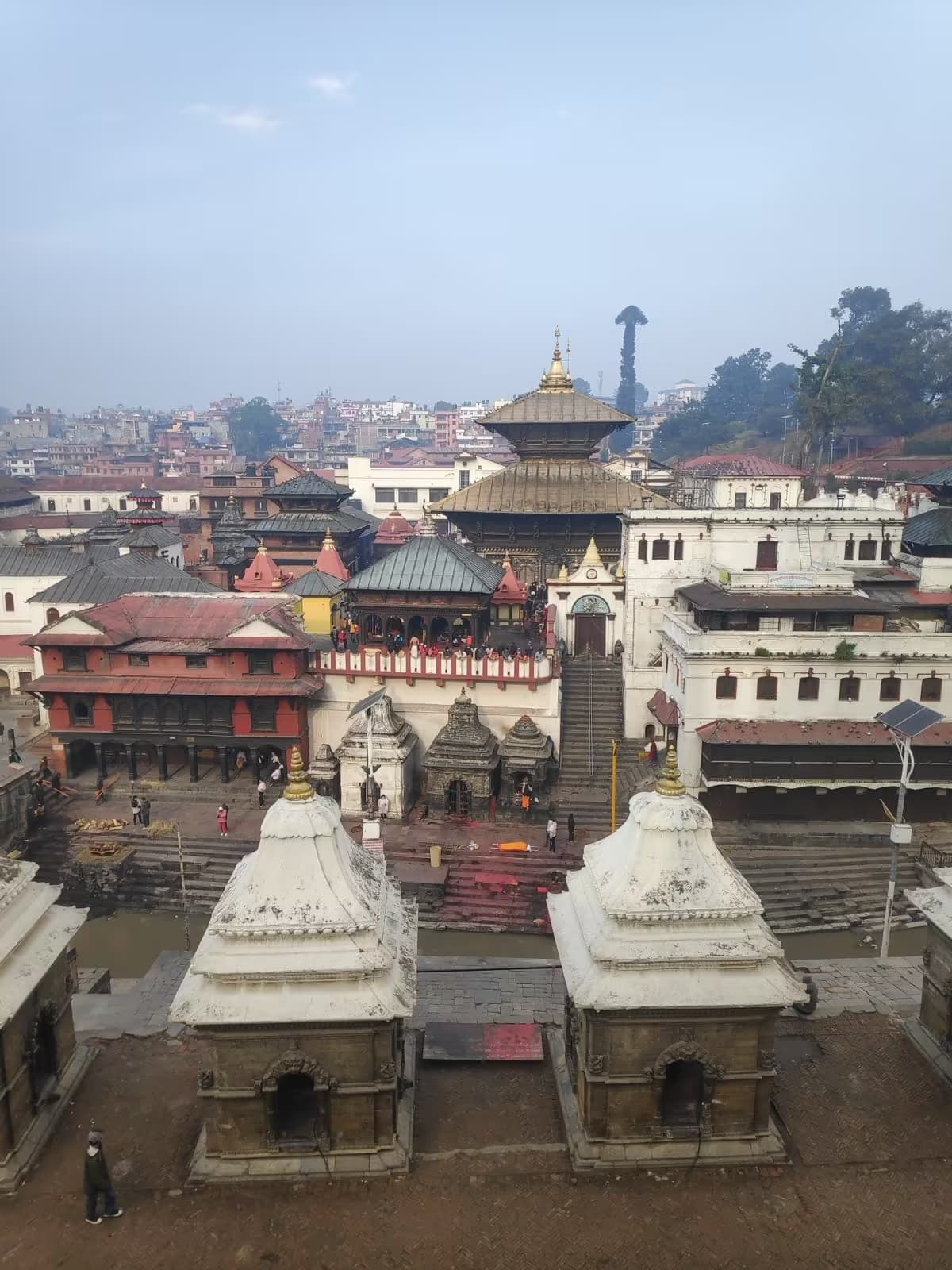
After the purification rituals, a meal follows — the first unrestricted eating since the nirjala fast. The red saris come off; ordinary dress returns. Rishi Panchami is the threshold between festival time and everyday time, and crossing it requires a ritual act rather than simply the passage of hours. The women who fasted together, sang together, and stood in the Pashupatinath queue together return to their separate households — but the experience of shared intensity lingers. The community formed during Teej sustains relationships through the year, and the relationships sustained through the year are what makes next year's Teej possible.
Related
Connected places and entries worth pairing
Deities & Presences

Dances


Part of Teej (Haritalika Teej)