Ghantakarna means bell-ears, and the name is the story.
He hung bells from his ears so that he would never have to hear the name of Vishnu spoken — a deliberate act of deafness, which is what marks him out from an ordinary monster. He terrorised the valley, extorting its settlements and carrying off children and cattle, and the bells rang as he moved so that people knew he was coming.
He is built and burned every year, which makes him one of the very few figures in the Nepali festival calendar who exists mainly in order to be destroyed. There is no shrine to him and no day on which he is honoured. The tole makes him out of its own swept-up rubbish, guards him for a day, and then drags him out and sets him on fire.
Accounts of how he died differ, and the one thing most of them keep is the frog.
Related
Connected places and entries worth pairing
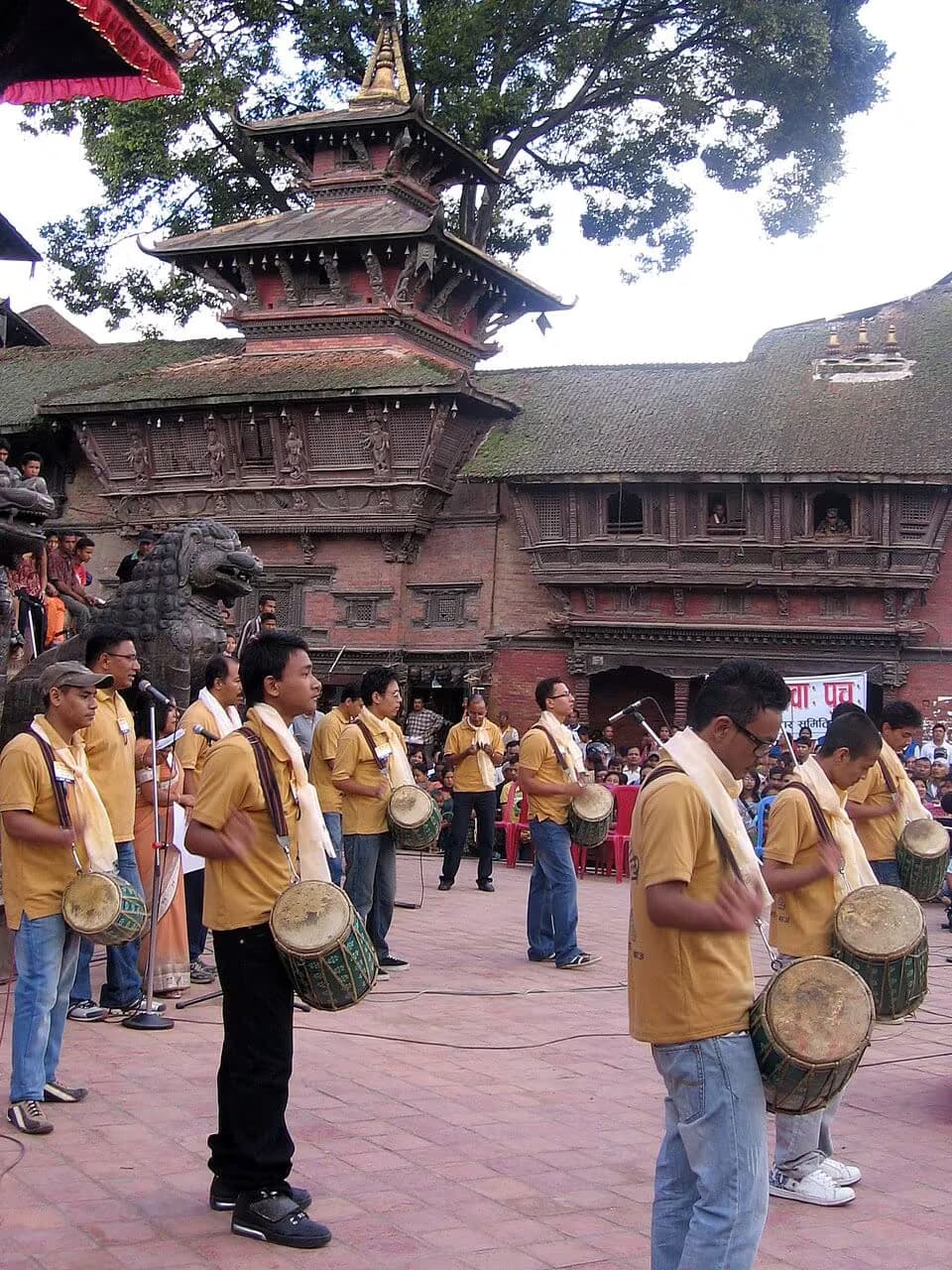
Gunla
Gunla, the Newar Buddhist holy month, begins two days after the demon is burned
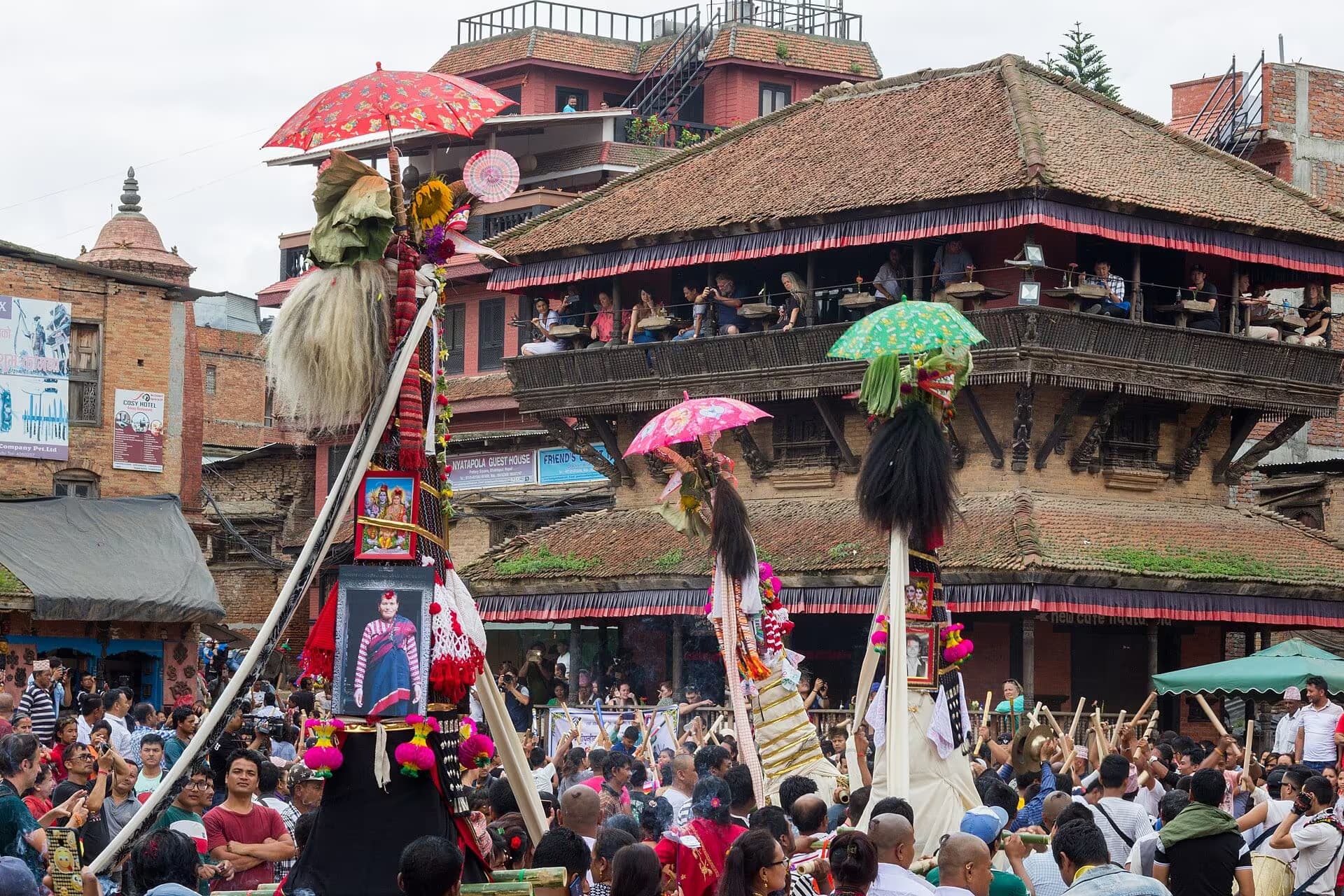
Gai Jatra
Charhe opens the festival season that runs on through Sa Paru

Sithi Nakha
The valley's other Newar cleaning festival — water sources in Jestha, houses in Shrawan

Bhaktapur Durbar Square
Bhaktapur's toles build the tallest and most competitive effigies
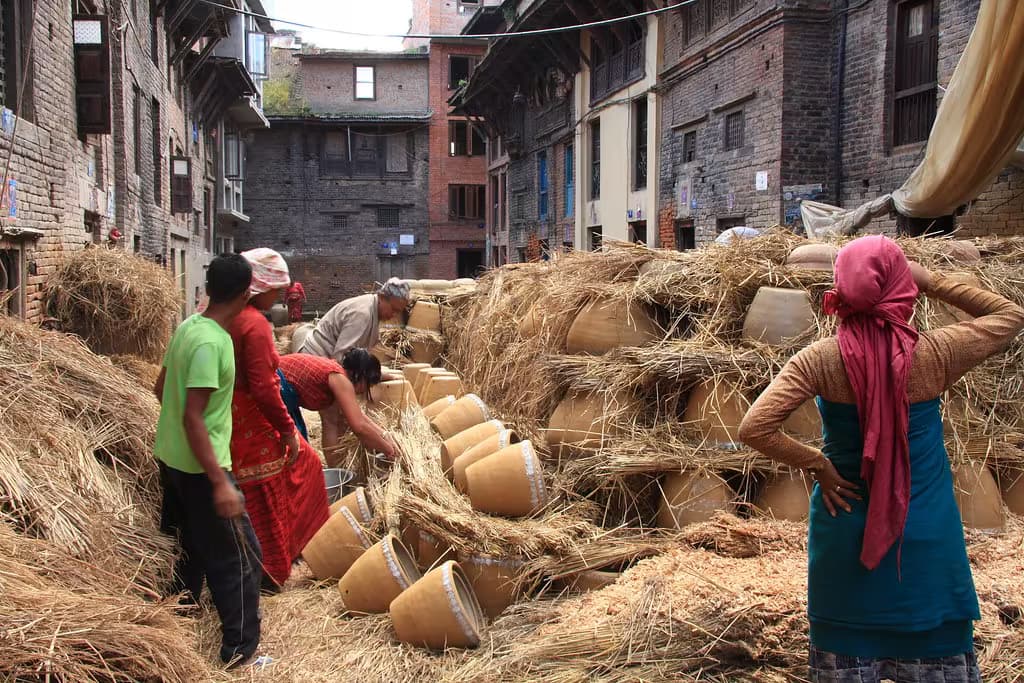
Thimi
Thimi and neighbouring Bode keep the night vividly
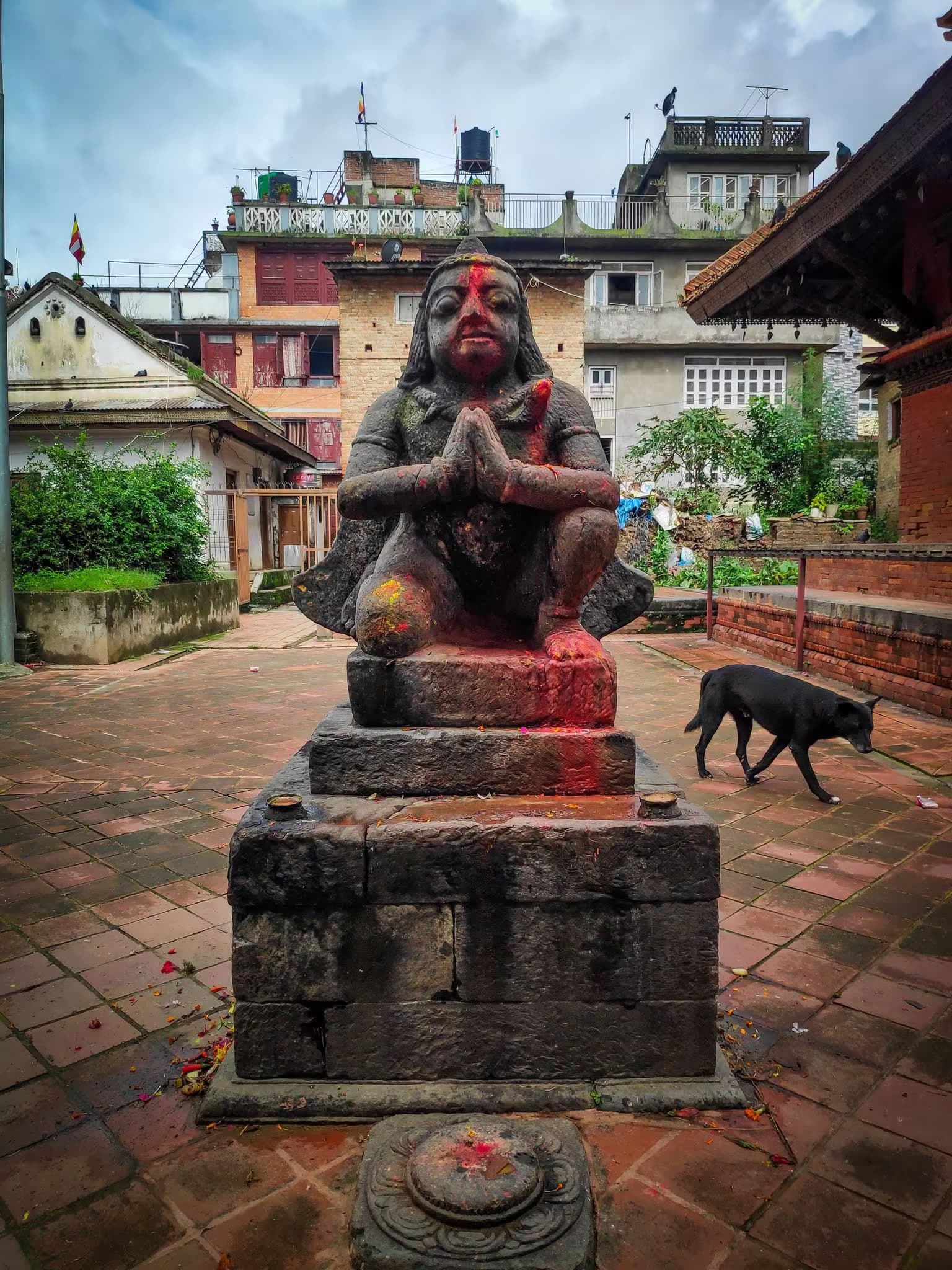
Banepa
A Newar bazaar town on the old Tibet road — the effigies go up here too
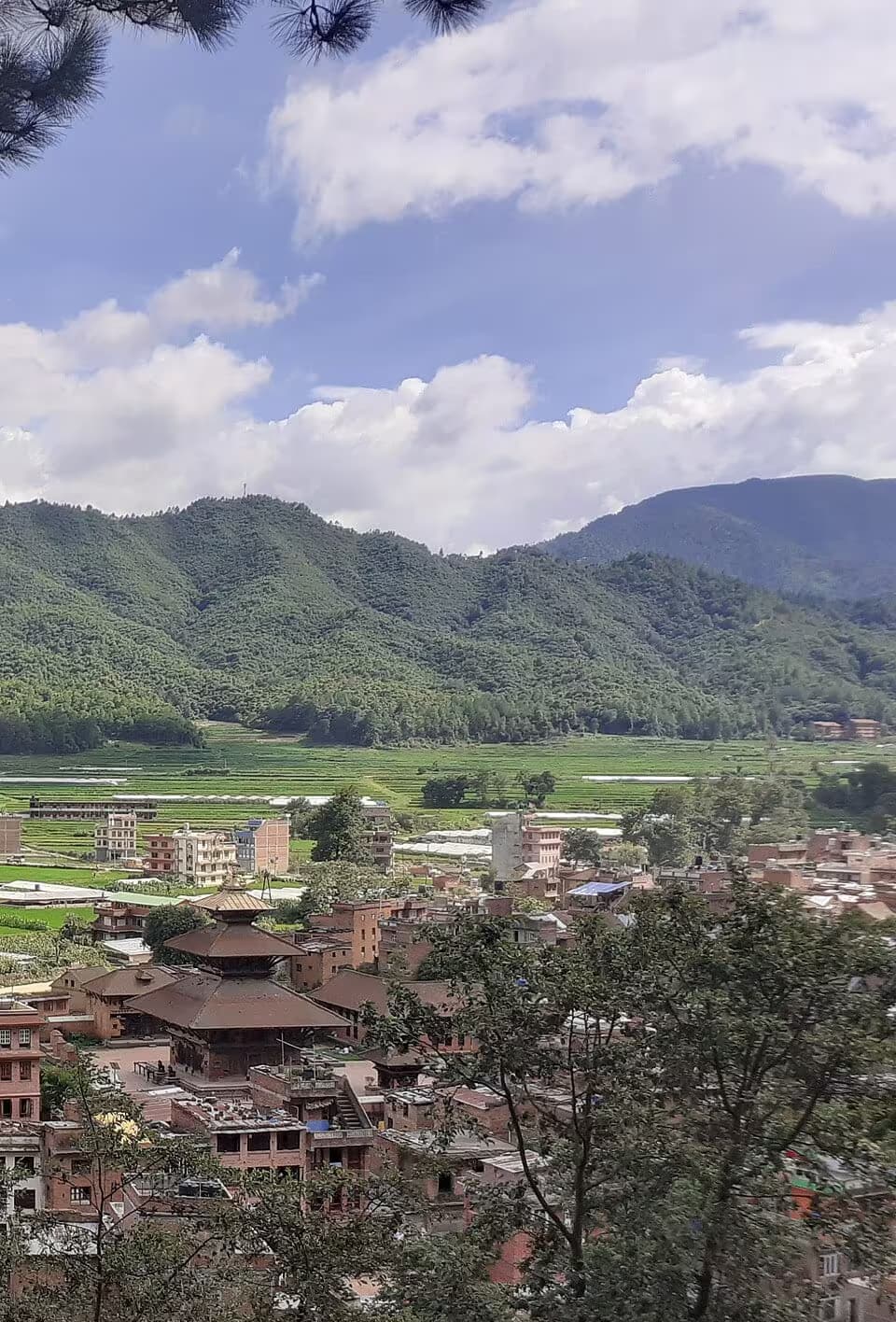
Panauti
Observed in Panauti's toles, on a smaller scale than the Valley's
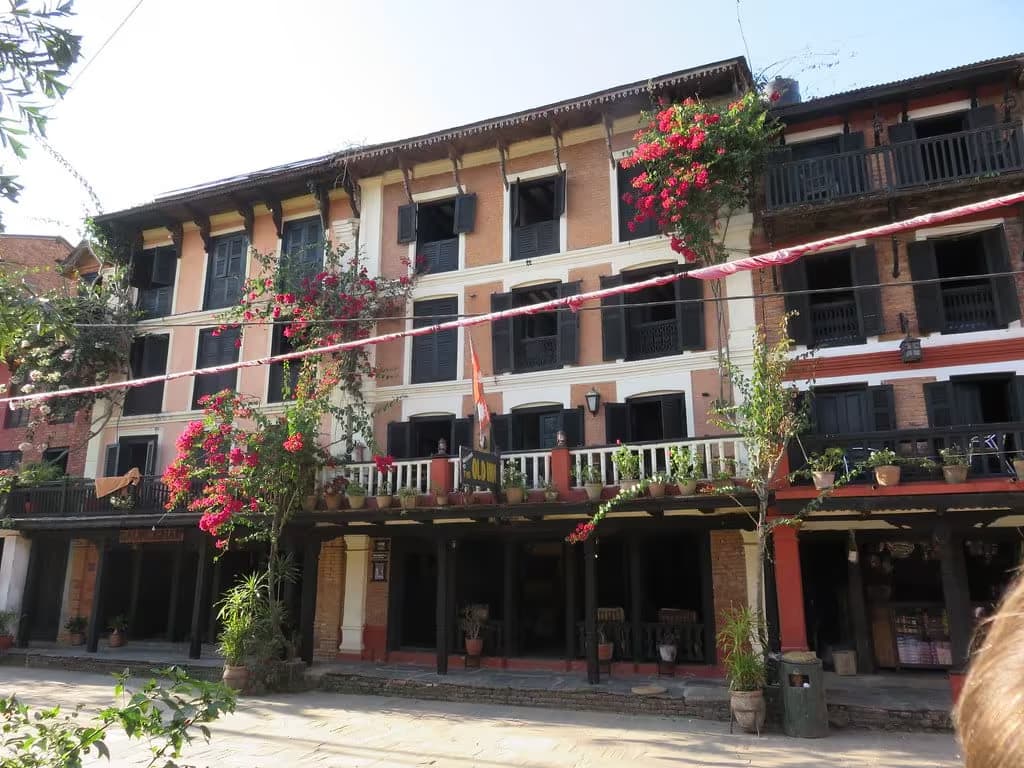
Bandipur
A Newar trading settlement far west of the Valley that kept the festival
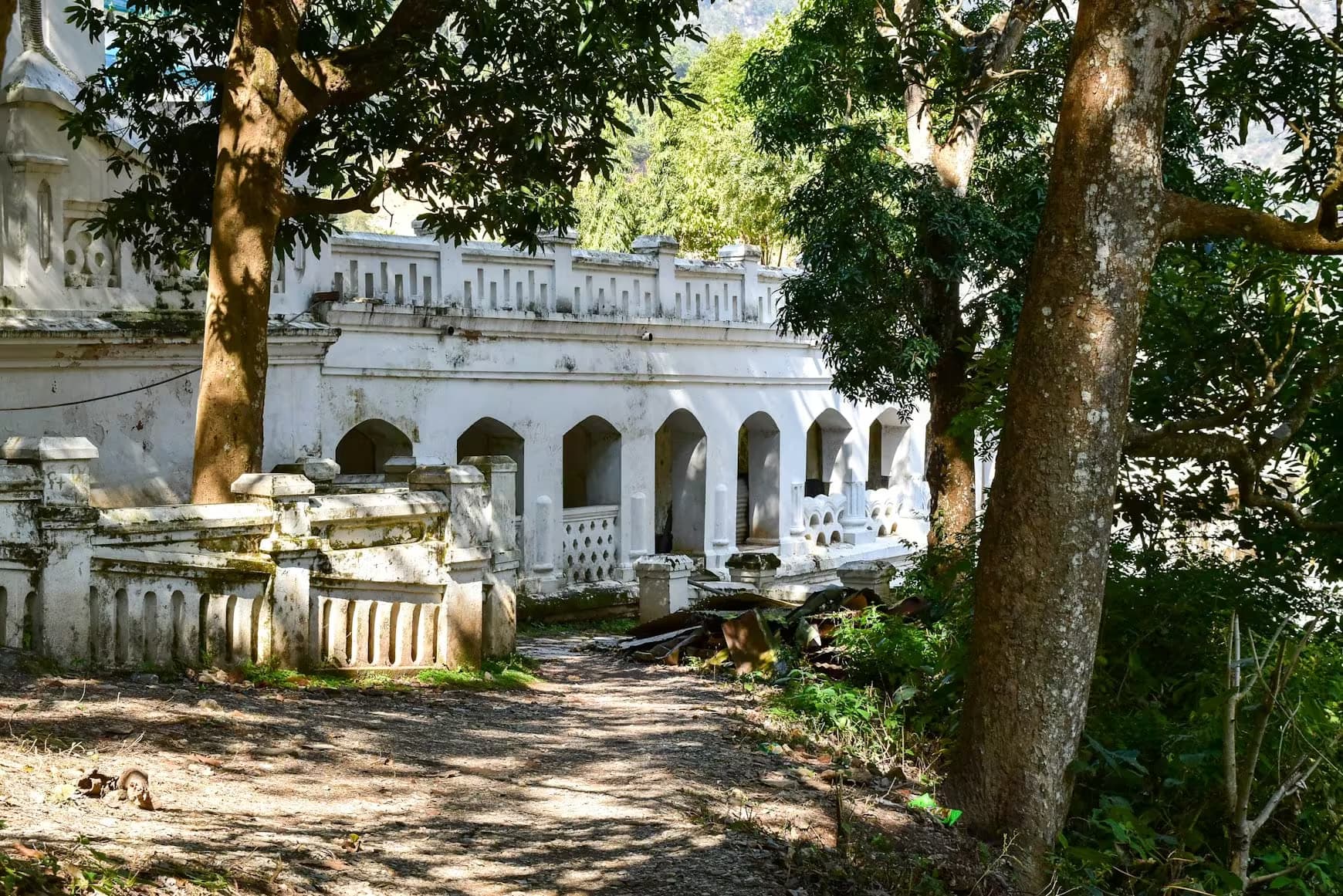
Tansen (Palpa)
Palpa's Newar bazaar raises its own effigies on the same night
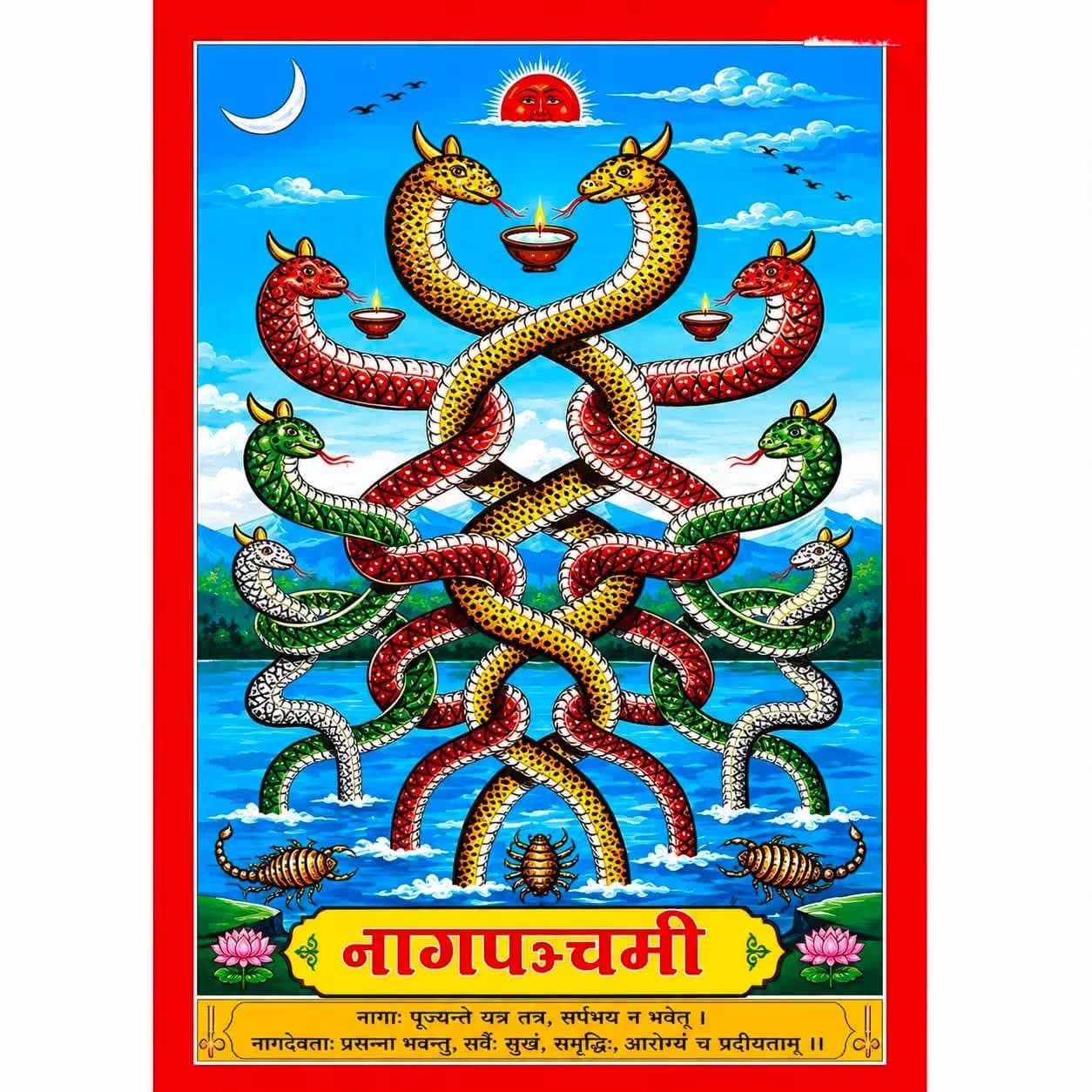
Nag Panchami
Nag Panchami follows about a week later in the monsoon run of Newar and Hindu observances
Characters
Part of Gathamuga: Charhe