Bhai Tika / Kija Puja
On the fifth and final day, sisters worship their brothers — placing a seven-strand tika of five colours and a garland of marigolds as protection against Yama — in a ceremony whose mythology runs from the court of the god of death to every household in Nepal.
Two Names, One Bond
The fifth day of Tihar is called Bhai Tika in Nepali (bhai = brother, tika = the forehead mark) and Kija Puja in Nepal Bhasa (kija = younger brother, puja = worship). The ceremony is the same: a sister worships her brother, placing a specific tika and garlands on him, and receives his gifts in return. But the two names encode slightly different emphases — Bhai Tika emphasises the tika's physical act, Kija Puja emphasises the worship relationship.
The Mythology of Yamuna and Yama
The story behind Bhai Tika places it within the festival's overarching Yama framework. According to the Purana tradition, Yamuna (the river goddess and sister of Yama, god of death) worshipped her brother on this day. The five colours of the tika she placed — a specific mixture including red, blue, yellow, green, and white — were chosen to create a protection that even Yama could not breach: as long as the tika remained, Yama could not take his own sister's brother.
This is the practical logic devotees invoke: a sister's tika on Bhai Tika day extends Yama's protection to her brother for the year ahead. The ceremony is not merely sentimental; it is understood as a ritual technology for navigating the boundary between life and death.
The Ceremony
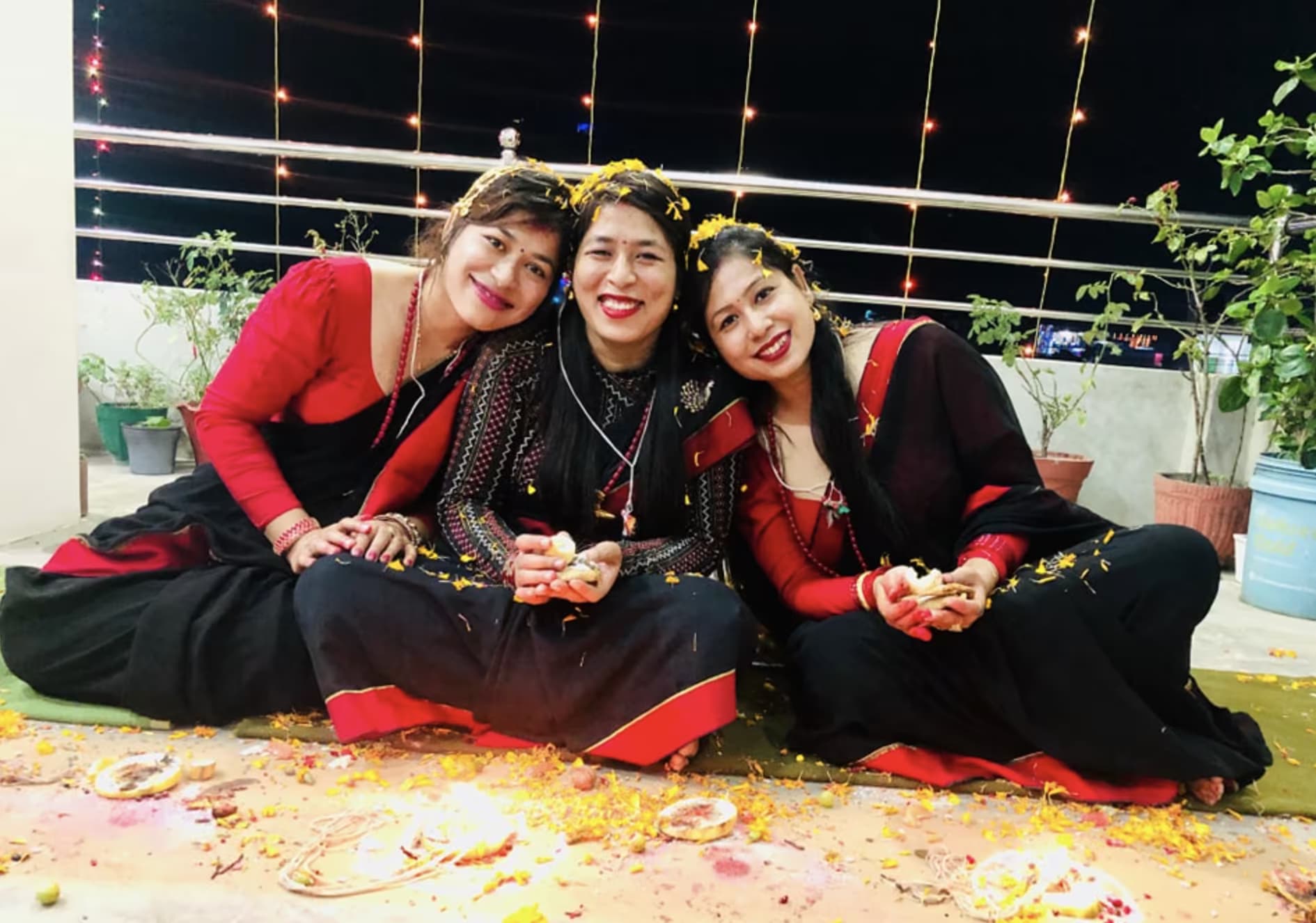
The sister prepares a puja plate with: the five-colour tika mixture (pancharan), a garland of marigolds, fruits, seeds of various types including mustard and makhamali (globe amaranth), and sagun (auspicious items). She draws a mandala at the brother's feet and performs the puja sequence.
The seven-strand tika (saptarangi tika) is distinctive: it is applied in seven horizontal lines, each strand a different colour, covering the forehead from hairline to brow. No other Nepali festival produces a tika of this complexity. After the tika, the garland goes around the brother's neck; the seeds are scattered in his hair and around the ritual space.
The brother gives his sister dakshina — money, clothing, or gifts — acknowledging the protection she has extended. In contemporary practice, this exchange has become an occasion for significant gift-giving: Bhai Tika is Nepal's highest-traffic day for shopping, second only to Dashami.
Sisters Who Have No Brothers
For women with no living brother, the ceremony can be performed with a male cousin, a nephew, or — in a practice observed in some communities — with an apple tree or the sun, treating a natural entity as a proxy for the brother relationship. The ceremony's emotional weight makes its absence from a woman's Tihar a significant loss, and these adaptations reflect how seriously the tradition is taken.
The Newar Kija Puja
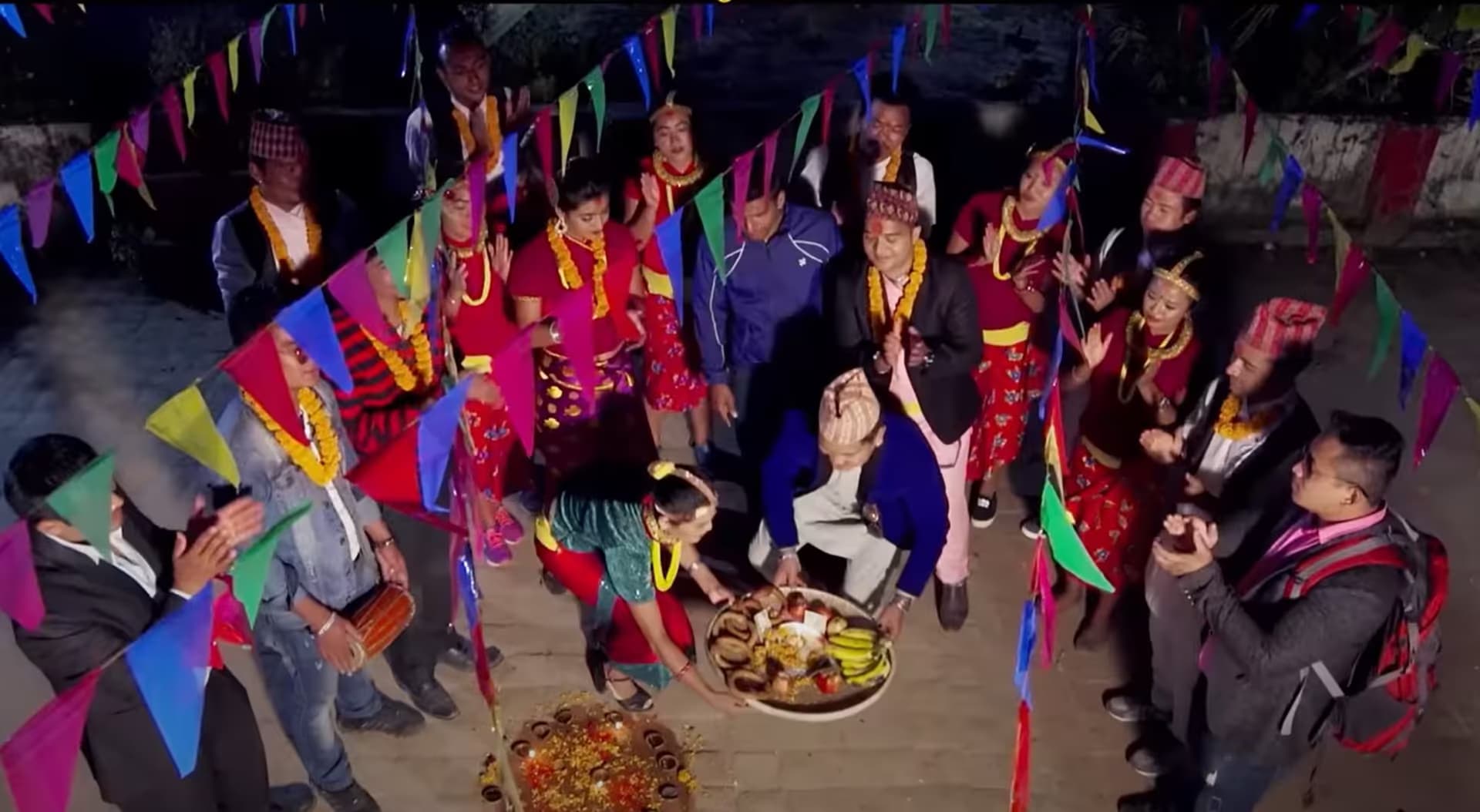
In Newar practice, Kija Puja is elaborated with communal feasting (bhwoy): the sister's household prepares a meal for the brothers, and the gathering becomes a broader family reunion. The ritual sequence is similar to the Nepali Bhai Tika but may include Nepal Bhasa prayers and Newar-specific puja items. The feast aspect is more prominent in Newar celebrations than in many hill communities' observances.
Related
Connected places and entries worth pairing
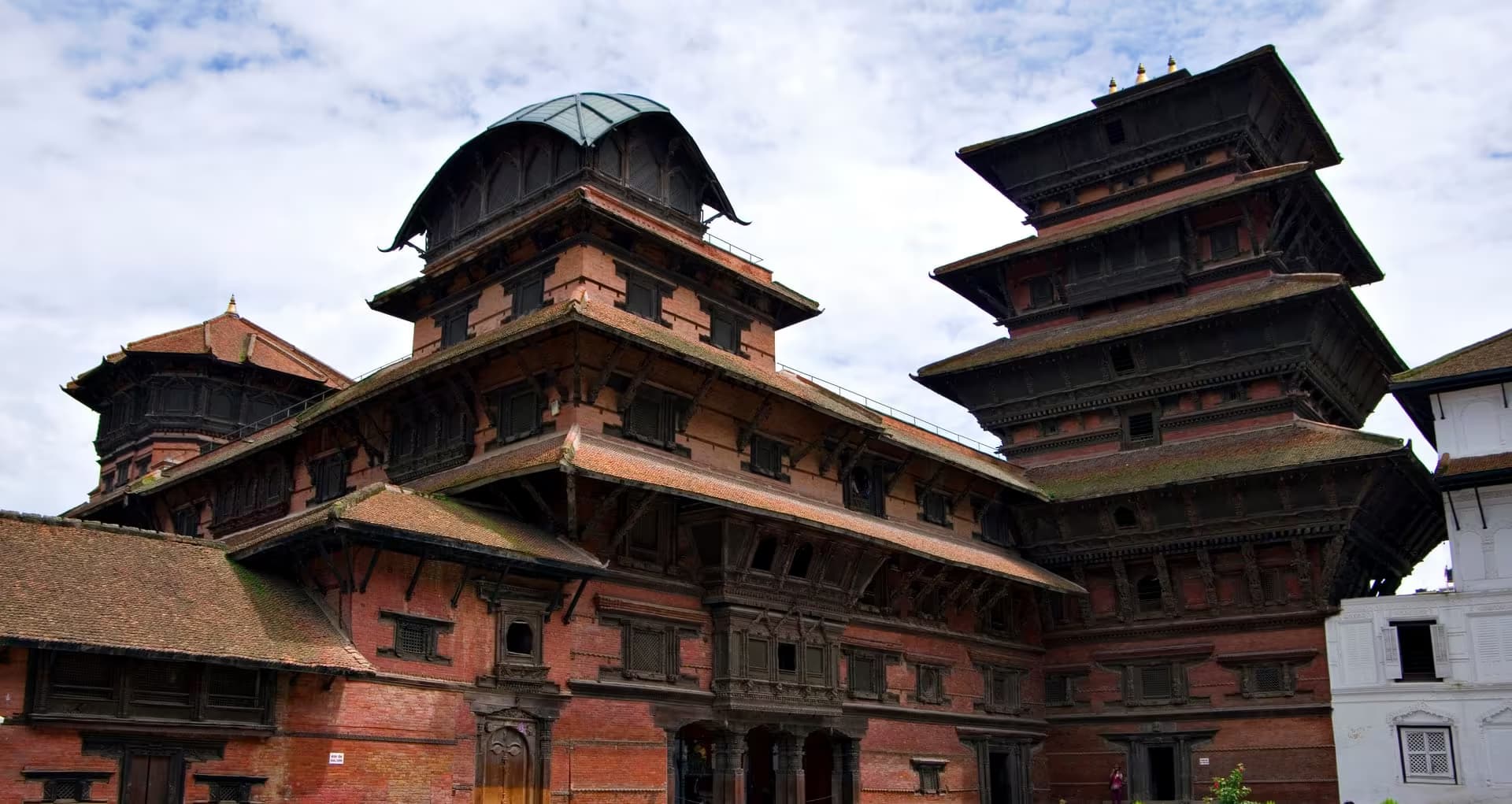
Kathmandu Durbar Square
One of the three squares where the Tihar lights are most concentrated

Patan Durbar Square
One of the three squares where the Tihar lights are most concentrated

Bhaktapur Durbar Square
One of the three squares where the Tihar lights are most concentrated
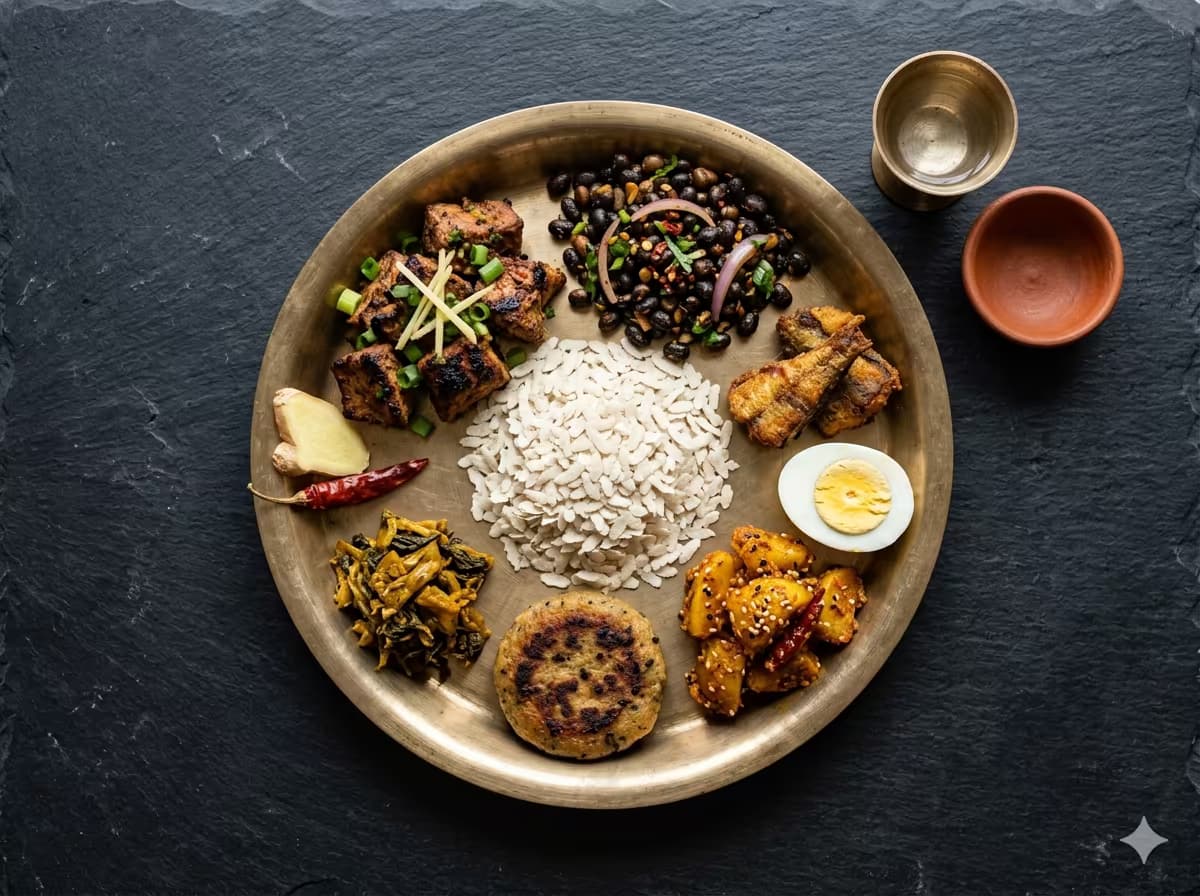
Samay Baji
The Newar ritual platter served on Mha Puja day
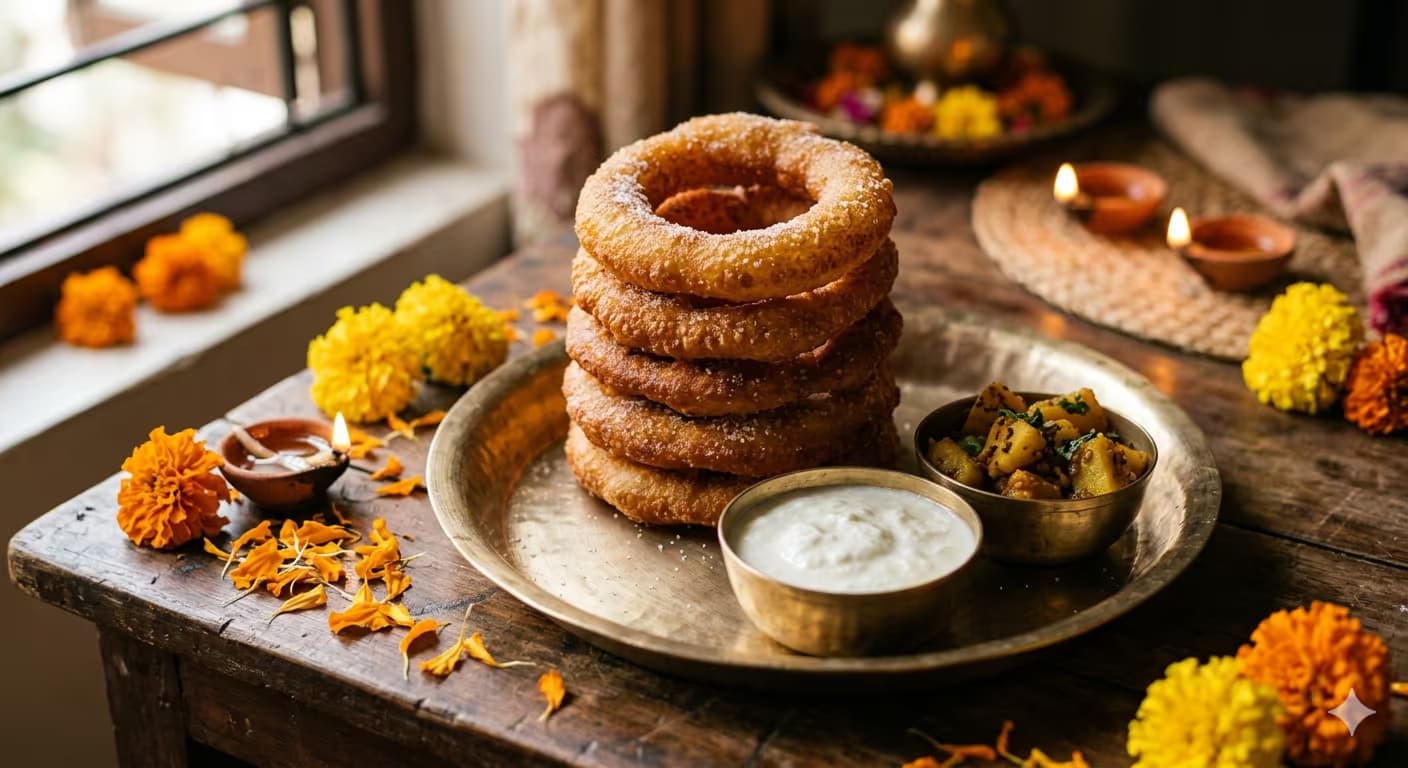
Sel Roti
Made in every household across the Dashain and Tihar season
Deities & Presences
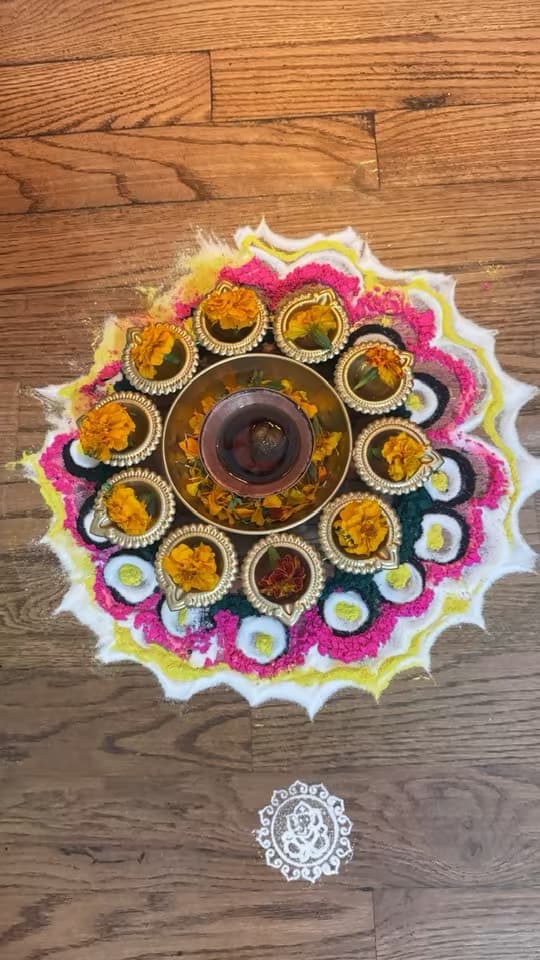

Part of Tihar (Deepawali)