The Royal Plants
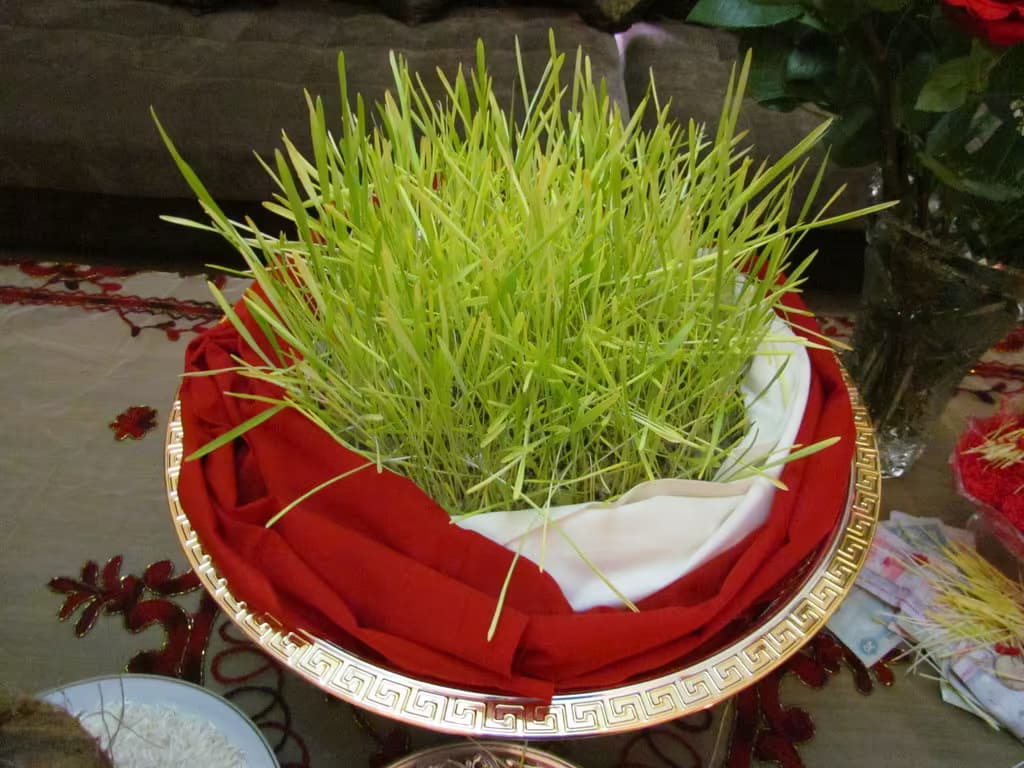
Fulpati means, literally, "flowers and leaves" in Nepali — but the word names a specific ritual bundle: a collection of sacred plants assembled according to tradition, including banana plants, sugarcane, turmeric, jamara (barley shoots), and various flowers, all considered auspicious in the festival's religious context.
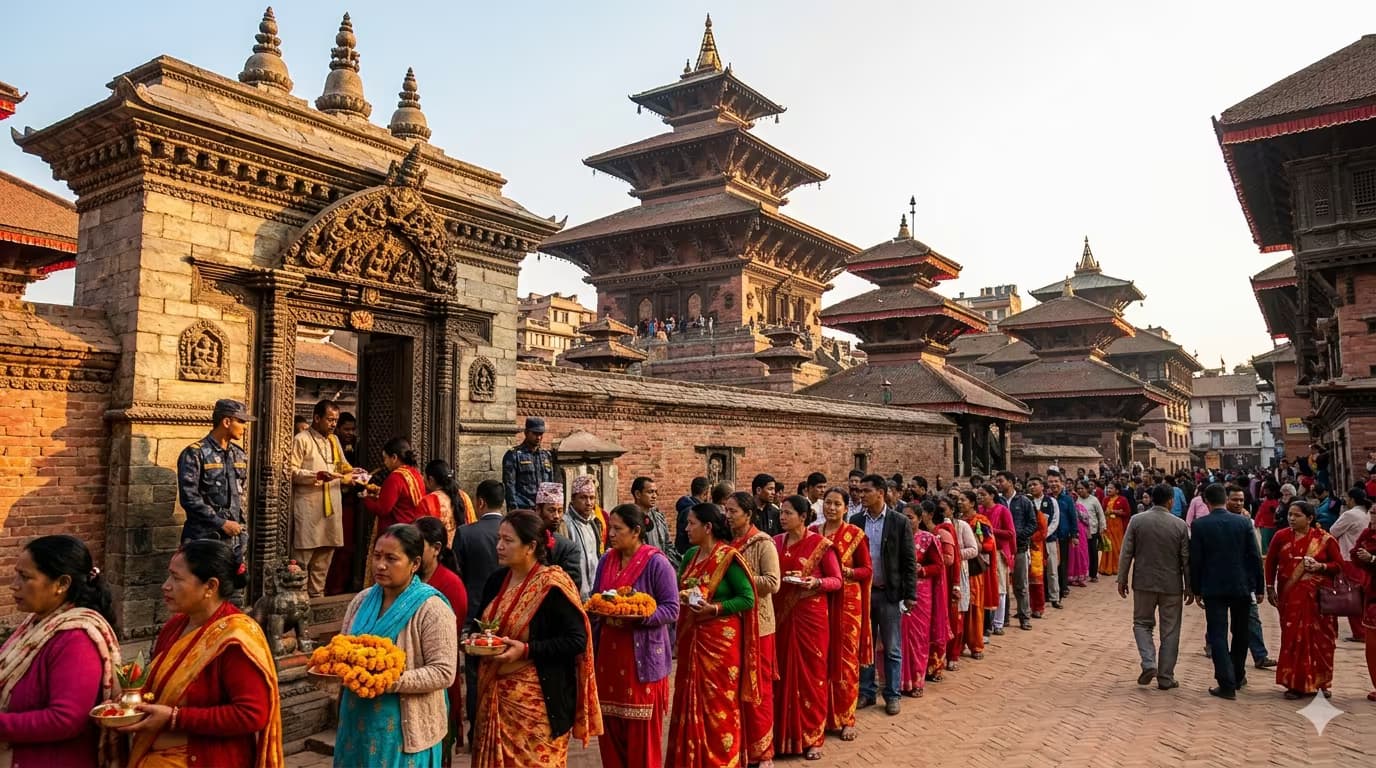
On the seventh day of Dashain — Saptami, the seventh lunar day — this bundle is brought from the Gorkha Palace, the ancestral seat of the Shah dynasty in the hills of Gorkha district, to Kathmandu's Hanuman Dhoka (the old royal palace complex), arriving with ceremony at the Dashain kotha (festival room) of the former palace.
The Procession
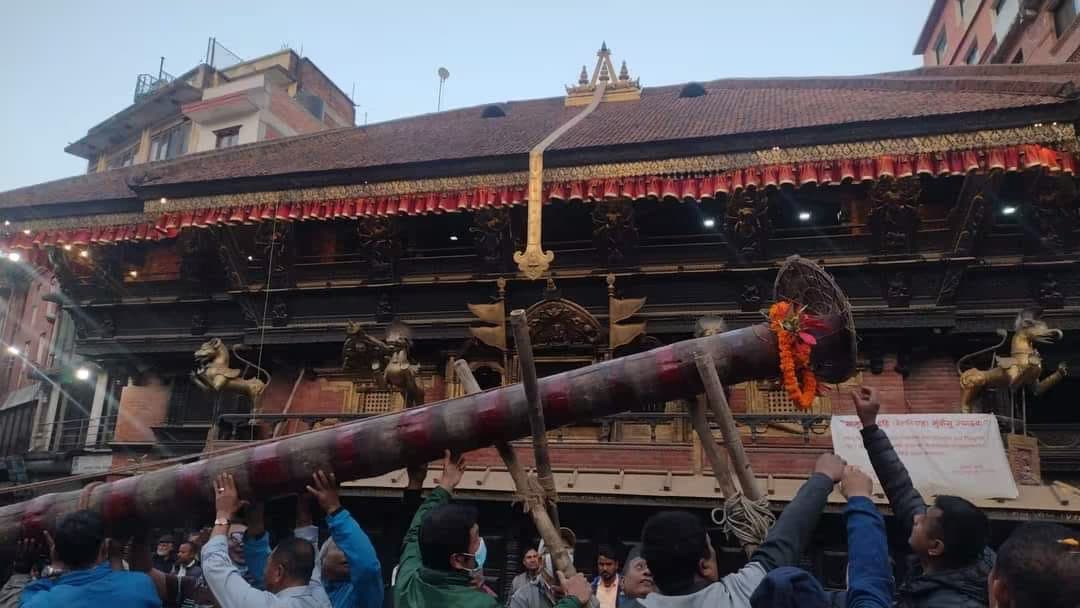
The Fulpati procession is a state ceremony. A palanquin (doli) carries the sacred bundle along the route accompanied by Nepal Army soldiers in dress uniform, military bands, and civilian attendants. Until 2008, when Nepal was a monarchy, the procession's arrival at Hanuman Dhoka was received by the king himself; in the republic, senior government officials and military commanders perform the reception.
The sight of uniformed soldiers escorting a ceremonial palanquin through the streets of Kathmandu compresses several centuries of Nepalese history into a single afternoon. The route from Gorkha — the hill kingdom from which Prithvi Narayan Shah unified Nepal in the 18th century — to the Kathmandu Valley enacts the founding journey of the Nepali state. Fulpati is the festival's most explicitly political moment.
Seventh-Day Significance
Saptami marks a pivot. The first six days of Dashain are preparatory — the jamara grows, the puja room is maintained, but the major communal celebrations have not yet begun. With Fulpati's arrival, the festival shifts into public gear. The evening of Saptami sees increased temple activity across the valley; the following two days (Ashtami and Navami) bring the festival to its most intense pitch.
Beyond Kathmandu
In towns and villages across Nepal, Fulpati is marked not by the Gorkha procession (which is specific to Kathmandu) but by local ceremonies at the district headquarters — government offices, army barracks, and police stations receive a fulpati delivery from local authorities. This parallel structure extends the ceremony's reach across the country while preserving its connection to state authority.
Related Places & Sites
destination
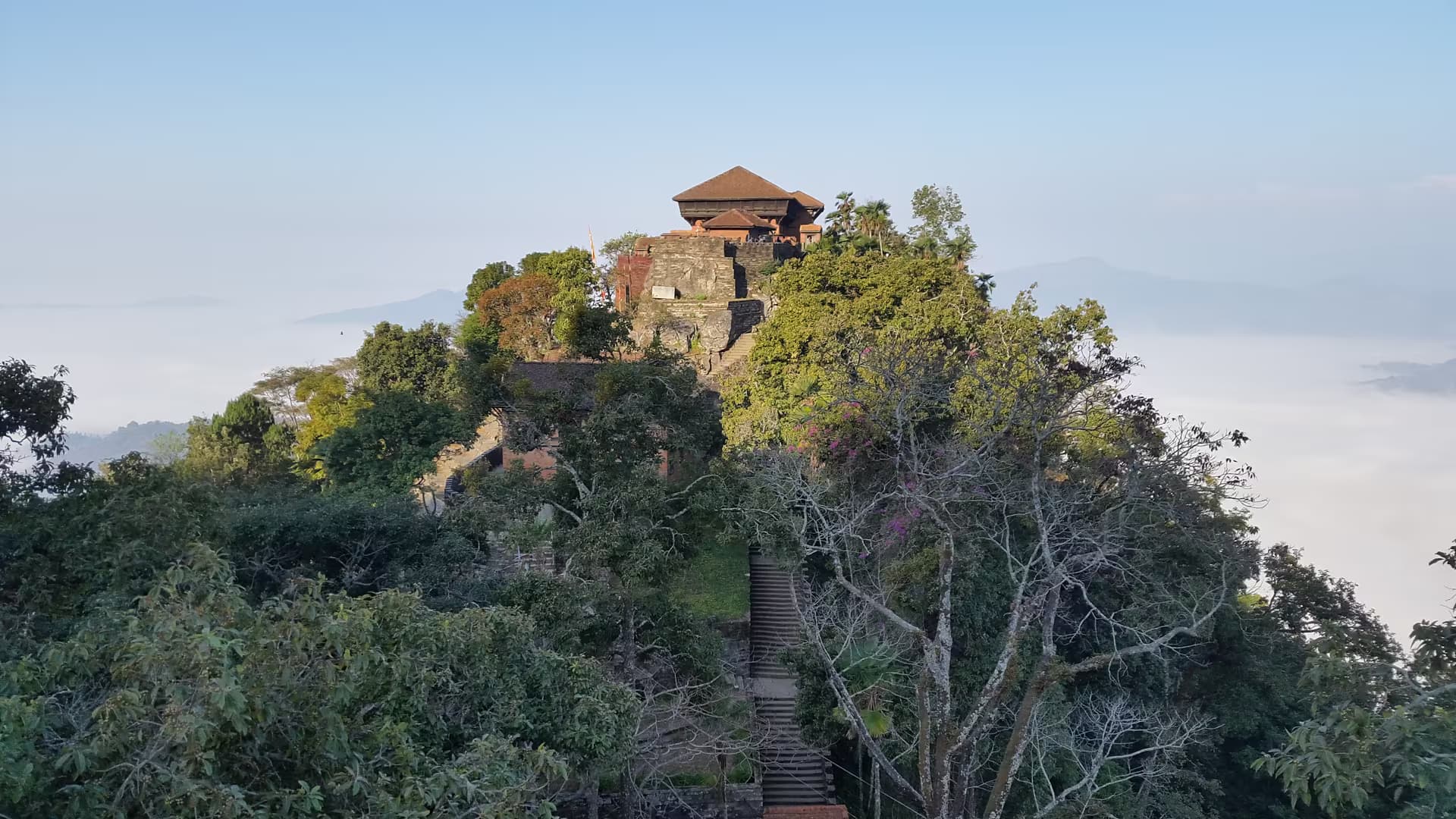
Gorkha DurbarGorkha Durbar is the origin point of the Fulpati procession — the sacred plants are assembled here and dispatched to Kathmandu on Saptami
Related
Connected places and entries worth pairing
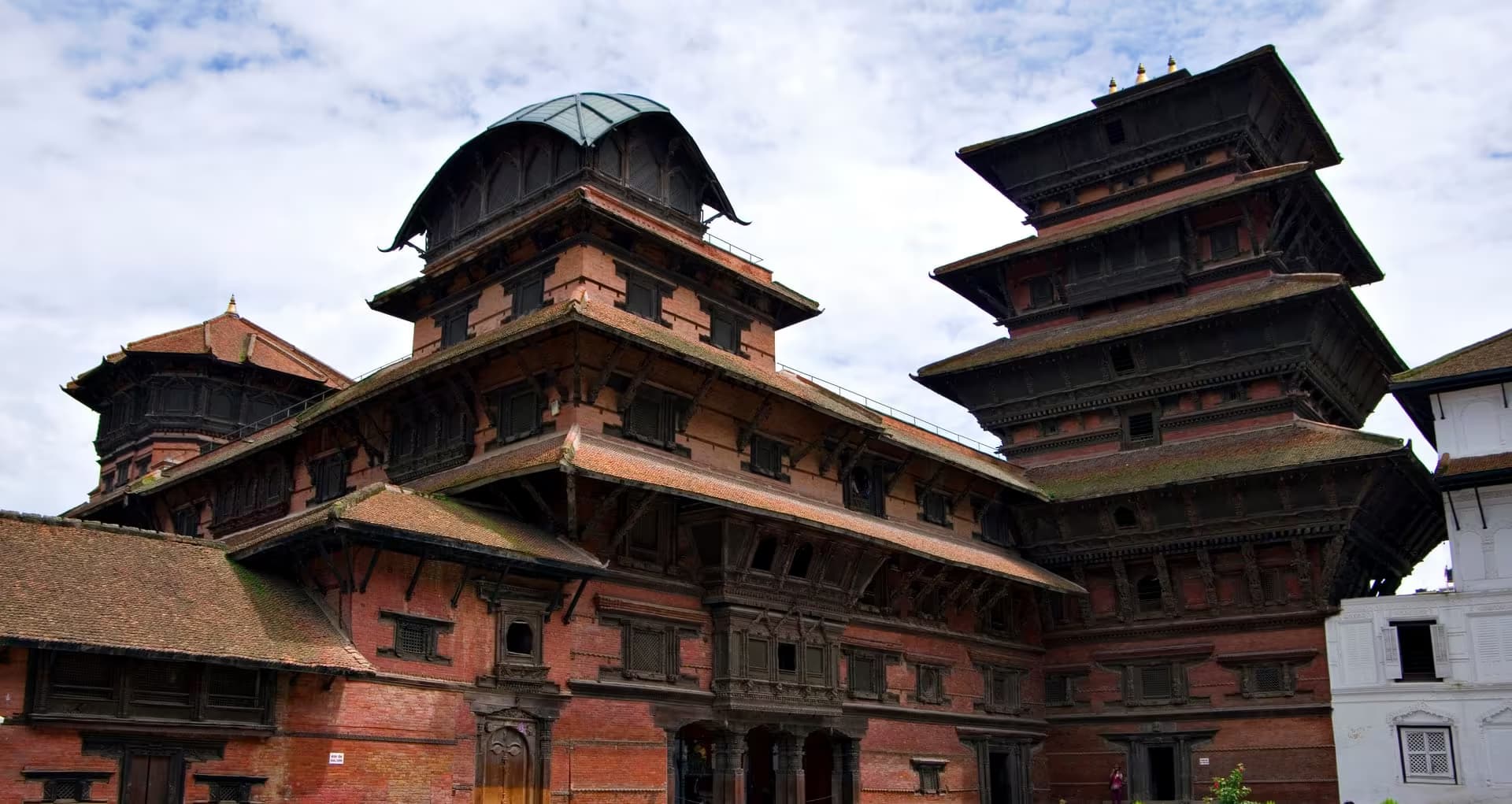
Kathmandu Durbar Square
Hanuman Dhoka takes the Fulpati arrival on the seventh day and the Kot sacrifices on Ashtami
Gorkha Durbar
The origin point of the Fulpati procession, several days ahead of its arrival in Kathmandu
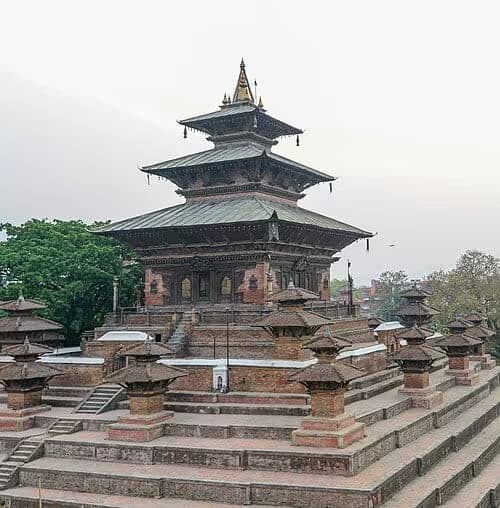
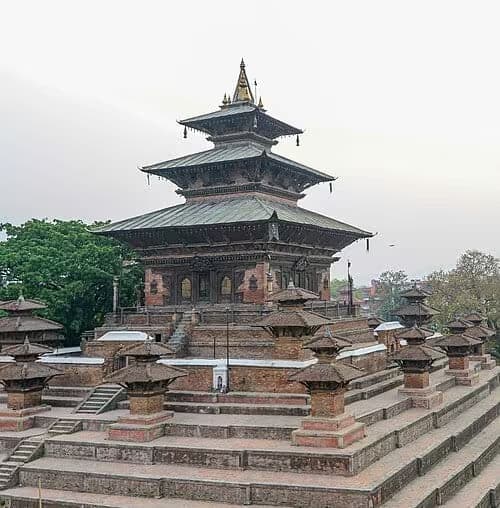
Taleju Temple
Closed to the public all year and open to Hindu devotees on Maha Navami
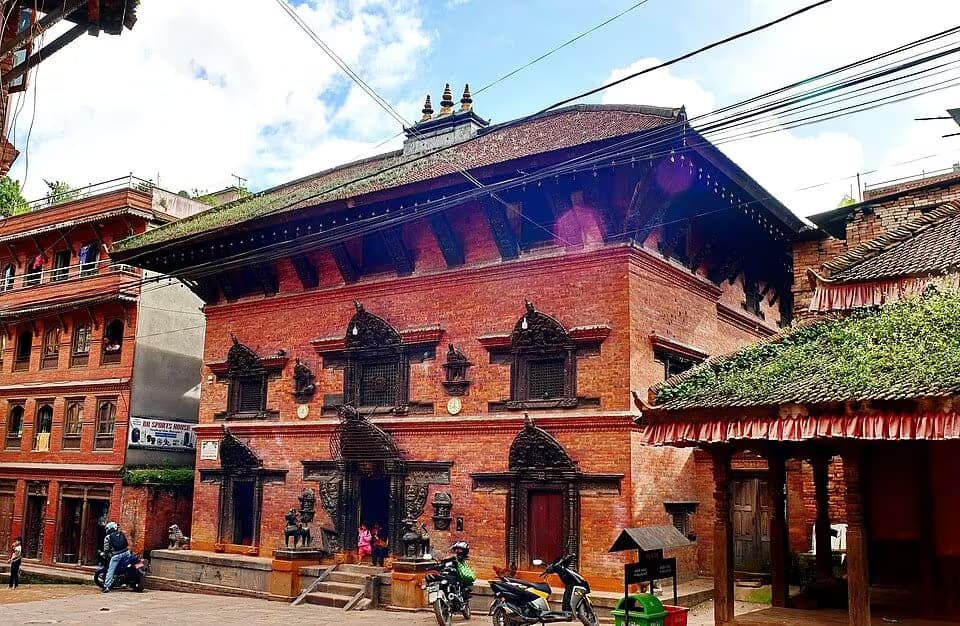
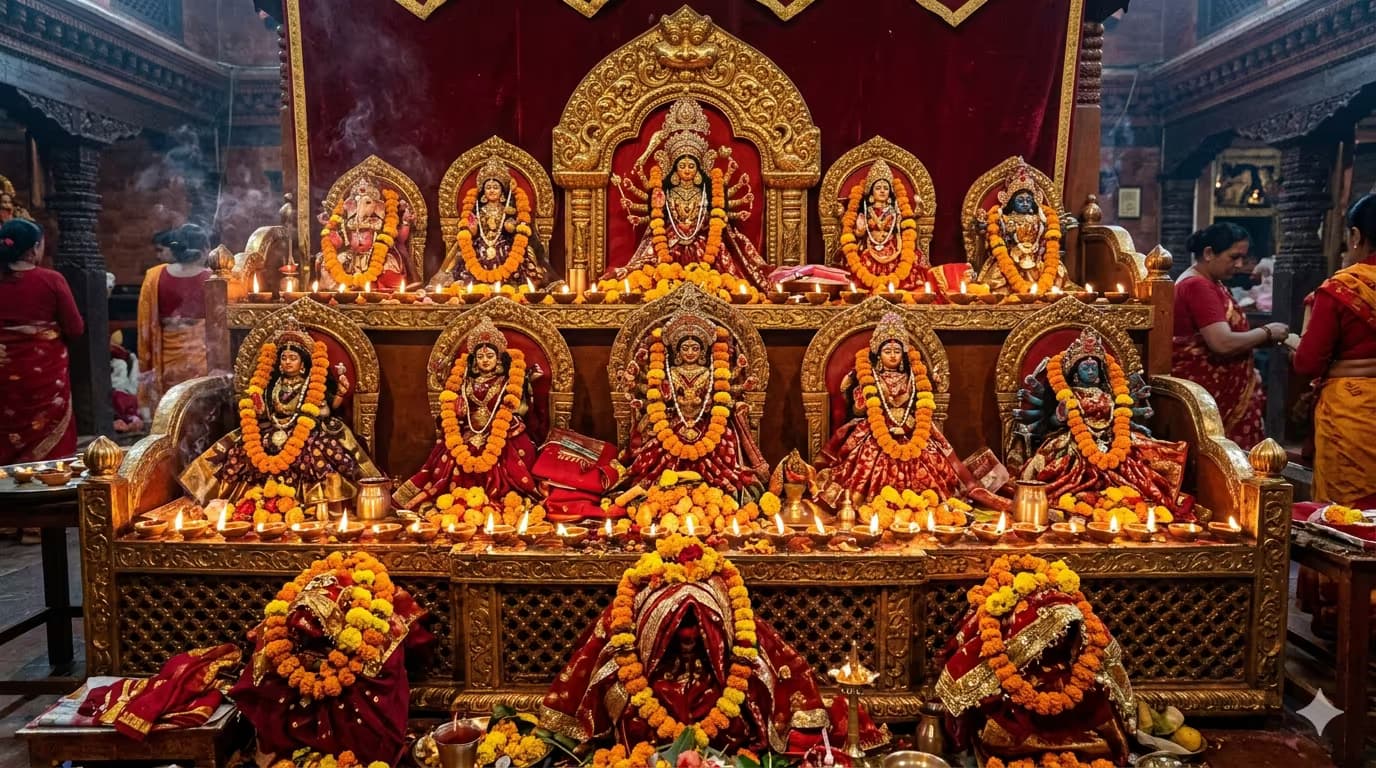
Navadurga Temple (Nava Durga Dyo Chhen)
Works through the nine forms of Durga in exactly the Navaratri cycle
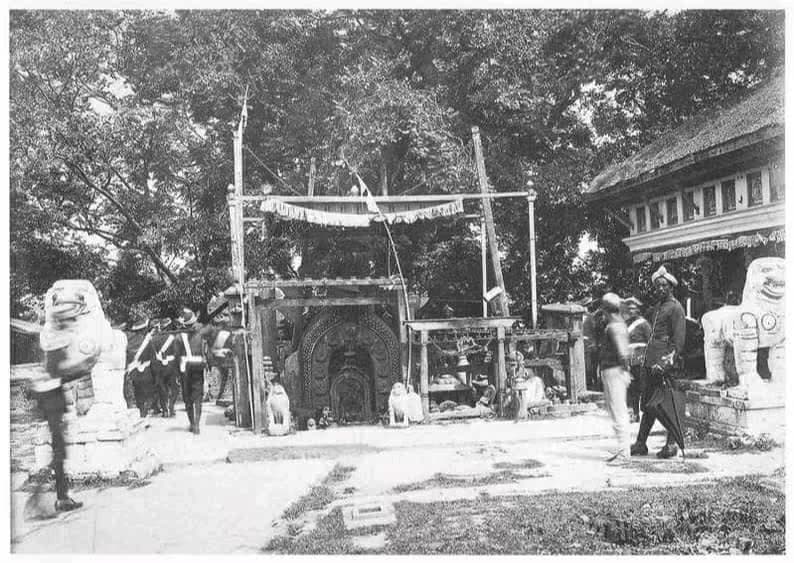
Bhadrakali Temple
On the valley's Navaratri circuit
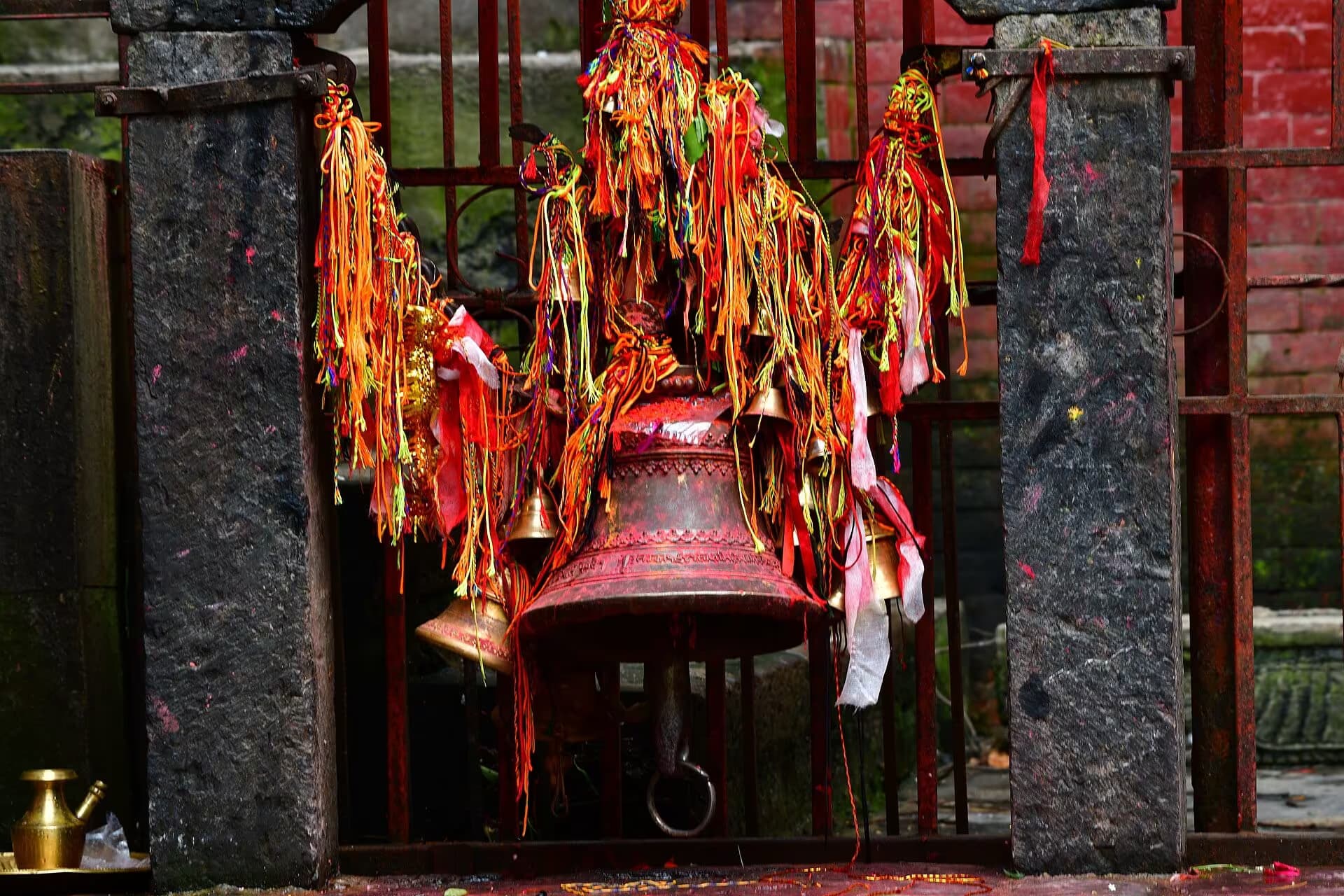
Dakshinkali Temple
The valley's principal sacrifice site, at its most crowded during Dashain
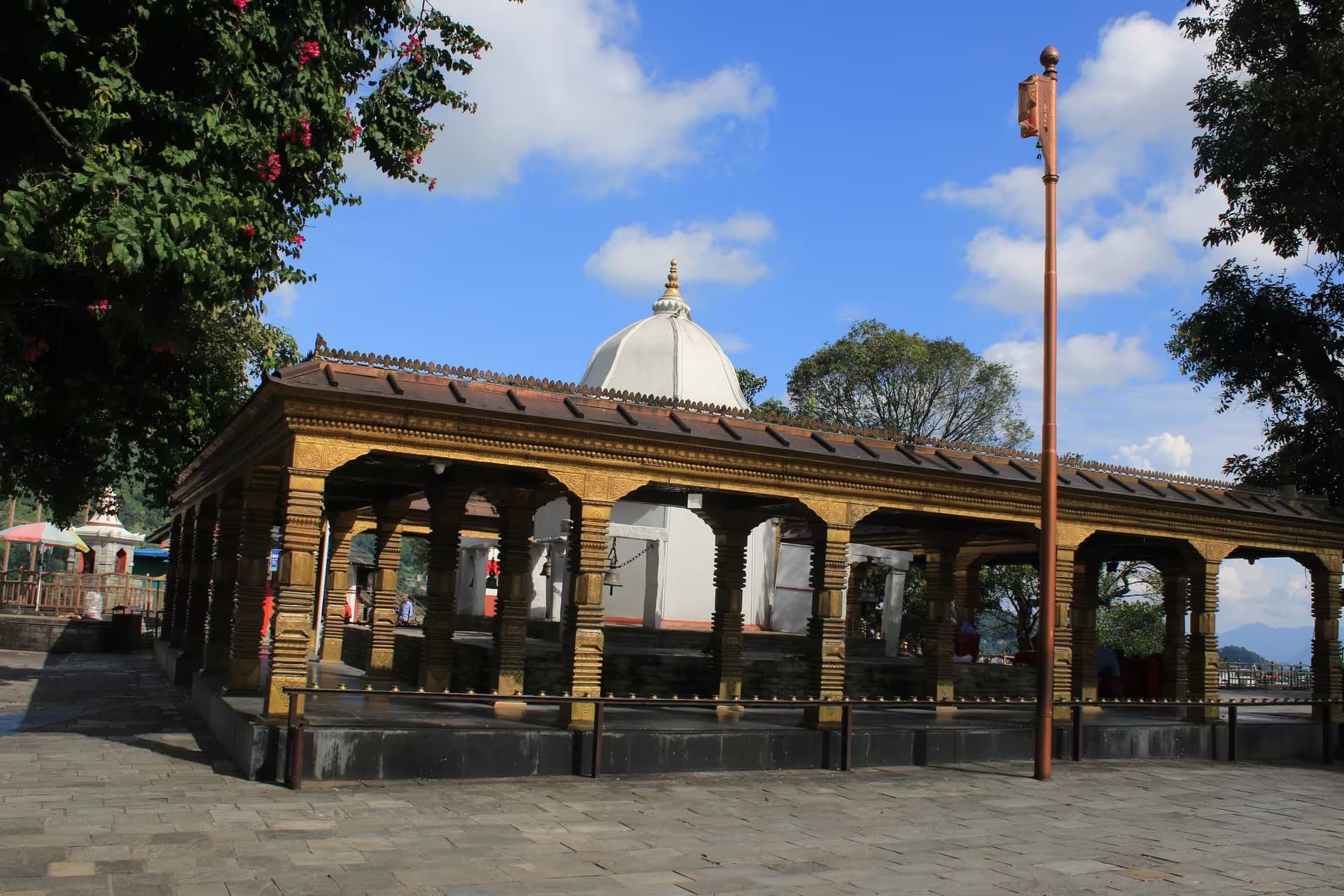
Bindhyabasini Temple
Pokhara's Dashain focus, outside the valley
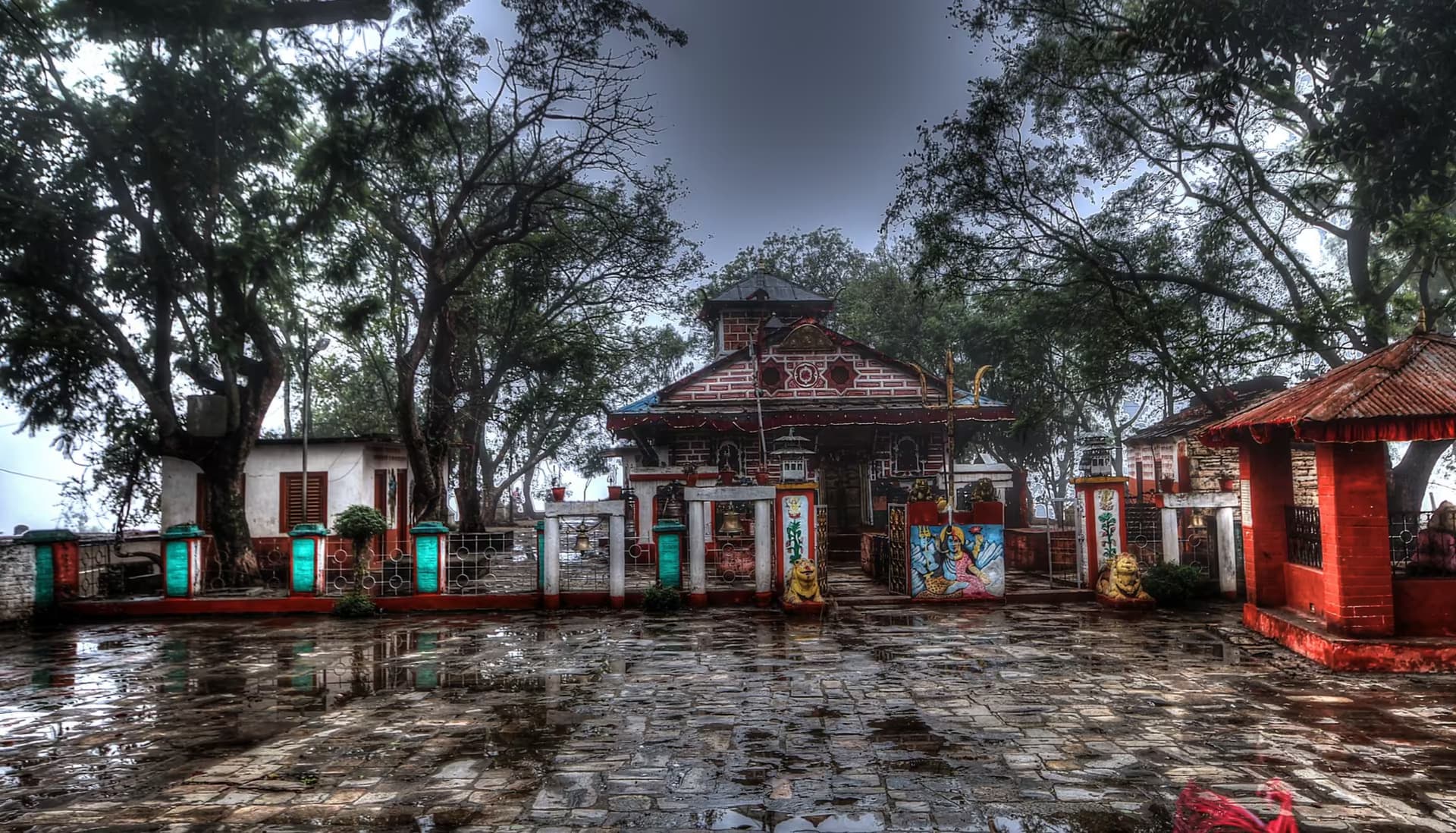
Doti (Silgadhi)
Navaratri and Dashain observances in the far west
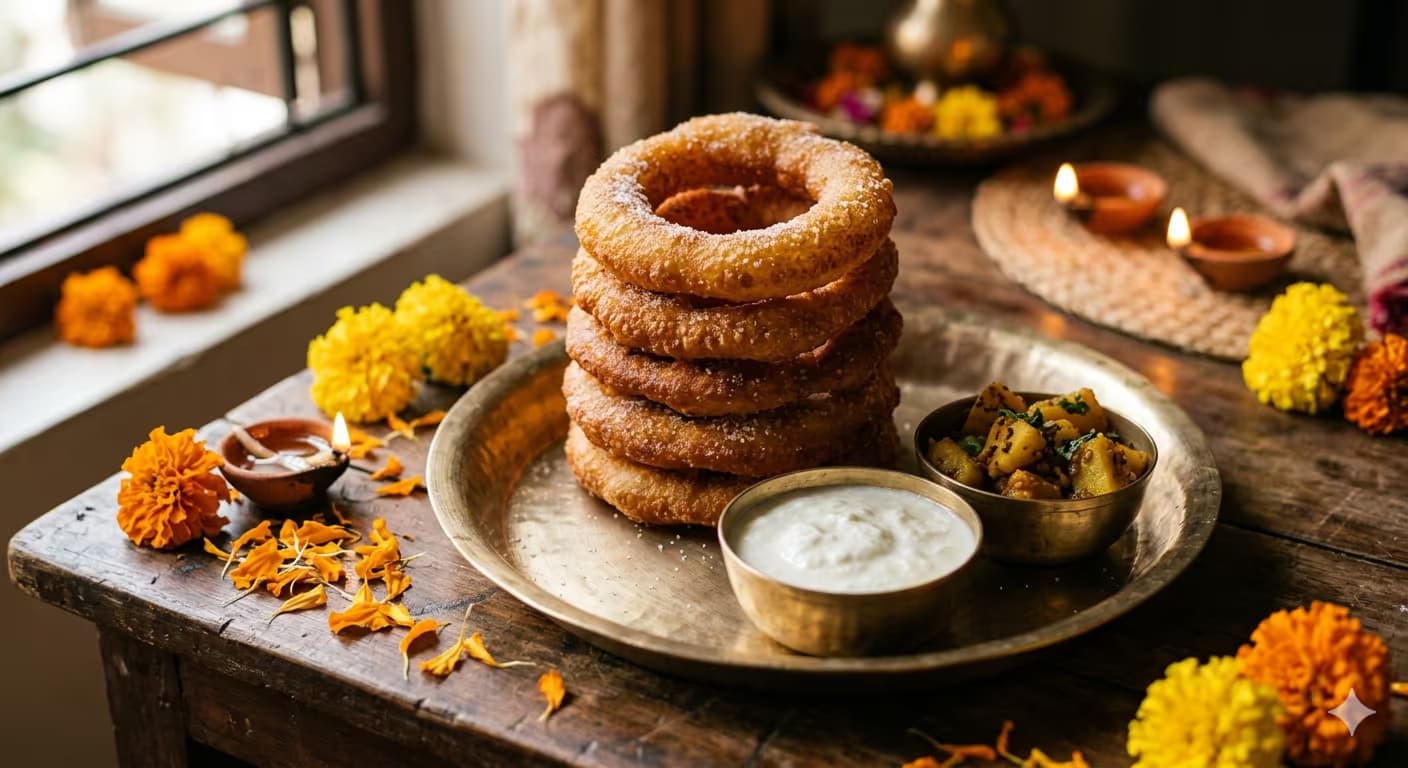
Sel Roti
Made in every household across the Dashain and Tihar season
Part of Dashain (Vijaya Dashami)