The Planting That Begins Everything
Ghatasthapana — from Sanskrit ghata (pot) and sthapana (installation) — is the ritual act that formally opens Dashain. On the first day of the waxing moon of Ashwin, in the early morning hours considered auspicious by the family priest, a clay or copper pot (kalash) is filled with holy water and placed in the puja room. Into the earth or sand around its base, seeds of barley — and sometimes mustard, maize, and other grains — are planted.
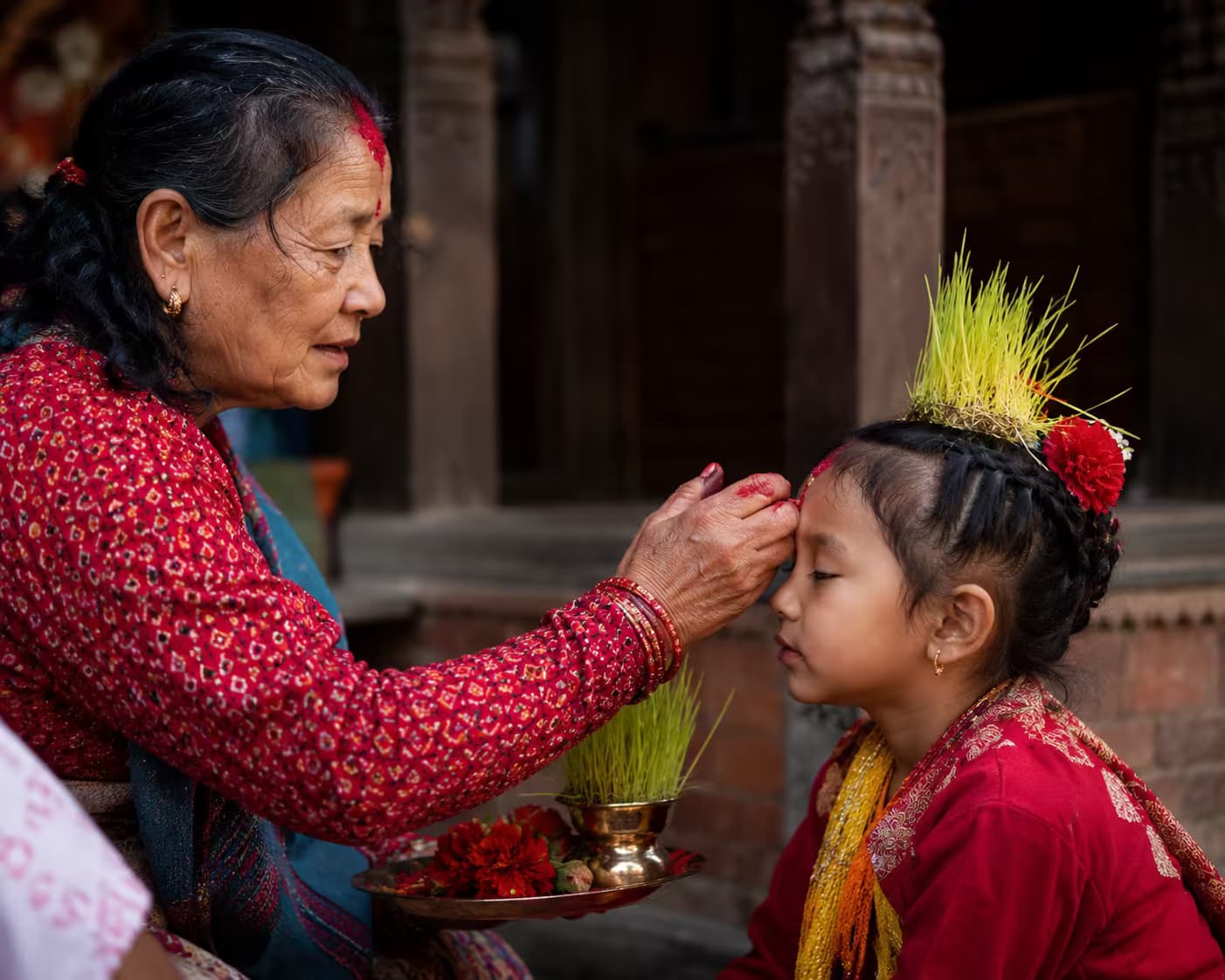
These seeds are jamara: they will grow in the puja room's darkness for the full ten days of Dashain, turning yellow for lack of sunlight. On the tenth day, Vijaya Dashami, they will be cut and placed in the hair of family members after the tika blessing — a living connection between the festival's beginning and its culmination.
The Puja Room
From Ghatasthapana until Dashami, the puja room — called dashain kotha or dashain ghar — becomes the home's sacred centre. An oil lamp or ghee wick burns continuously; the ghata is tended daily with water, flowers, and prayers. Family members approach the room with reverence each morning. The space is kept ritually clean; menstruating women are traditionally excluded.
In Newar households, the room may also contain the lineage deity's image or the agam (household tantric shrine). For both Hindu and Newar families, the puja room represents the domestic axis of the festival — the place where the goddess's presence is anchored in the home.
The Timing
Ghatasthapana is performed within a specific auspicious window — often in the early morning — determined by the family priest according to the almanac (panchang). Some families wake before dawn to complete the ritual before sunrise. The moment of planting is not casual: it is the threshold between ordinary time and festival time, and the precision of its performance is held to affect the entire household's fortunes through the following year.
The Seed and the Goddess
Jamara's symbolism is layered. At one level it is purely agricultural: Dashain falls at the harvest's edge, and the seeds represent the earth's fecundity. At another level, the jamara grown in darkness and given as a blessing carries the goddess Durga's light — the shoots are touched by her presence in the puja room before they reach the worshipper's hair.
In Nepal's hilly and mountain regions, the planting sometimes extends to the courtyard or an outdoor sacred space rather than an indoor room. The form varies; the intention — to set ten days of divine presence in motion with a single deliberate act — remains constant.
Related
Connected places and entries worth pairing
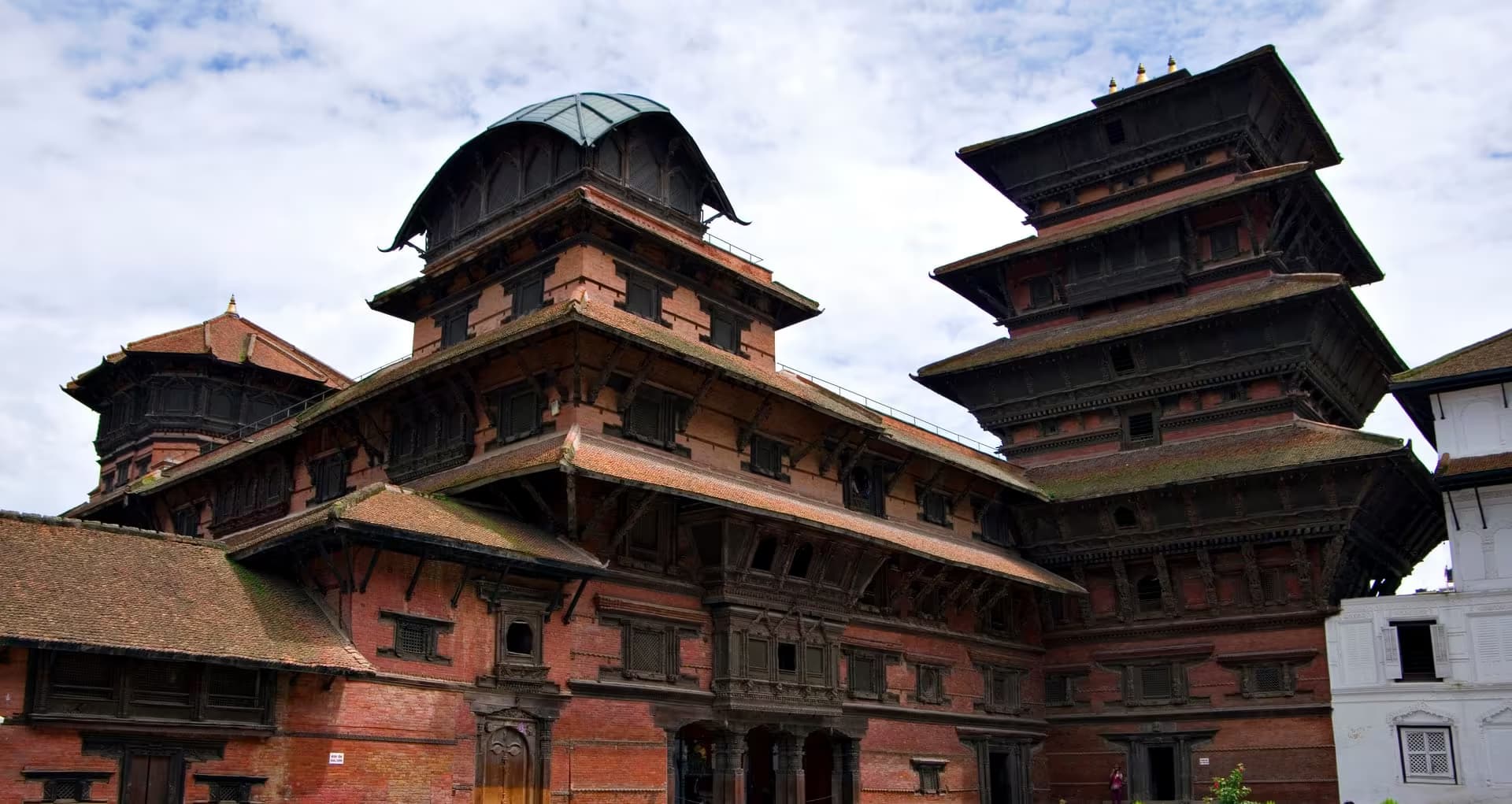
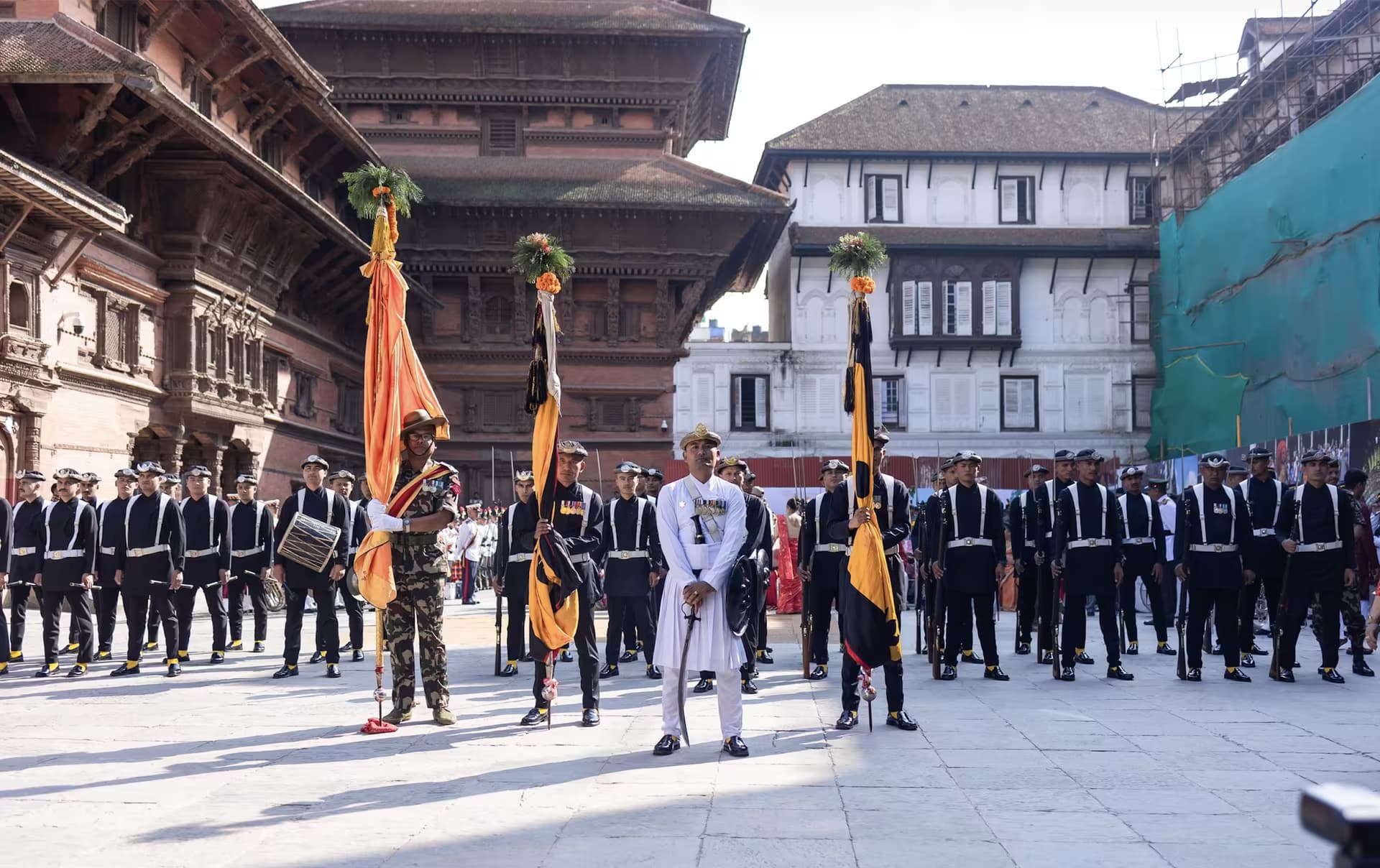
Kathmandu Durbar Square
Hanuman Dhoka takes the Fulpati arrival on the seventh day and the Kot sacrifices on Ashtami
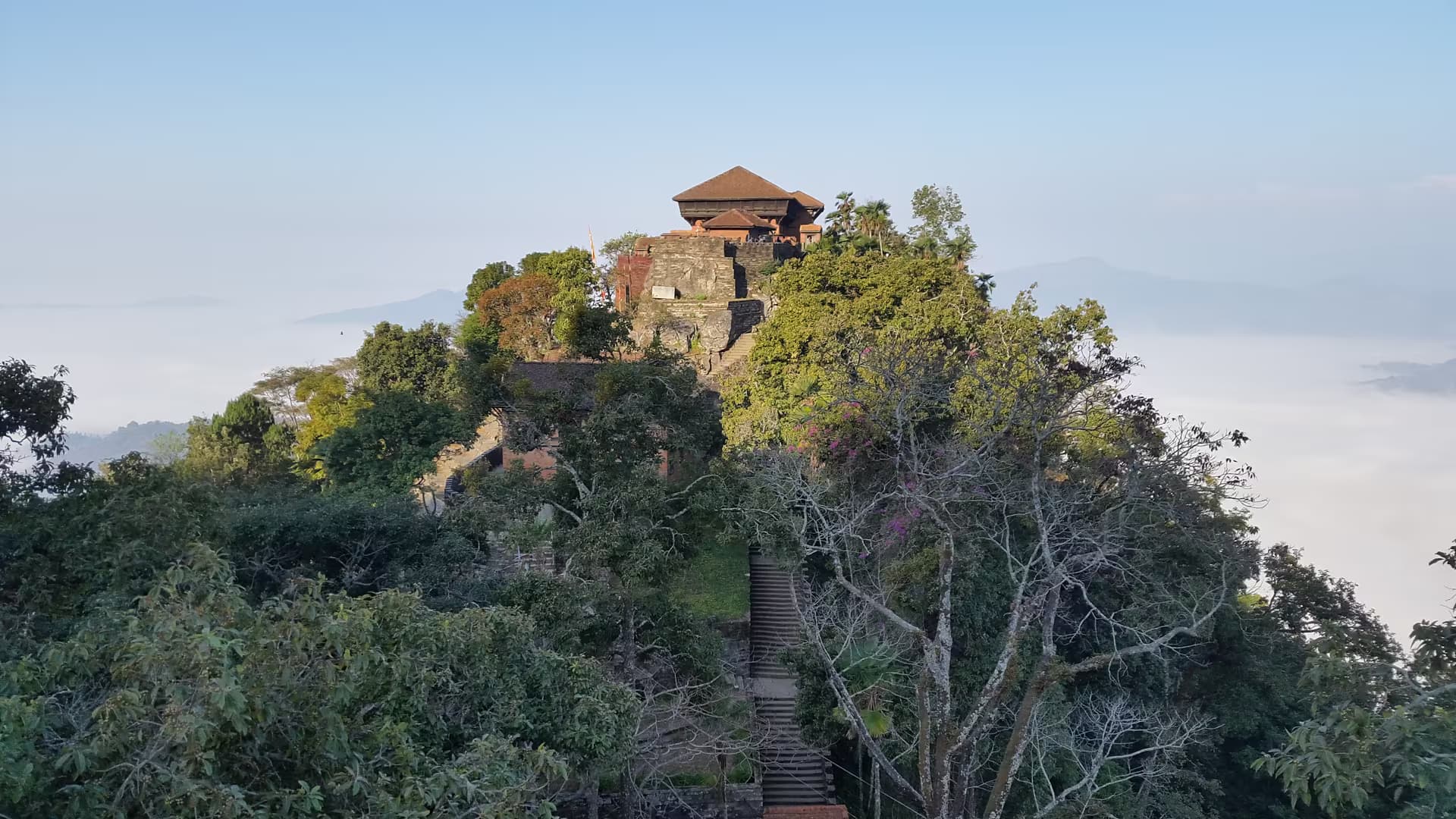
Gorkha Durbar
The origin point of the Fulpati procession, several days ahead of its arrival in Kathmandu
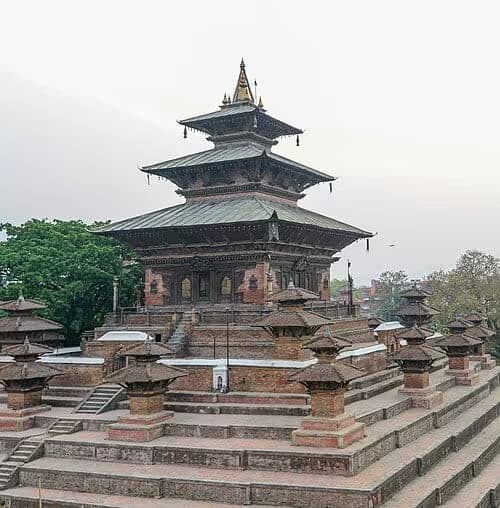
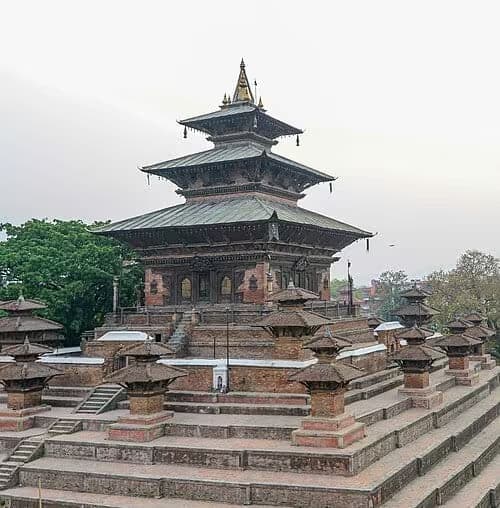
Taleju Temple
Closed to the public all year and open to Hindu devotees on Maha Navami
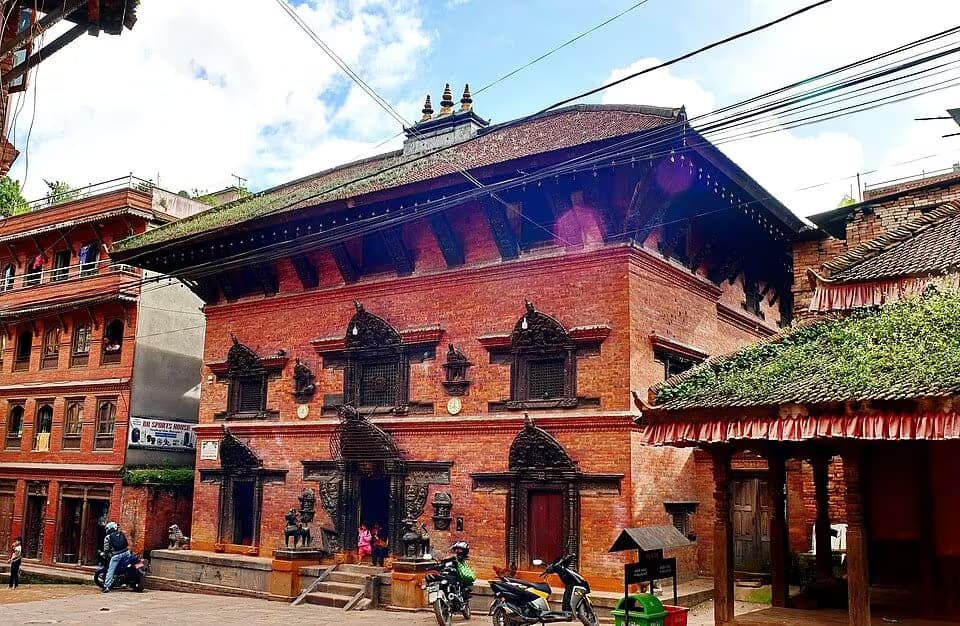
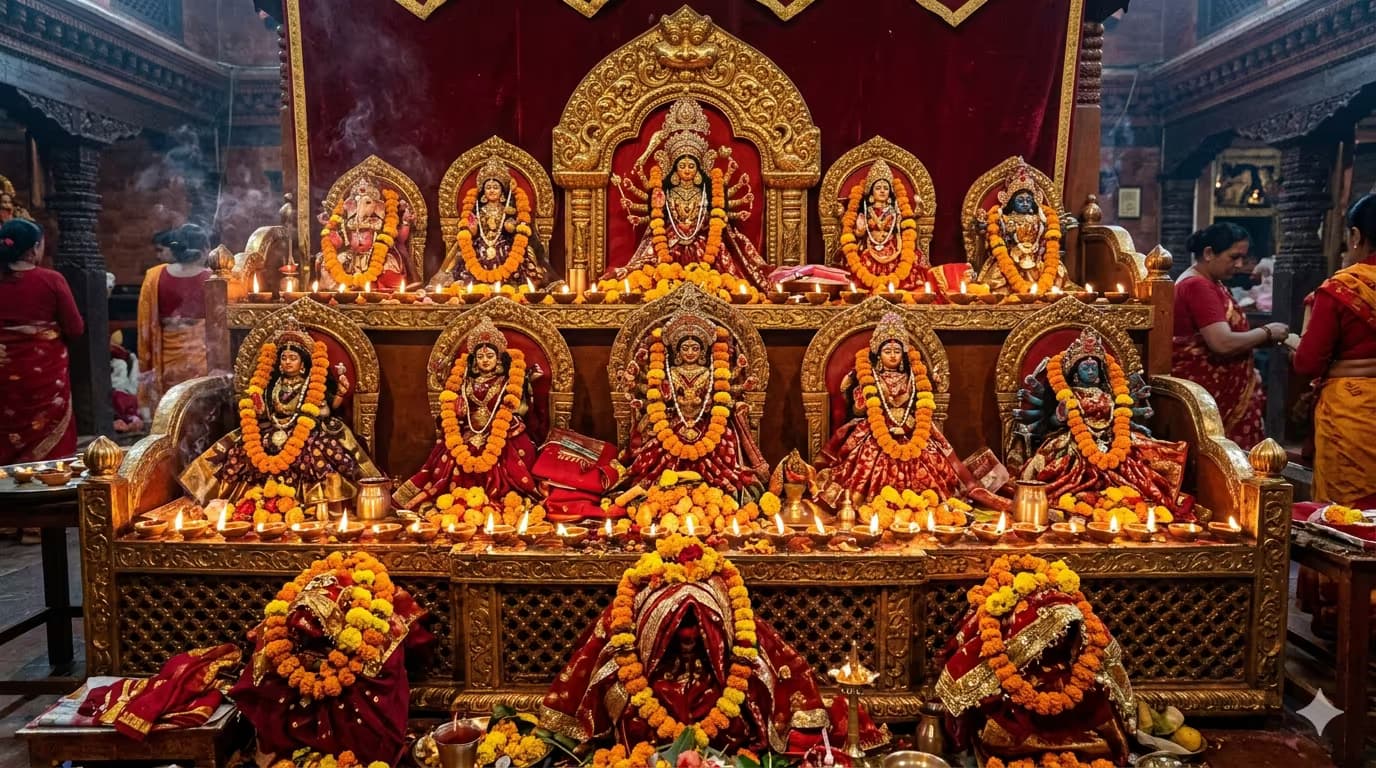
Navadurga Temple (Nava Durga Dyo Chhen)
Works through the nine forms of Durga in exactly the Navaratri cycle
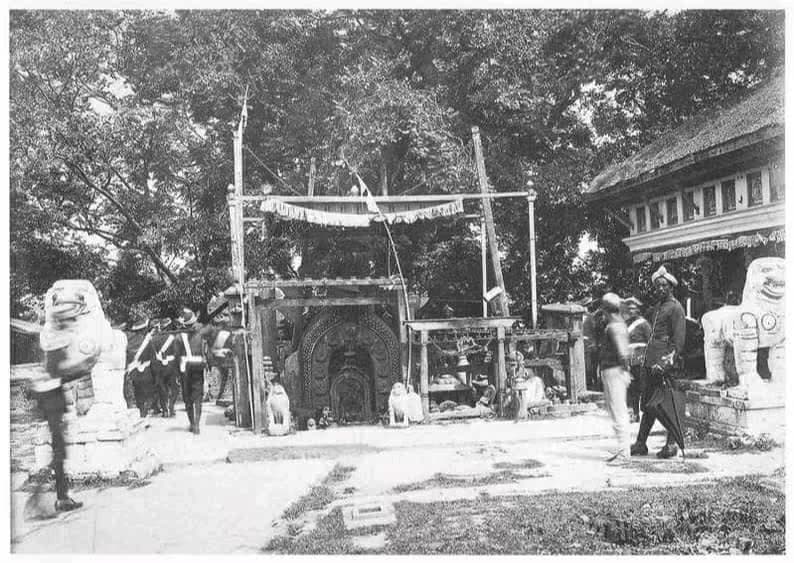
Bhadrakali Temple
On the valley's Navaratri circuit
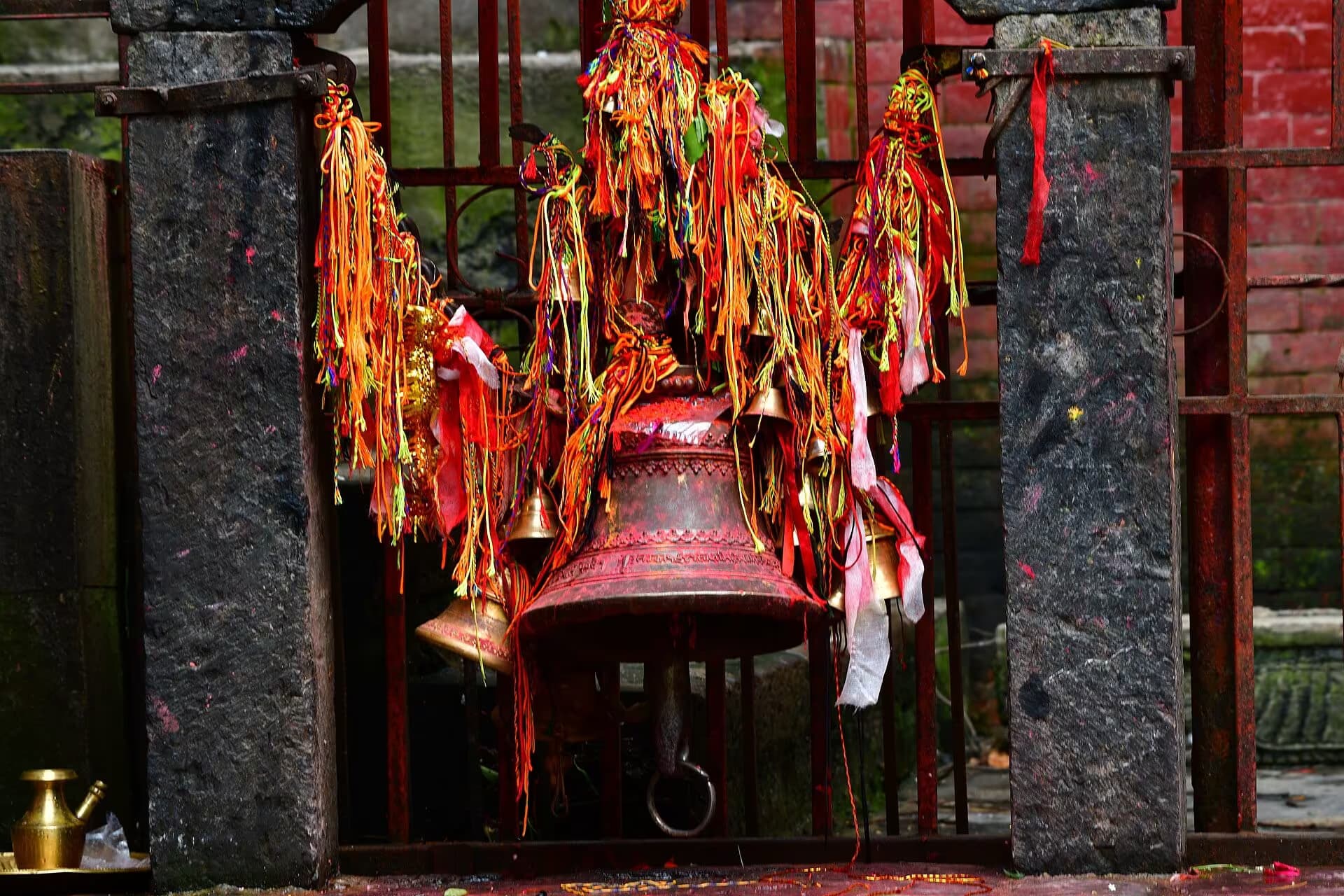
Dakshinkali Temple
The valley's principal sacrifice site, at its most crowded during Dashain
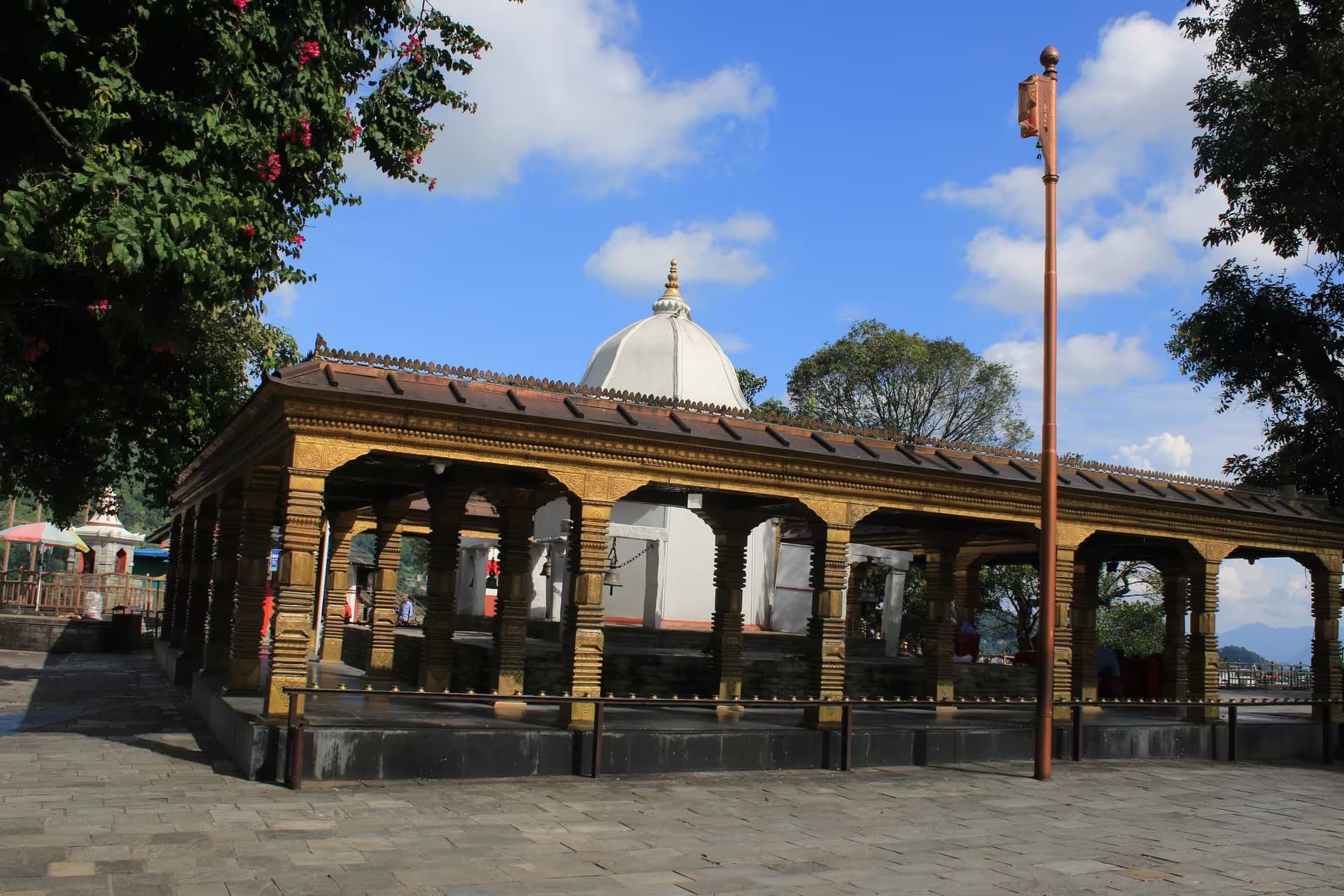
Bindhyabasini Temple
Pokhara's Dashain focus, outside the valley
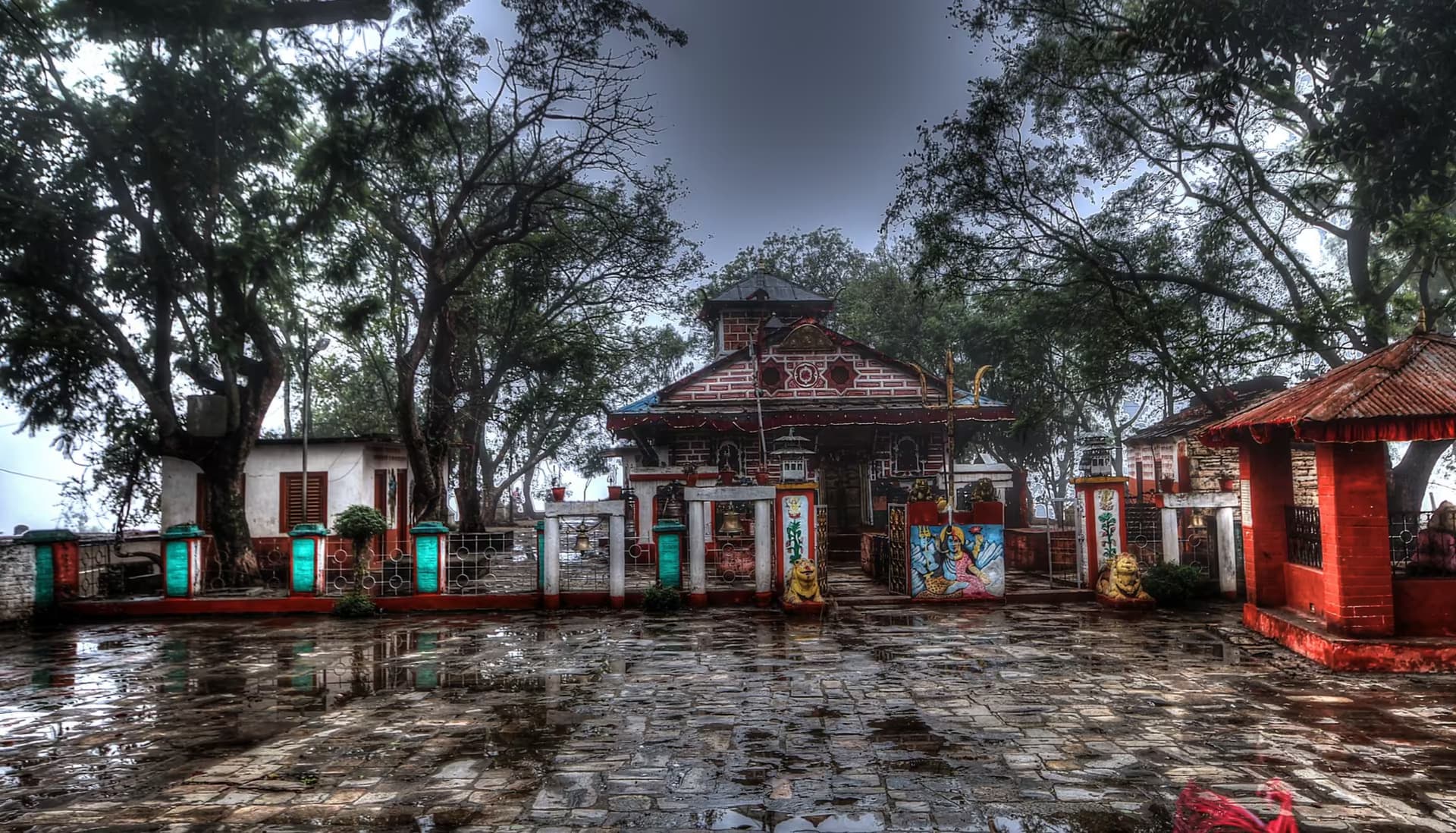
Doti (Silgadhi)
Navaratri and Dashain observances in the far west
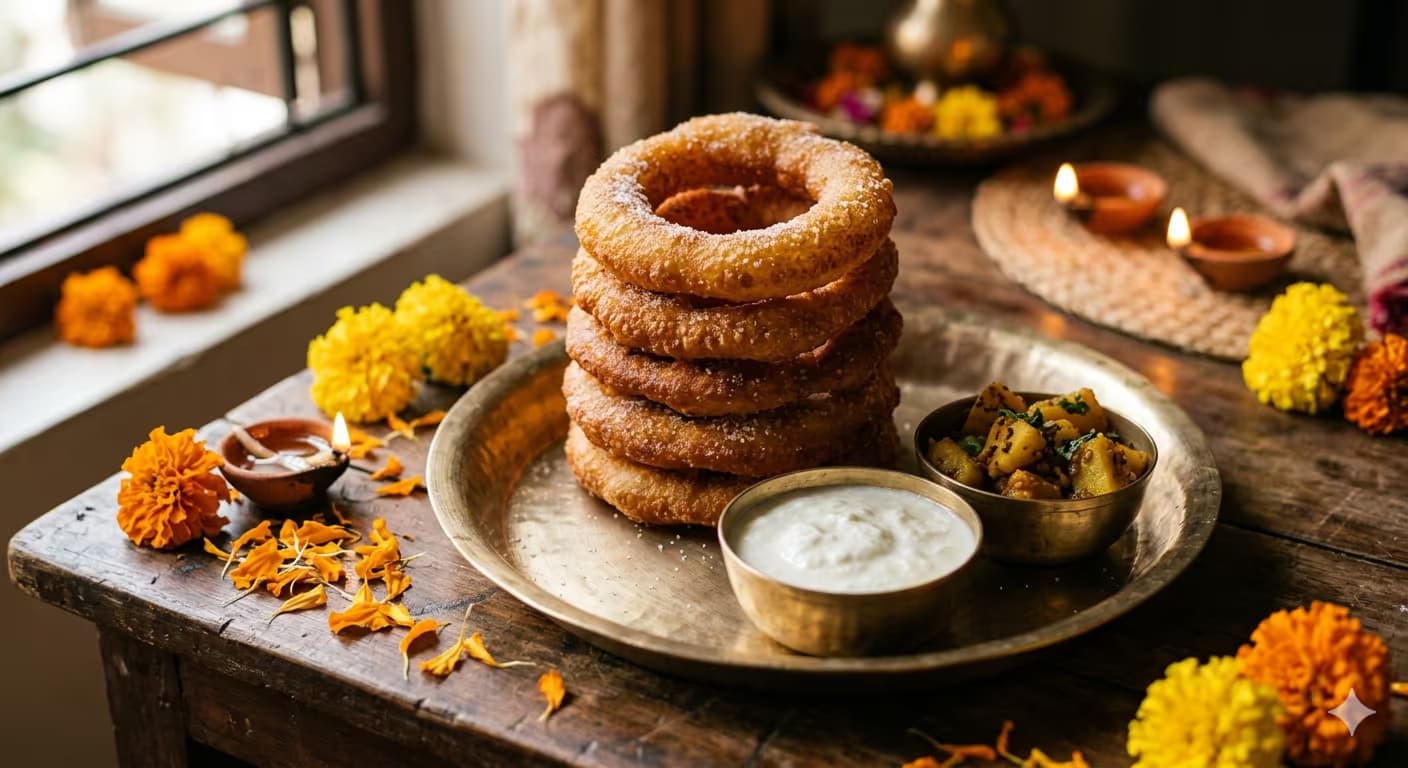
Sel Roti
Made in every household across the Dashain and Tihar season
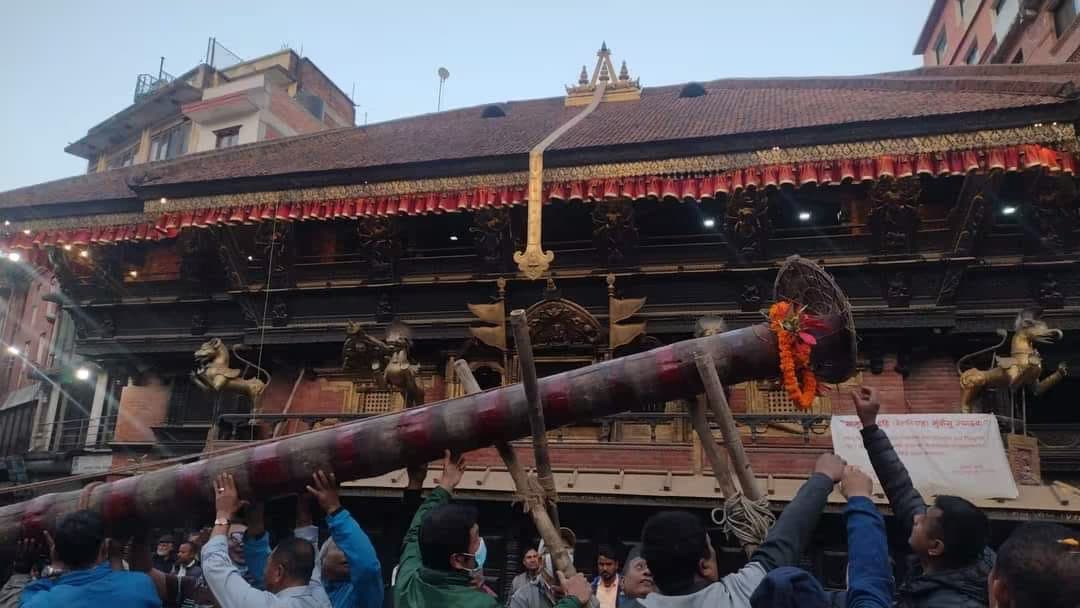
Part of Dashain (Vijaya Dashami)