Vajrayāna · वज्रयान · The Diamond Vehicle
Vajrayana Buddhism in Nepal
Nepal is one of the few places where two complete Vajrayana traditions are practised side by side. In the Kathmandu Valley, Newar Buddhists have kept a Sanskrit-language tantric lineage alive in their courtyard monasteries since the Licchavi period — the last surviving line of Indian Mahayana-Vajrayana that never went through Tibet. Above them, in Solukhumbu, Mustang and Dolpo, and around Boudhanath since 1959, the Tibetan tradition runs its own monasteries, its own calendar and its own language of practice.
This page maps both: the great stupas they share, the bahals and gompas they do not, the tantric power places where Buddhist and Hindu practice genuinely overlap, and the vocabulary you need to read any of it.
56
Sites on this page
42
Newar mahavihars
10
Festivals in the cycle
2
Living traditions
The organising split
Two streams, one vehicle
Almost every confusion about Buddhism in Nepal comes from treating it as one thing. Newar and Tibetan Vajrayana share their tantras and much of their iconography, and diverge on nearly everything institutional — who may officiate, in what language, in what kind of building, under what vows.
Read this table first and the rest of the page sorts itself.
Newar Vajrayana
नेवार वज्रयानThe Kathmandu Valley's own tradition — Sanskrit-language, householder-clergy, courtyard-based. One of the very few surviving lines of Indian Mahayana-Vajrayana that never passed through Tibet.
Tibetan & Himalayan Vajrayana
बौद्ध गुम्बाCarried into Nepal's high valleys — Solukhumbu, Mustang, Dolpo, Manang — and, after 1959, into the Valley itself around Boudhanath. Tibetan-language liturgy, monastic ordination, reincarnate teachers.
| Aspect | Newar | Tibetan |
|---|---|---|
| Liturgical language | Sanskrit, written in Ranjana and Newar scripts | Classical Tibetan |
| Clergy | Hereditary, non-celibate: Vajracharya (ritual masters, able to perform tantric consecration) and Shakya (temple caretakers), born into the role rather than ordained into it | Monastic ordination, celibate sangha, plus recognised reincarnate lineage-holders and lay tantric practitioners (ngakpa) |
| Institution | The bahal or mahavihar — a courtyard monastery owned collectively by the descendants of its founding sangha | The gompa — a residential monastery with an abbot and a curriculum |
| Initiation | Bare chuyegu / chudakarma, a life-cycle rite that makes a Shakya or Vajracharya boy a member of the sangha for four days, then returns him to household life | Novice and full monastic vows, taken for life or for a stated term |
| Central image | The kwapah-dyah — usually Shakyamuni or Akshobhya — in the ground-floor shrine, with the esoteric agam shrine restricted to initiates above it | A main assembly hall (dukhang) with the lineage's principal deities and teachers |
| Ritual economy | Guthi — endowed trusts that fund festivals, repairs and feasts across generations | Patronage, monastic estates, and today pilgrimage and visitor support |
| Where to see it | Kathmandu, Patan and Bhaktapur's courtyards; Kirtipur; Swayambhu's hill | Boudhanath's ring of monasteries; Khumbu, Mustang and Pokhara's gompas |
Mahachaitya
The great stupas
Nepal's Vajrayana landscape is anchored by stupas that both traditions share. Newar Buddhists and Tibetan Buddhists circumambulate the same domes, on the same mornings, with different liturgies — and the monasteries of both stand within sight of them.
04 places
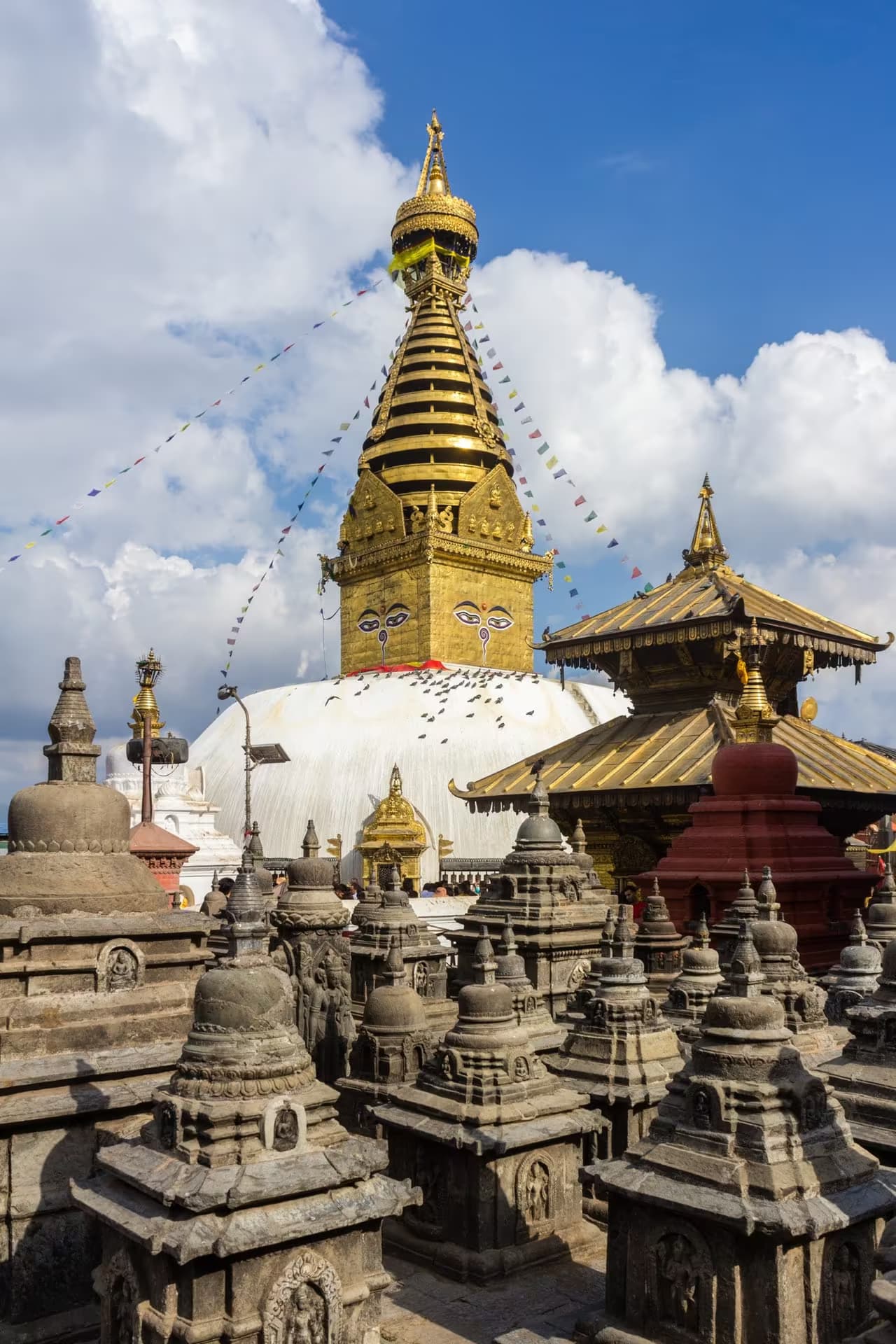
Swayambhunath
स्वयम्भूनाथ
Self-arisen hilltop stupa older than the city below it, where Buddhist and Hindu worship share one summit — and the month of Gunla fills the steps with dawn music.
stupa · Kathmandu
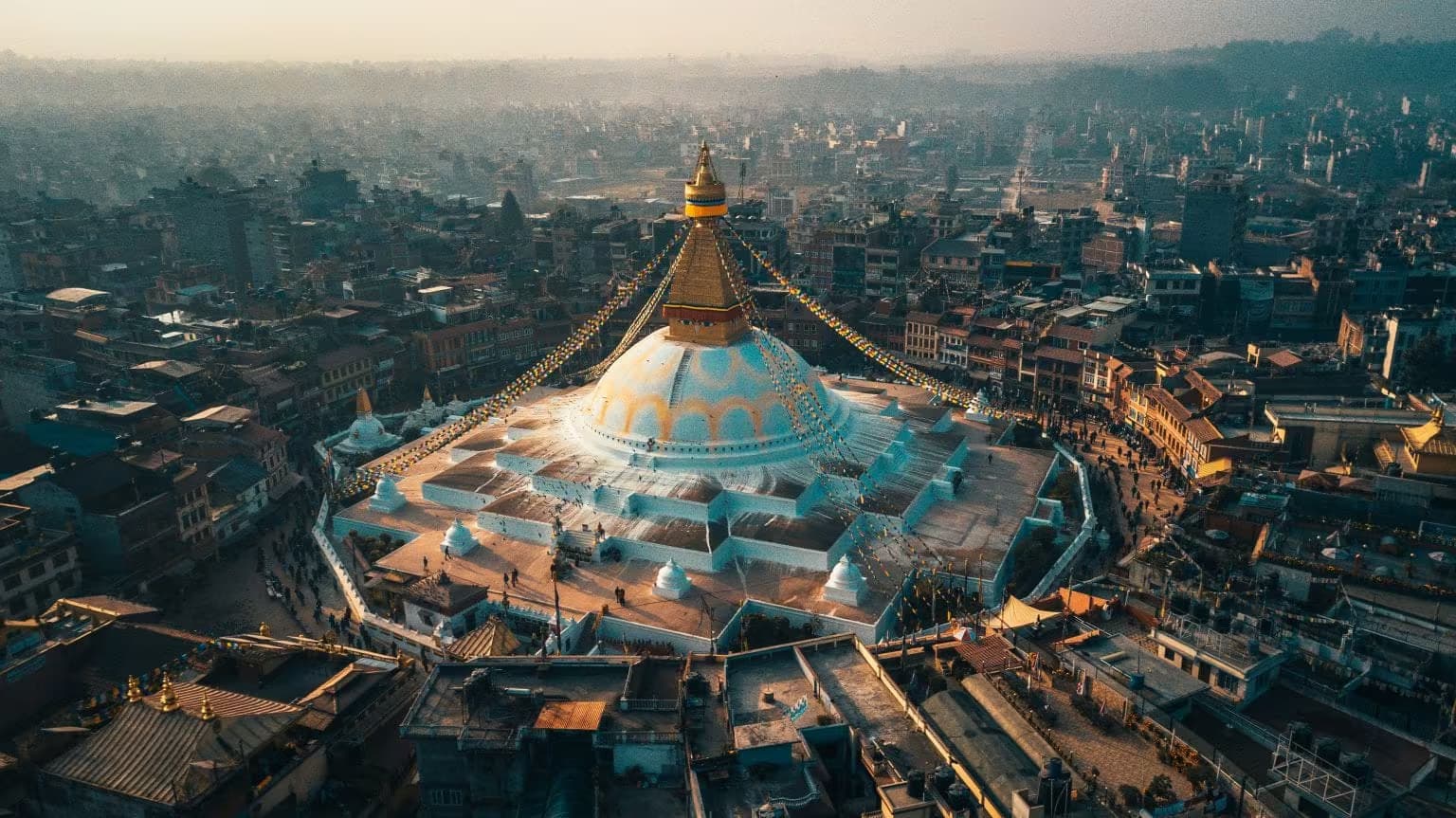
Boudhanath Stupa
बौद्धनाथ स्तूप
One of the world's great stupas and the heart of Tibetan Buddhism in Nepal — raised, legend says, by a poultry-keeper and her sons, and rebuilt after 2015 by its own community.
stupa · Kathmandu
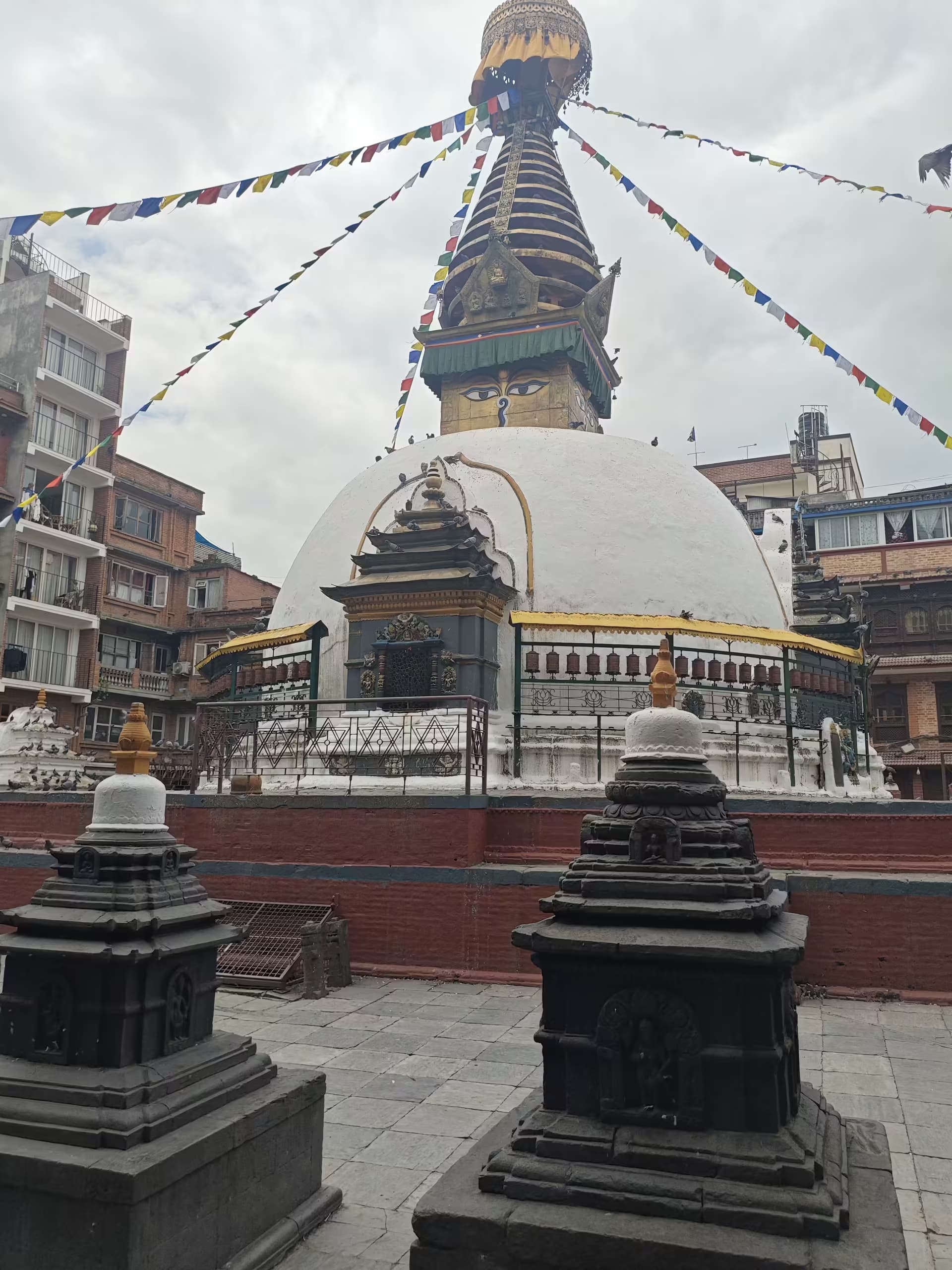
Dharmakirti Bahal (Sighal Bahal / Kathesimbhu)
धर्मकीर्ति बहाल
A Newar Buddhist courtyard just south of Thamel, built around the 17th-century Kathesimbhu Stupa — a miniature replica of Swayambhu — and today home to the Dharmakirti Theravada nunnery.
bahal · Kathmandu
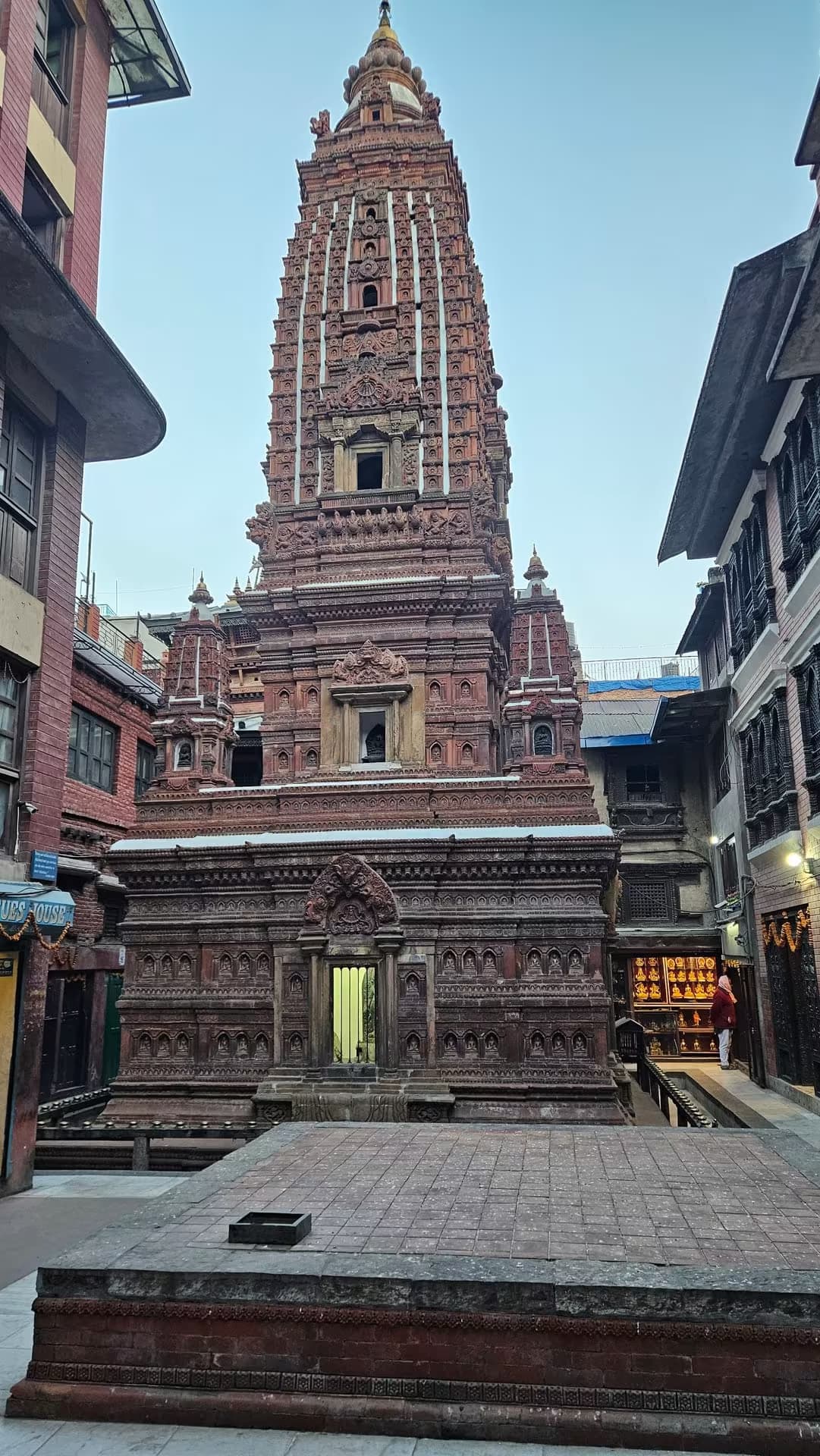
Mahabouddha Temple (Temple of a Thousand Buddhas)
महाबुद्ध मन्दिर
A unique shikhara-style tower entirely covered in terracotta tiles, each bearing a hand-carved image of Buddha, modeled after the Mahabodhi Temple in Bodh Gaya.
bahal · Lalitpur
Bahal · Bahi · Mahavihar
The Newar mahavihars
A bahal is a monastery you enter through a lane. Its ground floor holds the public shrine, its upper floor the tantric agam closed to non-initiates, and its members are born into it rather than ordained. Several hundred survive across the three cities — most of them still houses, workshops and playgrounds as well as monasteries.
42 courtyards listed
The full bahals hub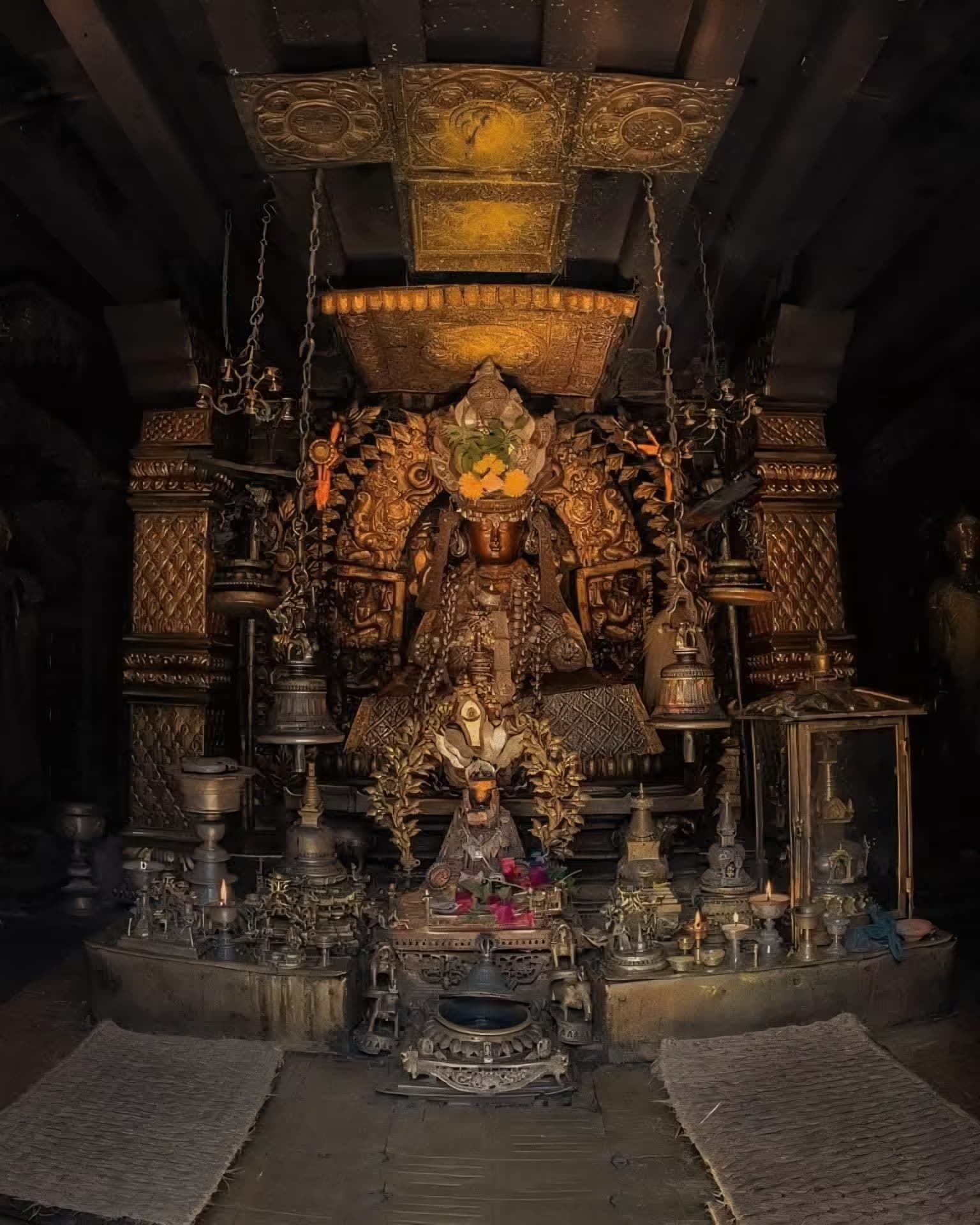
Hiranya Varna Mahavihar (Golden Temple)
हिरण्यवर्ण महाविहार
Patan's celebrated Golden Temple — a 12th-century Newar Buddhist bahal sheathed in gilded copper, with a rotating boy priest and an 800-year-old Prajnaparamita manuscript.
bahal · Lalitpur
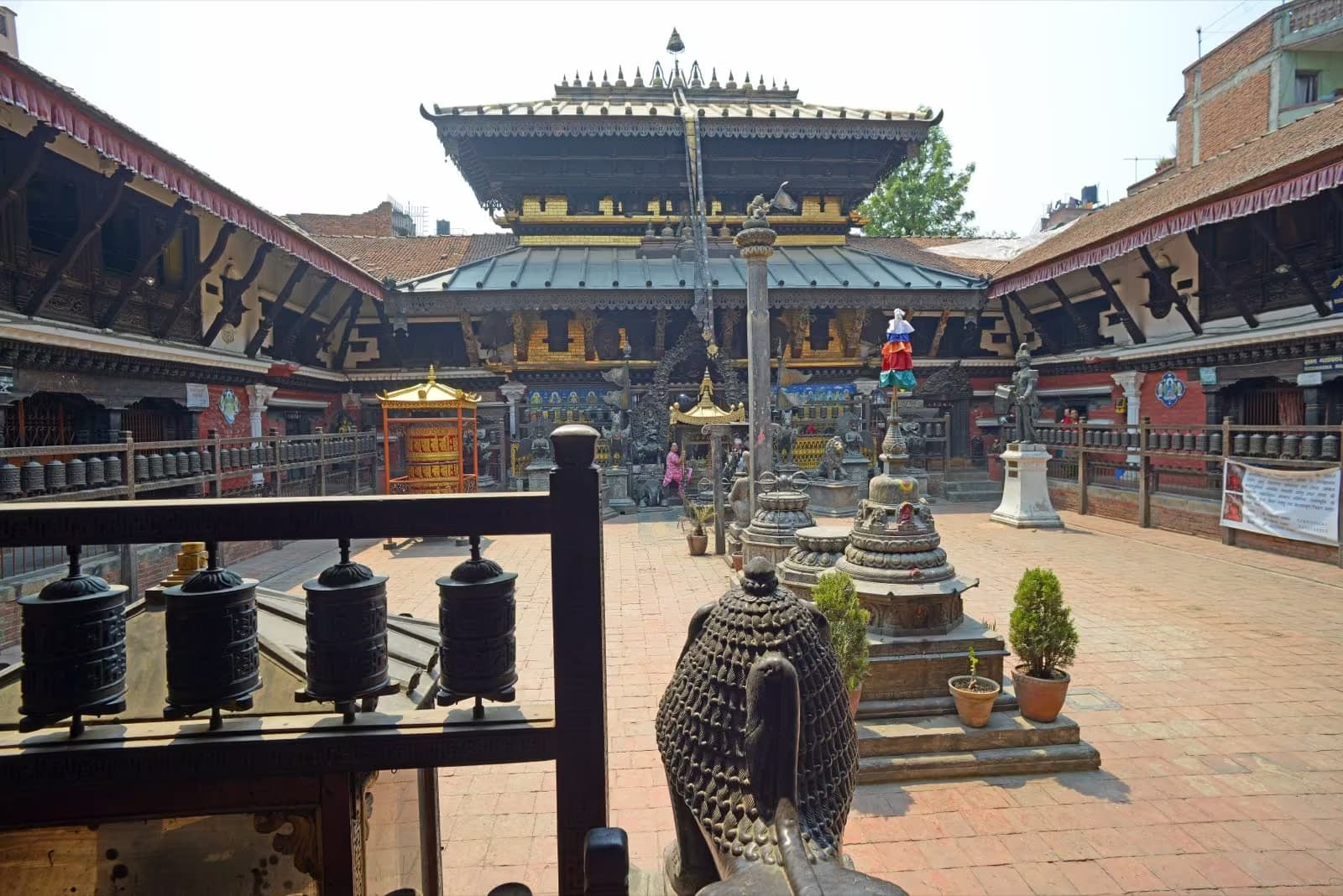
Rudravarna Mahavihar (Okubahal)
रुद्रवर्ण महाविहार
An ancient 6th-century Newar Buddhist monastery in Patan with three interconnected courtyards, renowned for its exquisite stone and metal sculptures.
bahal · Lalitpur
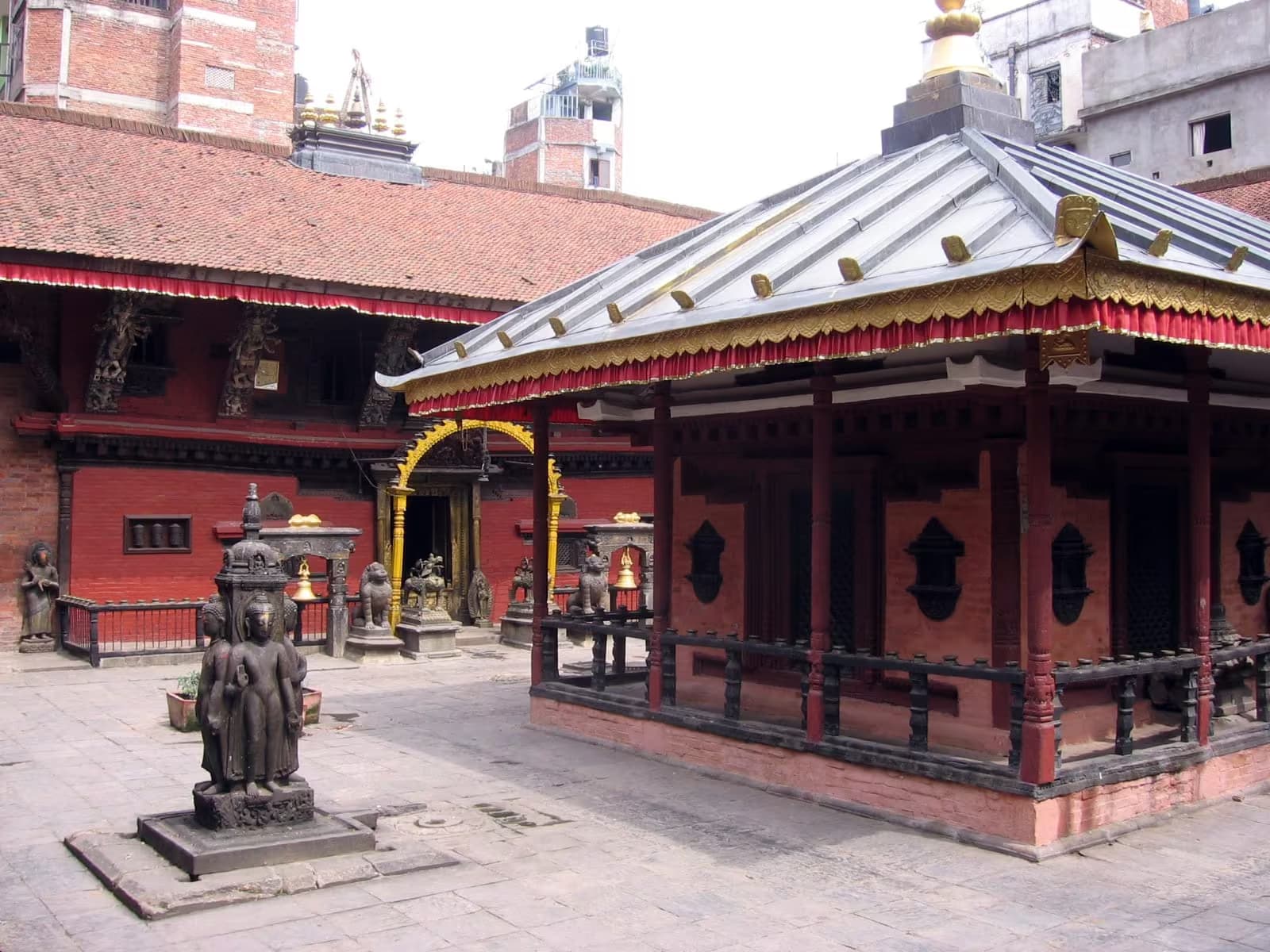
Itum Bahal (Keshchandra Mahavihar)
इटुम बहाल
Kathmandu's largest Buddhist monastery complex with hidden courtyards, brass plaques depicting the Gurumapa legend, and a golden window relic.
bahal · Kathmandu
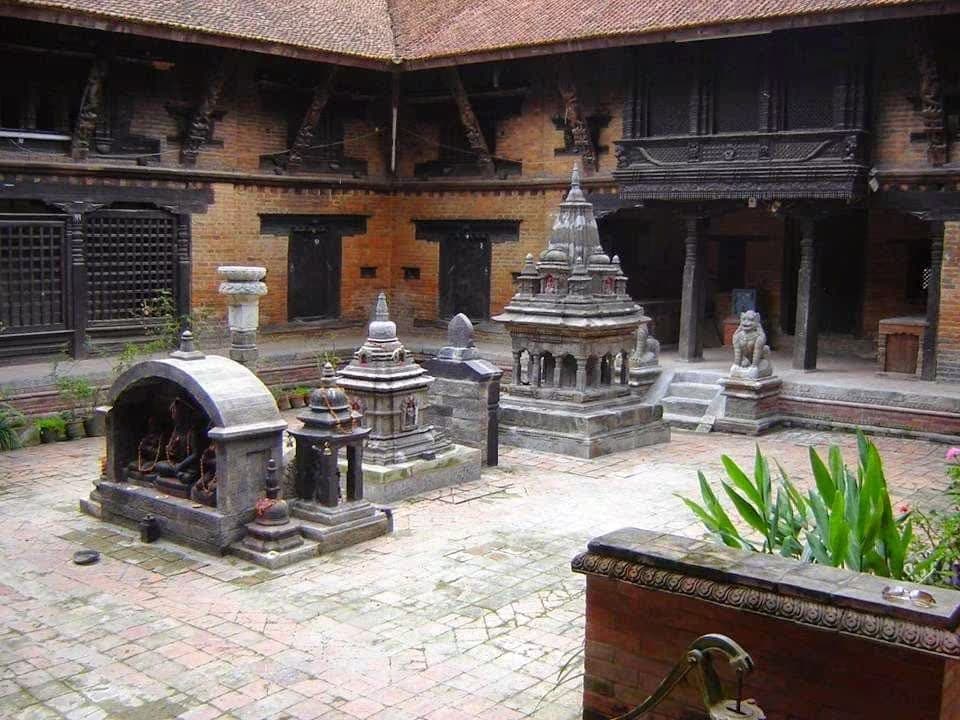
Chusya Bahal (Gunakar Mahavihar)
चुस्या बहाल
A well-preserved 17th-century monastery built by a Nepal-Tibet trader, one of the finest surviving examples of traditional Newar Buddhist monastic architecture in Kathmandu.
bahal · Kathmandu
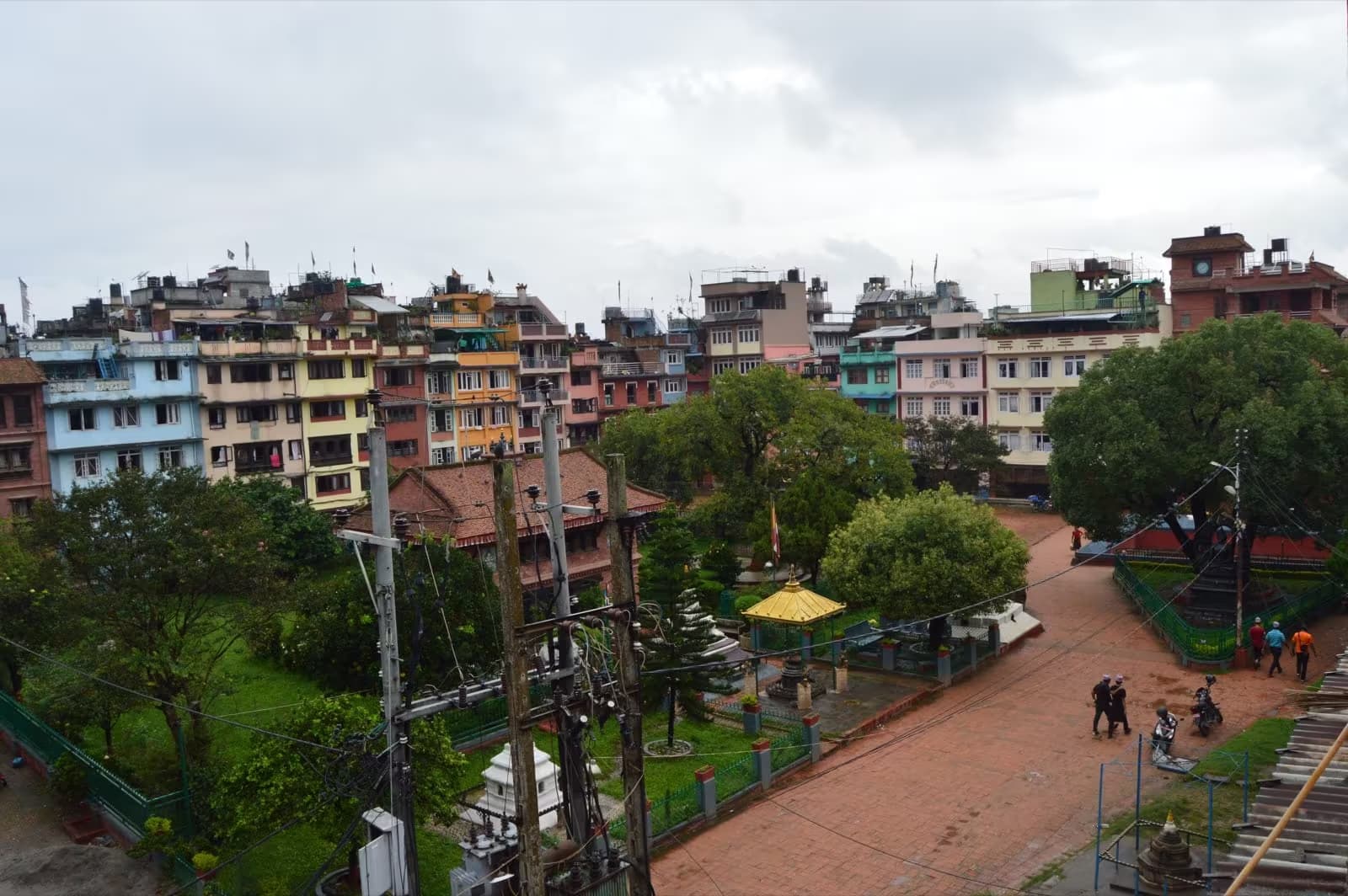
Nag Bahal (Nagbahal)
नागबहाल
One of Patan's oldest Buddhist courtyards and the gathering site for the Samyak Mahadan festival, where all Dipankara Buddha images from across Patan are assembled.
bahal · Lalitpur
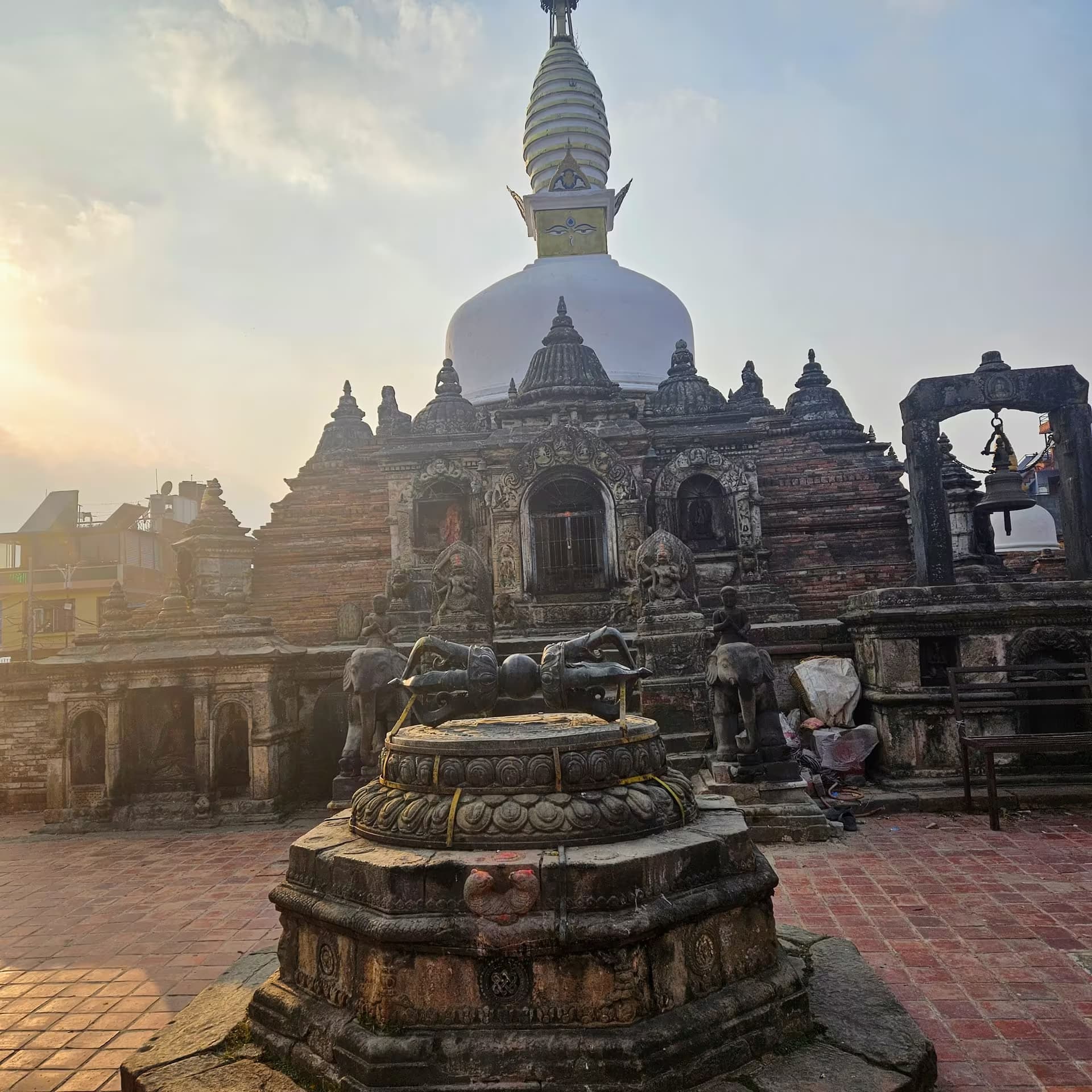
Chilancho Bahal (Jagat Pal Mahavihar)
जगत्पाल महाविहार
A stunning hilltop Buddhist stupa and monastery in Kirtipur attributed to Emperor Ashoka, formally established as Jagat Pal Mahavihar in 1515 CE — one of the most archaeologically important Buddhist monuments in the Kathmandu Valley.
bahal · Kathmandu
Every other courtyard on this page
Kathmandu & Kirtipur
काठमाडौं17The densest network in the Valley, reached through the bazaar lanes around Asan, Kel Tole and Thamel.
- Bhagwan Bahal (Vikramashila Mahavihar)
- Dharmachakra Mahavihar (Tanga Bahal)
- Jirna Uddhar Mahavihar (Chidhya Bahal)
- Karunapur Mahavihar (Musya Baha)
- Kindo Bahal
- Kwa Bahal (Maitripur Mahavihar)
- Lagan Bahal (Kirtipunya Mahavihar)
- Mu Bahal (Mulashree Mahavihar)
- Musum Bahal (Manisingha Mahavihar)
- Nhuche Baha (Bajradhatu Mahavihar)
- Om Bahal (Brahmachakra Mahavihar)
- Pyukha Bahal (Dharma Dhatu Mahavihar)
- Sabal Bahal (Mantrasiddhi Mahavihar)
- Sikhamu Bahal (Shreekhanda Tarumula Mahavihar)
- Takse Bahal (Suratshree Mahavihar)
- Tukan Bahal
- Yetakha Bahal (Bhaskarakirti Mahavihar)
Patan (Lalitpur)
ललितपुर15The finest surviving metal and stone sculpture, and the most active Newar Buddhist sangha of the three cities.
- Bhinche Bahal (Mayurvarna Mahavihar)
- Bu Bahal (Yashodhar Mahavihar)
- Co Bahal (Kacchapal Giri Mahavihar)
- Cuka Bahal (Chakravarna Mahavihar)
- Dau Bahal (Dattanama Mahavihar)
- Dhum Bahal (Gunalakshmi Mahavihar)
- Guji Bahal (Vaishravarna Mahavihar)
- Ha Bahal (Ratnakar Mahavihar)
- Jyo Bahal (Jyoti Varna Mahavihar)
- Si Bahal (Sri Vaccha Mahavihar)
- Su Bahal (Jayamanohara Mahavihar)
- Ta Bahal (Dharma Kirti Mahavihar)
- Tanga Bahal (Jestha Varna Mahavihar)
- Wan Bahal (Bajra Kirti Mahavihar)
- Yachu Bahal (Baladhara Gupta Mahavihar)
Bhaktapur
भक्तपुर04Fewer houses, but the Samyak and Panchadan rituals here run on the oldest continuous schedule in the Valley.
Pitha & cave
Tantric power places
Vajrayana in Nepal does not stop at the monastery wall. Caves where Padmasambhava is held to have practised, goddess seats claimed by Hindu and Buddhist tantra at once, a Himalayan shrine that Hindus, Buddhists, Bon and Tibetan pilgrims all walk to, and a cave sacred to Hindus, Buddhists and Kirats alike. The overlap is not confusion — the same shrine genuinely carries more than one reading, and Newar practice has held them together for centuries.
07 places
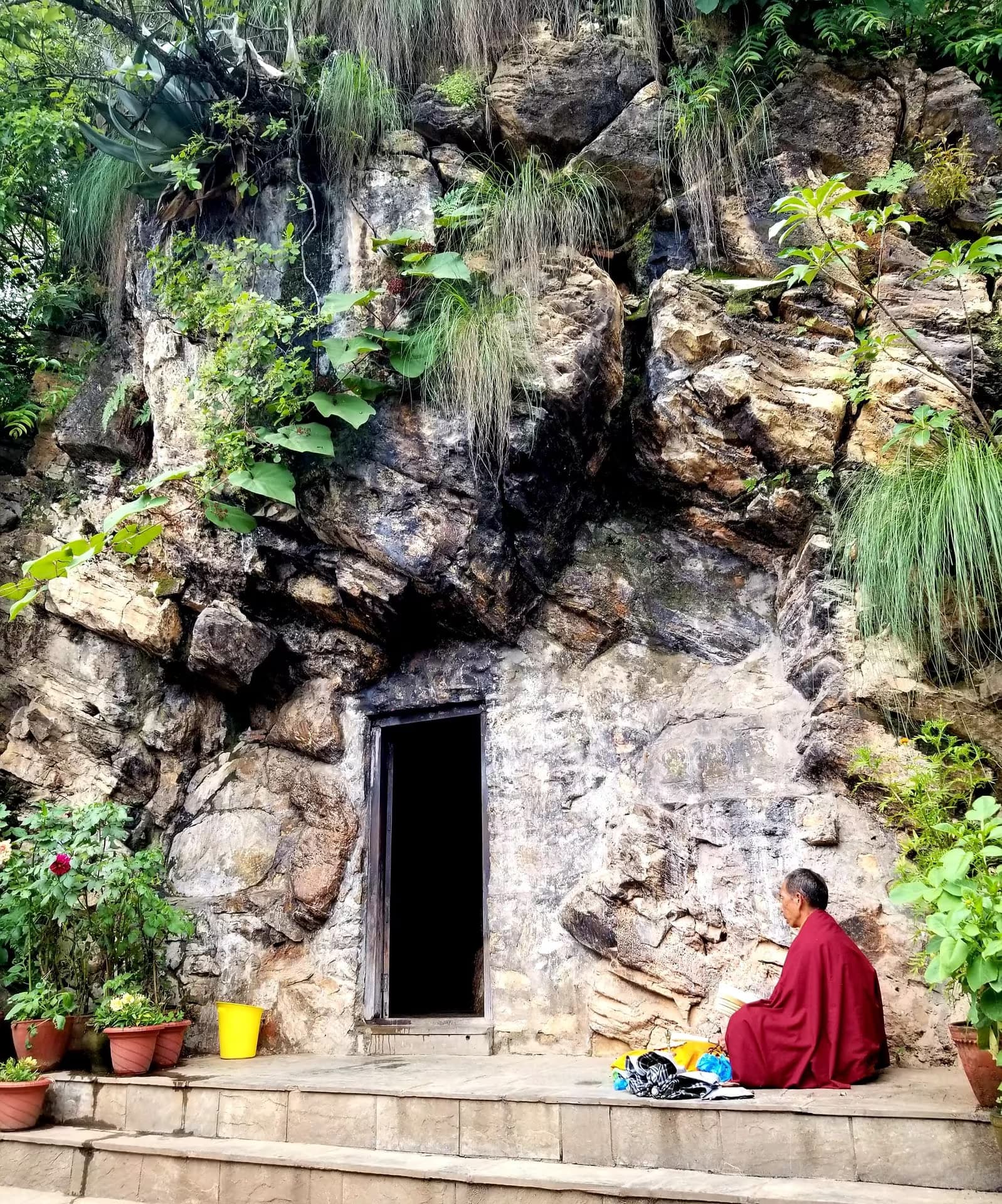
Asura Cave (Yangleshö)
असुर गुफा
A sacred Buddhist cave in Pharping where Padmasambhava (Guru Rinpoche) is believed to have attained the realization of Mahamudra, one of the most important Tibetan Buddhist pilgrimage sites in the Kathmandu Valley.
shrine · Kathmandu
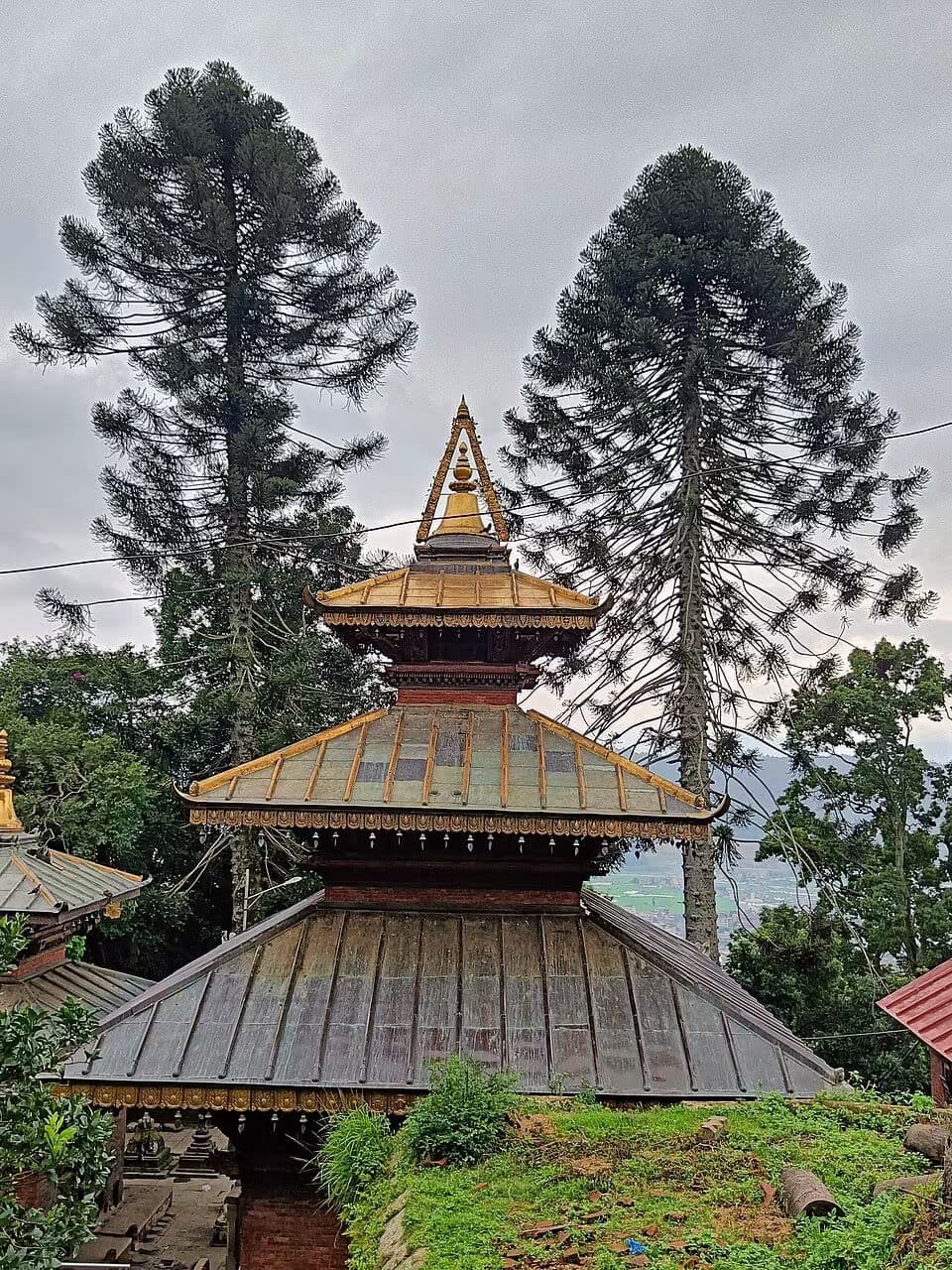
Vajrayogini Temple
वज्रयोगिनी मन्दिर
An important tantric goddess temple above the ancient Newar town of Sankhu, one of the four principal Vajrayogini shrines in the Kathmandu Valley and a revered Shakti peetha.
temple · Kathmandu
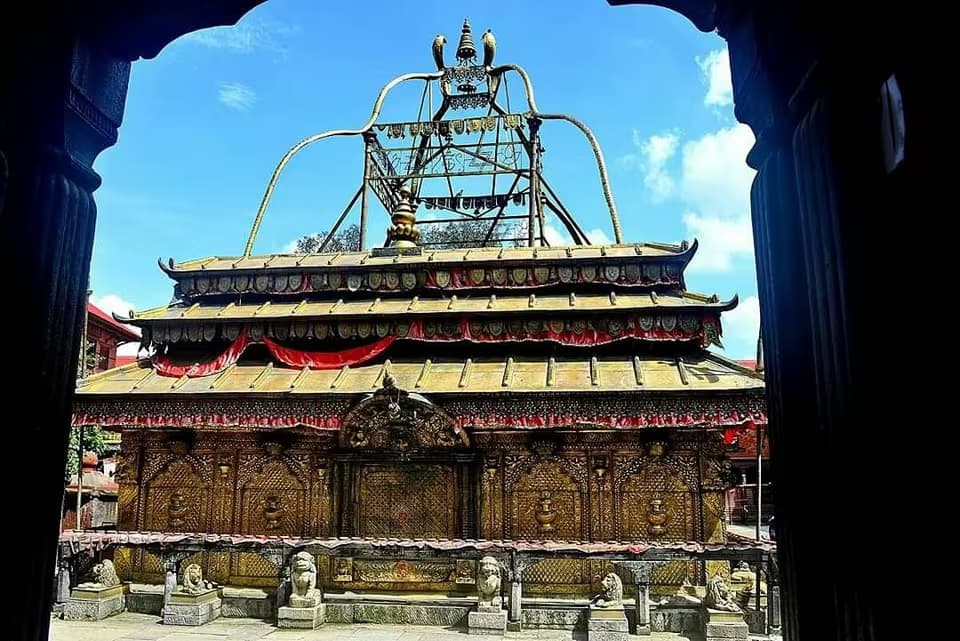
Guhyeshwari Temple
गुह्येश्वरी मन्दिर
A major Shakti Peeth on the Bagmati where part of Sati fell — Pashupatinath's goddess counterpart, and for Newar Buddhists the root of the Swayambhu lotus.
temple · Kathmandu
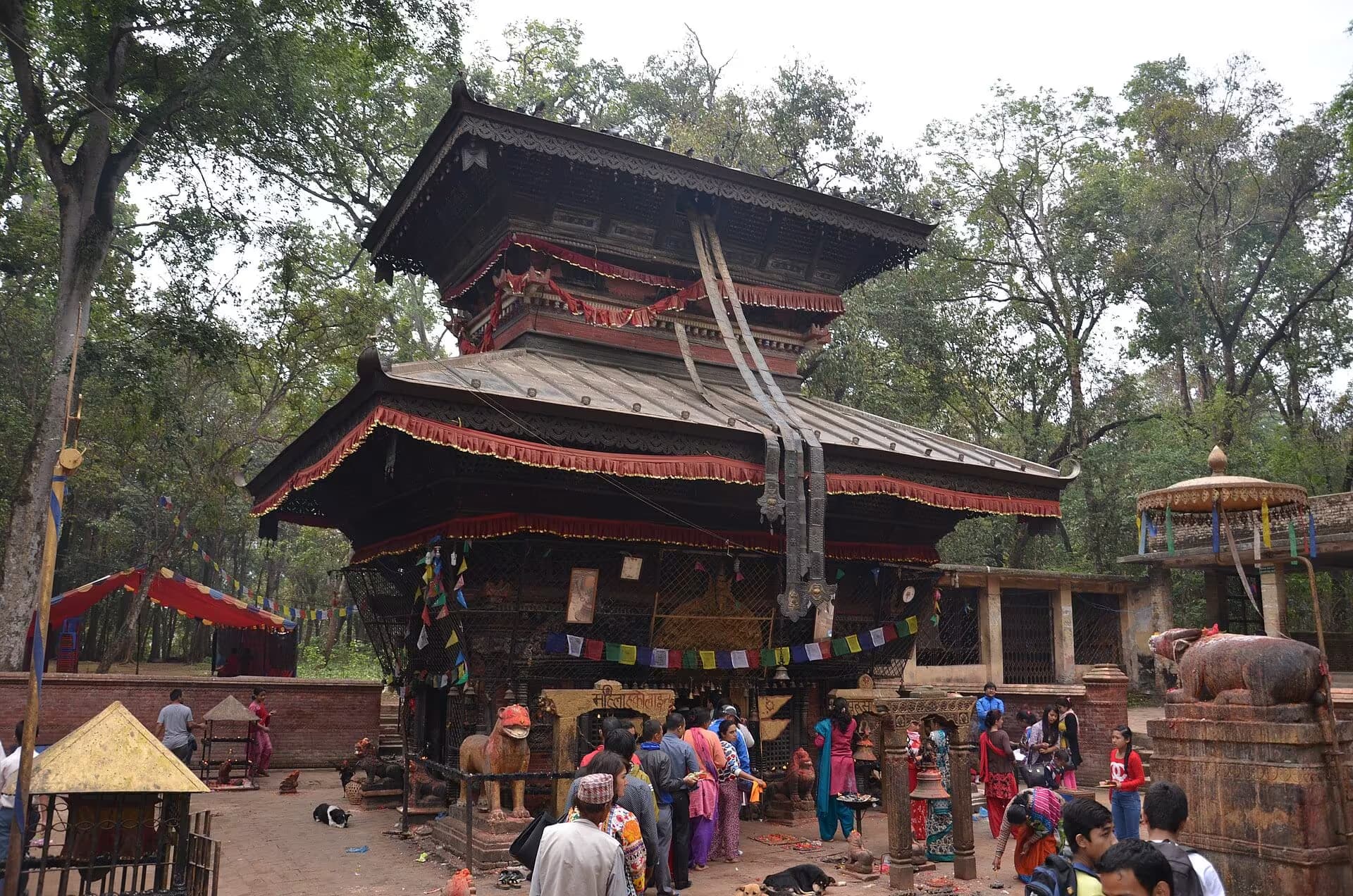
Bajra Barahi Temple
बज्रबाराही मन्दिर
An ancient tantric temple set within a sacred forest in Chapagaun, south of Patan — one of the Kathmandu Valley's most powerful and atmospheric sacred sites, especially revered during Dashain.
temple · Lalitpur
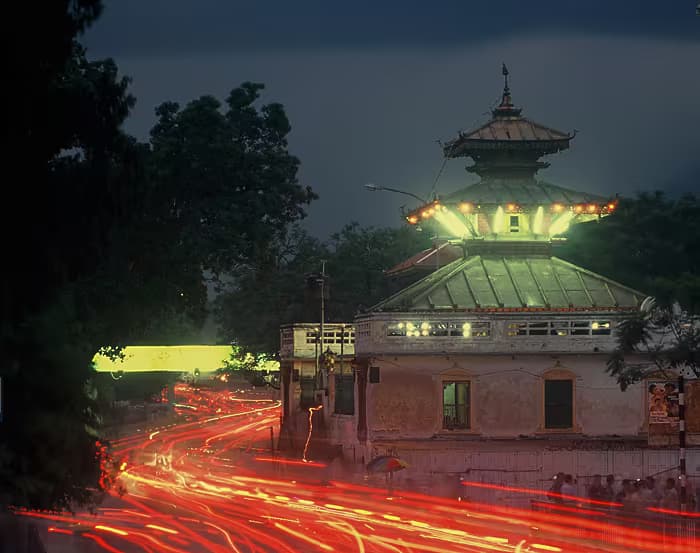
Mahankal Temple
महाकाल मन्दिर
A fierce Bhairav shrine in a three-storey white temple on the western edge of Tundikhel, drawing large Saturday crowds seeking relief from hardship.
temple · Kathmandu
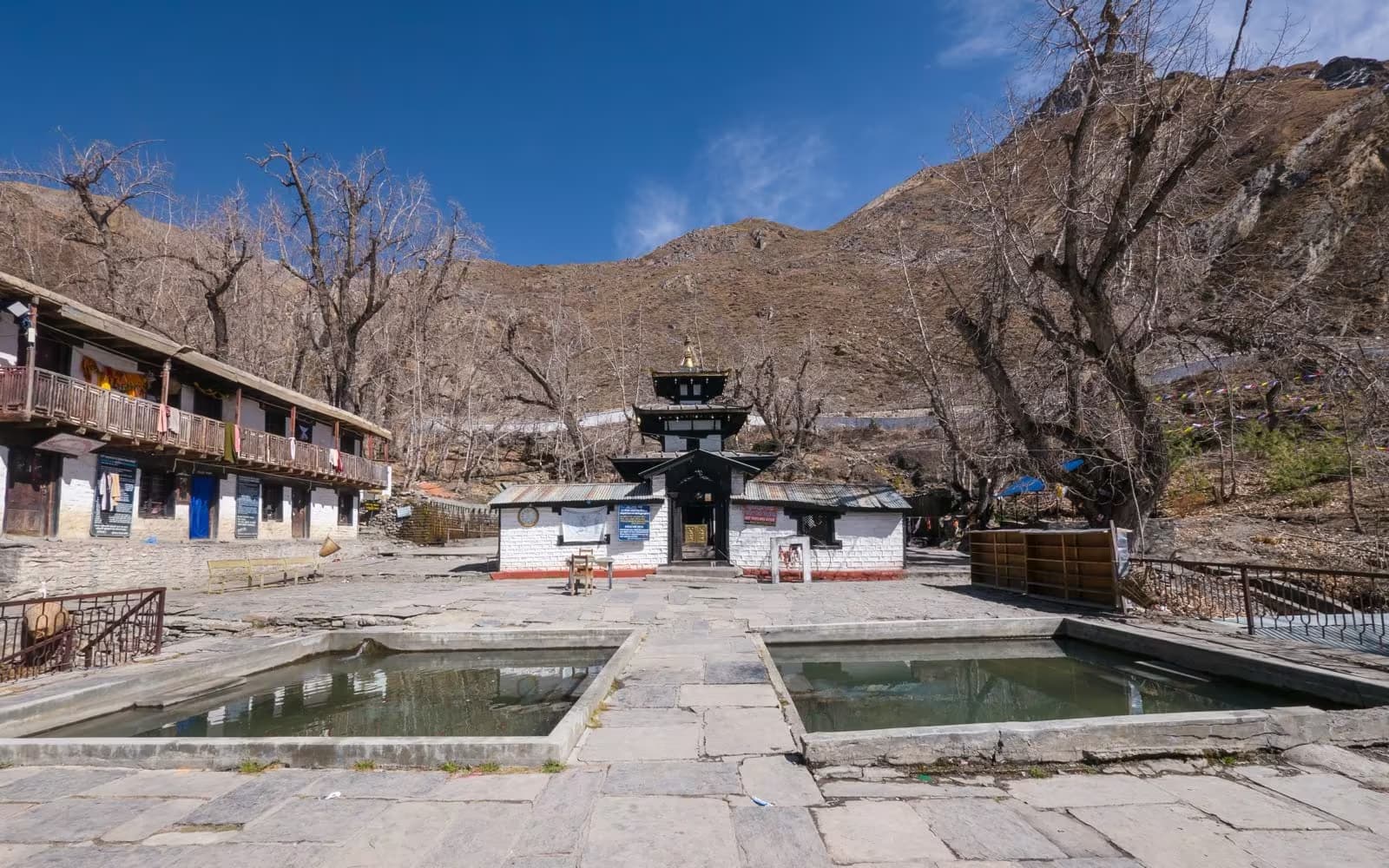
Muktinath Temple
मुक्तिनाथ मन्दिर
Sacred to both Hindus and Buddhists, this high-altitude temple at 3,710m in Mustang is one of the 108 Divya Desams of Lord Vishnu.
temple · Mustang
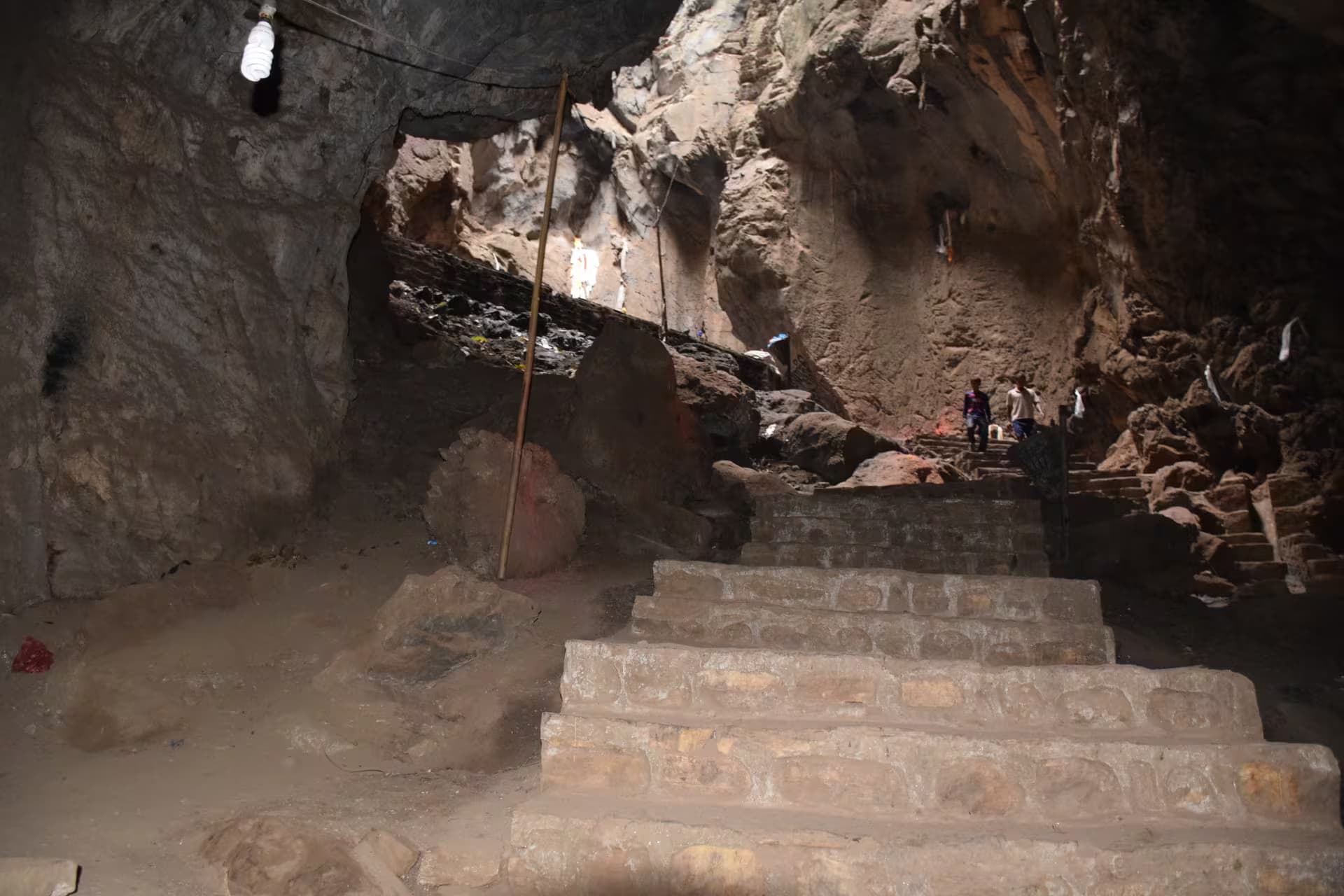
Halesi Mahadev Temple
हलेसी महादेव मन्दिर
A cave shrine in eastern Nepal sacred to both Shaiva Hindus and Tibetan Buddhists, where Shiva devotion and the Maratika meditation tradition meet underground.
temple · Khotang
The Tibetan line
Gompas beyond the Valley
Outside the three cities the tradition changes language. From the Kavre hills to the Pokhara ridge to Solukhumbu at 3,860 m, these monasteries follow the Tibetan curriculum — Tibetan-language liturgy, ordained sangha, and the masked cham cycles that are the most visible Buddhist ritual in Nepal for anyone on a trek.
03 places
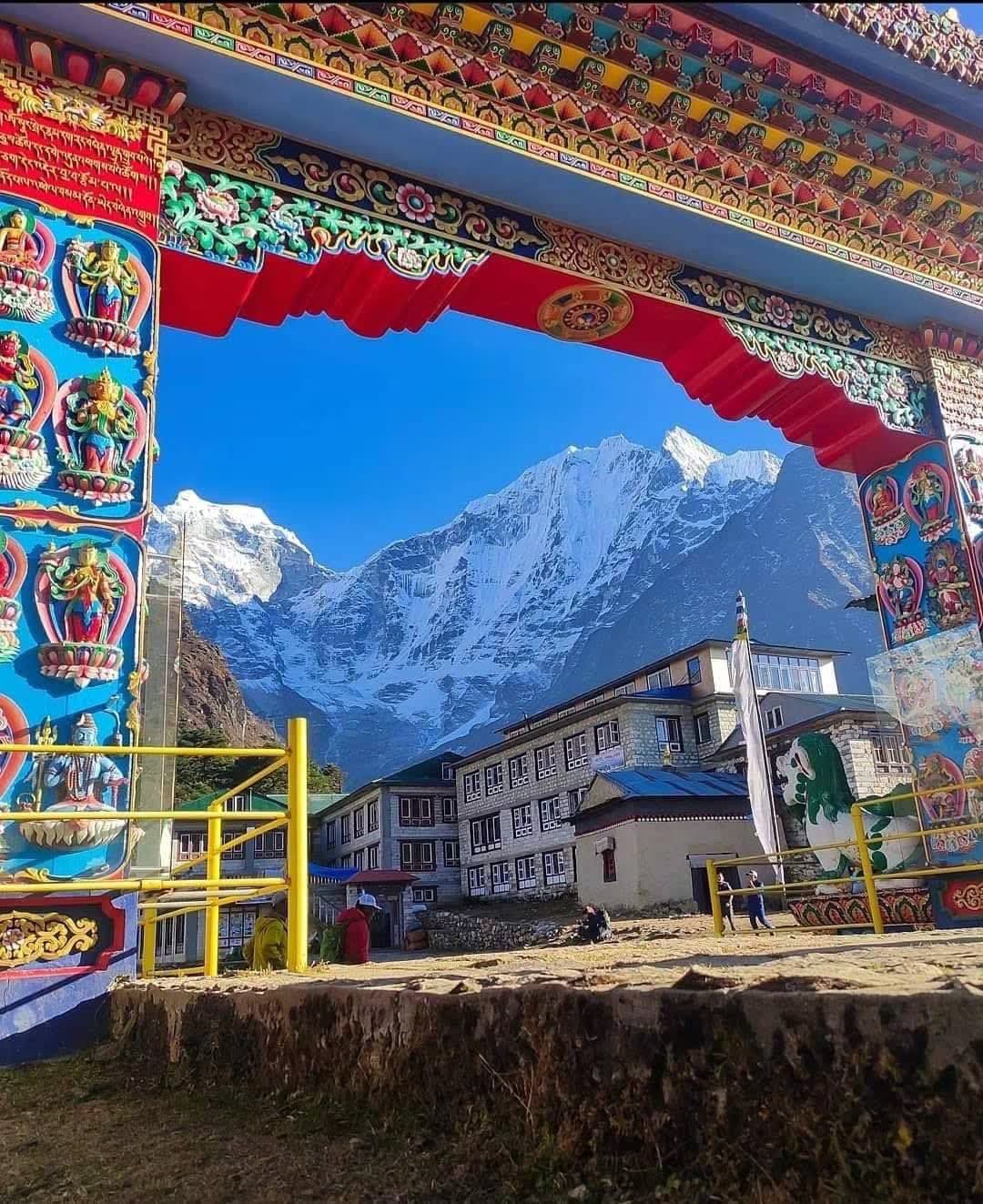
Tengboche Monastery
टेङ्बोचे गुम्बा
The most famous Sherpa monastery in the Khumbu region, set against the dramatic backdrop of Ama Dablam, Everest, and Lhotse.
monastery · Solukhumbu
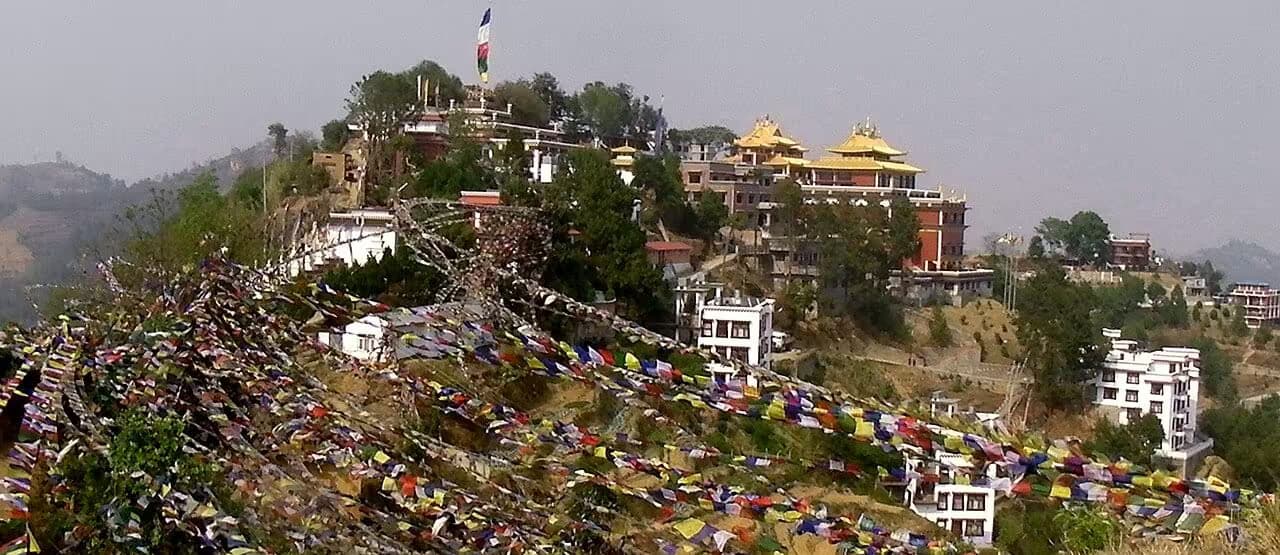
Namo Buddha (Thrangu Tashi Yangtse Monastery)
नमोबुद्ध
One of the three holiest Tibetan Buddhist pilgrimage sites in Nepal, where legend says a prince offered his body to a starving tigress.
monastery · Kavrepalanchok
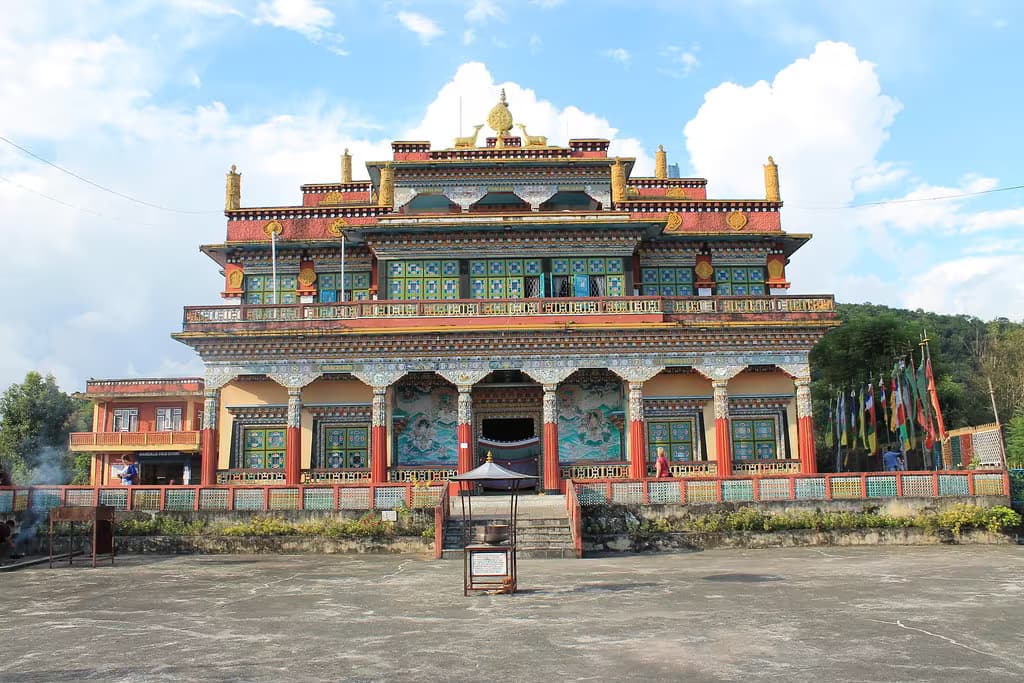
Matepani Gumba
A Tibetan Buddhist monastery on a wooded hill east of Pokhara's old bazaar, founded by Manangi settlers in 1960 — a working monastic school and the quietest viewpoint in the city.
monastery · Kaski
Pancha Buddha
The Five Dhyani Buddhas
The scheme behind almost every Vajrayana image in Nepal. Five Buddhas, five directions, five families — and once you can read the mudra you can name the shrine. Swayambhunath’s dome carries all five, one per compass point.
Centre · White
Vairocana
Dharmachakra — turning the wheel
Buddha (tathagata) family
The centre of the mandala; at Swayambhunath his shrine sits next to Akshobhya's because the dome is itself the centre.
East · Blue
Akshobhya
Bhumisparsha — touching the earth
Vajra family
The kwapah-dyah of many Valley bahals, and the Buddha most associated with Newar Vajrayana's vajra imagery.
South · Yellow
Ratnasambhava
Varada — giving
Ratna (jewel) family
Generosity; the jewel family, tied to merit-making and donation rituals such as Samyak.
West · Red
Amitabha
Dhyana — meditation
Padma (lotus) family
Avalokiteshvara belongs to his family — which is why Nepal's Machhindranath cults sit inside Vajrayana as well as folk religion.
North · Green
Amoghasiddhi
Abhaya — fearlessness
Karma (action) family
Shielded by the naga Muchalinda in many Valley images; associated with accomplishment and the completion of ritual.
The ritual year
When the tradition is visible
Most of what happens inside a bahal is not on view. The festival calendar is when it comes out — treasures unlocked, Dipankar images carried into the street, cham masks danced at altitude. Dates move with the lunar calendar; check each festival page for the year you are travelling.
Festival calendar- SharedApril/May
Buddha Jayanti (Buddha Purnima)
Birth, enlightenment and death on one full-moon day. Swayambhunath and Boudhanath both fill before dawn.
- NewarAugust/September
Gunla
A whole sacred month: devotional processions up to Swayambhu at first light, fasting, and the display of bahal treasures normally kept locked away.
- Newarvaries
Samyak
The great alms-giving. Rows of Dipankar Buddha images are carried out of the bahals that own them — the one occasion when the Valley's monastic community assembles in the open.
- NewarDecember
Yomari Punhi
A harvest full moon whose steamed yomari sweets are offered in bahals alongside the household ritual.
- NewarAugust
Matya
An all-day walking circuit of Patan's Buddhist courtyards and chaityas, offering light at each one in turn.
- NewarMarch/April
Pahan Charhe
Tantric deity chariots through old Kathmandu — the point where the Valley's Buddhist and Hindu tantra are hardest to separate.
- NewarApril/May
Rato Machhindranath Jatra
The longest chariot festival in Nepal, for a rain-bringing form of Avalokiteshvara claimed by Buddhists and Hindus alike.
- NewarMarch/April
Seto Machhindranath Jatra
Kathmandu's counterpart, three days through the old city for the white Avalokiteshvara of Jan Bahal.
- NewarApril
Bajrayogini Jatra
The Sankhu goddess brought down from her hill temple — a tantric procession rather than a public spectacle.
- TibetanOctober/November
Mani Rimdu
Masked cham dance at Tengboche, the most accessible Tibetan-tradition ritual cycle in Nepal.
Read the shrine
Glossary
Site names on this page mix Newari, Sanskrit and Tibetan, often in one line. These are the words that recur.
Institutions
- Bahalबहाल
- A Newar Buddhist courtyard monastery — the main, fully-fledged kind, whose members hold hereditary rights in it. Kathmandu and Patan each count their principal bahals in the dozens.
- Bahiबही
- The second kind of Newar monastery: plainer, usually two-storeyed with an open upper gallery, historically tied to a more scholastic and celibate strand. Bhaktapur's Thatu Bahi and Jhaur Bahi are examples.
- Mahaviharमहाविहार
- The Sanskrit formal name a bahal carries — Hiranya Varna Mahavihar for the Golden Temple, Rudravarna Mahavihar for Okubahal. Most sites here have both a Newari and a Sanskrit name.
- Gompaगुम्बा
- A Tibetan-tradition monastery. In Nepal the word covers everything from a single village temple to a large teaching institution like Tengboche.
- Guthiगुठी
- The endowed trust — usually land — that pays for a bahal's festivals, feasts and repairs. When a guthi's land is lost, the ritual it funded usually stops.
- Sangha
- In the Newar case, not a body of monks but the hereditary community of Shakya and Vajracharya men who own and serve a particular bahal.
People
- Vajracharyaवज्राचार्य
- 'Vajra master' — the Newar priestly caste qualified to perform tantric ritual for others. The role is inherited, and Vajracharyas marry and raise families.
- Shakyaशाक्य
- The second sangha caste — temple caretakers and, historically, the Valley's goldsmiths and image-makers. Much of the bronze on this page was cast by Shakya families.
- Ngakpa
- A Tibetan-tradition lay tantric practitioner: long-haired, robed in white and red, holding tantric vows without monastic ordination.
- Kwapah-dyahक्वापाःद्यः
- The main, publicly visible shrine image of a bahal, on the ground floor facing the entrance. Usually Shakyamuni or Akshobhya.
- Agamअगं
- The esoteric upper shrine holding the bahal's tantric deity. Closed to non-initiates — often the reason an upper floor is barred when the courtyard is open.
Stupas & fabric
- Chaityaचैत्य
- A stupa in miniature, usually stone, standing in the middle of a bahal courtyard. The Valley has thousands; the oldest go back to the Licchavi period.
- Harmika
- The square block above a stupa's dome. At Boudhanath and Swayambhunath it carries the painted eyes and the Nepali numeral one for the nose.
- Yasti & chhatra
- The central mast rising from the harmika and the tiers of parasols on it — thirteen at both great stupas, read as the thirteen stages to enlightenment.
- Toranaतोरण
- The carved and gilded tympanum over a shrine door, usually showing the deity inside flanked by attendants.
- Chorten
- The Tibetan word for a stupa — the wayside form seen along Khumbu and Mustang trails, always passed on the left.
- Mani wall
- A wall of slate slabs carved with om mani padme hum, built up over generations by travellers along Himalayan routes.
Practice
- Vajra & ghantaवज्र · घण्टा
- Thunderbolt-sceptre and bell, held in the right and left hands. Method and wisdom; the pair that gives Vajrayana its name.
- Mandala
- A deity's palace drawn as a diagram. Used to structure meditation, ritual space, and — at Swayambhu and Boudhanath — the layout of the site itself.
- Mantra
- Sound as practice. Om mani padme hum belongs to Avalokiteshvara and is the one written on most prayer wheels in Nepal.
- Kora / pradakshina
- Circumambulation, always clockwise. At Boudhanath the whole surrounding street is the circuit.
- Thangka & paubha
- Painted scrolls — thangka in the Tibetan tradition, paubha in the Newar. Both are ritual objects first and pictures second.
- Charya nritya
- The Newar tantric dance in which a Vajracharya takes on a deity's form. Rarely performed in public, and never as entertainment.
Take part
Where to practise and learn
Courses and workshops open to visitors, plus the long-form guides that plan a route through all of this.
Kopan Monastery Meditation
Buddhist meditation courses and retreats at the famous hilltop monastery.
Kathmandu
Thangka Painting Class
Learn the ancient art of Buddhist Thangka painting with master artists.
Bhaktapur
Patan Metalwork Workshop
A craft-focused session with artisans around Patan's traditional metalwork lanes.
Lalitpur
Guides
- Buddhist Pilgrimage in Nepal: Lumbini, Boudhanath, Swayambhunath & Monasteries8 min
- A Spiritual Journey Through Nepal: Temples, Monasteries & Sacred Landscapes11 min
- Kathmandu Valley Heritage Walk: Temples, Stupas & Living Culture11 min
- Best Time for a Nepal Pilgrimage: Festivals, Weather & Crowds7 min
Before you go in
Etiquette
Nearly every place on this page is in use. None of these rules are decorative.
Walk clockwise
Circumambulate stupas, chaityas, chortens and mani walls with your right shoulder to them. It applies to a wayside chorten on a trail as much as to Boudhanath.
The upper floor is not shut by accident
A bahal's agam shrine is restricted to initiates. If a stair is barred or a door closed, that is the rule and not an oversight — the open courtyard is the part offered to you.
A courtyard is someone's front door
Most bahals are lived in. Photographing across a threshold, into a shrine, or at a family ritual needs asking first, and sometimes the answer is no.
Ritual objects are in use
Prayer wheels are turned clockwise; butter lamps, offerings and chaityas are not props. Do not step over or sit on any of them.
Festivals are not performances
Chariot pulls, masked dance and alms-giving are liturgy with a crowd around it. Stay out of the processional line and follow the marshals.
Shoes and shoulders
Remove shoes and leather at shrine entrances, and keep shoulders and knees covered — Newar bahals are less formal about this than Hindu temples, but the shrine itself is not.
Boundaries
What this page is not
Vajrayana is one tradition among several in Nepal. These neighbours have their own hubs — sending you there is more useful than blurring the categories here.
Lumbini and the Buddha's own landscape
The birthplace, Tilaurakot, Kudan and the Maya Devi Temple belong to the earliest layer of Buddhism, long before the tantras. The international monasteries in the Lumbini garden are Theravada, Chinese and Korean Mahayana, and Japanese Nichiren foundations — related traditions, but not this one.
Buddhist CircuitEvery courtyard, city by city
This page shows a selection of the Valley's mahavihars. The full set — Kathmandu, Patan and Bhaktapur, with their Newari and Sanskrit names, chaityas and sangha life — has its own hub.
Kathmandu Valley bahalsThe Hindu half of the same shrines
Guhyeshwari, Bajra Barahi, Mahankal, Muktinath and Halesi are on this page because Vajrayana claims them. Every one of them is claimed by Hindu tradition as well, and several by Bon or Kirat practice on top of that. The pilgrimage hub reads the same landscape from the other side.
Devbhoomi NepalPlan it
Walk the Diamond Vehicle
A Valley circuit of bahals and stupas takes three unhurried days. Adding Namo Buddha makes four; adding Tengboche or Muktinath turns it into a trek.